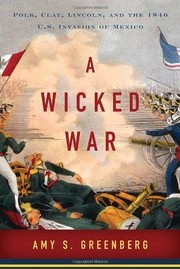
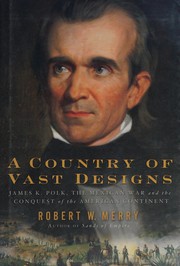
Begin with Amy S. Greenberg's A wicked war, a narrative built around Polk, Clay, Lincoln and the antiwar movement that treats the war as a political choice rather than an inevitability. It is readable without being thin, and it gives you the domestic argument that everything else depends on. Then John S. D. Eisenhower's So far from God for the campaigns, and Robert W. Merry's A country of vast designs for Polk's presidency at book length.
The order matters more here than on most subjects, because the standard account of this war has been rewritten twice. Justin Harvey Smith's history won a Pulitzer in 1919 and treated the war as a regrettable but honourable American necessity. A generation of scholars after 1960 recast it as a war of aggression. The most recent work insists on something harder: that Mexico had its own politics, its own soldiers and its own reasons, and that a war cannot be understood from one capital. This list is arranged so you watch that argument happen rather than being handed its conclusion.
Reading the war from Mexico
Peter Guardino's The dead march is the reason the second stage exists. Reconstructed from Mexican archives, it argues that Mexico's defeat came from poverty and fiscal weakness rather than from any deficiency of nation or will — a claim aimed squarely at the explanation an American reader will already have absorbed. It is dense with fiscal detail and the material conditions of soldiering, and it repays a slower pace. Read Timothy J. Henderson's A glorious defeat first even so: it supplies the political narrative of Mexico between independence and 1846 that Guardino assumes you already know. Laura E. Gómez's Manifest Destinies, Second Edition then follows what the treaty did to the people it transferred, tracing how Mexicans in the annexed territory were legally made white and socially made otherwise.
The campaigns and the occupation
James M. McCaffrey's Army of Manifest Destiny is the war as the American volunteer lived it — enlistment, disease, boredom, plunder — and it documents atrocities against Mexican civilians that the operational accounts pass over. David A. Clary's Eagles and empire keeps both governments and both armies on the page at once, which is worth far more once you know each side separately. K. Jack Bauer's The Mexican War, 1846-1848 is the reference rather than the read: keep it beside you and check Monterrey, Buena Vista, Cerro Gordo and Chapultepec in it as they come up. Stephen A. Carney's The Occupation of Mexico, May 1846-July 1848 is a 47-page official campaign study, not a monograph — it earns its place because it covers the stretch between the fall of Mexico City and the treaty where most narratives simply stop.
Why the oldest book is read last
Robert W. Johannsen's To the Halls of the Montezumas explains how Americans consumed the war as spectacle and romance in the first conflict covered by a mass press. George Winston Smith's Chronicles of the gringos is a documentary collection of American accounts of the occupation, including material on volunteer misconduct; read it in sections and against McCaffrey. Keep the two Smiths distinct — they are different men.
Justin Harvey Smith's The war with Mexico goes last, and the placement is the whole point. It is the Pulitzer-winning history that held the field for four decades and it is the book Guardino and the entire second stage are arguing with. Reading it after them rather than before turns it into something more useful than an outdated survey: a primary source on American self-understanding, on what a serious scholar in 1919 thought it was reasonable to say about Mexico. You can only read it that way once you know where it is wrong. Taken first, it would simply be wrong. We hold no page count for it, so plan it as a multi-volume history rather than around a figure we cannot supply.
The stages, with study plans and questions, are at /paths/pt_ai_the-mexican-american-war. The related wars of 1898 and after are at /subjects/the-spanish-american-war and /subjects/the-philippine-american-war.
Ready to learn something deeply?
Build a reading path — free