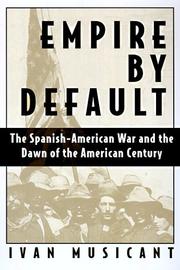
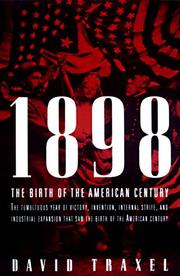
Ivan Musicant's Empire by default is the place to start: the most complete single-volume narrative, covering both oceans and the diplomacy around them, and detailed enough that you will not have to re-learn the basics later. Read David Traxel's account of the year, titled simply 1898, second — it is not about the war at all but about the twelve months around it, and the war is far more intelligible as one event inside that year than as a self-contained story beginning in Havana harbour.
The fighting lasted about ten weeks and the consequences have not finished. The subject is easy to read badly, because the two most available versions are both distortions: the American adventure story of the Maine, the yellow press and San Juan Hill, and a flat anti-imperialist reading in which nothing happens until Washington decides it should. The ordering here is designed to get past both.
The Cuban war the American story omits
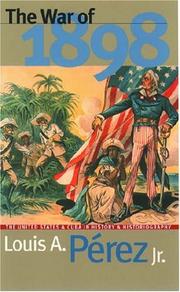
Louis A. Pérez's The war of 1898 is the pivot. It is short, argumentative and not easy: Pérez shows how American historians constructed a version of 1898 in which Cubans are absent or incapable, then reads the sources back against it. His case is that the Cuban Liberation Army had been fighting Spain for three years and had already largely won the countryside, and the fastest way to feel its force is to notice how little of that appears in the narrative you have just built. Cuba in the American Imagination is the companion, on the metaphors that made intervention feel natural — Cuba as a child, as a woman, as a ripening fruit. Read it second, because it explains where the omissions came from.
Whether calling this the Spanish-American War is itself an argument is a live question among historians, and Pérez is the clearest statement of the case that it is. Other books here use the conventional name without apology. The disagreement is worth sitting with rather than resolving.
The press, the personalities and the fleet
Evan Thomas's The war lovers is a group portrait of Roosevelt, Hearst and Henry Cabot Lodge set against William James arguing the other way, and it is the best cure for treating the yellow press as a faceless force. Joyce Milton's The Yellow Kids covers the correspondents themselves — what they filed, how much they invented, how the Hearst-Pulitzer circulation war shaped coverage — and testing Thomas's portrait against the reporting is the reason it comes second.
Then a pair that share a title, so keep the authors attached. Theodore Roosevelt's The Rough Riders is a participant's account written immediately afterwards by the man with the most to gain from it, and it is the foundation of the popular memory of the war; read it as a primary source on the making of a myth, not as a record of what happened on Kettle Hill. Mark Lee Gardner's Rough Riders is the modern corrective, rebuilt from the letters and diaries of men other than the regiment's famous member. Reading them back to back is the exercise.
The operational record, and what the war started
David F. Trask's The war with Spain in 1898 is the scholarly operational standard, covering strategy, planning and command on both sides — slower than Musicant and considerably more precise. Joseph Wheeler's The Santiago campaign, 1898 is testimony rather than analysis: a senior commander, a former Confederate general, writing about his own conduct. Michael Blow's A ship to remember follows the Maine from construction through the explosion to the successive inquiries, including modern engineering assessments that undercut the mine theory.
The list closes on the argument the war opened. Stephen Kinzer's The true flag stages the debate over empire as the argument it was, with Roosevelt and Lodge against Mark Twain and Carl Schurz, and it is the natural bridge to the war in the Philippines that followed. Robert L. Beisner's Twelve against empire is the scholarly study of the anti-imperialists and is honest about their limits in a way Kinzer is not: several opposed annexation on frankly racial grounds, objecting to absorbing populations they did not want as fellow citizens. Meet the warm version first, then the cold one.
The ordered path with study plans is at /paths/pt_ai_the-spanish-american-war; the war that followed it is at /subjects/the-philippine-american-war.