The Philippine-American War: books to read, in order
This is the war the United States fought after the war it remembers. It began in February 1899, ran for at least three years and in parts of the archipelago for a decade more, killed somewhere between two hundred thousand and a million Filipinos depending on whose estimate you accept, and produced the first American torture scandal to reach the Senate floor. Almost none of that is in the standard American narrative, and the historiography is unusually contested even by the standards of colonial wars: scholars disagree about the death toll, about whether 'insurrection' or 'war' is the honest word, about whether American counterinsurgency was unusually brutal or unusually restrained by the standards of 1900, and about how much agency the First Philippine Republic actually had. This path is ordered to make those disagreements visible. It opens with the two best short narratives, moves to Brian Linn's operational history, then to the atrocities and the fight over them at home, then to the colonial state that followed, and closes with Filipino accounts that start the story somewhere other than 1898.
The Narrative, Twice
BeginnerGet the shape of the war and its imperial context. By the end you should be able to explain how the alliance between Aguinaldo and Dewey turned into open fighting, what the Malolos Republic was, and why the conventional phase ended quickly while the guerrilla phase did not.
▸ Study plan for this stage
Pace: Two books, 766 pages. David J. Silbey's A War of Frontier and Empire is 272 pages, the best short single-volume account and unusually even-handed about a conflict that invites polemic; read it first, in a week. Stanley Karnow's In our image is 494 pages and is the long one here, but it is not a war
- The Aguinaldo-Dewey alliance of 1898 and the ambiguity both sides preserved in it
- The Malolos Republic — a constitution, a congress and a claim to sovereignty the United States never recognised
- The outbreak of February 1899 and the disputes about who fired first
- The short conventional phase against the long guerrilla phase, and why the second could not be won the way the first was
- American war aims shifting from Spanish defeat to permanent possession
- The death-toll range, and the difference between combat deaths, famine and disease
- Karnow's long arc: occupation, commonwealth, the Second World War, independence and after
- Why Silbey treats Filipino leaders as strategists making choices rather than as subjects of American policy
- How did the alliance between Aguinaldo and Dewey become open fighting? Give the sequence and the points of ambiguity.
- What was the Malolos Republic, and what did it have that a state is supposed to have?
- Why did the conventional phase end quickly while the guerrilla phase did not?
- What accounts for the enormous spread in Filipino death estimates? Name the categories that different scholars include or exclude.
- Karnow places the war inside a century. What does that framing make visible, and what does it soften?
- Build a timeline from Silbey covering 1896 to 1902 with two rows, Filipino and American, and mark where each side's aims change.
- Write down, before going further, the death figure you would use if asked. At the end of the path, come back and see what you would revise and why.
- From Silbey, list the strategic choices Aguinaldo's leadership actually made, with the alternative available at each point.
- Read Karnow's chapter on independence, then his chapter on the war, and note what the later material implies about how he reads the earlier.
Next up: You now have the shape of the war from two accounts that agree about the outline; the next stage puts you inside the argument about how it was fought, where the agreement stops.
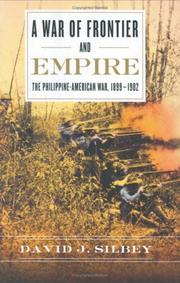
The best short single-volume account, and unusually even-handed about a conflict that invites polemic. Silbey treats the Filipino leadership as strategists making choices rather than as victims, which is the framing the rest of this path builds on.

The century-long story of the American relationship with the Philippines, of which the war is the first chapter. Read it second for the long arc — Karnow's war chapters are thinner than Silbey's, but nothing else places the conflict so well.
How the War Was Actually Fought
IntermediateWork through the military history in detail and be able to describe the transition to guerrilla war, the role of local elites and the reconcentration policy, and to state the case that American operations were more discriminating than the atrocity literature suggests.
▸ Study plan for this stage
Pace: Two books by Brian McAllister Linn, 694 pages, and they are the same argument at two scales. Read The Philippine War, 1899-1902 first — 427 pages, the standard military history and the most thoroughly researched book on this path. Its central claim is that the war was won through decentralised, prov
- The transition from conventional to guerrilla war, and what the Filipino command lost and gained by it
- Province-by-province variation as Linn's core finding — that there was no single American war
- Local elites, and the bargains that ended resistance in one province while it continued in the next
- Reconcentration: what it was, where it was used, and what it did to civilian populations
- Attraction and chastisement as the two declared halves of American policy
- The evidentiary basis of Linn's case — regimental records, officer correspondence, and what such sources record and omit
- The difference between a war won by adaptation and a war won by terror, stated precisely enough to be tested
- Why a study of four provinces can support a general claim, and where that inference is vulnerable
- Describe the shift to guerrilla war and the American response to it in the year that followed.
- State Linn's thesis in one sentence, then state what evidence would falsify it.
- What role did Filipino local elites play in ending resistance, and what did they get?
- How does reconcentration fit into an argument that American operations were discriminating rather than terroristic?
- Linn's four-province study underpins the larger book. Which provinces, and what would a differently chosen four have shown?
- What kinds of event would leave no trace in the sources Linn relies on?
- Map the four provinces Linn studies and mark which parts of the archipelago they do not represent.
- Take one province from the narrower book and follow the same province through the general history. Note what was compressed and what was dropped.
- Write out Linn's thesis and, beside it, the strongest objection you can construct from his own evidence before reading anyone else's.
- Track his treatment of reconcentration specifically: what he says it did, what figures he gives, and which he declines to give.
Next up: You now hold the case that American counterinsurgency was more discriminating than its reputation; the next stage is the case against it, and the argument between the two is the real subject.
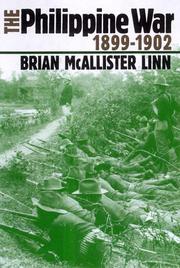
The standard military history and the most thoroughly researched book on the list. Linn argues that the war was won through decentralised, province-by-province adaptation rather than through terror, a position that is contested and that you should read as a position.

Linn's earlier and narrower study, four provinces examined in depth, and the evidentiary base for the larger book. Worth reading second if you want to see how the argument in the general history was constructed.
Atrocity, Torture and the Senate
IntermediateConfront the violence and the American argument about it. You should be able to describe the water cure, what happened at Balangiga and in Samar afterwards, and what the Lodge Committee hearings established and what they buried.
▸ Study plan for this stage
Pace: Three books, 1,072 pages, and this is where the historiography is genuinely at war with itself. Read Gregg R. Jones's Honor in the dust first, 430 pages, the most accessible account of the atrocity scandal, built around the Senate hearings and the courts-martial that followed; it is the direct count
- The water cure: what it was, how widely it was used, and how it was described at the time
- Balangiga, the American losses there, and the Samar campaign that followed
- Jacob Smith's order and the courts-martial that resulted, including their outcomes
- The Lodge Committee hearings — what was entered into the record and what the committee declined to pursue
- Miller's indictment: racial contempt as the enabling condition of the violence
- Linn's reply as you now understand it, and the exact points where the two men contradict rather than merely differ in tone
- The death-toll dispute, and how counting famine and disease deaths changes the answer by an order of magnitude
- 'Insurrection' versus 'war' as a legal and political claim about who was sovereign
- Describe the water cure and say what the Senate hearings established about how routine it was.
- What happened at Balangiga, and what happened in Samar afterwards? Keep the two separate.
- What did the Lodge Committee establish, and what did it bury? Distinguish the record from the finding.
- Where exactly do Miller and Linn contradict each other on fact, as opposed to disagreeing on emphasis?
- How do the two positions arrive at such different Filipino death figures? Name the categories in dispute.
- Schott is dated in his assumptions. Point to a passage where that shows, and say what you can still use him for.
- Make a two-column table, Miller against Linn, listing each factual claim in dispute and, for each, the evidence each cites. Mark the rows where they are using different sources rather than reading the same source differently.
- Take the testimony on the water cure quoted in Jones and check what Linn says about the same episodes. Record whether he disputes it, contextualises it, or passes over it.
- Reconstruct the Samar sequence from Schott and then from Jones, and note where a narrative written as a case study and one written around a scandal diverge.
- Write a paragraph stating the death-toll question honestly: the range, the reason for the range, and what a reader is entitled to conclude.
- Draft the sentence you would use to name this conflict, and defend the choice between 'insurrection' and 'war' on grounds you can state.
Next up: The argument about how the war was fought only settles into place once you see the colonial state it produced, which is what the next stage supplies.

The most accessible account of the atrocity scandal, built around the Senate hearings and the courts-martial that followed. It is the natural counterweight to Linn and should be read immediately after him.
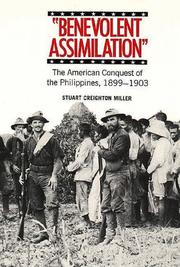
The book that put American conduct in the Philippines back into the historiography in 1982, and still the sharpest indictment. Older than the rest of this stage and openly polemical, which is worth knowing before you open it.
A narrow, narrative account of Balangiga and General Jacob Smith's 'howling wilderness' order. Dated in its assumptions and useful for the detail; read it as a case study, not as an interpretation of the war.
The Colonial State That Followed
IntermediateUnderstand what the war produced. This stage covers the racial logic of American rule, the surveillance and police apparatus built in the archipelago, and the medical and sanitary regime — and how each was carried back to the United States.
▸ Study plan for this stage
Pace: Three scholarly monographs, 1,652 pages — the heaviest stage on this path by a wide margin, and none of the three is a trade book. Alfred W. McCoy's Policing America's empire is 659 pages and is the longest thing you will read here; Paul A. Kramer's The blood of government is 538 and is the densest;
- Race as colonial infrastructure: how Filipino incapacity was produced as knowledge, not merely asserted
- Filipino elite collaboration and negotiation as a strategy with its own logic
- The colonial police and intelligence state — files, informers, surveillance as routine administration
- McCoy's return thesis: colonial policing techniques carried back into the United States
- Public health as governance, and the colonial subject as a body to be managed
- The census, the exposition and the classification of peoples as instruments of rule
- The distinction between a war and the state it leaves behind, and why the second outlasts the first
- What 'benevolent assimilation' meant in administrative practice rather than in proclamation
- How, in Kramer's account, was Filipino incapacity manufactured, and by which institutions?
- What did Filipino elites obtain by negotiating within the colonial order, and what did it cost?
- Trace one policing or surveillance technique from the archipelago to its American use, as McCoy documents it.
- In what specific sense was public health an instrument of rule rather than a service under it?
- Which of these three books best explains why the war's violence was possible, and does that answer strengthen Miller or Linn?
- What survived of this apparatus after independence?
- From Kramer, list the institutions that produced knowledge about Filipinos and what each was for. Then check which of them appear in Silbey's narrative at all.
- Follow one of McCoy's cases from a Manila file to an American agency and write the chain out with dates supplied by him.
- Read Anderson's account of one sanitary campaign and describe what it required of the population being governed.
- Return to the Linn-Miller table from the last stage and add a third column for what Kramer's evidence implies about each disputed row.
Next up: You have now read the war and the state entirely through American sources and American arguments, which is exactly the limitation the final stage is designed to break.
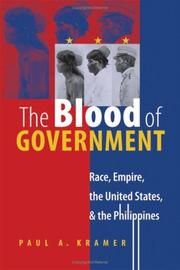
The major scholarly work on race and American empire in the Philippines, tracing how ideas of Filipino incapacity were manufactured and how Filipino elites negotiated within them. Dense and worth the effort.

The colonial police and intelligence state built in the Philippines, and McCoy's argument that its techniques returned home to American domestic surveillance. The clearest demonstration that this war did not stay overseas.
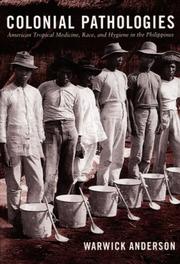
American medicine and public health as instruments of colonial rule — hygiene as government. A different angle on the same apparatus, and short enough to read alongside McCoy.
Filipino Accounts and the Missing Memory
IntermediateRead the war from the archipelago and ask why it vanished from American memory. You should be able to explain how Filipino historians periodise the revolution, and why the American label 'the Philippine Insurrection' was a legal and political claim rather than a description.
▸ Study plan for this stage
Pace: Three books, 1,360 pages, and they are three different genres. Teodoro A. Agoncillo's The revolt of the masses is 456 pages, the classic Filipino nationalist history of Bonifacio and the Katipunan, and it is here because it starts the story in the wrong place on purpose — with the revolution against
- Filipino periodisation: a revolution beginning in 1896 against Spain, of which the American war is a phase
- Bonifacio, the Katipunan and the class argument Agoncillo makes about who led the revolution
- Why the starting date of a narrative is a claim about causation
- 'The Philippine Insurrection' as a legal and political assertion that no Philippine state existed to make war
- Primary documents against four stages of interpretation — what the sources support and what they do not
- The capture of Aguinaldo and its symbolic weight on both sides
- Forgetting as a historical process with mechanisms: textbooks, commemoration, the absence of monuments
- What it would take for this war to occupy the place in American memory that its scale warrants
- How do Filipino historians periodise the revolution, and what does that periodisation assert that the American one denies?
- What is Agoncillo's argument about Bonifacio and the masses, and who in the Philippines disputes it?
- Why was 'insurrection' the official American word, and what would have followed legally from calling it a war?
- Pick a claim from any earlier stage and test it against a document in the Reader. Does the document support the historian?
- Bain finds the war remembered differently in the Philippines than in the United States. What accounts for the difference?
- Having read all five stages, what is your answer to the death-toll question, and what exactly are you counting?
- Rewrite your stage-one timeline with 1896 as the starting point and the American arrival as an event within it. Note every entry whose meaning changes.
- Choose five documents from the Reader that bear on the Linn-Miller dispute and write a paragraph on what they settle and what they do not.
- Take Agoncillo's account of the Katipunan and set it against Silbey's treatment of the same period. List what each includes that the other omits.
- Follow Bain's route as he retraces the Aguinaldo pursuit and write down, at each stop, what he says is remembered locally.
- Return to the death figure you wrote down in stage one, revise it, and write two sentences explaining what changed your mind and which stage did it.
Next up: This closes the path: you can state what happened, name the two camps arguing about how it happened, say honestly what the evidence will and will not settle, and explain why almost none of it reached American memory.
The classic Filipino nationalist history of Bonifacio and the Katipunan, which begins the story with the revolution against Spain rather than with the American arrival. Contested in the Philippines too, and the necessary alternative starting point.
A documentary collection running from the colonial period forward, including Filipino voices and American policy texts side by side. The fastest way to read the primary material after four stages of interpretation.
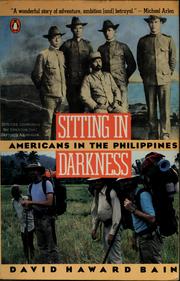
Bain retraces the pursuit and capture of Aguinaldo on the ground eighty years later, alternating the 1901 narrative with what he finds in the same villages. An unusual book and the right one to end on, because it is directly about how a war is remembered and forgotten.
Discussion
Keep reading
Paths that share books, cover the same subject, or open a related topic.