The Mexican-American War: books to read, in order
The war of 1846-48 is the most consequential American war that most Americans cannot describe: it took roughly half of Mexico's national territory, made the fight over slavery's westward spread unavoidable, and trained almost every officer who would command at Gettysburg. It is also a subject whose standard account has been rewritten twice. Justin Smith's two-volume history won a Pulitzer in 1920 and treated the war as a regrettable but honourable American necessity; a generation of scholars after 1960 recast it as a war of aggression; and the most recent work insists on something harder still, which is that Mexico had its own politics, its own soldiers and its own reasons, and that a war cannot be understood from one capital. This path is built to let you watch that argument happen rather than be told its conclusion, so it puts the modern narrative first, the Mexican side second, the campaigns third, and the older accounts last, where you can read them as evidence of how the story was once told.
Start With the Narrative
BeginnerGet the sequence of events and the American political fight straight before meeting any interpretation of them. By the end of this stage you should be able to explain how the annexation of Texas, the Nueces-Rio Grande boundary dispute and Polk's message to Congress led to a declaration of war, and who in the United States opposed it.
▸ Study plan for this stage
Pace: Three books, 1,356 pages, and they are not the same kind of reading. Amy S. Greenberg's A wicked war is 344 pages of narrative built around Polk, Clay, Lincoln and the antiwar movement and moves quickly; John S. D. Eisenhower's So far from God is 436 pages of clear chronological campaign history; Ro
- The annexation of Texas and why it was a slavery question before it was a Mexican one
- The Nueces-Rio Grande boundary dispute, and the fact that the disputed strip is where the shooting started
- Polk's message to Congress and the claim that American blood had been shed on American soil
- The Whig and abolitionist opposition — Clay, Lincoln's Spot Resolutions, the Massachusetts dissenters
- The Wilmot Proviso and how the war made slavery's westward spread unavoidable
- The two theatres: Taylor in the north, Scott from Veracruz to Mexico City
- The Treaty of Guadalupe Hidalgo and the extent of the territorial transfer
- Presidential war-making as a constitutional question the war opened and did not close
- Reconstruct the chain from Texas annexation to the declaration of war. At which link could the sequence plausibly have broken?
- Who opposed the war in the United States, on what grounds, and how much did their grounds differ from one another?
- Eisenhower and Greenberg cover the same eighteen months. Where do they disagree about why something happened rather than about what happened?
- Merry is sympathetic to Polk. State his strongest defence of Polk in Merry's own terms, then say what Greenberg would answer.
- What did the United States acquire under Guadalupe Hidalgo, and what did it pay?
- Build a one-page timeline as you read Greenberg, marking events, and after Eisenhower add the military operations to the same page. Keeping politics and campaigns on one sheet is the point.
- Write out Polk's justification for war in a paragraph, using only what he claimed at the time, then annotate it with what Greenberg and Merry each say was actually true.
- Pick one episode covered by all three books — the Thornton affair, or the decision to land at Veracruz — and set the three accounts side by side, noting where each places responsibility.
- After Merry, list the three points where he most clearly disagrees with Greenberg and mark which of them is a disagreement about evidence and which about judgement.
Next up: You now have the American account of the war complete and internally argued, which is precisely what the next stage exists to dismantle.
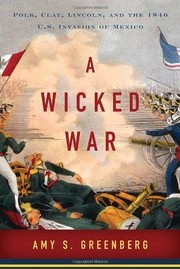
The best modern entry point: a narrative built around Polk, Clay, Lincoln and the antiwar movement that treats the war as a political choice rather than an inevitability. It is readable without being thin, and it gives you the domestic argument you will need before anything else makes sense.
The standard one-volume military narrative, clear and chronological, covering Taylor in the north, Scott's landing at Veracruz and the march to Mexico City. Read it second so the campaigns hang on the politics rather than the other way round.
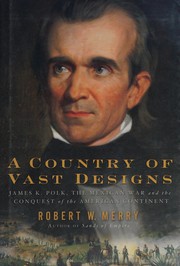
Polk's presidency at book length, which is where the war actually originates. Merry is broadly sympathetic to Polk, which makes him a useful counterweight to Greenberg and a good test of whether you have understood her argument or merely absorbed it.
The War From Mexico
IntermediateStop reading the war as an American event. This stage is where the historiographical revision actually lives: understand why Mexico lost, what Mexican soldiers and civilians experienced, and why 'a weak and chaotic Mexico' is an explanation that recent scholarship rejects.
▸ Study plan for this stage
Pace: Three books, 1,060 pages, and the mix matters. Peter Guardino's The dead march is 512 pages and is the slow one — an archival monograph reconstructed from Mexican sources, dense with fiscal detail and the material conditions of soldiering, and it repays being read at half the pace of stage one. Timo
- Mexican politics between independence and 1846: centralists against federalists, and why no settlement held
- Fiscal weakness as a military fact — an army that cannot be paid, supplied or moved
- Guardino's argument that poverty, not national character, explains the defeat
- The Mexican soldier's experience, and the soldaderas who made the army function
- The war as it was fought over Mexican civilians rather than merely near them
- Santa Anna's repeated returns to power, and what they show about the political system rather than about the man
- Article VIII and IX of the treaty, and the legal whiteness Gómez traces for the transferred population
- Why 'the loser had it coming' is a historiographical position rather than a neutral summary
- State Guardino's explanation for Mexico's defeat in one sentence, then state the explanation it replaces.
- What had Mexican politics been doing between independence and 1846, and which of those conflicts was still live when the war began?
- What did the treaty promise the Mexicans in the transferred territory, and what did they actually receive?
- Gómez argues that the transferred population was legally made white and socially made otherwise. What is her evidence, and what does the distinction do?
- Having read Henderson and Guardino, which parts of stage one now look like American assumptions rather than findings?
- Take the paragraph in Greenberg or Eisenhower that explains why Mexico lost, copy it out, and annotate it against Guardino's evidence line by line.
- Follow Guardino's fiscal material specifically: note each figure he gives for what the Mexican state could raise and spend, and reconstruct from those numbers alone why the army performed as it did.
- Using Henderson, draw the centralist-federalist split as a diagram of who wanted what, then mark on it where each of the war's Mexican commanders stood.
- Read Gómez's account of one legal case in full and write down what the court had to assume about race for its ruling to make sense.
- Go back to your stage-one timeline and add a second row for Mexican events. The gaps in that row are what the American narrative left out.
Next up: With both national accounts in hand you can finally read the campaigns as something other than a story about competence, which is what the operational and occupation histories in the next stage require.
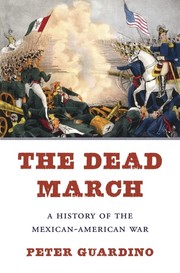
The most important recent book on the war and the reason this stage exists: Guardino reconstructs the conflict from Mexican archives and argues that Mexico's defeat came from poverty and fiscal weakness rather than from any deficiency of nation or will. Catalogued under the bare title; the subtitled form does not resolve.
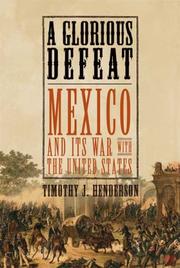
A short, lucid account of Mexico's internal politics between independence and 1846 — centralists against federalists, the church, the army, the collapsing treasury. Read it alongside Guardino; it supplies the political narrative he assumes.

What the treaty did to the people it transferred. Gomez traces how Mexicans in the annexed territory were legally made white and socially made otherwise, which is the war's longest-running consequence. The catalogue holds the second edition.
The Campaigns and the Army
IntermediateWork through the fighting itself and the occupation that followed, so you can say what actually happened at Monterrey, Buena Vista, Cerro Gordo and Chapultepec, and understand how a volunteer army behaved in occupied territory.
▸ Study plan for this stage
Pace: Four books, 1,366 pages, and they range from a 47-page official study to a 590-page dual narrative, so plan by book rather than by week. Start with James M. McCaffrey's Army of Manifest Destiny, 275 pages on enlistment, disease, boredom and plunder — the war as the American volunteer lived it, and t
- The operational shape of the war: Taylor's northern campaign, Scott's amphibious landing and the road to Mexico City
- Monterrey, Buena Vista, Cerro Gordo and Chapultepec — what each decided and what each cost
- Regulars against volunteers, and the difference in discipline that ran through the whole war
- Disease as the principal killer, and the ratio of sickness to battle deaths
- Volunteer misconduct and atrocities against civilians as documented behaviour rather than rumour
- Occupation as a distinct phase with its own politics, running from the fall of the capital to ratification
- The San Patricio battalion and what desertion tells you about who was in the American ranks
- Why a dual-sided narrative reads differently once you have read each side's own historians
- Describe what happened at Cerro Gordo and why Scott could not simply have marched around it.
- How did the volunteer regiments behave in occupied territory, and what does McCaffrey use as evidence?
- What killed most of the men who died in this war, and how does that change your sense of the campaigns?
- The period between the capital's fall and the treaty is usually skipped. What was actually happening in it?
- Where does Bauer's operational record contradict, or merely sharpen, the narratives you read in stage one?
- What does Clary gain by holding both armies on the page, and what does the dual structure cost him?
- Keep Bauer beside McCaffrey and Clary and check each named engagement in him as you meet it. Note every occasion the narrative account has smoothed something.
- Read Carney's 47 pages in one sitting immediately after finishing Clary and list what the occupation phase adds that the campaign narrative had implied was over.
- From McCaffrey alone, tabulate the causes of death he reports and compare the totals with the battle casualties in Bauer.
- Trace one atrocity documented in McCaffrey through Bauer and Clary and record how each handles it — named, mentioned, or absent.
- Draw Scott's route from Veracruz to Mexico City on a map from Bauer's account, then mark on it where Guardino says the Mexican state could and could not supply an army.
Next up: You now know what happened well enough to notice what the older histories chose to say about it, which is the only way to read the final stage as evidence rather than as information.
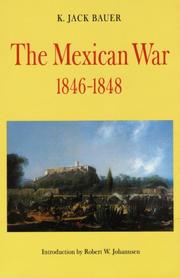
The scholarly military standard for decades and still the most reliable operational account. Use it as the reference you check the narratives against, not as a book to read straight through first.
The war as the American volunteer experienced it — enlistment, disease, boredom, plunder. It is the necessary corrective to campaign history, and it documents the atrocities against Mexican civilians that the operational accounts pass over.
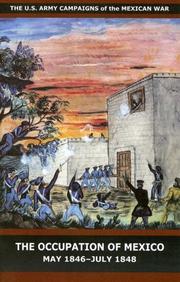
A concise official campaign study of the occupation phase, useful because the period between Mexico City's fall and the treaty is where most narratives simply stop. The catalogue title carries the date range, May 1846 to July 1848.
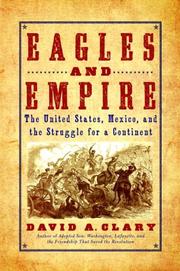
A dual-sided narrative that keeps both governments and both armies on the page at once. Placed here rather than in stage one because it is most valuable once you already know each side's story separately.
Culture, Memory and the Older Accounts
IntermediateRead the war's contemporary reception and the histories that shaped it, and be able to describe how the standard interpretation changed between 1919 and now — and what each version was arguing for.
▸ Study plan for this stage
Pace: Three books. Robert W. Johannsen's To the Halls of the Montezumas is 384 pages, George Winston Smith's Chronicles of the gringos is 523 pages, and the two together come to 907; for Justin Harvey Smith's The war with Mexico we hold no recorded page count, so plan it as a multi-volume history rather t
- The war as the first American conflict sold through a mass press, and what that made possible
- Romance and spectacle as a mode of public consumption, distinct from support for the policy
- Documentary evidence read directly, and how much interpretive work a narrative history performs invisibly
- Justin Harvey Smith's account as the standard for forty years, and what it was arguing for
- The revision after 1960 that recast the war as aggression, and what it still took for granted
- The most recent turn, which insists that Mexico had its own politics and cannot be understood from one capital
- Reading an outdated history as evidence about its own moment rather than as a bad guide
- Why the order of this path — modern narrative, Mexican side, campaigns, older accounts — is itself an argument
- How was the war presented to the American public while it was being fought, and how does that differ from how it was justified in Congress?
- In Chronicles of the gringos, find an occupation episode also covered by McCaffrey. What does the document say that the historian's summary does not?
- What is Justin Harvey Smith's central claim about the war's justice, and what evidence does he rest it on?
- Describe the three-stage movement of the standard account — Smith, the post-1960 revision, and Guardino — and say what each was reacting against.
- Which of Smith's judgements survive the modern scholarship, if any, and on what grounds?
- If you had to name the single assumption that changed most between the older accounts and Guardino, what would it be?
- Read Justin Harvey Smith's treatment of any episode you already know well from Bauer and Guardino, and mark every sentence where his framing rather than his facts is doing the work.
- Pick five documents from George Winston Smith's collection and write a paragraph of narrative history from them. Then compare your paragraph with McCaffrey's on the same material.
- Using Johannsen, list the images of the war circulating at home, then check each against something in stage three that contradicts it.
- Write a single page tracing one specific claim — why Mexico lost — through Justin Harvey Smith, then Greenberg, then Guardino, quoting each.
- Return to the reading order of this path and argue, in a paragraph, for putting the older accounts last rather than first. Then argue the other side.
Next up: This closes the path: you can now describe not only what happened between 1846 and 1848 but how the account of it was built, rebuilt and rebuilt again, which is the harder and more durable skill.
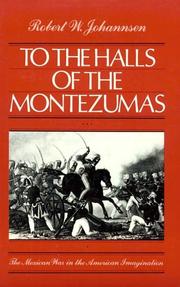
How Americans experienced the war as spectacle and romance — the first war covered by mass newspapers, sold as a national adventure. It explains the enthusiasm that Greenberg's dissenters were arguing against.
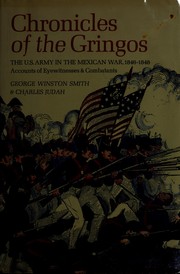
A documentary collection of American accounts of the occupation, including material on volunteer misconduct. Reading the sources directly is the fastest way to see how much interpretation the narrative histories are doing.

The 1919 Pulitzer-winning history that set the standard account for forty years, and the book everything in the second stage is arguing with. Read it last and read it as a primary source on American self-understanding, not as a current guide to the war.
Discussion
Keep reading
Paths that share books, cover the same subject, or open a related topic.