Family Law: The Best Books on Marriage, Divorce and Custody, in Order
Family law is the area where the gap between doctrine and practice is widest. The black-letter rules on marriage, divorce, property division, support and custody can be learned in a week; what actually determines outcomes is a negotiation between two lawyers in a corridor, a judge applying a standard as elastic as the best interests of the child, and a set of assumptions about what families are for that the statutes never state. This path teaches the doctrine first, because you cannot see the gap without it, then the casebook and the American statutory frame, then three stages of the harder material: how divorce is really negotiated, how custody law arrived at its current standard, and the critiques arguing that the field's basic categories are wrong. It is an academic reading path about the law as a subject, not legal advice, and family law is jurisdiction-specific — most of what follows is American.
The Doctrine, Compressed
BeginnerLearn the actual rules — grounds for divorce, equitable distribution versus community property, the difference between alimony and child support, custody versus visitation — so that every argument in the later stages has something concrete to attach to.
▸ Study plan for this stage
Pace: 3–4 weeks. Family Law in a Nutshell is about two hundred small-format pages and is genuinely a weekend read. Understanding Family Law is a student treatise of five hundred-odd pages — two weeks at a chapter a sitting. Contemporary Family Law is a full modern treatment and should be read selectively
- Marriage formation and the requirements a state can impose — licence, capacity, ceremony, and what common-law marriage survives where
- Grounds for dissolution and what no-fault divorce actually replaced
- Equitable distribution versus community property, and the separate-property carve-out that decides most cases
- Alimony and spousal support versus child support: different theories, different modifiability, different enforcement
- Legal custody versus physical custody versus visitation, and the best-interests standard that governs all three
- Parentage, adoption, and the functional-parent problem that biology-based rules cannot reach
- That every one of these rules is state law, so 'the law is X' is almost always a majority-rule claim with minority jurisdictions doing otherwise
- What does a court do differently in an equitable-distribution state and a community-property state when the marital home was bought with one spouse's premarital savings?
- Why is child support treated as the child's entitlement rather than the custodial parent's, and what follows from that for waiver and modification?
- Where does Understanding Family Law give reasoning that the Nutshell states as a bare result? Pick three examples.
- Which doctrines in the Nutshell does Contemporary Family Law show to be under strain from same-sex marriage, assisted reproduction or cohabitation?
- For any rule you have learned this stage, can you say which states are the outliers — and if not, what does that tell you about how you have been reading?
- Read the Nutshell cover to cover in a weekend and build a one-page glossary from it: every term of art, defined in your own words. Everything in the later stages will attach to this page.
- Take three rules the Nutshell states flatly and find the corresponding passage in Understanding Family Law. Write out the majority rule, the minority rule and the reason for the split. The Nutshell will have given you only the first.
- Using Contemporary Family Law, pick one doctrine designed around a marital biological family — parentage presumptions are the cleanest — and write how it applies to a same-sex couple using a donor. Note where it produces a result nobody intended.
- Draft a two-column sheet: on the left, what the doctrine says decides a property division; on the right, what you would need to know about the actual couple to predict the outcome. The gap between the columns is the subject of stage three.
Next up: With the rules in hand you can read judicial opinions as arguments rather than as sources of the rules, which is the only way a casebook repays the effort.

The compressed doctrinal overview and the correct first book: two hundred pages covering marriage formation, dissolution, property, support, custody, adoption and parentage. Krause with David Meyer in the later editions. Read it in a weekend to get the vocabulary, not to learn the subject.
The next step up in depth — a treatise-style student text that gives the reasoning and the majority and minority rules where the Nutshell only gives the result. Read second, and use it to fill in whatever the Nutshell left as an assertion.

The full modern treatment, and the first book here that engages seriously with what has changed: same-sex marriage, assisted reproduction, unmarried cohabitation, functional parenthood. Read it third, once the traditional doctrine is in place, so you can see which parts of the structure the new cases actually strain.
The Cases and the American Frame
IntermediateRead the primary material — the decisions themselves — and understand the constitutional and federal-state architecture that makes American family law behave the way it does.
▸ Study plan for this stage
Pace: 6–8 weeks. Cases and Materials on Family Law is a law-school casebook — a semester's material, and the honest pace is two or three principal cases a sitting with the notes read, not skipped. Check which edition you have, since the catalogue record here is an older one and the constitutional material
- How to read an opinion for holding, standard of review and dictum rather than for the outcome
- The constitutionalisation of family relations — the substantive due process line from Meyer and Pierce through Griswold, Loving, Zablocki, Troxel and Obergefell
- The residual state authority over domestic relations, and the domestic-relations exception to federal jurisdiction
- The interaction of family law with welfare, tax and immigration law, which is where a great deal of the real doctrine hides
- Interstate problems: UCCJEA for custody, UIFSA for support, full faith and credit and its limits
- Katz's frame: family law as a federal-state hybrid rather than a coherent body of state law
- In Troxel, what exactly did the Court hold, and why is the plurality opinion so hard to apply to the next grandparent-visitation case?
- What work is the fundamental-rights framing doing in the marriage cases, and what would family law look like if none of it had been constitutionalised?
- Why does it matter for a real litigant which state's court hears a custody dispute, and what does the UCCJEA do about it?
- Where does Katz say the federal government exerts influence over family law without ever regulating it directly?
- After reading opinions for six weeks, which rules from stage one turn out to be far less settled than the treatises made them sound?
- Brief ten principal cases from the casebook properly — facts, procedural posture, issue, holding, reasoning, disposition — and keep them. Then reread your briefs and mark every one where you cannot state the rule the case adds.
- Take the casebook's custody chapter and extract, from the opinions alone, the list of factors courts actually cite. Compare that list to the statutory best-interests factors in the Nutshell.
- Trace one doctrine — marital privacy, or parental rights — through the sequence of cases the casebook gives, writing one sentence per case on what each added. Then read Katz's account of the same sequence and note what a case-by-case reading made you miss.
- Pick any two cases from different states reaching opposite results on similar facts. Write the half-page memo explaining to a client why the answer depends on where they live — that memo is the jurisdiction-specificity lesson in concrete form.
Next up: You now know what the law says and what appellate courts do with it, which is exactly the knowledge the empirical studies in the next stage are about to complicate.
The leading casebook, and the point at which you stop reading summaries and start reading opinions. Catalogued here under the inverted form Cases and Materials on Family Law and at an older edition, so check which edition you are buying; the case selection is the reason to use it.

Katz's short synthetic account of how the American system fits together — the constitutionalisation of family relations, the residual state authority, the interaction with welfare and tax law. Read it after the casebook: it supplies the frame that a case-by-case reading fragments.
How Divorce Is Actually Negotiated
IntermediateSee the gap open. These are empirical studies of practising divorce lawyers, and they explain why outcomes cluster the way they do regardless of what the statute says.
▸ Study plan for this stage
Pace: 5–6 weeks. Divorce Lawyers at Work and Divorce Lawyers and Their Clients are both social-science monographs of moderate length with methods sections that should be read rather than skipped — about two weeks each. Marriage Buyout is a shorter, argumentative legal-academic book and takes a week or so.
- Bargaining in the shadow of the law: the statutory rule as a bargaining endowment rather than a decision rule, since almost nothing is tried
- Mather, Maiman and McEwen's finding that lawyers' own professional communities of practice — local, informal, and shared with opposing counsel — set the range of reasonable outcomes
- The lawyer as gatekeeper of the client's expectations, and the reframing of a client's grievance into a legal claim
- Repeat players versus one-shot players, and what that asymmetry does to settlement
- Starnes's partnership theory of marriage and the buyout model of dissolution, offered as a replacement for discretionary alimony
- The methodological limits of all three: interviews and observation in a small number of states, at a particular time, generalised carefully or not at all
- What exactly do Mather, Maiman and McEwen mean by a community of practice, and what is their evidence that it constrains outcomes more than the statute does?
- In Sarat and Felstiner's transcripts, what is the lawyer doing when they tell the client the legal system will not give them what they want? Is it advice, management, or both?
- If the local bar sets the settlement range, what happens to a client whose lawyer is from outside that community?
- What problem in stage one's alimony doctrine is Starnes's buyout designed to solve, and what new problems does it create?
- Which of these three books would change a legislator's mind, and which would change a practitioner's?
- How far can findings from divorce lawyers in Maine and New Hampshire be generalised, and do the authors claim they can be?
- Read the methods appendix of Divorce Lawyers at Work first, before the findings. Write down the sample, the jurisdictions and the period — then read the findings and note every time you were tempted to generalise past them.
- Take one full lawyer-client conference from Sarat and Felstiner and annotate the client's turns and the lawyer's turns separately: what the client is asking for, and what the lawyer converts it into. Then write the case as the resulting court filing would look.
- Apply Starnes's buyout formula to a hypothetical built from the property-division rules you learned in stage one, and compute the outcome both ways. The difference is her argument, made concrete.
- Return to the two-column sheet from stage one and fill the right-hand column using these three books — which lawyer, which county, which stage of the client's grief. That completed sheet is the gap the path exists to show.
Next up: Having seen how adult financial claims are really settled, you can watch the same gap open in the one area where the stakes are a child rather than a house.

The key empirical study, by Mather, Maiman and McEwen: interviews with practising divorce lawyers in Maine and New Hampshire showing that the profession's own informal norms — about reasonable settlements, about clients who want to fight — do more to shape outcomes than the law. Read it first here; it is the book that reframes everything in stage one.

Sarat and William Felstiner recorded actual lawyer-client conferences, which almost nobody has done. The result is a close study of how legal reality gets constructed in the room — the lawyer managing the client's expectations, the client's story being translated into claims. Read it second, as the microscope to Mather's survey.

Starnes argues that marriage should be treated as a partnership and divorce as a buyout of a departing partner's stake, which would replace the current discretionary alimony mess with something principled. Read it as the reform proposal that follows directly from what the two studies above expose. Catalogued without the leading article.
Custody and Children
IntermediateFollow the single most consequential standard in the field — the best interests of the child — from the doctrine that produced it, through the critique of its indeterminacy, to its history.
▸ Study plan for this stage
Pace: 5 weeks. Beyond the Best Interests of the Child is short — under two hundred pages — and should be read in one or two sittings because its force is in its brevity, then reread after the rejoinder. The Custody Wars and From Father's Property to Children's Rights are each a fortnight of steady reading
- The psychological parent, and the claim that a child's bond to a caretaker matters more than biology or legal status
- The least detrimental alternative as a replacement for the best interests of the child, and why Goldstein, Freud and Solnit thought the shift mattered
- Continuity of care, the child's sense of time, and the argument for finality and against continuing judicial supervision
- Indeterminacy: Mason's case that best-interests gives no decision rule, so it produces unpredictability, expense and an incentive to litigate
- The sequence of American custody rules — paternal entitlement, the tender-years presumption, best interests — and what each was reacting to
- The primary-caretaker and approximation standards as proposed determinate alternatives
- That Beyond the Best Interests is an advocacy text by three authors with a psychoanalytic commitment, not a neutral summary of the developmental literature
- What decision rule does Beyond the Best Interests actually propose, and what does it tell a judge to do in a case where two adults are both psychological parents?
- Where does Mason say the indeterminacy of the best-interests standard costs children rather than merely costing money?
- How did the tender-years presumption arise and why did it collapse — and does the current rule solve the problem it was collapsing under?
- If today's standard is the fourth in a sequence, what is the strongest argument for thinking it is nonetheless the right one?
- How much of Goldstein, Freud and Solnit's empirical basis has held up, and how would you find out?
- Extract from Beyond the Best Interests the three or four operational rules it proposes, then apply each to a contested relocation case built from the casebook. Note where the rules give you an answer and where they simply relabel the difficulty.
- Read The Custody Wars immediately after and mark, chapter by chapter, which of Mason's objections lands on Goldstein's argument and which lands on how courts adopted it. They are not the same target.
- Using From Father's Property to Children's Rights, build a timeline of the four American custody regimes with, for each, the social fact it was responding to and the class of parent it disadvantaged.
- Write the same custody decision three times — under tender-years, under best-interests, and under a primary-caretaker rule — on one set of facts. Then say which you would enact and what you are trading away.
Next up: You have now seen doctrine, practice and one standard's whole history, which is enough to judge the arguments that the field's basic categories are themselves the problem.
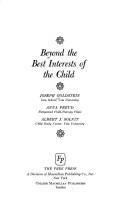
Goldstein, Anna Freud and Albert Solnit's enormously influential and much-criticised argument for the psychological parent and for the least detrimental alternative. Read it first here: whether you accept it or not, it shaped custody practice for a generation and every later book in this stage is arguing with it.

Mason's account of what the best-interests standard actually produces in litigation — unpredictability, high cost and an incentive to fight — with proposals for a more determinate rule. The direct rejoinder to the previous book, and best read immediately after it.

Mason's history of American child custody, from paternal ownership through the tender-years presumption to the current standard. Read it last in this stage: knowing that today's rule is the fourth in a sequence is the strongest argument against treating it as natural.
What the Law Is Actually For
IntermediateFinish with the arguments that family law's own categories are the problem, and with the demographic evidence about what American families are now doing — which is the ground any reform has to stand on.
▸ Study plan for this stage
Pace: 5–6 weeks. Family Law Reimagined is a legal-academic monograph and the hardest reading on the path — a fortnight, with its footnotes. Red Families v. Blue Families and The Marriage-Go-Round are social science written for a general reader and go faster, about a week to ten days each. All three are ar
- Hasday's canonical stories: that family law is separate from market and state, that it has steadily progressed, that it is local — each historically false and each doing work in real decisions
- How a false self-description of the field changes case outcomes, not just its scholarship
- Cahn and Carbone's two family systems: differing ages of marriage and first birth, differing relationships to contraception and education, mapped onto political geography
- Family law conflict as a conflict between those systems rather than as a straightforward moral disagreement
- Cherlin's finding that Americans both marry more and dissolve unions more than comparable rich countries, so children experience more household transitions
- Transition frequency, rather than family form, as the variable that shows up in child outcomes
- That all three books are advocates for a reading of the evidence, and each selects the evidence its argument needs
- Pick one of Hasday's canonical stories and show, from a case you briefed in stage two, where a court relied on it.
- Is Hasday's claim that family law is not separate from the market descriptive, normative, or both — and does it matter for her conclusion?
- How do Cahn and Carbone explain the fact that divorce rates are often higher where opposition to divorce is strongest?
- If Cherlin is right that transitions are what harm children, which of the doctrines from stage one and the standards from stage four should change, and how?
- Which of the reform proposals across this whole path — Starnes's buyout, Mason's determinate custody rule, Cherlin's implicit one — is most consistent with the demography, and which is least?
- Take the list of Hasday's canonical stories and test each against the casebook: find one opinion that relies on the story and one that contradicts it. If you cannot find the contradicting case, that is itself evidence for her.
- Reconstruct Cahn and Carbone's two-systems argument as a chart of the actual variables they use — age at marriage, age at first birth, educational attainment, contraception — then check two of their figures against the current data source they cite and note how much has moved.
- Using Cherlin's transition data, redesign the child-support and custody rules you learned in stage one for a population where a child sees three partnerships rather than one. Write the two paragraphs of statutory language.
- Write a closing memo of no more than three pages: what family law is currently for, what it appears to be doing instead, and the single change best supported by everything on this path. Cite specific books; note where you are relying on American data that would not carry to another jurisdiction.
Next up: This closes the path: you have the doctrine, the cases, the practice, the history of its central standard, and the demographic ground any reform of it would have to stand on.

The sharpest critique in the field: Hasday shows that family law tells itself a set of stories — that it is separate from market and state, that it has steadily progressed — which are historically false and which distort how cases are decided. Read it once you know the doctrine well enough to test the claim.

Cahn and June Carbone map two American family systems with different timing of marriage and childbearing, and show that the legal and political fights over family law are largely a conflict between them. Read after Hasday: it grounds the critique in demography rather than in doctrine.

The best closing book, and not a law book at all: Cherlin's finding that Americans both marry more and dissolve unions more than comparable countries, so children pass through more transitions. It is the empirical fact any custody or support regime has to be designed around, and it is the strongest argument that the doctrine in stage one is solving yesterday's problem.
Discussion
Keep reading
Paths that share books, cover the same subject, or open a related topic.