Understanding Islam: the best books to learn the faith and its history
This curriculum takes a beginner from zero familiarity with Islam all the way to a nuanced understanding of its theology, scripture, history, and civilizational legacy. Each stage builds on the last: first establishing core beliefs and vocabulary, then exploring the Prophet's life and the Quran directly, then diving into Islamic history and diversity, and finally engaging with scholarly and intellectual depth.
Foundations — What Islam Is
BeginnerGrasp the five pillars, core beliefs, basic vocabulary (Allah, Quran, hadith, sunnah, ummah), and the broad shape of Islam as a living religion practiced by 1.8 billion people.
▸ Study plan for this stage
Pace: 4–5 weeks, approximately 25–30 pages per day. Start with Armstrong's "Islam" (roughly 2–2.5 weeks), then move to Aslan's "No god but God" (2–2.5 weeks). This allows time for reflection and note-taking between chapters.
- The Five Pillars (shahada, salah, zakat, sawm, hajj) as the structural foundation of Islamic practice and belief
- The concept of tawhid (monotheism) and Allah as the central theological principle in Islam
- The Quran as Islam's foundational text, hadith and sunnah as interpretive guides, and their relationship to Islamic law and practice
- The historical development of Islam from Muhammad's revelation through the early caliphates, and how this shapes Islamic identity today
- The ummah (global Muslim community) as a unifying concept that transcends ethnicity, nationality, and sect
- Core Islamic beliefs: prophecy, the Day of Judgment, divine will (qadar), and the role of reason in faith
- The diversity within Islam (Sunni, Shia, Sufi traditions) and how different communities interpret and practice the religion
- Islam as a living, practiced religion with 1.8 billion adherents, not merely a historical or theological abstraction
- What are the Five Pillars of Islam, and why does each one matter both spiritually and communally?
- How do the Quran, hadith, and sunnah work together to guide Islamic belief and practice, and what are their different roles?
- What is tawhid, and how does the concept of monotheism shape Islamic theology and practice?
- How did Islam develop historically from Muhammad's time through the early caliphates, and what major divisions or schools of thought emerged?
- What is the ummah, and why is it significant as a unifying concept in Islam?
- What are the major branches or traditions within Islam (Sunni, Shia, Sufi), and how do they differ in belief or practice?
- Create a visual map of the Five Pillars: for each pillar, write its Arabic name, its English meaning, its spiritual significance, and one practical example of how a Muslim might observe it.
- Write a one-page summary of Muhammad's life and mission based on Armstrong's account, highlighting the key events that shaped Islam's early development.
- Compile a glossary of essential Islamic terms (Allah, Quran, hadith, sunnah, ummah, tawhid, shahada, salah, zakat, sawm, hajj, Sunni, Shia) with definitions in your own words and one sentence explaining why each term matters.
- Compare and contrast the Sunni and Shia branches: create a two-column chart noting their historical origins (from Aslan), key theological differences, and how these differences affect practice.
- Interview a Muslim (in person, by email, or via video call) about which of the Five Pillars is most meaningful to them and why. Write a 300–400 word reflection on what you learned.
- Read one chapter from the Quran (e.g., Surah Al-Fatiha, the opening chapter) and write a short reflection on its themes, then compare your reading with scholarly commentary from Armstrong or Aslan.
Next up: By mastering Islam's foundational beliefs, pillars, and historical development, you will be prepared to explore how these principles manifest across different cultures, regions, and historical periods—moving from "what Islam is" to "how Islam has been lived and interpreted across time and geography."
A concise, accessible, and sympathetic overview by one of the most respected Western writers on religion — the perfect first book to orient a beginner without overwhelming them.
Picks up where Armstrong leaves off, weaving the origins of Islam, the life of Muhammad, and the religion's evolution into a compelling narrative written explicitly for a general audience.
The Prophet — Life of Muhammad
BeginnerUnderstand the biography (sira) of Muhammad — his revelations, his community-building in Mecca and Medina, and why his life is the model (sunnah) for all Muslims.
▸ Study plan for this stage
Pace: 4–5 weeks, ~25–30 pages/day. Start with Armstrong (3–4 weeks, ~25 pages/day) for interpretive context, then Lings (1–2 weeks, ~30 pages/day) for detailed biographical narrative.
- Muhammad's early life in Mecca: orphanhood, merchant background, and the spiritual climate of pre-Islamic Arabia (Jahiliyyah)
- The revelation experience: the first encounter with Gabriel, the nature of Qur'anic revelation, and Muhammad's initial doubt and confirmation
- Early preaching in Mecca: the message of monotheism (tawhid), opposition from Quraysh, and the persecution of early believers
- The Hijra (migration) to Medina: the turning point that transformed Muhammad from a rejected preacher into a community leader and statesman
- Community-building in Medina: the Constitution of Medina, relationships with Jewish tribes, and the establishment of the first Islamic state
- Military conflicts and treaties: Badr, Uhud, the Trench, Hudaybiyyah, and the conquest of Mecca as expressions of both spiritual and political authority
- The Sunnah: why Muhammad's example (his actions, decisions, and character) became binding precedent for Islamic law and ethics
- Muhammad's character and legacy: his role as mercy to mankind, his treatment of women and the poor, and his final sermon as a summary of Islamic principles
- What were the major events and spiritual influences in Muhammad's early life before his prophethood, and how did they prepare him for his mission?
- How did Muhammad's message of tawhid (monotheism) challenge the religious and social order of Mecca, and why did the Quraysh oppose him?
- What was the Hijra, and why is it considered the pivotal moment that changed Muhammad's role from a preacher to a community and state builder?
- How did Muhammad establish and govern the Muslim community in Medina, and what was the significance of the Constitution of Medina?
- What is the Sunnah, and why do Muslims regard Muhammad's life and example as a binding model for their own conduct?
- How did Muhammad's approach to conflict—including both military campaigns and treaties—reflect his broader spiritual and political vision?
- Create a timeline of Muhammad's life (birth to death) marking key events: birth, first revelation, Meccan preaching period, Hijra, major battles, treaties, and the conquest of Mecca. Use both Armstrong and Lings to cross-reference dates and significance.
- Write a character sketch of Muhammad based on Armstrong's interpretive lens and Lings's biographical details. Include his personality traits, decision-making style, and relationships with family, companions, and opponents.
- Compare the Meccan and Medinan periods: create a two-column chart showing how Muhammad's message, methods, and role changed after the Hijra. What stayed constant?
- Analyze the Constitution of Medina (discussed in both texts): identify its key provisions and explain how it reflects Muhammad's vision of community governance and religious pluralism.
- Select three key moments of conflict (e.g., Badr, Uhud, Hudaybiyyah) and write a brief analysis of how Muhammad's decisions in each case balanced spiritual principles with political realities.
- Reflect on the concept of Sunnah: identify 3–4 specific examples from Muhammad's life (from either text) that illustrate why Muslims view his example as normative and binding for ethical conduct.
Next up: This stage establishes Muhammad's life as the foundational narrative and ethical model for Islam; the next stage will deepen your understanding of the Qur'an itself—the revelation he received—and how it shapes Islamic theology, law, and practice.

A focused, empathetic biography written for non-Muslim readers; having read Armstrong's short history first, the reader now has the context to appreciate Muhammad's life in detail.
A richly detailed biography drawn directly from classical Arabic sources, written by a Muslim scholar — gives the reader the 'insider' perspective and the spiritual texture of the Prophet's life.
The Quran — Islam's Sacred Text
IntermediateRead and understand the Quran itself — its structure, themes, literary character, and central messages — and know how Muslims relate to it as the literal word of God.
▸ Study plan for this stage
Pace: 6–8 weeks, ~25–30 pages/day (including both close reading and reflection time)
- The Quran's structure: surahs (chapters), ayahs (verses), and the distinction between Meccan and Medinan revelations
- The Quran as oral text: its rhythmic, poetic, and musical qualities (tajweed, rhyme, assonance) and how these shape meaning
- Central theological themes: monotheism (tawhid), prophethood, the Day of Judgment, divine mercy and justice, and guidance
- Narrative and literary character: how the Quran tells stories (qisas), uses metaphor and imagery, and repeats themes across surahs
- The Muslim relationship to the Quran: belief in its literal divine origin (wahy), memorization (hifz), and reverence in practice
- Historical and contextual understanding: how revelations responded to specific situations in 7th-century Arabia while carrying universal messages
- Intertextuality: the Quran's dialogue with earlier scriptures (Torah, Gospels) and its claims about prophetic continuity
- Interpretive approaches: the difference between literal reading, contextual understanding, and how classical and modern Muslims approach Quranic interpretation
- What is the structure of the Quran, and how do Meccan and Medinan surahs differ in style and content?
- How does the Quran's oral and poetic character (rhythm, rhyme, sound patterns) contribute to its meaning and memorability?
- What are the major theological themes of the Quran, and how do they interconnect across different surahs?
- How do Muslims understand the Quran as the literal word of God (wahy), and what practices (like hifz) reflect this belief?
- What role do narrative, metaphor, and repetition play in the Quran's literary structure and persuasive power?
- How does understanding the historical context of 7th-century Arabia help you grasp both the specific and universal dimensions of Quranic messages?
- Read Sells' introduction and selections in 'Approaching the Qur'an' aloud, paying attention to rhythm and sound; note which passages feel most musical and why
- Create a visual map of the Quran's structure: list 10–15 major surahs, mark them as Meccan or Medinan, and note their primary themes
- Select one surah (e.g., Surah Al-Fatiha, Surah Yusuf, or Surah Al-Baqarah) and read it in Abdel Haleem's translation multiple times; write a 2–3 page reflection on its central message and literary qualities
- Trace one theological theme (e.g., divine mercy, human responsibility, or the Day of Judgment) across 5–6 different surahs using Abdel Haleem's translation; note how the theme develops and repeats
- Compare how the same story (e.g., the story of Moses, Abraham, or Joseph) appears in different surahs; analyze what each version emphasizes and why repetition matters
- Write a short essay (3–4 pages) on how understanding the Quran as an oral text—meant to be heard and memorized—changes how you read it on the page
Next up: This stage equips you with direct familiarity with the Quran's text, structure, and theological core, preparing you to explore how Islamic law, theology, and spirituality are built upon and derived from Quranic foundations in subsequent stages.
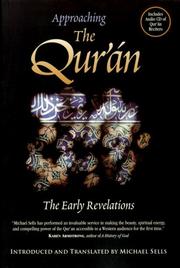
An ideal introduction to the Quran's earliest and most poetic suras, with expert commentary on its oral and literary power — essential preparation before reading the full text.

Abdel Haleem's Oxford World's Classics translation is widely praised for clarity and readability; after Sells, the reader is ready to engage the full scripture with informed eyes.
History, Civilization & Diversity
IntermediateTrace the spread of Islam from Arabia across the world, understand the Sunni–Shia split and other internal diversities, and appreciate Islam's golden age of science, philosophy, and art.
▸ Study plan for this stage
Pace: 8–10 weeks, ~40–50 pages/day. Read "The House of Wisdom" (weeks 1–3), "Destiny Disrupted" (weeks 4–7), and "The Great Theft" (weeks 8–10) with 2–3 days between books for reflection and note consolidation.
- The intellectual flowering of the Islamic Golden Age (8th–14th centuries) and the House of Wisdom's role in translating, preserving, and advancing Greek, Persian, and Indian knowledge
- Islam's rapid geographic expansion from Arabia to three continents and the political fragmentation that followed (Umayyad, Abbasid, and regional dynasties)
- The Sunni–Shia schism: its theological roots (succession of the Prophet), historical development, and lasting impact on Islamic civilization and politics
- The diversity of Islamic thought, law schools (madhabs), and mystical traditions (Sufism) that emerged across different regions and time periods
- The decline of the Islamic Golden Age and the factors (Mongol invasions, internal conflicts, economic shifts) that contributed to the loss of scientific and philosophical momentum
- How classical Islamic civilization shaped modern interpretations of Islam and the tension between traditional scholarship and contemporary reinterpretation of Islamic law and identity
- What was the House of Wisdom, and what role did it play in preserving and advancing human knowledge during the Islamic Golden Age?
- Trace the major phases of Islam's geographic expansion from the 7th century through the early Islamic empires. What were the key political structures that emerged?
- What theological and political disagreements led to the Sunni–Shia split, and how did this division shape Islamic civilization over time?
- How did the Islamic Golden Age produce advances in mathematics, astronomy, medicine, and philosophy, and what caused this period of intellectual flourishing to decline?
- What is the relationship between classical Islamic jurisprudence and law schools (madhabs) and modern debates about Islamic law and religious authority?
- How does understanding Islam's internal diversity—across regions, schools of thought, and time periods—challenge monolithic or essentialist views of 'Islam'?
- Create a timeline of major Islamic empires and dynasties (Umayyad, Abbasid, Fatimid, Seljuk, Ottoman) with key dates, capitals, and territorial extent. Annotate with major intellectual or cultural achievements for each.
- Write a comparative essay (1,500–2,000 words) explaining the theological and political origins of the Sunni–Shia split and its consequences for Islamic law, governance, and religious practice across different regions.
- Map the geographic spread of Islam from 632 CE to 1000 CE in stages (by century). For each region, note the primary vectors of expansion (conquest, trade, migration) and the resulting cultural synthesis.
- Research and summarize the contributions of three major figures from the Islamic Golden Age (e.g., Al-Ghazali, Ibn Sina, Al-Razi) mentioned in the books. Explain how their work bridged Islamic and Greek/Persian intellectual traditions.
- Debate or write a reflection on El Fadl's argument about the 'great theft' of Islamic law: What does he mean by the appropriation of Islamic jurisprudence, and how does this connect to the loss of intellectual pluralism after the Golden Age?
- Create a visual chart or infographic showing the major Islamic law schools (Hanafi, Maliki, Shafi'i, Hanbali, Ja'fari) with their geographic distribution, key methodologies, and historical periods of influence.
Next up: This stage establishes Islam's rich intellectual and political history, internal diversity, and the classical sources of Islamic thought—providing essential context for the next stage, which will likely examine how these historical traditions intersect with modern Islamic movements, reform, and contemporary challenges.
Brings to life the Islamic golden age of learning in Baghdad and its transmission to Europe — shows Islam as a civilization, not just a religion, and builds pride and context for what follows.
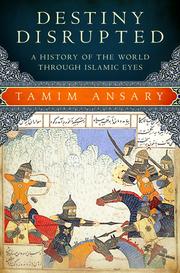
A sweeping history of the world told from an Islamic perspective, covering the caliphates, the Crusades, colonialism, and modernity — essential for understanding how Muslims see their own history.
A Muslim scholar's authoritative account of the internal struggle between moderate and puritanical Islam, giving the reader a sophisticated map of contemporary Islamic diversity and debate.
Depth & Scholarship — Theology and Thought
ExpertEngage with Islamic theology, law (sharia), mysticism (Sufism), and modern intellectual challenges at a scholarly level — understanding Islam from the inside as a complete system of thought.
▸ Study plan for this stage
Pace: 8–10 weeks, ~40–50 pages/day with 2–3 days/week for reflection and note-taking
- Islamic theological cosmology: the relationship between God (tawhid), creation, and human consciousness as presented in Murata's systematic framework
- The metaphysical structure of Islamic thought: how Sufism, jurisprudence, and theology form an integrated whole rather than separate disciplines
- Sharia as a living legal and ethical system: its principles, schools of interpretation, and internal diversity across Islamic history
- The role of reason and revelation in Islamic intellectual tradition: how Islamic scholars reconcile rational inquiry with scriptural authority
- Modern tensions in Islamic thought: how contemporary Muslims navigate tradition, secularism, tolerance, and pluralism as discussed in Harris's dialogue
- The concept of Islamic reform and reinterpretation: what it means to engage Islam critically from within versus from outside perspectives
- Sufism as experiential theology: the mystical dimension of Islamic practice and its relationship to orthodox doctrine
- Epistemology in Islamic scholarship: how Muslims establish knowledge claims about theology, law, and ethics
- How does Murata explain the relationship between tawhid (divine unity) and the structure of creation? What role does human consciousness play in this cosmology?
- What are the major schools of Islamic jurisprudence (madhabs) discussed in Murata, and how do they differ in their approach to deriving law from sources?
- How does Murata present Sufism not as a deviation from Islam but as an integral expression of Islamic theology and practice?
- What are the key tensions Harris identifies between traditional Islamic thought and modern secular values, and what does he propose as a path forward?
- According to Harris, what role should reason and critical thinking play in contemporary Islamic theology and practice?
- How do Murata and Harris differ in their assessment of Islam's compatibility with modernity, tolerance, and pluralism?
- Create a detailed concept map of Islamic cosmology based on Murata's framework, showing the relationships between God, creation, human beings, and knowledge
- Comparative analysis: chart the four major madhabs (Hanafi, Maliki, Shafi'i, Hanbali) on how they approach a specific legal question (e.g., interest in banking, women's testimony) using Murata's explanations
- Write a 2,000-word essay: 'How Sufism Functions as Theology in Murata's Vision' — ground it in specific passages from The Vision of Islam
- Dialogue reconstruction: after reading Harris, write a response essay addressing his critiques from the perspective of classical Islamic theology as presented by Murata
- Close reading exercise: select one chapter from Murata on a theological concept (e.g., divine attributes, human free will) and annotate it with marginal notes identifying: (a) key claims, (b) scriptural/philosophical sources cited, (c) connections to other Islamic disciplines
- Debate preparation: identify 3–4 specific points of tension between Harris's modernist critique and Murata's traditional framework, then research contemporary Muslim scholars' responses to similar critiques
Next up: This stage equips you with both the internal logic of Islamic thought (via Murata's systematic theology) and critical awareness of its modern challenges (via Harris), positioning you to engage with contemporary Islamic movements, reform debates, and the lived experience of Muslims navigating tradition and modernity in the next stage.

A systematic and beautifully organized guide to Islamic theology, ethics, and spirituality written by two leading scholars — the closest thing to a complete intellectual map of the tradition.

A structured dialogue between a critic and a Muslim reformer (Maajid Nawaz) that forces the reader to grapple with the hardest contemporary questions about Islam — a rigorous capstone that tests and sharpens everything learned.
Discussion
Keep reading
Paths that share books, cover the same subject, or open a related topic.