Foundation Reading Order: Publication or Chronological?
This curriculum guides you through Isaac Asimov's interconnected universe in the most rewarding reading order: starting with the original Foundation trilogy to build your footing in the Galactic Empire, then expanding into Asimov's sequels and prequels, and finally tracing the deep connections back to his Robot novels. Each stage builds the narrative and thematic vocabulary needed to fully appreciate the next, culminating in a unified understanding of Asimov's grand, interlocking future history.
The Original Trilogy — Start Here
BeginnerUnderstand the core concept of psychohistory, the fall of the Galactic Empire, and Hari Seldon's plan — the bedrock of everything that follows.
▸ Study plan for this stage
Pace: 8–10 weeks total (~25–30 pages/day, 5 days/week): spend weeks 1–3 on Foundation, weeks 4–6 on Foundation and Empire, and weeks 7–10 on Second Foundation — leaving buffer days for reflection and re-reading pivotal Seldon Crisis scenes.
- Psychohistory: the fictional mathematical science that predicts the broad behavior of large populations, as conceived and applied by Hari Seldon throughout all three books
- The Seldon Plan: the 1,000-year blueprint designed to shorten the Dark Age between Galactic Empires from 30,000 years to just 1,000, introduced in Foundation and tested across all three novels
- Seldon Crises: the pivotal turning-point moments — political, economic, or military — that the Plan anticipates and that the protagonists must navigate correctly, appearing in every book
- The Encyclopedia Galactica as a framing device and symbol of preserved knowledge, used repeatedly as an in-universe source of epigraphs that signal Asimov's ironic, retrospective narrative voice
- The First Foundation (Terminus): the overt, science-and-technology-based arm of the Plan, whose rise from a small encyclopedia outpost to a regional power is the spine of Foundation
- The Mule: the unforeseen mutant conqueror in Foundation and Empire whose existence represents the single greatest threat to the Seldon Plan — the unpredictable individual versus statistical determinism
- The Second Foundation: the hidden, mind-science counterpart to the First, whose location and nature form the central mystery of Second Foundation and reveal the Plan's true safeguard
- Asimov's episodic / fix-up structure: understanding that each book is composed of originally separate short stories or novellas unified by theme, which explains the time jumps and shifting casts of characters
- In your own words, what is psychohistory, and why does it require a large population to function — and what does The Mule's existence reveal about its core limitation?
- Trace the arc of at least three Seldon Crises across Foundation and Foundation and Empire: what was the crisis, who resolved it, and what solution did they choose?
- How does the First Foundation's source of power shift across the three books (from encyclopedia project → religious authority → mercantile dominance), and what does each shift say about how civilizations maintain control?
- Why is the Mule considered an existential threat to the Seldon Plan in a way that the Empire's military campaigns in Foundation are not?
- By the end of Second Foundation, what is revealed about the true purpose and location of the Second Foundation, and how does this reframe events in the earlier two books?
- How does Asimov use the Encyclopedia Galactica epigraphs as a narrative device, and what effect does knowing the 'future history' outcome have on the tension of each story?
- Timeline mapping: After finishing each book, draw a hand-written timeline of the Galactic Era — mark the fall of Trantor, each Seldon Crisis, the Mule's conquest, and the key events of Second Foundation. Annotate each event with the in-universe date and the characters involved.
- Seldon Crisis analysis journal: For each crisis you encounter, write a short paragraph (5–8 sentences) identifying (a) the nature of the threat, (b) the solution chosen, and (c) whether Seldon's hologram confirms or subverts your expectations — compare your entries across all three books at the end.
- Character motivation map: Create a simple diagram connecting major characters (Salvor Hardin, Hober Mallow, the Mule, Bail Channis, Arkady Darell) to their goals and their relationship to the Plan — note who works with it, against it, or unknowingly for it.
- The Mule debate: Write a one-page argument either defending or refuting this claim: 'The Mule proves that psychohistory is fundamentally flawed, not merely incomplete.' Use specific evidence from Foundation and Empire and Second Foundation.
- Epigraph close-reading: Select three Encyclopedia Galactica epigraphs from across the trilogy and analyze each one: what does it tell you before the chapter begins, and how does dramatic irony shape your reading of the scene that follows?
- Comparative reflection essay (500 words): After finishing Second Foundation, revisit the opening chapter of Foundation and write about how your understanding of Hari Seldon's plan changed — what did you miss on first read that now seems obvious?
Next up: Completing the Original Trilogy gives you a firm grasp of the Plan's architecture and its vulnerabilities, which is the essential foundation for tackling the prequels and sequels — where Asimov expands, complicates, and ultimately challenges everything Seldon built.

The starting point of the entire saga, introducing psychohistory, Hari Seldon, and the First Foundation. Reading this first gives you the essential vocabulary and stakes for all subsequent books.
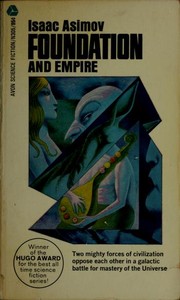
Raises the tension by introducing the Mule, a mutant who threatens to derail Seldon's Plan entirely — a pivotal dramatic turn you need to experience before moving on.

Completes the original trilogy by revealing the secret of the Second Foundation and resolving the Mule crisis, giving you a satisfying arc and the thematic grounding for the later sequels.
The Foundation Sequels — The Story Continues
BeginnerFollow the story centuries further, encounter Gaia and the concept of a collective consciousness, and see how Asimov began weaving his Robot universe into the Foundation saga.
▸ Study plan for this stage
Pace: 6–8 weeks total: spend the first 3–4 weeks on Foundation's Edge (~25–30 pages/day across ~366 pages), then 3–4 weeks on Foundation and Earth (~25–30 pages/day across ~500 pages). Read each book in order without skipping ahead, as Foundation and Earth picks up immediately where Foundation's Edge ends
- Gaia — the planet-wide collective consciousness where every living and non-living thing shares a unified mind, introduced in Foundation's Edge
- Galaxia — the long-term vision of expanding Gaia's collective consciousness to encompass the entire galaxy, and the philosophical debate around individuality vs. unity it provokes
- The Second Foundation's secret role — the revelation in Foundation's Edge that the Second Foundation has been quietly steering Seldon's Plan from Trantor, and the power struggle this creates
- Trevize's Choice — Golan Trevize's unexplained but pivotal decision at the end of Foundation's Edge to endorse Galaxia, and his quest in Foundation and Earth to understand why he made it
- The merging of the Robot Universe — Foundation and Earth introduces Solaria, R. Daneel Olivaw, and the ancient Earth, explicitly connecting Asimov's Robot novels to the Foundation saga
- R. Daneel Olivaw's hidden role — the revelation that the positronic robot Daneel has been secretly guiding humanity for 20,000 years, acting as the true architect behind both the Seldon Plan and Gaia
- Earth's radioactivity and lost origins — the search for humanity's home planet and the discovery that Earth is lethally radioactive, symbolizing humanity's forgotten and suppressed past
- Psychohistory's limits — both books challenge whether Seldon's mathematical Plan is truly sufficient, raising the question of whether a deeper, non-mathematical force (Daneel's Zeroth Law reasoning) is actually steering history
- By the end of Foundation's Edge, three forces are competing to control the future: the First Foundation, the Second Foundation, and Gaia. What are each faction's goals, and why does Trevize ultimately side with Gaia?
- What is Galaxia, and what is the central ethical tension it creates — what does humanity stand to gain, and what does it stand to lose, if Galaxia is achieved?
- In Foundation and Earth, Trevize, Pelorat, and Bliss travel to several worlds including Comporellon and Solaria. What does each stop reveal about humanity's deep past and the dangers of extreme social choices?
- Who is R. Daneel Olivaw, what has he been doing for 20,000 years, and how does his existence reframe everything that happened in the original Foundation trilogy?
- How does Foundation and Earth connect the Robot novels to the Foundation saga — what specific links (characters, places, history) does Asimov use to unify his two universes?
- After finishing both books, do you think Trevize made the right choice endorsing Galaxia? Use evidence from both novels to defend your position.
- Faction map: Draw a diagram with three columns — First Foundation, Second Foundation, Gaia — and fill in each faction's leadership, home base, method of control, and ultimate goal as revealed in Foundation's Edge. Update it as you read Foundation and Earth when new information emerges.
- Trevize's journey log: Keep a running list of every planet or location visited in Foundation and Earth, noting in one sentence what Trevize learns or discovers at each stop. By the end, review the list and write a short paragraph on what the journey as a whole reveals about humanity's history.
- The Galaxia debate: Write a one-page argument FOR Galaxia and a one-page argument AGAINST it, drawing only on scenes and dialogue from the two books. Then write a final sentence stating your own verdict and why.
- Character connection chart: When R. Daneel Olivaw is revealed in Foundation and Earth, map out his connections — list at least three events or characters from the original trilogy that can now be reinterpreted in light of Daneel's secret influence.
- Zeroth Law analysis: Asimov's Three Laws of Robotics are subtly referenced through Daneel's reasoning. Write a short explanation (3–5 sentences) of what the 'Zeroth Law' is, how Daneel uses it to justify his actions, and whether you find his logic convincing or dangerous.
- Before-and-after reflection: Before starting Foundation's Edge, write 3–5 sentences on what you think the Seldon Plan is and who controls it. After finishing Foundation and Earth, revisit what you wrote and note what the books overturned or complicated about your original understanding.
Next up: Having seen Asimov stitch his Robot universe into the Foundation saga through Daneel and Gaia, the reader is now primed to explore the Robot and Empire novels — the deeper prehistory that gives full context to Daneel's 20,000-year mission and the origins of psychohistory itself.
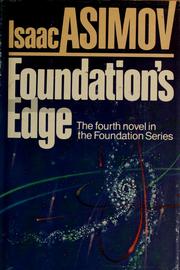
Asimov's first return to the series after 30 years, set 500 years after the original trilogy — it introduces Gaia and begins the explicit bridge to the Robot books, so it must be read before the finale.

Directly continues Foundation's Edge and sends the protagonist on a search for humanity's origin planet, fully merging the Foundation and Robot universes — the payoff requires having read the prior sequels.
The Robot Novels — The Hidden Foundation
IntermediateUnderstand the Robot stories that secretly underpin the entire Foundation universe, including the origins of psychohistory and the long-lived robots who quietly shaped galactic history.
▸ Study plan for this stage
Pace: 8–10 weeks total: ~2.5–3 weeks per novel (~25–30 pages/day). Read each book to completion before moving to the next, pausing at the end of each to reflect before continuing.
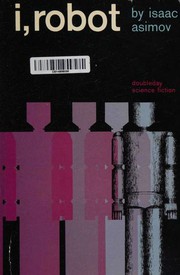
- The Three Laws of Robotics and their ambiguities — pay close attention to how Lije Baley and R. Daneel Olivaw repeatedly expose edge cases and conflicts between the Laws across all three novels
- Human–robot partnership and trust: the evolving relationship between Baley (a robot-skeptic Earthman) and Daneel (a humaniform robot) as a microcosm of humanity's long-term dependence on robotic guidance
- Agoraphobia vs. claustrophobia as social metaphors: Earth's enclosed Cities in 'The Caves of Steel' versus Solaria's extreme open-space isolation in 'The Naked Sun' versus Aurora's middle-ground society in 'The Robots of Dawn' — each world represents a different possible future for humanity
- Spacer vs. Earthman civilizations: the political, demographic, and philosophical tensions between the long-lived, robot-dependent Spacers and the teeming, robot-fearing Earthmen, which foreshadow the eventual collapse Hari Seldon will one day model
- The concept of Galactic settlement and the 'Zeroth Law' seed: by 'The Robots of Dawn,' R. Giskard Reventlov begins reasoning toward a higher law — the welfare of humanity as a whole over any individual — which is the secret philosophical engine behind the entire Foundation Plan
- Psychohistory's hidden origins: the nudging of human history by long-lived robots (especially Daneel and Giskard) is the unspoken precursor to Hari Seldon's mathematical formalization — these novels show the raw, intuitive version of what psychohistory will become
- Detective fiction as a structural lens: Asimov uses the murder-mystery format in all three novels to force rigorous logical deduction, mirroring the scientific method and training the reader to think about cause, motive, and systemic consequence
- Solaria's extreme robot-to-human ratio as a cautionary extreme: the near-total replacement of human labor and contact on Solaria prefigures the danger of over-reliance on robots and the eventual stagnation of Spacer civilization
- By the end of 'The Caves of Steel,' why does Lije Baley change his mind about robots, and what does his partnership with R. Daneel Olivaw reveal about human prejudice and fear of technological displacement?
- In 'The Naked Sun,' how does Solarian society — with its extreme isolation, low population, and vast robot workforce — serve as a warning about what happens when a civilization optimizes entirely for comfort and avoidance of human contact?
- Across all three novels, how do the Three Laws of Robotics create as many problems as they solve? Identify at least one specific scene from each book where a Law conflict drives the plot.
- In 'The Robots of Dawn,' what is the significance of R. Giskard Reventlov's emerging ability and his private conversations with R. Daneel? How does this moment quietly set the stage for everything that follows in the broader Foundation universe?
- How does Asimov use the contrast between Earth, the Spacer worlds (Solaria, Aurora), and the idea of new settlement worlds to argue for a specific vision of humanity's healthiest future — and how does that argument connect to the Foundation's eventual mission?
- What does the murder-mystery structure in each novel contribute beyond plot? How does it reflect Asimov's broader belief in reason, empiricism, and the power of logical systems to decode seemingly chaotic events?
- **Three Laws Stress-Test Log:** As you read, keep a running journal. Each time a robot's behavior seems odd or a Law appears to conflict with another, write down the scene, which Law(s) are in tension, and how it resolves. By the end of 'The Robots of Dawn' you should have 10–15 entries that collectively reveal the Laws' systemic weaknesses.
- **World-Building Comparison Chart:** Create a three-column table (Earth / Solaria / Aurora). For each world, track: population size, robot-to-human ratio, attitude toward robots, attitude toward open space, social structure, and long-term viability. Use only evidence from the three novels. Write a one-paragraph conclusion about which society Asimov implicitly endorses and why.
- **Baley's Character Arc Essay (500–700 words):** Trace Lije Baley's psychological journey across all three books — from his claustrophobic fear and robot-skepticism in 'The Caves of Steel' to his deliberate exposure to open sky by the end of 'The Robots of Dawn.' Argue whether his arc is primarily personal growth, political awakening, or both.
- **The Zeroth Law Thought Experiment:** After finishing 'The Robots of Dawn,' write a one-page reflection in Giskard's voice: what reasoning process led him to conclude that humanity's collective welfare can override an individual human's safety? Then write a one-paragraph counter-argument from Baley's perspective. This exercise directly prepares you for the moral architecture of the later Foundati
- **Mystery Reconstruction:** Choose one of the three novels and, without re-reading it, reconstruct the mystery's solution in writing: the crime, the false leads, the key clue Baley identifies, and the logical chain to the conclusion. Then flip back through the book to check your accuracy. This tests both plot retention and your grasp of Asimov's deductive method.
- **Hidden History Timeline:** Draft a speculative timeline showing how the events and decisions in these three novels (Daneel and Giskard's emerging agenda, Baley's push for new settlement, Spacer decline) could plausibly lead, over thousands of years, to the galactic civilization Hari Seldon will one day study. Use only what is established in these three books — no outside spoilers required.
Next up: Having established who R. Daneel Olivaw and R. Giskard Reventlov are, what they are secretly capable of, and why they have committed themselves to guiding humanity's future, the reader is now primed to encounter the Foundation series proper — where those same millennia-long robotic machinations finally crystallize into Hari Seldon's psychohistory and the grand Plan those hidden hands have been bui

The first Elijah Baley/R. Daneel Olivaw mystery novel, introducing the robot detective who turns out to be one of the most important figures in the entire Asimov universe — start here to meet him properly.

The second Baley/Daneel novel, deepening the social tensions between Earth, the Spacer worlds, and robots that will echo across the Foundation prequels.
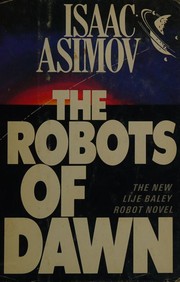
The third Baley/Daneel novel and the direct narrative bridge to the Foundation prequels — it introduces Giskard and the concept of zeroth-law robotics, which is essential context for the Prequel stage.
The Foundation Prequels — The Man Behind the Plan
IntermediateReturn to the very beginning of the saga to understand how Hari Seldon developed psychohistory, and see the full sweep of Asimov's unified future history from its earliest roots.
▸ Study plan for this stage
Pace: 4–5 weeks total: spend ~2.5 weeks on *Prelude to Foundation* (~25–30 pages/day) and ~2 weeks on *Forward the Foundation* (~25–30 pages/day), leaving a few days at the end for reflection and review exercises.
- The origins of psychohistory: how Hari Seldon's initial 'purely theoretical' paper at the Decennial Convention sets the entire saga in motion, and the long road from abstract mathematics to a working predictive science
- Trantor as a living setting: the planet-wide city's sectors, social stratification, and political machinery serve as both backdrop and crucible for Seldon's intellectual development in *Prelude to Foundation*
- The role of Chetter Hummin / Eto Demerzel: understanding how this enigmatic guide shapes Seldon's journey and what his true identity reveals about the deep continuity of Asimov's future history
- Psychohistory's core requirements: why the science demands enormous populations, statistical anonymity, and subjects unaware of the predictions — constraints Seldon wrestles with throughout both novels
- The Seldon Plan's human cost: *Forward the Foundation* chronicles the deaths of Seldon's closest companions (Dors Venabili, Yugo Amaryl, Raych) and shows how personal tragedy is inseparable from the Plan's completion
- Galactic decline as a slow-motion catastrophe: both books dramatize the Empire's creeping decay — political corruption, intellectual stagnation, and social fragmentation — making the need for the Foundation viscerally concrete
- Yugo Amaryl's mathematical contributions: his partnership with Seldon illustrates the collaborative, iterative nature of scientific breakthroughs and the division between visionary and technical genius
- Legacy and mortality: *Forward the Foundation* ends with an aged, isolated Seldon recording the Time Vault messages, tying the prequels directly to the events of the original *Foundation* trilogy
- By the end of *Prelude to Foundation*, what has Seldon actually achieved mathematically, and what does he still believe is impossible — and how does that gap drive the plot of *Forward the Foundation*?
- What is the significance of Chetter Hummin's true identity, and how does Asimov use that revelation to unify the Robot and Foundation series into a single future history?
- How do the deaths of Dors, Yugo, and Raych in *Forward the Foundation* each represent a different kind of sacrifice required to bring the Seldon Plan to fruition?
- In what concrete ways do both novels depict the Galactic Empire's decline, and why is it important that this decay is gradual and bureaucratic rather than sudden and dramatic?
- What are the key mathematical and sociological constraints that Seldon identifies as necessary for psychohistory to work, and which of those constraints create the most ethical tension?
- How does reading the prequels *after* the original trilogy (as Asimov wrote them) change or deepen your understanding of the Seldon who appears in the Time Vault hologram recordings?
- **Psychohistory Design Doc:** After finishing *Prelude to Foundation*, write a one-page 'specification sheet' for psychohistory as Seldon understands it at that point — list its assumptions, requirements, and known limitations. Then update the document after finishing *Forward the Foundation* to show how the science evolved.
- **Sector Map of Trantor:** Sketch a rough annotated map (or diagram) of the Trantorian sectors visited in *Prelude to Foundation* (Streeling, Mycogen, Dahl, Wye, the Imperial Sector, etc.), noting what social or political idea each sector embodies and what Seldon learns in each one.
- **Character Eulogy:** Choose one character who dies in *Forward the Foundation* (Dors, Yugo, or Raych) and write a 300–400 word in-universe eulogy from Seldon's perspective, drawing only on events depicted in the two books. This forces close re-reading of their arcs.
- **Decline Tracker:** As you read *Forward the Foundation*, keep a running log of every specific sign of Imperial decay mentioned — political, economic, cultural, or scientific. At the end, categorize your list and write two sentences on which category Asimov emphasizes most and why.
- **Continuity Bridge Essay:** Write a short (400–500 word) comparative essay examining one scene or concept from *Prelude to Foundation* or *Forward the Foundation* that directly foreshadows or explains something from the original *Foundation* trilogy, arguing how the prequels enrich (or complicate) that earlier moment.
- **Seldon's Timeline:** Construct a chronological timeline of Hari Seldon's life across both books, marking his age, key intellectual milestones, and personal losses. Use this to visualize how Asimov paces the decades-long arc of a single human life against the centuries-long arc of civilizational collapse.
Next up: By grounding readers in Seldon's full biography and the painstaking birth of psychohistory, this stage transforms the Seldon Plan from an abstract premise into a deeply personal legacy — making the political crises, encyclopedists, and traders of the original *Foundation* trilogy feel like the living continuation of one man's life's work.
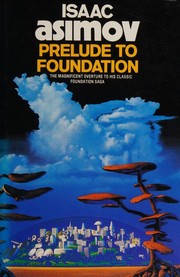
Follows a young Hari Seldon as he first arrives on Trantor and begins conceiving psychohistory — best read after the Robot novels so you can recognize the hidden figures guiding him.
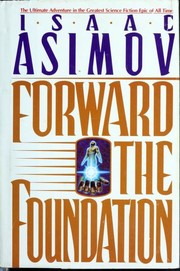
Asimov's final novel, covering Seldon's later life as he completes the Plan — reading it last in the prequels gives it the emotional weight of a farewell, both for Seldon and for Asimov himself.
Discussion
Keep reading
Paths that share books, cover the same subject, or open a related topic.