The Shadowhunter Chronicles Reading Order: Where to Start
Cassandra Clare has written four interlocking series set in the same world across three centuries, and the question every new reader asks is whether to read them one series at a time or interleaved. Read them in publication order. It is not a compromise — Clare wrote the Victorian Infernal Devices while The Mortal Instruments was still running, and its reveals are timed against what a reader of the modern books already knows. Publication order slots Clockwork Angel in straight after City of Glass, which is exactly where the recommendations converge anyway. The chronological alternative, starting in 1878 with Clockwork Angel and working forward, is a legitimate reread and a terrible first read: The Infernal Devices ends on a revelation that City of Heavenly Fire is built to pay off, and taking it first defuses both.
Start Here: The Mortal Instruments
BeginnerMeet Clary, Jace and the New York Institute, and get through the original trilogy that the whole world was built out of.
▸ Study plan for this stage
Pace: Four to five weeks for roughly 1,530 pages. City of Bones is 512, City of Ashes 480, City of Glass 541 — all fast-moving YA that reads at 60 to 80 pages an hour once you have the vocabulary. Read them consecutively; the trilogy was written as one arc and the gaps between the volumes are cliffhangers
- Nephilim basics — Shadowhunters, runes and the stele, seraph blades, the Institutes, and the Clave as governing body. City of Bones front-loads all of it and never re-explains any of it across the other fourteen books
- The Downworlder categories: vampires, werewolves, warlocks and faeries, and the Accords that supposedly bind them to the Clave. The politics of that arrangement drive every later series
- The three Mortal Instruments themselves — Cup, Sword and Mirror — and what each does. The trilogy is structured as a hunt for them in order
- Valentine Morgenstern and the Circle: a Shadowhunter supremacist movement and the generation-old civil war that every adult character in the series is a survivor of
- Idris and Alicante in City of Glass — the Shadowhunter homeland finally shown, which converts the Clave from an offstage authority into a place with a politics
- The Lightwood, Fairchild, Herondale and Blackthorn family names, which recur across three centuries. Start noticing them here; they are the connective tissue of the entire Chronicles
- The parabatai bond, introduced lightly here and load-bearing in The Dark Artifices — two Shadowhunters oath-bound, with a prohibition attached that becomes the engine of a later series
- What is a Shadowhunter, what is the Clave, and what does the Accords arrangement actually require of Downworlders?
- What does Valentine want, and how do his stated aims differ from what his followers seem to think they signed up for?
- City of Glass was written as the end of the series. What does it resolve, and what does it leave deliberately open?
- Which family names have you seen more than once by the end of City of Glass, and which characters carry them?
- The first trilogy sets up a hidden world beside the ordinary one. What are the rules of visibility — glamours, the Sight, mundanes — and where do they get bent?
- Start a family tree on paper, adding every surname as it appears with the character's era beside it. You will be adding to this for fifteen books and it is the single most useful thing you can do in this path.
- Keep a running glossary of invented terms from City of Bones — parabatai, mundane, Forsaken, warlock mark, Silent Brothers. Clare assumes fluency by book two.
- After City of Glass, write down which plot threads you think are finished. Check the list after City of Fallen Angels; the gap between the two is the story of how a trilogy became a nine-book run.
- Compare the opening chapter of City of Bones with the opening chapter of City of Glass. The improvement over two years is measurable and worth seeing, because it is the reason to keep going.
Next up: City of Glass closes the original arc and is exactly where Clare published the first Victorian book, so the next stage steps back to 1878 with the family names now meaning something — which is the whole design.

Book one of everything. A teenager watches a murder nobody else can see and discovers a hidden order of demon hunters. The prose is at its most 2007 here — push through; the series improves markedly.
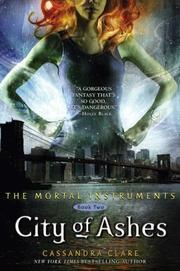
Second, escalating the Valentine plot and committing to the most uncomfortable thread in the first trilogy. Read straight on.
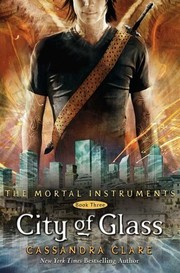
Third, in Idris, and originally written as the end of the series — it resolves nearly everything. This is the natural pause, and the point at which the Victorian books enter the sequence.
Victorian London Enters
IntermediateStart The Infernal Devices exactly where it was published, and learn to read the two eras against each other.
▸ Study plan for this stage
Pace: Four to five weeks for about 1,420 pages. Clockwork Angel is 481, City of Fallen Angels 434, Clockwork Prince 502. The alternation between 1878 London and modern New York is deliberate and you should keep it — the point of publication order is that Clare wrote each book knowing what her readers had
- The London Institute in 1878 and how differently the Clave operates in the Victorian era — more rigid, more class-bound, and with Downworlder relations on far worse terms
- Tessa Gray, whose ability to change shape has no precedent in the world's established rules, and the question of what she is, which anchors the whole trilogy
- Will Herondale and Jem Carstairs as parabatai, and the trilogy's central triangle — handled with considerably more care and more genuine tragedy than the modern books manage with theirs
- The Magister and the automatons: a steampunk antagonist that lets Clare write about industrialisation as a Shadowhunter problem
- Reading the eras against each other. Clockwork Angel is a period romance with Victorian conventions — courtship, chaperonage, letters — and the contrast with Clary's New York is part of the pleasure
- City of Fallen Angels as a bridge: it reopens the Mortal Instruments with a new and smaller-scale antagonist, shifts weight onto Simon, and plants the alliance that carries through to City of Heavenly Fire
- The Silent Brothers and the Iron Sisters, whose roles are far better explained in the Victorian books than in the modern ones
- Recurring immortals — Magnus Bane above all — as the mechanism by which the two eras are directly connected
- What is Tessa's power, and why does it break the rules the first trilogy established about what Shadowhunters and Downworlders can be?
- How does the Clave of 1878 differ from the Clave of the modern books, and what does the comparison suggest Clare thinks about institutions?
- Which characters or names in Clockwork Angel and Clockwork Prince did you recognise from the first trilogy, and what does recognising them add that a chronological reader would not have?
- City of Fallen Angels restarts a finished story. What new problem does it introduce, and what is it setting up for the final three modern books?
- The Victorian triangle and the modern one are structurally similar. Why does the Victorian version work better, and what is Clare doing differently with it?
- Add the 1878 cast to your family tree, drawing the lines that connect them to the modern surnames. Several of those lines are the reveals the later books depend on.
- Write 200 words on what a chronological-order reader would know at this point that you do not, and what you know that they do not. This is the clearest way to see why publication order is recommended.
- Track Magnus Bane across both eras and note what he says about each. He is the only character who has seen all of it, and Clare uses him as the reader's proxy.
- After City of Fallen Angels, list what it actually accomplished for the larger plot. It is a more useful book than its reputation, and making the list is how you find that out.
Next up: Both series are now running in parallel toward their finales, and the next stage takes them in the exact order Clare published them — which matters, because one of the two endings is written to be read after the other.
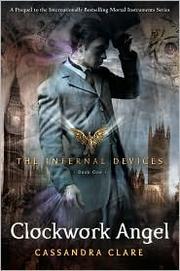
Published fourth, and the best book Clare had written to that point: 1878, the London Institute, and a girl who can change her shape. Read here rather than first — the family names mean something to you now, which is the entire design.
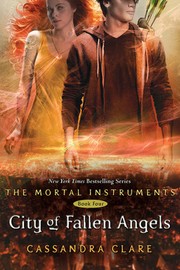
Published fifth, restarting The Mortal Instruments after its apparent ending. Weaker than what surrounds it and often called the series' low point, but it sets up the final three modern books.
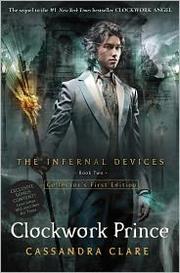
Published sixth, and the middle of the Victorian trilogy — the triangle at the heart of the series, handled with more care than the modern books manage. Alternating with the New York books is deliberate; keep alternating.
Both Endings at Once
IntermediateClose the two original series in the order Clare closed them, so the connective revelations land in the right sequence.
▸ Study plan for this stage
Pace: Six weeks for roughly 1,800 pages, and City of Heavenly Fire alone is 725. The order in this stage is the least negotiable thing in the path: City of Lost Souls, then Clockwork Princess, then City of Heavenly Fire. Clockwork Princess must be finished before you open City of Heavenly Fire, which refe
- City of Lost Souls as the most plot-dense modern book: the alliance of the core cast becomes an actual working unit, and the terms of the finale are set
- Clockwork Princess resolving the Victorian trilogy, including an epilogue that is the passage readers most often name as the best thing Clare has written and the most spoiled thing in the fandom
- The connective revelation between the two series — Clare wrote the Victorian ending to be paid off in the modern finale, and reading them the other way round defuses both
- City of Heavenly Fire as a hinge rather than a conclusion: it ends The Mortal Instruments and simultaneously introduces the Blackthorn children and Emma Carstairs, who carry the next series
- The parabatai prohibition, stated fully here, which becomes the central problem of The Dark Artifices. Note exactly how it is phrased
- Immortality and its cost as the tradition running through both endings — the Victorian trilogy's resolution and Magnus's arc are the same theme from two directions
- Where the modern series lands on Downworlder politics, and how much has actually changed since the Accords were described in book one
- What does the alliance formed in City of Lost Souls consist of, and which of those relationships survives into the later series?
- Clockwork Princess ends with a choice that reframes the whole Victorian trilogy. What does it say about how Clare weighs love against duty, and does the first trilogy agree?
- Where exactly does City of Heavenly Fire reference the end of Clockwork Princess, and what would that moment feel like if you had read them in the other order?
- Which characters introduced in City of Heavenly Fire's final act are clearly being set up for the next series, and what have you already been told about them?
- State the parabatai prohibition precisely as the books state it. What is forbidden, and what is the stated consequence?
- Before opening City of Heavenly Fire, write down what you think the Clockwork Princess epilogue will turn out to matter for. Check it afterwards.
- Update the family tree with everything the two finales establish. Several long-running questions about who descends from whom are answered in these three books.
- Write 300 words on the Clockwork Princess ending immediately after finishing it and before reading any fandom discussion. It is the single most spoiled and most argued-about passage in the Chronicles and a first-hand reaction is worth having.
- List every unresolved thread left standing at the end of City of Heavenly Fire. Almost all of them are picked up in the next two stages, and having the list makes the connections visible.
- Reread the first chapter of City of Bones now. Seven books on, the world it introduces reads completely differently, and this is the cheapest demonstration of how much has been built.
Next up: The two original series are finished and their strongest characters have handed the story to a new cast in Los Angeles, where the parabatai rule you have just had spelled out becomes the whole problem.

Published seventh, and the most plot-dense modern book. Seventh: it sets the board for the finale and introduces the alliance that carries into every later series.

Published eighth, ending The Infernal Devices with the epilogue readers most often name as the best thing Clare has written. It must come before City of Heavenly Fire, which references it directly.

Published ninth, ending The Mortal Instruments and introducing the Blackthorns who carry the next series. Ninth exactly — it is the hinge between the old books and the new ones, and it pays off Clockwork Princess.
The Dark Artifices
IntermediateMove to Los Angeles five years on, into the strongest-written of the four series.
▸ Study plan for this stage
Pace: Seven to eight weeks for roughly 2,340 pages — this is the longest stage in the path by a wide margin, and Queen of Air and Darkness alone is 880. Lady Midnight is 720 and Lord of Shadows 736. Lord of Shadows ends on the cruellest cliffhanger in the Chronicles, so have Queen of Air and Darkness to h
- The LA Institute and the Blackthorn family as an ensemble rather than a couple with friends — the largest and best-drawn family unit in the Chronicles
- Emma and Julian as parabatai, and the prohibition from the previous stage turned into the engine of the plot. The series is built on a rule the reader has known for three books
- The five-year gap since City of Heavenly Fire and what the Clave did with its victory, which is less admirable than the modern trilogy's ending implied
- The Cold Peace: punitive measures imposed on faeries after the last war, and Clare's most sustained treatment of collective punishment and its consequences
- Faerie politics in Lord of Shadows — the Seelie and Unseelie courts as an actual political system rather than a source of monsters
- Cortana, the Carstairs sword, and how The Dark Artifices reaches directly back into the Victorian books for objects, bloodlines and debts
- The Cohort and Clave supremacism in Queen of Air and Darkness: Valentine's politics returning through official channels rather than through insurrection
- How much of Queen of Air and Darkness depends on having read the other three series. It draws on all of them, and the density of that payoff is the reward for publication order
- What is the Cold Peace, who imposed it, and on what justification? Judge the Clave's reasoning on the evidence the books give.
- How does the parabatai prohibition function as a plot engine rather than just an obstacle — what does it force Emma and Julian to do?
- Lord of Shadows widens into faerie court politics. What are the two courts' aims, and how reliable is any information the reader gets from either?
- The Cohort makes an argument about Shadowhunter purity that echoes Valentine's. What has changed about how that argument is made, and why is the institutional version more dangerous?
- Which specific elements of Queen of Air and Darkness would be flat or unintelligible to a reader who had skipped the Victorian trilogy?
- Map the Blackthorn siblings with ages and defining traits before you are fifty pages into Lady Midnight. It is a large family introduced quickly and the map saves confusion for 2,000 pages.
- Track every reference in The Dark Artifices back to an earlier book — Cortana, a family name, a debt, a line of dialogue. The list is long and it is the concrete case for reading the Chronicles as one work.
- Write 400 words comparing the prose of Lady Midnight's opening chapter with City of Bones's. Being specific about what improved is a genuinely useful exercise for any reader of long-running series.
- After Lord of Shadows, write down your prediction for the cliffhanger's resolution before starting the next book. Clare plays fair with her setups and checking your guess is instructive.
- Set out the Cohort's argument in its own terms, then write the strongest response the books offer to it. Queen of Air and Darkness takes the political thread more seriously than anything earlier in the Chronicles.
Next up: With the modern era brought up to date, the last stage returns to London in 1903 for the trilogy that assumes the Victorian books entirely — the payoff for having taken Clockwork Angel in publication order rather than first.

Tenth, opening the modern-era sequel series with Emma and Julian in the LA Institute. Clare is a much better novelist here than in City of Bones, so readers who found the early books rough should hold on for this one.

Eleventh, widening into faerie politics and ending on the series' cruellest cliffhanger. Read the next book immediately.

Twelfth, closing The Dark Artifices and setting up everything that follows. It draws directly on both earlier series, which is the reward for reading them first.
The Last Hours
IntermediateFinish with the Edwardian trilogy, which assumes the Victorian books completely and rewards a reader who has done the whole run.
▸ Study plan for this stage
Pace: Five to six weeks for about 1,750 pages: Chain of Gold 584, Chain of Iron 624, Chain of Thorns 544. Read them consecutively — this is the most tightly serialised of the four trilogies and Chain of Iron in particular ends mid-motion. Do not attempt this trilogy as an entry point; it opens on the grow
- 1903 London as a third distinct era — Edwardian rather than Victorian, with a visibly different social world and a Clave that has moved on in some respects and not others
- The second generation: the children of the Infernal Devices cast, with inherited names, inherited trauma and inherited debts. Almost every emotional beat depends on knowing the parents
- James Herondale and Cordelia Carstairs, and the way the trilogy rhymes with its predecessor without repeating it — another Herondale, another Carstairs, a very different problem
- Chain of Iron as a murder mystery inside the Edwardian Enclave, which is a genre shift for the Chronicles and the closest Clare comes to writing a whodunnit
- Belial and the Princes of Hell, who move the cosmology from demons-as-monsters to demons-as-dynasty, and which reaches back to the origins established in the Victorian books
- Cortana again, appearing in a third era, and the running motif of objects outliving their owners
- The Chronicles' central argument, most explicit here: that the past is not finished with anyone, and that Shadowhunter families inherit obligations they did not choose
- That Chain of Thorns closes The Last Hours but not the Chronicles — The Wicked Powers continues from here, so this is a stopping point rather than an ending
- Which parents from The Infernal Devices are these characters the children of, and what specifically did each inherit — a name, a curse, a temperament, a sword?
- What does the Edwardian setting let Clare do that 1878 did not, and what has the Clave learned in twenty-five years?
- Chain of Iron works as a murder mystery. Does the fair-play structure hold up, and did the solution use information you had?
- What are the Princes of Hell, and how does introducing a demonic aristocracy change the stakes established in the first trilogy?
- Having finished all fifteen books, what is the Chronicles actually about? Answer with the family tree in front of you rather than in the abstract.
- Before opening Chain of Gold, complete the family tree from Clockwork Princess to 1903 and predict who these characters will turn out to be. Getting it partly right is the reward publication order was designed to give you.
- In Chain of Iron, keep a suspect list with evidence as you go and stop reading twenty pages before the reveal to commit to an answer. It is the only book in the Chronicles that supports this.
- Write 300 words on one inherited trait — a Herondale temperament, a Carstairs obligation — traced across all three eras. Doing it once shows you how the whole structure works.
- Finish the family tree with all three centuries on one page and write a paragraph on which of the fifteen books it would be least damaging to have skipped. The answer is genuinely arguable and thinking it through is a good final exercise.
- Write a 500-word case for publication order to a friend starting the series, using specific moments that would be spoiled by reading chronologically. If you cannot make the case, the reread is available and the chronological order is the right way to do it.
Next up: This is the end of the path — fifteen books across three centuries, read in the order Clare wrote them — and the natural next moves are The Eldest Curses trilogy for Magnus and Alec, the Ghosts of the Shadow Market stories that fill the gaps between series, and The Wicked Powers, which picks up where Chain of Thorns leaves the world.

Thirteenth, set in 1903 with the children of The Infernal Devices cast grown up. Effectively unreadable as an entry point and superb as a continuation — this is the payoff for taking Clockwork Angel in publication order.

Fourteenth, a murder mystery inside the Edwardian Enclave. Read straight on from Chain of Gold.

Fifteenth, closing The Last Hours and, for now, the main line of the Chronicles. Fifteenth and last in this path — the later Wicked Powers books continue from here.
Discussion
Keep reading
Paths that share books, cover the same subject, or open a related topic.