The Twilight Saga Reading Order: Where to Start
The Twilight Saga is four novels in a single continuous story plus a set of retellings and companions that all assume you have finished it. The order for the main four is not in dispute; the real question is where Midnight Sun, Life and Death and the Bree Tanner novella belong, and the answer in every case is afterwards. This path reads the four, then the retellings, then Meyer outside Forks, then the paranormal-romance shelf that Twilight created.
The Four, in Order
BeginnerRead the main saga in publication order, which is also its chronology. ORDER CHOSEN: publication order — Bella narrates all four, the story runs continuously from her arrival in Forks to the end of Breaking Dawn, and there is no alternative sequence anyone recommends.
▸ Study plan for this stage
Pace: Five to seven weeks for 2,446 pages, and the books get steadily longer as they go: Twilight 498, New Moon 563, Eclipse 629, Breaking Dawn 756. Breaking Dawn is half as long again as the first book and is also structurally the strangest, so plan for it to take noticeably more time rather than assumin
- Meyer's vampire rules — no coffins, no sunlight death, permanent daylight visibility problems — and how sharply they break with earlier traditions
- The imprinting mechanic introduced with the Quileute wolves and the plot weight it carries by book four
- Edward's absence through most of New Moon as the structural move that makes the third book's triangle work
- The Volturi as an external authority, which converts a romance into a series with stakes
- Bella as a first-person narrator whose judgement the books do not question, and what that does to the reader's position
- Breaking Dawn's genre swerve, and why it is the most divisive book of the four
- State Meyer's vampire rules as the first book gives them. Which of them exist to solve a plot problem rather than to build a world?
- New Moon removes Edward for most of its length. What does the book have to do to hold together, and does it?
- Imprinting is introduced as folklore and ends as a plot resolution. Is it set up fairly, and where would you have needed to notice it?
- The narration never contradicts Bella. Find a scene where an outside view would change your reading of it.
- Breaking Dawn changes shape twice. Name the two turns, and say whether either is prepared for.
- Write out Meyer's vampire rules as a numbered list while reading Twilight and add each new rule as it appears; by Breaking Dawn the list is what the climax is argued over.
- In New Moon, mark every chapter where Edward is absent and note what replaces him as the source of tension.
- Track the Volturi's stated laws across the four books and check whether the ending is consistent with them.
- After Breaking Dawn, return to Bella's first description of Edward in book one and note how much of what she reports she could actually have known.
Next up: With the main story finished, the next stage takes the three companion volumes, every one of which retells or sits inside events you have now read.
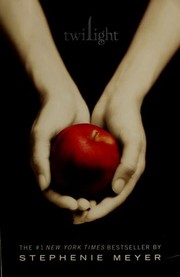
Bella moves to Forks and meets Edward Cullen. The 2005 original and the only possible starting point — the rules of Meyer's vampires, which differ sharply from every earlier tradition, are all set out here.

Second, and the book that introduces the Quileute wolves and the Volturi. It is the structural pivot of the saga: Edward is absent for most of it, which is what makes the third book work.
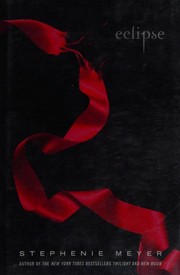
Third, with the newborn army in Seattle and the triangle at full strength. Read it in place — the Bree Tanner novella later on is set inside these events and spoils them completely if taken early.
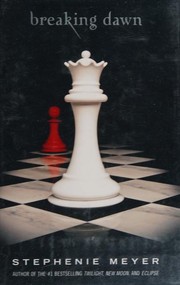
Fourth and final: marriage, pregnancy and the confrontation with the Volturi. The most divisive book of the four and the end of the main story.
The Retellings and the Novella, Afterwards
BeginnerRead the three companion volumes, all of which retell or sit inside events from the main four and none of which should be read before them.
▸ Study plan for this stage
Pace: Three to four weeks for 1,267 pages. Midnight Sun is 675 pages — longer than the novel it retells, which is worth knowing before you start — Life and Death is 400, and The Short Second Life of Bree Tanner is 192, the shortest book on the path and a single sitting. Read them in this order and only af
- Retelling as a form: what a second viewpoint can add when the plot is already known, and what it cannot
- Motive retro-fitted to scenes the reader already has, and how much of Edward's behaviour it re-frames
- Life and Death as a controlled experiment — the same novel with the genders swapped — published as an answer to critics of Bella's passivity
- What the gender swap does and does not change, which is the only way to test the criticism it responds to
- The Bree Tanner novella as a minor-character perspective on a major event, and what the newborn army looks like from inside
- Publication history as part of the reading — Midnight Sun leaked in draft in 2008 and appeared in 2020
- Midnight Sun is longer than Twilight. What is in the extra pages, and is it worth them?
- Name three scenes from Twilight whose meaning Midnight Sun changes. Do the changes improve the original or patch it?
- Life and Death swaps the genders. List what actually changes in the plot, and what stubbornly does not.
- Does the gender swap answer the criticism it was published in response to? Argue from a specific scene.
- Bree Tanner sees the Eclipse climax from the losing side. What does that vantage reveal that Bella's could not?
- Pick one chapter of Twilight and read the corresponding chapter of Midnight Sun immediately after; the exercise is more informative than reading either book straight through.
- Make a two-column list of everything Life and Death changes and everything it keeps; the second column is the real finding.
- Read Bree Tanner in one sitting and then reread the final chapters of Eclipse; the two together are one event from two sides.
- Write a paragraph on whether the companions belong to the saga or comment on it, using a passage from each.
Next up: The next stage leaves Forks entirely for the one Meyer novel with no connection to the saga, which is the fairest test of her writing without the vampire framework.
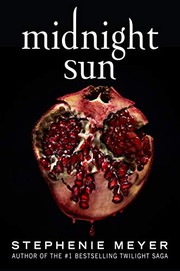
Twilight told from Edward's side, leaked in draft in 2008 and finally published in 2020. Read it first of the companions and only after Breaking Dawn: it is the same plot as book one, so it has no tension of its own, but it retro-fits motive to a hundred scenes you already know.

The first novel rewritten with the genders swapped — Beau and Edythe — published for the tenth anniversary as an answer to critics of Bella's passivity. Read after Midnight Sun as the second experiment on the same book. Our catalogue record displays it simply as Life and Death.

A novella following one of the newborn vampires from Eclipse. Last of the companions because it is set inside book three's climax and assumes you know how that ends.
Meyer Beyond Forks
BeginnerRead the one Meyer novel that has nothing to do with the saga, and see what her writing looks like without the vampire framework.
▸ Study plan for this stage
Pace: Ten days to two weeks for 640 pages. The Host is her only adult novel and at 640 pages one of the longest on this path, and it is a slower read than the saga — the premise takes real setup and the first hundred pages are the hardest. Read it after the saga is finished rather than as a break in the m
- A parasitic alien occupying a human body, with two consciousnesses sharing one skull
- A love triangle in which two of the three participants inhabit the same body — a structural idea the saga never attempted
- Occupation and colonisation handled from the occupier's point of view
- What Meyer's writing looks like without vampires: the same emotional register applied to a stranger premise
- An adult novel by a young-adult author, and what actually differs beyond the marketing category
- Judging a writer by the book that was not the phenomenon
- The Host's narrator is an invader. How does Meyer make that position sympathetic, and should she have?
- Two of the three points of the triangle share a body. What does that constraint make possible that the saga's triangle could not?
- The novel is marketed as adult. Which specific features would have to change for it to be shelved as young adult?
- Compare Wanderer's narration with Bella's. Which is the more capable narrator, and does the book know it?
- On the evidence of this book alone, what would you say Meyer is good at?
- Write down the rules of the occupation as the book establishes them in its first hundred pages; the plot's resolutions all depend on them.
- Mark every passage where the two consciousnesses disagree and note how Meyer signals which is speaking.
- Compare a scene of physical danger in The Host with one in Twilight and note how differently each is paced.
- Write one paragraph on what the saga's framework was doing for Meyer, using a place where The Host has to work harder without it.
Next up: The final stage moves outward to the paranormal-romance shelf — the series that came before Twilight and the wave its success produced.
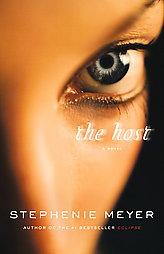
An occupied Earth, a parasitic alien in a human body, and a love triangle in which two of the three share one skull. Her only adult novel and a much stranger book than its reputation; read it once the saga is finished.
The Paranormal-Romance Shelf Around It
IntermediateMove outward into the series that preceded Twilight and the ones its success made possible, ordered from the ancestor to the imitators.
▸ Study plan for this stage
Pace: Six to eight weeks. The Awakening is 264 pages, Vampire Academy 352, City of Bones 512 and Beautiful Creatures 527; we hold no page count for our record of Hush, Hush, so budget it by its chapters. They are ordered from the ancestor outward rather than by size, and there is no obligation to read all
- The Vampire Diaries as a documented ancestor rather than an imitator — same premise, fifteen years earlier
- Vampire Academy's institutional worldbuilding, and what taking your own rules seriously does for a series
- City of Bones putting urban fantasy first and romance second while keeping the same readership
- Hush, Hush as the clearest transplant of the Twilight formula onto a different supernatural, which is what makes it useful
- Beautiful Creatures inverting the setup with a male narrator and a girl with the powers
- Distinguishing what a market copied from what a genre already contained
- The Awakening predates Twilight by fifteen years with nearly the same premise. What does that do to the claim that Twilight invented anything?
- Vampire Academy has the most developed worldbuilding here. Where does the extra rigour show in the plotting?
- City of Bones keeps the audience but changes the priority. What is lost when the romance stops being the engine?
- Hush, Hush swaps vampires for fallen angels and keeps everything else. Which elements turn out to be the formula and which were the vampires?
- Beautiful Creatures reverses the narrator's gender and the power. Compare it with Life and Death — two swaps, two very different results.
- Write out the Twilight formula as a list of beats, then tick each one off against Hush, Hush; the overlap is the exercise's whole point.
- Compare the first meeting scene in The Awakening and in Twilight and mark what is shared, what is inverted and what is genuinely new.
- List Vampire Academy's rules of its world and check whether any is broken for plot convenience later in the book.
- Set Beautiful Creatures beside Life and Death and write a paragraph on what actually changes when the narrator's gender changes — you now have two independent tests of the same question.
Next up: This is the end of the path: the four novels, the companions that only work afterwards, Meyer outside Forks and the shelf around her — from here, pick whichever of the five series held you and read it in full rather than sampling more openers.

The first Vampire Diaries book, published in 1991 — fifteen years before Twilight and with nearly the same premise. Read it first here: it is the direct ancestor, and the comparison is genuinely instructive. Our record credits it to Lisa Jane Smith, the author's full legal name.

A boarding school for vampire royalty and their guardians. The best-plotted of the post-Twilight vampire series and the one that takes its own worldbuilding most seriously.

The first Mortal Instruments book, and the largest of the series that followed in Twilight's wake. Here because it swaps romance-first for urban-fantasy-first while keeping the same audience.
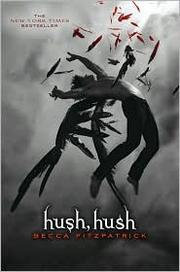
Fallen angels instead of vampires, and the clearest example of the exact Twilight formula transplanted to a different supernatural. Useful for seeing what the market copied.
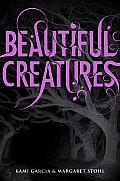
A Southern gothic with a male narrator and a girl with powers — the mirror image of Twilight's setup. Last because it is the biggest departure while still belonging on the same shelf.
Discussion
Keep reading
Paths that share books, cover the same subject, or open a related topic.