The Clifton Chronicles Reading Order: Where to Start
Jeffrey Archer's seven Clifton Chronicles are one story broken into volumes, not a set of linked novels, and every book ends on a cliffhanger that the next one opens with. That makes the reading order trivially fixed and the practical advice simple: start at Only Time Will Tell, do not sample the middle, and have the next volume ready. This path takes the seven in sequence and then points at the standalone Archer novels worth reading afterwards.
Start here
BeginnerMeet Harry Clifton and the Barrington family, and understand that the series is a single serialised narrative rather than seven separate books.
▸ Study plan for this stage
Pace: 1-2 weeks. Only Time Will Tell is around 400 pages of very fast, very plain prose and most readers finish it in under a week — Archer writes short chapters with a hook at the end of each, which makes 60-80 pages an evening entirely normal. Have The Sins of the Father bought before you start. This is
- The Clifton Chronicles are one serialised story split into seven volumes, not seven linked novels — there is no entry point other than page one
- The parentage question: whether Harry Clifton is the son of a Bristol stevedore or of Hugo Barrington, which is the engine of all seven books
- Archer's rotating close-third structure — each section is headed with a character's name and years, so the same events recur from different vantage points
- The Bristol docks setting and the rigid class boundary between the Cliftons and the Barringtons, which is what makes the parentage question consequential rather than merely dramatic
- Maisie Clifton as the series' moral centre and the character who does the most with the least
- Old Jack Tar and the scholarship plot: Archer's recurring belief that a single mentor can move someone across a class line
- The cliffhanger as a structural commitment — every volume ends on one, so pacing yourself between books is not really an option
- What is the case for each of Harry's two possible fathers, and what evidence does book one actually supply?
- Why does the answer matter legally as well as personally, and what is at stake for the Barringtons?
- What does the rotating-narrator structure let Archer withhold that a single viewpoint could not?
- What does Maisie sacrifice, and how does Archer keep her from becoming a saint?
- How does Hugo Barrington's behaviour set up the antagonists of the middle books?
- Buy volume two before you start volume one. Everyone who does not regrets it.
- Keep a simple two-column list — Cliftons and Barringtons — and add names as they appear. The cast triples by book four.
- Note the exact point at which each named section stops; Archer times his handoffs deliberately and the technique is worth watching.
- Do not read plot summaries or reviews of later volumes; the series is built almost entirely on withheld information.
Next up: Volume one leaves Harry's identity unresolved and his life in someone else's name, which is precisely where the next three books do their work.

Bristol docks in the 1920s, and a stevedore's son whose parentage is the question the whole series turns on. It ends mid-sentence in effect, which tells you immediately what kind of commitment the Chronicles are. There is no other entry point.
The core
BeginnerFollow Harry through the war, the courts and the inheritance dispute, in the three books where the plot machinery is at its busiest.
▸ Study plan for this stage
Pace: 4-6 weeks for the three, and they will go faster than you plan. Each is 350-400 pages of short-chapter, high-momentum storytelling; readers commonly clear one in five or six days. Read them back to back — The Sins of the Father opens on the exact moment Only Time Will Tell stopped, and the gap betwe
- The stolen-identity plot and the New York murder trial, which is Archer at his most assured — courtroom procedure is his best register
- Archer's own life as a member of parliament and a peer feeds the House of Lords material directly, and it shows in the accuracy of the procedure
- The Barrington title vote in Best Kept Secret: a legal contest that resolves the parentage question institutionally without resolving it emotionally
- Sebastian Clifton's arrival as the second generation, and the series' shift from one family quarrel to a business and political saga
- The Barrington Shipping Line as the arena for the middle books, with a boardroom war and a saboteur replacing the courtroom
- Don Pedro Martinez and the villains who take over the plot here — Archer's antagonists are competent and persistent, which is why the sequence sustains
- The series' operating rule: every setback is reversed, and every reversal costs somebody something concrete
- How does the New York trial turn on identity rather than on the facts of the killing?
- What does the House of Lords actually decide about the Barrington title, and on what grounds?
- What does Sebastian inherit from each of his parents, and where does he first go wrong?
- Who is running the campaign against the Barringtons by the fourth book, and what do they want?
- How does Emma's rise in the shipping line change the shape of the story from family drama to business thriller?
- Add the second generation to your family chart at the start of Best Kept Secret; the cast expands sharply here.
- Track the shipping line's finances across the two business volumes — the plot turns on them more than on personalities.
- Note each cliffhanger and whether the next book resolves it in the first chapter or lets it hang. Archer varies this deliberately.
- Read the trial sequence of The Sins of the Father in one sitting; it is built to be read that way.
Next up: With the title settled and the business secure, the story moves outward — into politics, the Cold War, and a vendetta that follows the family for three more books.
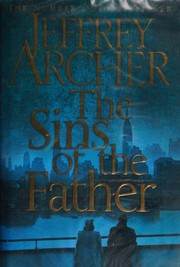
New York, a stolen identity and an American murder trial. Picks up the instant the first book stops, and the courtroom material is Archer at his most confident.

The House of Lords vote on the Barrington title, and the next generation entering the story. The series widens from one family quarrel to a national one.

The Barrington shipping line, a boardroom war and a saboteur. The middle of the sequence and the point where the villains take over the plot.
The finish
BeginnerSee the three-generation story through to its end, across the Cold War and into the 1990s.
▸ Study plan for this stage
Pace: 4-6 weeks for the three. Same pace as the core — fast, short chapters, one volume a week if you have the evenings. Cometh the Hour and This Was a Man in particular should be read close together; almost every thread converges in the sixth book and pays off in the seventh, and a long gap flattens the
- The series opening out beyond Britain: an IRA bombing, a banned Russian novel, and Harry's PEN campaign for an imprisoned dissident writer
- Harry's late-career reinvention as a campaigner rather than a novelist, which is the series' answer to what a decent man does with fame
- Three strands running in parallel by book six — Emma at the health service, Giles in Parliament, Sebastian at the bank — and Archer cutting between them at chapter length
- The long-running vendetta reaching its crisis, and how a thriller plot is made to coexist with a family chronicle
- The Cold War material and Archer's fondness for institutions doing their jobs correctly — committees, boards, courts, votes
- This Was a Man closing the story across four decades and finally settling the question asked on the first page of volume one
- Why the ending only works if the seven were read in order: nearly every payoff is planted in a book that appeared years earlier
- What does Harry's campaign for the dissident writer cost him, and what does it get him?
- How does Archer manage three simultaneous careers without losing the family thread?
- Who wins the vendetta, and does the series make you feel that as justice or as exhaustion?
- What is the final answer to the parentage question, and does it match what book one led you to expect?
- Which of the second generation ends up carrying the family's values, and how does Archer signal it?
- Before starting Cometh the Hour, list the open threads from the first five books. The sixth volume closes most of them and the list makes that visible.
- After the last page, reread the opening chapter of Only Time Will Tell — the sentence the series has been answering is in it.
- Write down what happened to each named character from stage one. The completeness of the accounting is Archer's actual achievement here.
- Note where the seventh book chooses sentiment over plot, and decide whether the series has earned it.
Next up: With the family story finished, the standalone novels that made Archer's name show you the same machinery running in a much tighter space.
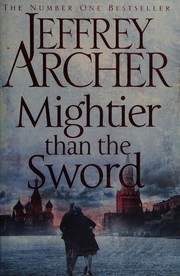
An IRA bomb, a banned Russian novel and Harry's campaign for a dissident writer. Opens the series out beyond Britain.

Emma at the health service, Giles in politics and Sebastian at the bank, with the long-running vendetta reaching its crisis. Almost every thread converges here.

The final volume, closing the family story across four decades. It resolves the parentage question from book one, which is the reason to have read all seven in order.
Where to go next in Archer
IntermediateMove on to the standalone novels that made his name, now that you know how he builds a long plot.
▸ Study plan for this stage
Pace: 3-4 weeks. Note that the volume listed here is an omnibus pairing Kane and Abel with its sequel The Prodigal Daughter — buy it and you get both, so do not also buy Kane and Abel separately. Read Kane and Abel first regardless of how the omnibus is titled; it is around 550 pages and reads at Clifton
- Kane and Abel as the compressed version of everything the Clifton Chronicles do across seven volumes: two men born the same day, sixty years, one long mutual destruction
- Reading it after the Chronicles is the pleasure — the same structural habits, the same reversals, at a quarter of the length
- The Prodigal Daughter as the sequel that follows the next generation, so the omnibus repeats the Clifton generational move in miniature
- Not a Penny More, Not a Penny Less as Archer's debut and his tightest construction: four men swindled by one conman, each recovering exactly his share
- The caper structure as a corrective after seven volumes of saga — no cliffhangers, no generations, one clean mechanism
- What Archer's plotting is actually good at, visible more clearly at short length than long: reversal, procedure, and characters who are competent at their jobs
- Where does Kane and Abel use the same reversal Archer used in the Chronicles, and does it land harder or softer compressed?
- What does the seven-volume format allow that Kane and Abel cannot manage in one?
- How does the debut's caper structure differ from the saga structure, and which suits his strengths better?
- In Not a Penny More, what makes each recovery satisfying — is it the scheme or the character running it?
- Having read all of it, what is the recurring Archer plot?
- Check your omnibus contents before buying anything else by him; the Kane and Abel volumes are bundled in several combinations.
- Read Kane and Abel with the Clifton structure in mind and mark the equivalent beats.
- Read Not a Penny More in as few sittings as possible; it is engineered for that.
Next up: This closes the path: the seven-volume saga plus the two standalones that show the same storytelling at full compression.

Two men born on the same day on opposite sides of the world, spending sixty years destroying each other. His best-known book and effectively the Clifton Chronicles compressed into one volume; read it after, and the resemblance is the pleasure.
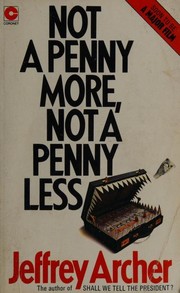
His debut, a tight caper about four men swindled by the same conman. Short, funny and structurally the neatest thing he wrote — a good corrective if seven volumes of family saga has left you wanting something compact.
Discussion
Keep reading
Paths that share books, cover the same subject, or open a related topic.