The Edge Chronicles Reading Order: Where to Start
The Edge Chronicles is thirteen books arranged in four trilogies plus a bridging novel, and it has one of the sharpest publication-versus-chronology splits in children's fantasy: the world's story begins with Quint, but Paul Stewart and Chris Riddell wrote his grandson Twig's story first and built the earlier trilogy as a set of answers. Read it in publication order. Beyond the Deepwoods opens with a boy walking into a forest and no explanation of anything, which is exactly the right way in, and the Quint books are written to land as revelations about things you already know. The chronological order — Quint, then Twig, then Rook, then Cade — is a real alternative and a good reread, but as a first read it spends every reveal in advance. One catalogue note: book twelve, Doombringer, is not catalogued in a form we can verify, so it is named here rather than listed.
Start Here: The Twig Trilogy
BeginnerLearn the world the way the authors intended — through a boy who does not understand it either — and get used to Riddell's illustrations doing half the worldbuilding.
▸ Study plan for this stage
Pace: 3–4 weeks for 1,056 pages, though the page counts overstate the reading time — the type is large and Riddell's illustrations take a substantial share of every page. A committed reader finishes each book in two or three sittings. If reading aloud, budget roughly six weeks at a chapter a night. One fo
- The Edge itself: a flat land ending in a cliff over open sky, with the Deepwoods inland, the Edgewater River running out, and Undertown and Sanctaphrax at the lip — the geography every later book assumes
- Beyond the Deepwoods as a bestiary rather than a plot: Twig leaves the path and meets a sequence of inventions, one per chapter, and the near-absence of story is deliberate
- Riddell's illustrations as primary text — creatures, machines and buildings are described minimally in prose because the drawing is doing the work
- Floating rock, buoyancy and the sky ships: the physical system introduced in Stormchaser that turns a fantasy world into one with an economy
- Sanctaphrax as a floating city of academics tethered by a chain, and the professional rivalries that pass for its politics
- Stormphrax and the purification of Edgewater — the resource logic that explains why anyone risks a stormchase
- Twig's parentage and the questions the first trilogy raises and does not answer, which are the hooks the Quint books are built to pay off
- The hard ending of Midnight over Sanctaphrax, which closes Twig's arc completely enough that the series could have stopped
- Draw the Edge from the descriptions in these three books: cliff, Deepwoods, river, Undertown, Sanctaphrax. What is at each point and who lives there?
- Why is Beyond the Deepwoods almost plotless, and what does that structure teach a reader about the world that a plot would not?
- How do sky ships work, and what makes flight in this world dangerous in a way that ordinary fantasy flight is not?
- What is stormphrax for, and why does the whole economy of Sanctaphrax depend on stormchasing?
- Which questions about Twig's origins are raised in this trilogy and left unanswered? Write them down — the Quint books answer them.
- How does Midnight over Sanctaphrax end, and why does that ending make going back a generation the natural next move?
- Draw your own map of the Edge as you read, adding to it each time a new place is named. By the end of the series it will be crowded, and the map is the single most useful thing you can make from these books.
- Keep a bestiary: every creature Twig meets in Beyond the Deepwoods, with a one-line note on what it does. Riddell has drawn most of them, and comparing your note to his drawing is the exercise.
- Write out the questions the first trilogy leaves open — about Twig's father, about the Gloamglozer, about how Sanctaphrax came to be. Seal the list. You will open it in stage three.
- Pick one page where the illustration carries information the prose omits, and write 150 words on what would be lost in a text-only edition.
- Write a 200-word explanation of how the sky-ship economy works — flight rock, stormphrax, the Leagues, the academics — as though for someone who has not read the books.
Next up: Twig's story is complete; the next stage takes the series backwards a generation exactly where it was published, then jumps fifty years forward into its strongest trilogy.
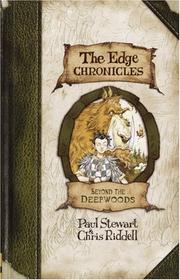
The first book published and the right place to start. A woodtroll foundling leaves the path into a forest of increasingly inventive monsters. Almost plotless by design — it is a bestiary you walk through — and Riddell's drawings are load-bearing, so do not read it in a format that drops them.
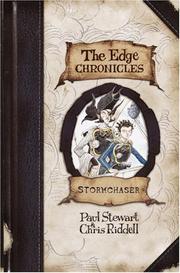
Second, and the book where the series acquires an engine: sky ships, floating rock, and the city of Sanctaphrax. The economics of the Edge start to make sense here.
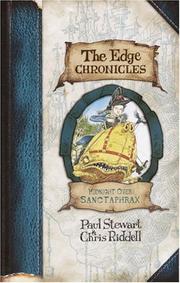
Third, and the end of Twig's arc. It closes the first trilogy hard enough that you could stop — which is precisely why the next book, going backwards a generation, works.
Back a Generation, and Forward Two
BeginnerTake the first Quint book exactly where it was published, then follow the series into its darkest and best trilogy.
▸ Study plan for this stage
Pace: 6–8 weeks for 1,570 pages. The Curse of the Gloamglozer stands alone and can be read in a week; The Last of the Sky Pirates, Vox and Freeglader are effectively one long story and are best read back to back with as little gap as possible. Vox in particular is bleaker than anything before it, so read
- Quint as Twig's father, apprenticed a generation earlier, and the effect of meeting a character whose fate you already know
- The Gloamglozer: named in the first trilogy as a bogey and given substance here, which is the model for how the Quint books convert established folklore into event
- How Sanctaphrax came to be as it is — the academic factions, the Knights Academy and the origins of institutions the first trilogy presented as given
- The fifty-year gap into the Rook trilogy and the state of the Edge afterwards: Undertown decayed, the Free Glades founded, the Guardians of Night in possession of Sanctaphrax
- The series acquiring politics: factions with ideologies rather than rivalries, slavery, a refugee movement and a war, which is why this trilogy is the most substantial stretch
- Rook as a librarian knight — the underground librarians, the skycraft, and knowledge as the thing being defended
- Vox Verlix as the series' most complicated figure: architect, tyrant, ruin, and the source of the plan the trilogy turns on
- The mother storm and the sequence that ends the Sanctaphrax era, and why Freeglader must be read before any of the remaining Quint books
- What does The Curse of the Gloamglozer explain that you had been wondering about since book one? Check your sealed list from stage one.
- Why does reading the Quint book here rather than first change what it does? Give a specific reveal that depends on the order.
- What has happened to the Edge in the fifty years between Midnight over Sanctaphrax and The Last of the Sky Pirates? Name four changes.
- How do the Guardians of Night justify themselves, and what makes them a different kind of antagonist from anything in the Twig books?
- What is Vox Verlix's plan, and at what point does the reader understand it before the characters do?
- How does Freeglader resolve the world state, and what does it leave in place for the books that follow?
- Update your Edge map with the Free Glades, the Twilight Woods, the Mire and the Foundry Glades. Mark the changes between the Twig era and the Rook era on the same sheet.
- Draw a timeline with three marks — Quint's era, Twig's era, Rook's era — and place every book you have read on it. The gap between publication order and chronological order becomes obvious as soon as it is drawn.
- Write 250 words on the Gloamglozer as it appears in the Twig books versus as it appears in The Curse of the Gloamglozer, and what the change does to a first-time reader.
- Track the librarian knights across the Rook trilogy and write half a page on what the series is arguing about knowledge and who keeps it.
- Compare the opening chapter of Beyond the Deepwoods with the opening chapter of The Last of the Sky Pirates. Write a paragraph on how much more the second assumes you know.
Next up: The Rook trilogy has closed the Sanctaphrax era; the next stage finishes Quint's story, whose reveals can now finally land, and then jumps centuries forward.
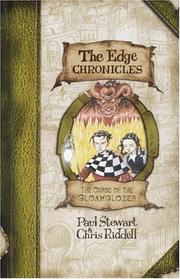
Fourth by publication and the first of the Quint trilogy, set a generation earlier with Twig's father as an apprentice. Read here, it explains things you have been wondering about for three books; read first, it explains things you have not yet asked.
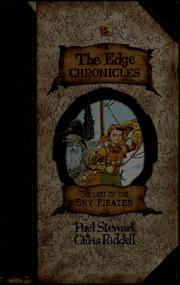
Fifth, opening the Rook trilogy fifty years after Twig. The Edge has gone wrong in the interval, and the series suddenly has politics. The best sustained stretch of the whole thing starts here.

Sixth, and much bleaker — a besieged city, a fading tyrant, and a storm coming. Read straight on from the previous book; the two are one story.
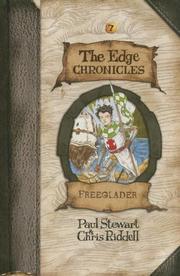
Seventh, closing the Rook trilogy and the Sanctaphrax era. Do not skip to the Quint books before this: Freeglader resolves the world state that everything after it assumes.
Finishing Quint
BeginnerComplete the earliest trilogy now that its reveals can actually land, then cross the long gap into the modern Edge.
▸ Study plan for this stage
Pace: 6–8 weeks for 1,550 pages. The Winter Knights and Clash of the Sky Galleons read at the pace of the earlier books; The Immortals is a 741-page doorstop that will take three or four weeks on its own and is best read in long sittings rather than dipped into. Do not start The Immortals until the other
- The Winter Knights and the Knights Academy, which is the institution the first trilogy referred to constantly and never showed
- The unnatural winter and the academic factions it exposes — the series' clearest picture of how Sanctaphrax scholarship actually functioned
- That book eight was published four books after book four, and is written assuming you have read everything in between, which is why publication order is not merely a convention here
- The revenge plot running from The Curse of the Gloamglozer through to Clash of the Sky Galleons, and its resolution
- How Clash of the Sky Galleons sets up the opening situation of Beyond the Deepwoods — the payoff that makes publication order the better first read
- The Immortals as a structural keystone: set centuries later, it connects all three preceding trilogies and reveals what several long-running figures actually were
- The scale shift in The Immortals — a longer book, a wider timespan and a stranger register than anything before it
- What the series is doing by ending a trilogy sequence with a book that reframes the whole history rather than continuing it
- What does the Knights Academy turn out to be, and how does it differ from what the Twig books implied?
- Where does Clash of the Sky Galleons connect to the opening of Beyond the Deepwoods? Describe the join precisely.
- Open your sealed list of questions from stage one. Which are now answered, which are answered differently than you expected, and which remain open?
- What does The Immortals reveal that recontextualises the earlier trilogies? Name two things.
- Why is The Immortals so much longer and stranger than the books before it, and does the shift work?
- Having read ten books in publication order, make the case for and against the chronological order as a first read.
- Complete your timeline: place all ten books read so far on both a publication axis and a chronological axis. The crossing lines are the structural fact this whole path is organised around.
- Write 300 words on one reveal in The Winter Knights or Clash of the Sky Galleons that would have been spent had you read the Quint trilogy first.
- Build a family and succession chart — Quint, Twig, Rook, and the connections The Immortals establishes. It is more tangled than it appears from any single book.
- After The Immortals, reread the first chapter of Beyond the Deepwoods and write half a page on what has changed. This is the reward for the reading order.
- Track one long-running character or entity across all ten books and write a page on how the authors changed what it meant each time it reappeared.
Next up: With the world's history assembled, the last trilogy returns to the Edge a generation on and deliberately rhymes with the book that started everything.
Eighth, returning to Quint at the Knights Academy in an unnatural winter. Published four books after the trilogy opener, and written on the assumption that you have read everything in between.
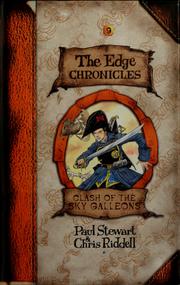
Ninth, ending the Quint trilogy with the revenge plot that has been running since book four. It also sets up the events at the start of Beyond the Deepwoods, which is the payoff for reading in publication order.

Tenth, a doorstop set centuries later that ties every previous trilogy together. Longest and strangest book in the series, and it genuinely requires the nine before it.
The Cade Trilogy
IntermediateRead the late trilogy that returns to the Edge a generation on, and see how the authors close a world they had already ended once.
▸ Study plan for this stage
Pace: 4–5 weeks for the two volumes we can list, plus book twelve read in place. ⚠️ Honest note: Doombringer is book twelve and sits between The Nameless One and Descenders. It is not catalogued in a form we can verify, so it is named here rather than listed — but it is part of the series and should be re
- The five-year publication gap before The Nameless One, and the shift in register that comes with returning to a world already ended once
- The deliberate rhyme with Beyond the Deepwoods: a boy flees into the Deepwoods, structurally echoing the opening of the entire series — an echo only audible if you started where the series started
- Great Glade as the Edge's new centre, and what has replaced Undertown and Sanctaphrax in the intervening generations
- The industrial and technological drift of the late Edge, and what the series is saying by making its final era the most developed one
- Descenders and the descending itself — going over the Edge, which is the one direction the geography has always implied and no book had taken
- How Stewart and Riddell close a world whose story they had already finished twice, and whether the final answer is the right size for the question
- Riddell's illustration style across twenty years of the series, and how the late books differ visually from Beyond the Deepwoods
- The full shape of thirteen books in four trilogies plus a bridging novel, which only becomes visible from the far end
- How does the opening of The Nameless One echo Beyond the Deepwoods, and what has the series gained by making the echo deliberate?
- What is Great Glade, and what does its rise say about what happened to the Edge after Freeglader?
- What does descending over the Edge turn out to mean, and was the answer prepared for by anything earlier in the series?
- Compare Riddell's illustrations in Descenders with those in Beyond the Deepwoods. What has changed in twenty years?
- Having finished the sequence, what is the shape of the whole thing — and would you now recommend publication order or chronological order to a new reader?
- Complete your Edge map one last time with Great Glade and the late-era locations, and put the four trilogies onto a single chronological line from Quint to Cade.
- Read the first chapter of Beyond the Deepwoods and the first chapter of The Nameless One back to back, and write 300 words on the deliberate structural rhyme.
- Write a one-page reading-order recommendation for a friend, arguing for publication order and honestly stating what chronological order gains. The series is one of the few where both cases are real.
- Pick five Riddell illustrations spread across the thirteen books and write a paragraph on how his drawing of the same kind of subject — a creature, a ship, a city — changed over two decades.
- Write a final half-page on what the series turned out to be about, and check it against what you thought after book one.
Next up: This closes the sequence: thirteen books, four trilogies and a bridging novel, read in the order that spends none of its reveals early.

Eleventh, opening the final trilogy after a five-year gap in publication. A boy flees Great Glade for the Deepwoods, deliberately rhyming with Beyond the Deepwoods — the echo is intentional and only audible if you started where the series started.

Thirteenth and last, finishing the Cade trilogy and the whole sequence by going over the Edge itself. Book twelve, Doombringer, sits between these two and is missing from our catalogue rather than from the series — read it in place.
Discussion
Keep reading
Paths that share books, cover the same subject, or open a related topic.