The science of happiness: the best books on well-being, in reading order
This curriculum takes you from the foundational ideas of positive psychology all the way to cutting-edge research on well-being, meaning, and lasting life satisfaction. Each stage builds on the last — first establishing the core science, then examining the practical levers of happiness, and finally wrestling with the deeper philosophical and empirical questions that separate fleeting pleasure from a truly flourishing life.
Foundations of Positive Psychology
BeginnerUnderstand what the science of happiness is, where it came from, and its most important early findings — building the vocabulary and mental models needed for everything that follows.
▸ Study plan for this stage
Pace: 8–10 weeks, ~40–50 pages/day (approximately 2–3 weeks per book, with overlap for integration)
- Positive psychology as a science: the shift from treating mental illness to cultivating flourishing and well-being
- Authentic happiness and Seligman's PERMA model: Positive emotion, Engagement, Relationships, Meaning, and Accomplishment as pillars of well-being
- The limitations of hedonic adaptation and the 'hedonic treadmill': why pursuing pleasure alone doesn't sustain happiness
- Daniel Gilbert's research on affective forecasting: how and why we systematically mispredict what will make us happy
- The distinction between experienced happiness (how you feel moment-to-moment) and remembered happiness (how you recall your life)
- Sonja Lyubomirsky's happiness formula: the relative contributions of genetics (~50%), life circumstances (~10%), and intentional activities (~40%)
- Evidence-based happiness interventions: specific, actionable practices shown to durably increase well-being
- The importance of individual differences: why the same intervention works differently for different people
- What is positive psychology and how does it differ from traditional psychology's focus on mental illness?
- What are the five components of Seligman's PERMA model, and how do they contribute to authentic happiness?
- Why is hedonic adaptation a challenge to sustained happiness, and what does research suggest about overcoming it?
- What is affective forecasting, and what are the common systematic errors we make when predicting our future happiness?
- According to Lyubomirsky's research, what percentage of happiness variation is attributable to intentional activities, and why is this significant?
- What is the difference between experienced and remembered happiness, and why does this distinction matter for understanding well-being?
- Complete Seligman's 'Signature Strengths' assessment (VIA Character Strengths) and reflect on how your top strengths relate to engagement and meaning in your daily life
- Track your mood and activities for one week using the 'experience sampling' method: rate your happiness and what you're doing at random intervals, then analyze patterns in what activities correlate with higher well-being
- Conduct a personal 'affective forecasting' experiment: predict your happiness level for a future event (a week from now), then compare your prediction to your actual experience and analyze where your forecast went wrong
- Identify one area of your life where you've experienced hedonic adaptation (e.g., a purchase, achievement, or life change that initially excited you but no longer does), and design a small intervention to re-engage with it
- Choose one evidence-based happiness intervention from Lyubomirsky's work (e.g., gratitude practice, acts of kindness, or savoring) and commit to it for 2 weeks, tracking changes in your well-being with daily ratings
- Create a personal 'happiness audit': map your current life across Seligman's PERMA dimensions, identify which areas are weakest, and draft one concrete change for each dimension
Next up: This foundation equips you with the scientific vocabulary, key theories, and empirical evidence about what happiness is and what reliably influences it—preparing you to explore deeper mechanisms (like the role of social connection, meaning-making, and resilience) and to apply these insights to specific life domains in the next stage.
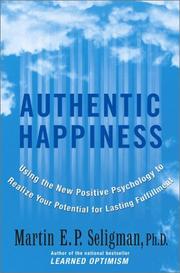
Written by the founder of positive psychology, this is the field's landmark starting point — it introduces the scientific study of happiness, signature strengths, and the distinction between pleasure and meaning. Reading it first gives you the conceptual vocabulary the entire field uses.
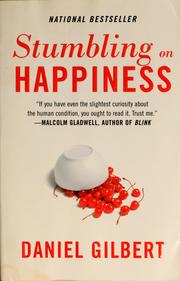
A Harvard psychologist explains, with wit and rigorous research, why humans are systematically wrong about what will make them happy. Reading this second immediately challenges and sharpens the intuitions built in Seligman's book.
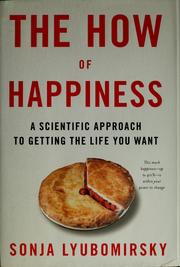
Lyubomirsky synthesizes decades of research into a clear, evidence-based framework — including the famous 'happiness pie chart' — and bridges the gap between theory and actionable practice, making it the perfect capstone for this foundational stage.
The Architecture of Well-Being
BeginnerExplore the key psychological structures — mindset, flow, and social connection — that research identifies as the most powerful drivers of sustained well-being.
▸ Study plan for this stage
Pace: 8–10 weeks, ~25–30 pages/day. "Flow" (~400 pages) takes 2–3 weeks; "Mindset" (~300 pages) takes 2–3 weeks; remaining time for review, exercises, and integration.
- Flow as optimal experience: the state of complete absorption when challenge matches skill, and how to cultivate it in daily life
- The autotelic personality: intrinsic motivation and the ability to find meaning in activities independent of external rewards
- Fixed vs. growth mindset: how beliefs about the malleability of abilities shape resilience, learning, and long-term achievement
- The role of deliberate challenge and struggle in building competence and sustaining engagement over time
- How psychological structures (flow, mindset, goal-setting) create the conditions for sustained well-being rather than fleeting happiness
- The neuroscience and psychology of habit formation: how repeated flow experiences and growth-oriented thinking reshape neural pathways
- Social and environmental design: structuring relationships, work, and leisure to support flow and growth mindset
- What are the conditions necessary for flow, and how do they differ from passive leisure or forced work?
- How does the concept of the autotelic personality relate to sustained well-being, and what role does intrinsic motivation play?
- What is the difference between a fixed mindset and a growth mindset, and how does each affect your response to failure and challenge?
- How can you intentionally design your daily activities and environment to increase flow experiences and reinforce a growth mindset?
- Why does Csikszentmihalyi argue that flow is more important to happiness than comfort or ease, and how does this connect to Dweck's findings on mindset?
- What specific strategies from both books can you apply to a skill or goal you are currently pursuing?
- Flow audit: Track your activities for one week, rating each by challenge level and skill level. Identify which activities produce flow (high challenge + high skill) and which produce anxiety, boredom, or apathy. Reflect on patterns.
- Design a flow activity: Choose a hobby, skill, or work task and deliberately structure it to increase challenge in small increments. Set clear goals, get immediate feedback, and practice for 30 minutes daily for two weeks. Document how your experience changes.
- Mindset journaling: For one week, write down moments when you encountered failure, criticism, or difficulty. Note your initial reaction (fixed or growth mindset language). Reframe each entry using growth mindset language and identify what you could learn.
- Autotelic interview: Identify someone you know who seems to experience flow regularly or embodies a growth mindset. Interview them about how they approach challenges, what motivates them, and how they structure their time. Compare their answers to concepts from the books.
- Challenge ladder: Pick a skill you want to develop (writing, a sport, a language, coding). Create a 10-step progression from easiest to hardest. Spend 2–3 weeks climbing the ladder, adjusting difficulty to stay in the flow zone. Track your mindset shifts.
- Belief inventory: List 5–10 core beliefs you hold about your abilities (intelligence, creativity, athleticism, social skills, etc.). For each, identify whether it reflects a fixed or growth mindset. Choose 2–3 to actively challenge with new behaviors over the next month.
Next up: This stage establishes the psychological foundations of well-being—the internal structures and mental frameworks that enable sustained happiness—preparing you to explore how these principles scale across relationships, communities, and life domains in the next stage.
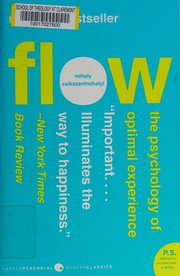
Csikszentmihalyi's landmark work on optimal experience introduces 'flow' — the state of deep engagement that is one of the most robust predictors of happiness. It expands the reader's model of well-being beyond simple pleasure.
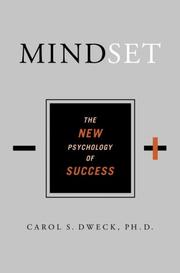
Dweck's research on fixed vs. growth mindsets reveals how our core beliefs about ability shape resilience and satisfaction — a crucial psychological layer that explains why some people thrive under the same conditions others do not.
Going Deeper — Meaning, Relationships & the Good Life
IntermediateMove beyond hedonic happiness to examine meaning, virtue, social bonds, and what a truly flourishing life looks like, drawing on both modern science and its philosophical roots.
▸ Study plan for this stage
Pace: 8–10 weeks, approximately 40–50 pages per day (mix of reading and reflection). Suggested pacing: 2–3 weeks per book with overlap for integration.
- PERMA model: Positive emotion, Engagement, Relationships, Meaning, and Accomplishment as the five pillars of flourishing (Seligman)
- The hedonic treadmill and why pleasure alone doesn't sustain happiness; the shift from hedonic to eudaimonic well-being
- Virtue and character development as foundations of the good life, grounded in both ancient philosophy and modern psychology
- The social brain: how humans are neurobiologically wired for connection, and why relationships are central to flourishing
- Meaning-making through narrative: how we construct coherent life stories and find purpose beyond immediate satisfaction
- The role of adversity and post-traumatic growth in building resilience and deeper well-being
- Psychological needs (autonomy, competence, relatedness) and how meeting them drives sustained happiness
- The neuroscience of social pain and reward: why belonging matters at a biological level
- What are the five elements of Seligman's PERMA model, and why is meaning considered distinct from pleasure?
- How does Haidt's metaphor of the 'happiness hypothesis' challenge the idea that happiness is primarily about maximizing positive emotions?
- What does Lieberman mean by the 'social brain,' and what evidence does he provide that humans are neurobiologically wired for connection?
- How do virtue, character, and narrative identity contribute to eudaimonic happiness across all three books?
- What role does adversity play in building a flourishing life, according to Seligman and Haidt?
- How do the three books collectively explain why relationships and social bonds are non-negotiable for human well-being?
- Map your own life against Seligman's PERMA model: rate yourself 1–10 on each pillar (Positive emotion, Engagement, Relationships, Meaning, Accomplishment) and identify which areas need development.
- Conduct a 'meaning audit': write down 3–5 activities or roles that give your life purpose. How do these align with or diverge from Haidt's and Seligman's frameworks?
- Practice narrative reflection: write a 2–3 page account of a difficult period in your life and identify how it shaped your character or values (connecting to Haidt's post-traumatic growth and Seligman's resilience).
- Social connection inventory: list your 5–10 closest relationships and assess the quality of each using Lieberman's framework of social pain/reward. Which relationships energize you, and which drain you?
- Design a 'flourishing experiment': choose one PERMA element you're weak in and commit to a specific, measurable action for 2 weeks (e.g., weekly meaningful conversation, daily engagement in a flow activity). Track changes in well-being.
- Virtue self-assessment: identify 3 character strengths you want to develop (drawing on Seligman's virtue framework) and create a concrete practice plan for each over the next month.
Next up: This stage establishes that flourishing requires meaning, virtue, and social connection—not just pleasure—preparing you to explore how these principles translate into specific life domains (work, parenting, aging, community) and how to sustain them through practical application and institutional design.
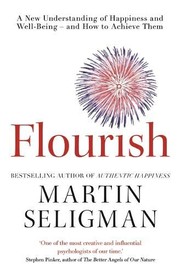
Seligman's own evolution of his theory — introducing the PERMA model — is best read here, after you've absorbed his earlier work and the broader field, so you can appreciate how the science matured.
Haidt bridges ancient wisdom (Plato, Buddha, the Bible) with modern psychology, testing timeless ideas about happiness against contemporary science. It adds philosophical depth and historical context that intermediate readers are now ready to absorb.
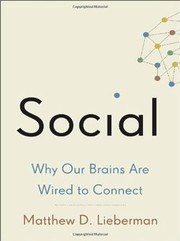
Neuroscience research showing that social connection is as fundamental a need as food or shelter — this book deepens the reader's understanding of why relationships are the single strongest predictor of well-being.
Advanced Frontiers — Measurement, Inequality & the Limits of Happiness
ExpertCritically evaluate the science itself — how well-being is measured, what it means at a societal level, and where the pursuit of happiness can go wrong — developing a nuanced, research-literate perspective.
▸ Study plan for this stage
Pace: 4–5 weeks, ~40–50 pages/day (approximately 280–350 pages total)
- The hedonic treadmill and adaptation: why pursuing happiness through external circumstances often fails
- Myth vs. reality in happiness research: common misconceptions about money, relationships, and life events
- The role of intentional activities and practices over circumstances in sustaining well-being
- Individual differences in happiness set points and the limits of happiness interventions
- Measurement challenges: how well-being is operationalized and the validity of self-report scales
- The dark side of happiness pursuit: when striving for happiness becomes counterproductive
- Societal and cultural variations in what happiness means and how it's valued
- The gap between what research shows and what people believe about achieving happiness
- What is the hedonic treadmill, and why does it explain why lottery winners and accident survivors return to baseline happiness levels?
- Which common myths about happiness does Lyubomirsky debunk, and what does the research actually show instead?
- How do intentional activities differ from life circumstances in their impact on sustained well-being, and why?
- What are the limitations of using self-report measures to assess happiness, and what biases might they introduce?
- Under what conditions can the pursuit of happiness become counterproductive or harmful?
- How do individual differences (personality, genetics, cultural background) constrain the potential for increasing happiness?
- Track your own happiness over 2 weeks using a simple daily scale (1–10), then identify which events you predicted would change your happiness vs. which actually did—reflect on adaptation patterns
- Identify one personal myth about happiness you hold (e.g., 'I'll be happy when I get promoted'), research what Lyubomirsky says about it, and journal on why you believed it
- Design a small intentional activity intervention for yourself (e.g., gratitude practice, acts of kindness) based on Lyubomirsky's recommendations and track its effects over 3 weeks
- Conduct a critical reading exercise: select one happiness study Lyubomirsky cites, locate the original paper, and evaluate its measurement methods and limitations
- Interview 3–5 people about what they believe makes them happy, categorize their answers as circumstance-based or activity-based, and compare against Lyubomirsky's findings
- Write a 2–3 page reflection on a time you pursued happiness and it backfired—analyze it through Lyubomirsky's framework of when happiness pursuit becomes counterproductive
Next up: This stage equips you with a critical lens for evaluating happiness claims and understanding the science's real constraints, preparing you to explore how happiness operates at societal and policy levels, and to examine alternative frameworks for well-being beyond the happiness paradigm itself.

Lyubomirsky returns to dismantle popular assumptions ('I'll be happy when I get married / rich / promoted'), using her own research to show where conventional happiness scripts fail — a sophisticated, corrective final lens.
Discussion
Keep reading
Paths that share books, cover the same subject, or open a related topic.