How to learn Habits & behavior change
This curriculum takes you from the intuitive "why habits matter" all the way to the neuroscience, systems thinking, and clinical frameworks that underpin lasting behavior change. Each stage builds on the last: you first develop a working mental model, then understand the brain mechanisms driving it, then learn to design environments and systems, and finally engage with the research-grade theory used by practitioners and researchers.
Foundations — Building a Mental Model
BeginnerUnderstand what habits are, why they form, and have a practical, actionable framework for starting to change them.
▸ Study plan for this stage
Pace: 6–8 weeks total: Weeks 1–3 for "The Power of Habit" (~25–30 pages/day, including 2–3 days of reflection per week); Weeks 4–7 for "Atomic Habits" (~20–25 pages/day, with slower pacing to complete the exercises Clear embeds in each chapter); Week 8 is a dedicated integration week — no new reading, jus
- The Habit Loop (Duhigg): every habit is built from three components — Cue, Routine, and Reward — and understanding this loop is the master key to diagnosing any behavior.
- The Craving Brain: habits persist because cues trigger anticipatory cravings for the reward, not just the routine itself; neurological desire is the engine of the loop.
- The Golden Rule of Habit Change (Duhigg): you cannot extinguish a habit, only rewire it — keep the cue and reward, but swap the routine.
- Keystone Habits: certain habits create cascading positive (or negative) effects across other areas of life; identifying and targeting these produces disproportionate results.
- The Four Laws of Behavior Change (Clear): Make it Obvious, Make it Attractive, Make it Easy, Make it Satisfying — a complete, actionable framework for building good habits and breaking bad ones.
- Identity-Based Habits (Clear): lasting change comes from shifting who you believe you are ('I am a runner') rather than focusing solely on outcomes ('I want to run a 5K'); behavior follows identity.
- Implementation Intentions & Habit Stacking (Clear): pre-deciding the exact when, where, and what of a habit (and anchoring new habits to existing ones) dramatically increases follow-through.
- The Plateau of Latent Potential (Clear): habits compound invisibly before producing visible results; understanding this prevents quitting too early and reframes what 'progress' looks like.
- Can you draw and label a complete Habit Loop for one of your own current habits — identifying the specific cue, routine, reward, and the craving that links them?
- Using Duhigg's Golden Rule, how would you redesign a bad habit you want to break — what stays the same and what changes, and why?
- What is a keystone habit in your own life, and what downstream behaviors does it seem to anchor or undermine?
- How do Clear's Four Laws of Behavior Change map onto Duhigg's Habit Loop — which Law corresponds to which component, and where do they differ?
- What is the difference between outcome-based and identity-based habit formation, and why does Clear argue identity is the more durable foundation?
- If a new habit you started showed no visible results after three weeks, how would you use the concept of the Plateau of Latent Potential to evaluate whether to continue or adjust?
- Habit Audit (Week 1): List 5–7 habits you perform daily without thinking. For each, write out the full Habit Loop — cue, craving, routine, reward — using Duhigg's framework. This forces you to move from abstract theory to personal diagnosis.
- Habit Dissection Journal (Weeks 1–3): Each day while reading 'The Power of Habit,' pick one habit from the book's case studies (e.g., Alcoa's safety routines, Febreze's marketing habit) and rewrite its Habit Loop in your own words. Translating Duhigg's stories builds pattern recognition.
- Golden Rule Redesign (End of Week 3): Choose one bad habit from your audit. Write a one-page plan using Duhigg's Golden Rule: document the cue and reward you'll keep, the new routine you'll substitute, and the specific trigger moment you'll intercept.
- Four Laws Scorecard (Weeks 4–6): Pick one habit you want to build. Rate your current environment on each of Clear's Four Laws (1–5 scale). Then brainstorm one concrete change per Law — e.g., place your running shoes by the door (Obvious), join a friend (Attractive), start with just 2 minutes (Easy), track it on a calendar (Satisfying).
- Identity Statement + Habit Stack (Week 6): Write a 2–3 sentence identity statement for the person you are becoming (e.g., 'I am someone who prioritizes my health'). Then build a Habit Stack using Clear's formula — 'After I [CURRENT HABIT], I will [NEW HABIT]' — anchoring your new behavior to an existing one.
- Stage Synthesis (Week 8): Write a 1–2 page personal 'Habit Change Playbook' that combines both books: use Duhigg's Habit Loop for diagnosis and Clear's Four Laws for implementation. Apply it to one real habit goal. This document becomes your reference artifact for the rest of the curriculum.
Next up: Mastering the mechanics and frameworks of how habits form and change at the individual level prepares the reader to explore the deeper psychological and environmental forces — motivation, willpower, decision-making, and social context — that either fuel or sabotage those frameworks in practice.

The perfect entry point — it introduces the habit loop (cue, routine, reward) through vivid storytelling, giving you the core vocabulary every later book assumes you already have.
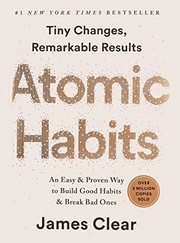
Builds directly on the habit loop by adding the 'Four Laws of Behavior Change,' making the theory immediately actionable with concrete implementation strategies.
The Psychology Layer — Motivation & Willpower
BeginnerUnderstand the psychological forces — motivation, self-control, and identity — that determine whether habit change succeeds or fails.
▸ Study plan for this stage
Pace: 6–8 weeks total: Week 1–2 — "Mindset" (~25–30 pages/day, ~288 pages); Week 3–4 — "Willpower" (~25–30 pages/day, ~291 pages); Week 5–6 — "Switch" (~25–30 pages/day, ~305 pages); Week 7–8 — review, reflection, and exercises
- Fixed vs. Growth Mindset (Dweck): the belief that abilities are either static or developable, and how that belief shapes effort, resilience, and response to failure
- Identity as the root of behavior (Dweck): lasting habit change requires a shift in how you see yourself, not just what you do
- Ego depletion and the 'muscle model' of willpower (Baumeister): self-control draws on a limited, depletable resource that can be strengthened over time with practice
- Glucose and rest as willpower inputs (Baumeister): biological factors — sleep, nutrition, decision fatigue — directly affect self-control capacity
- The Rider, Elephant, and Path framework (Heath): rational motivation (Rider), emotional drive (Elephant), and environmental design (Path) must all be aligned for change to stick
- Motivating the Elephant (Heath): emotion, not logic, is the primary engine of behavior change — finding the feeling matters more than analyzing the facts
- Shrinking the change and scripting critical moves (Heath): reducing the perceived size of a change and removing ambiguity dramatically lowers resistance
- The interplay of motivation and environment: internal psychological states (mindset, willpower) interact with external context (path-shaping) to determine whether habits succeed or fail
- According to Dweck, how does a fixed mindset sabotage habit change when early attempts fail, and what specific reframe does a growth mindset offer instead?
- Baumeister argues willpower is a finite resource — what are the practical implications of ego depletion for scheduling difficult habit-change efforts during the day?
- How does Baumeister's 'willpower as a muscle' metaphor suggest you should train self-control over time, and what are the risks of overtraining?
- In Heath's framework, what does it mean when the Rider and Elephant are in conflict, and which of the three elements (Rider, Elephant, Path) is most often the real bottleneck?
- How do Dweck's identity-level beliefs and Heath's 'Path' concept together explain why two people with equal motivation can have very different habit-change outcomes?
- Drawing on all three books, what would a psychologically sound plan look like for someone trying to build a new habit while under high stress and low energy?
- Mindset Audit (Dweck): Choose one habit you have repeatedly failed to build. Write a one-page journal entry identifying every fixed-mindset thought you have had about it (e.g., 'I'm just not a morning person'). Rewrite each statement as a growth-mindset alternative and post it somewhere visible.
- Willpower Budget Tracker (Baumeister): For one full week, log your energy and self-control quality at 3 time points each day (morning, afternoon, evening). Identify your personal peak willpower window and reschedule your most demanding habit-change effort to that window.
- Decision Fatigue Audit (Baumeister): List every decision you make before attempting your target habit each day. Eliminate or automate at least three of them (e.g., lay out workout clothes the night before) to preserve willpower for the habit itself.
- Rider–Elephant–Path Diagnosis (Heath): Pick one habit change that has stalled. Write one paragraph each diagnosing the Rider problem (lack of clarity?), the Elephant problem (lack of emotional motivation?), and the Path problem (environment too hard?). Design one intervention for each.
- Find the Feeling Exercise (Heath): Identify a habit you want to build and, instead of listing logical reasons for it, write a vivid, emotionally resonant story or find a concrete image that makes the desired future feel real and urgent to you personally.
- Identity Statement Practice (Dweck + Heath): Draft a two-sentence identity statement that reflects who you are becoming, not just what you want to do (e.g., 'I am someone who protects my energy' rather than 'I want to sleep 8 hours'). Read it aloud each morning for two weeks and journal any shifts in behavior or self-perception.
Next up: By understanding the internal psychological forces — mindset, willpower limits, and the emotional drivers of motivation — the reader is now equipped to explore the external, structural side of habit formation: the concrete mechanics of cue-routine-reward loops, environmental design, and systems that make good behavior automatic rather than effortful.
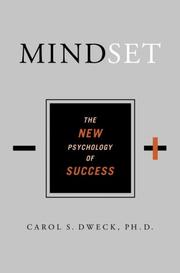
Establishes that beliefs about the self (fixed vs. growth mindset) are a hidden upstream driver of all behavior change — essential context before studying willpower.

Surveys the research on self-control as a limited resource, explaining why motivation alone fails and what psychological conditions support lasting change.
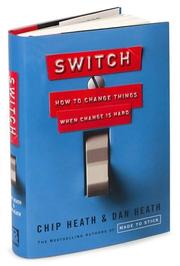
Introduces the Rider/Elephant/Path framework, showing how rational intent, emotion, and environment must all be aligned — a crucial bridge to the systems-thinking stage ahead.
The Neuroscience Layer — How the Brain Wires Behavior
IntermediateUnderstand the brain systems (dopamine, reward prediction, automaticity) that physically encode habits, so you can work with biology rather than against it.
▸ Study plan for this stage
Pace: 6–8 weeks total: Weeks 1–3 on "The Molecule of More" (~25–30 pages/day, including re-reading dense neuroscience sections); Weeks 4–7 on "Good Habits, Bad Habits" (~20–25 pages/day with slower pacing for research-heavy chapters); Week 8 reserved for synthesis, review, and completing exercises.
- The dopamine system governs desire and anticipation (the 'wanting' circuit), not pleasure itself — a distinction Lieberman makes central to understanding why we chase but are rarely satisfied
- Dopamine operates across two timescales: the Here-and-Now (H&N) system managing present experience vs. the dopaminergic future-orientation system driving pursuit of distant rewards
- Reward Prediction Error (RPE): the brain updates behavior based on the gap between expected and actual reward — the neurological engine behind habit formation and extinction
- Automaticity as the brain's efficiency solution: Wendy Wood's research shows ~43% of daily behaviors are habits performed with little conscious deliberation, driven by context cues rather than intention
- The habit loop reframed neurologically: context cues trigger learned neural pathways in the basal ganglia, bypassing the prefrontal cortex (deliberate thought) entirely once a habit is encoded
- Friction and environment design as biological levers: Wood's 'situation' concept shows that stable contexts physically reinforce neural grooves, meaning environment change is neurological intervention
- The role of repetition-in-context: habits are wired not just by frequency but by consistency of the surrounding context — same cue, same action, same reward strengthens the neural pathway
- Discontinuity moments (life transitions) as neurological reset opportunities: Wood's research shows disrupted contexts temporarily weaken automatic pathways, creating windows for rewiring
- According to Lieberman, why does dopamine make us relentlessly pursue goals yet often feel flat once we achieve them — and what does this reveal about the design of the brain's reward system?
- What is a Reward Prediction Error, and how does the brain use the mismatch between expected and actual outcomes to strengthen or weaken a behavioral pathway over time?
- Wendy Wood distinguishes between 'goal-directed' behavior and 'habitual' behavior at the neural level — what are the key differences, and why does this matter for anyone trying to change a habit?
- Wood argues that willpower-based approaches to habit change fail for a neurological reason. What is that reason, and what does she propose instead?
- How do stable contexts physically encode habits in the brain, and what practical implication does this have for someone trying to build a new habit or break an old one?
- How do the insights from Lieberman's dopamine framework and Wood's context/automaticity research complement each other to form a unified neurological model of habit?
- **Dopamine Audit Journal (Weeks 1–3):** While reading Lieberman, keep a daily log of 3 moments where you felt strong anticipation vs. 3 moments of actual reward. Note whether the dopamine 'wanting' felt stronger than the 'having.' Use Lieberman's H&N vs. future-reward framework to label each entry.
- **Habit Automaticity Inventory (Week 4):** Before starting Wood, shadow yourself for one full day and timestamp every behavior. At day's end, classify each as deliberate (prefrontal) or automatic (context-triggered). Aim to identify Wood's ~43% figure in your own life.
- **Context Map Exercise (Weeks 5–6):** Pick one habit you want to build and one you want to break. For each, draw a 'context map' — list every environmental cue (location, time, preceding action, social presence) that surrounds it. Then redesign the environment to either reinforce or disrupt those cues, using Wood's friction/ease principles.
- **Reward Prediction Error Experiment (Week 3):** Choose a small repeated behavior (e.g., checking your phone). For one week, deliberately vary the reward (sometimes respond to notifications, sometimes don't). Journal how your anticipation and automaticity shift — observe RPE in action.
- **Transition Window Planning (Week 7):** Identify one upcoming life discontinuity (a new week, a trip, a schedule change). Using Wood's research on habit discontinuity, write a concrete plan to install one new habit specifically during that window, specifying the context cues you will anchor it to.
- **Synthesis Essay (Week 8):** Write a 400–600 word personal brief titled 'My Brain on Habits' that integrates at least three concepts from Lieberman and three from Wood into a single coherent model. Explain how dopamine, automaticity, and context interact — in your own words, with examples from your own life.
Next up: Having established the neurological 'hardware' of habits — how dopamine wires desire and context encodes automaticity — the reader is now ready to explore the practical 'software': the specific frameworks and strategies (such as identity-based change, implementation intentions, and keystone habits) that consciously leverage these brain mechanisms to engineer lasting behavior change.

Explains dopamine's role in desire, craving, and reward-seeking — the neurochemical engine behind every habit loop you studied in Stage 1.

Written by the world's leading habit researcher, this book translates decades of lab science into clear principles about context, friction, and automaticity — the most research-grounded book in the curriculum.
Design & Systems — Engineering Your Environment
IntermediateLearn to redesign your physical, social, and digital environment so that good behaviors become the path of least resistance.
▸ Study plan for this stage
Pace: 6–8 weeks total: Weeks 1–3 cover "Nudge" (~30–35 pages/day, ~300 pages); Weeks 4–7 cover "Thinking, Fast and Slow" (~25–30 pages/day, ~450 pages); Week 8 is reserved for review, synthesis, and completing exercises.
- Choice Architecture: The deliberate structuring of how options are presented shapes decisions without restricting freedom — Thaler's central thesis in Nudge.
- Default Effects: People overwhelmingly stick with pre-set defaults (e.g., opt-in vs. opt-out organ donation); designing the right default is the highest-leverage environmental lever.
- Libertarian Paternalism: Nudges guide people toward better outcomes while preserving free choice — a framework for ethical environment design.
- Feedback Loops & Incentive Mapping: Thaler shows that timely, visible feedback (e.g., energy usage comparisons with neighbors) changes behavior more reliably than willpower alone.
- System 1 vs. System 2 Thinking: Kahneman's dual-process model explains WHY environment design works — automatic, effortless System 1 governs most daily behavior and is highly susceptible to contextual cues.
- Cognitive Biases as Environmental Vulnerabilities: Anchoring, availability heuristic, loss aversion, and status quo bias (all detailed by Kahneman) are the psychological mechanisms that nudges exploit or counteract.
- Friction as a Design Variable: Adding friction to bad behaviors and removing it from good ones is the practical engineering principle that unifies both books.
- Social Proof & Norms as Environmental Signals: Thaler's 'EAST' and social-comparison nudges show that the perceived behavior of peers is itself a powerful environmental cue that can be deliberately engineered.
- According to Thaler, what makes someone a 'choice architect,' and why is neutrality in design impossible? Give two real-world examples from Nudge.
- How does the default effect work psychologically, and what does Kahneman's System 1 / System 2 framework reveal about WHY defaults are so sticky?
- Kahneman identifies loss aversion as a core feature of System 1. How can a behavior-change environment be designed to harness loss aversion rather than fight it?
- What is the difference between a nudge and a mandate? Where does Thaler draw the ethical line, and do you agree with his criteria?
- Kahneman describes the 'what you see is all there is' (WYSIATI) principle. How does this explain why physical environment redesign (e.g., placing fruit at eye level) is more effective than adding information or warnings?
- Synthesizing both books: identify three cognitive biases from Kahneman that directly explain the success of three specific nudges described by Thaler.
- Default Audit — Survey your home, phone, and workspace and list every 'default' currently set (app notifications, pantry layout, desk arrangement, social media feeds). Classify each as helping or hindering a target habit, then redesign at least three defaults deliberately.
- Friction Asymmetry Experiment — Choose one habit you want to build and one you want to break. Add at least two concrete friction points to the bad habit (e.g., log out of a distracting app, move junk food to a high shelf) and remove two friction points from the good habit (e.g., lay out gym clothes the night before). Track behavior daily for two weeks and journal what changed.
- Bias-to-Nudge Mapping — Create a two-column table: in column A, list six cognitive biases from Kahneman (e.g., status quo bias, anchoring, availability). In column B, design a specific environmental nudge for your own life that exploits or counteracts each bias.
- Social Norm Nudge Design — Inspired by Thaler's energy-bill neighbor-comparison example, identify one area of your life where you could introduce a social proof signal. Design the intervention in writing: what data would you track, who is your 'reference group,' and how would the feedback be delivered?
- System 1 Environment Scan — Walk through your daily routine and annotate each decision point: Is it driven by System 1 (automatic) or System 2 (deliberate)? For every System 1 decision point that leads to an undesired outcome, propose one environmental redesign that redirects the automatic response.
- Synthesis Essay (500–700 words) — Write a personal 'Environment Design Manifesto' that integrates Thaler's choice architecture principles with Kahneman's dual-process theory. Describe the three highest-impact environmental changes you will make and justify each with specific concepts from both books.
Next up: Mastering environment design through Thaler and Kahneman establishes the structural 'outer game' of behavior change — the stage is now set to explore the 'inner game': identity, motivation, and the psychological mechanisms that sustain habits once the environment has made them easier to start.
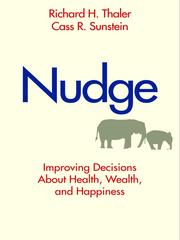
Introduces choice architecture — the idea that how options are presented shapes behavior more than willpower — giving you a powerful design lens for your own life.

The definitive account of System 1 (automatic) vs. System 2 (deliberate) thinking; understanding this duality explains why environment design works and pure intention often doesn't.
Advanced — Clinical & Theoretical Frameworks
ExpertEngage with the formal theoretical models used by behavioral scientists, therapists, and public-health practitioners to understand and change behavior at depth.
▸ Study plan for this stage
Pace: 6–8 weeks total. Week 1–4: "Changing for Good" (~30–35 pages/day, reading one stage of the Transtheoretical Model per sitting). Week 5–8: "The Willpower Instinct" (~25–30 pages/day, aligned with one chapter per session, ideally mirroring McGonigal's original 10-week course pacing compressed into 4 w
- The Transtheoretical Model (TTM) and its five stages of change: Precontemplation, Contemplation, Preparation, Action, and Maintenance — as laid out by Prochaska in 'Changing for Good'
- The 10 processes of change (e.g., consciousness-raising, self-liberation, counterconditioning) and how they map specifically onto TTM stages
- The concept of decisional balance: weighing pros and cons of change as a diagnostic and intervention tool within Prochaska's framework
- Self-efficacy as a stage-specific variable — how confidence in one's ability to change fluctuates across the TTM stages and must be cultivated accordingly
- The neuroscience of self-control as presented by McGonigal: the prefrontal cortex vs. the 'want' and 'fear' brain systems, and the 'pause-and-plan' response vs. the 'fight-or-flight' response
- McGonigal's three powers of willpower: 'I will,' 'I won't,' and 'I want' — and how each maps to distinct self-regulatory challenges
- The role of physiological factors in willpower: heart rate variability (HRV) as a measurable index of self-control capacity, and how sleep, stress, and exercise modulate it
- Willpower as a trainable, depletable resource: ego depletion theory, its critiques, and McGonigal's practical strategies for building reserve capacity (e.g., the 'willpower workout,' mindfulness, and self-compassion over guilt)
- According to Prochaska, why is it a clinical mistake to apply Action-stage interventions to someone in Precontemplation, and what should be done instead?
- How does Prochaska's decisional balance shift mathematically across the five stages, and what does this predict about when a person is ready to move from Contemplation to Preparation?
- What is the 'pause-and-plan' response described by McGonigal, how does it differ physiologically from the stress response, and why is it central to willpower?
- McGonigal argues that guilt and self-criticism after a willpower failure are counterproductive — what does she recommend instead, and what is the psychological mechanism behind it?
- How do the processes of change in Prochaska's TTM (e.g., helping relationships, stimulus control) correspond to the practical willpower strategies McGonigal prescribes (e.g., environment design, urge surfing)?
- What does McGonigal mean by the 'what-the-hell effect,' and how does Prochaska's concept of recycling through stages (rather than linear progression) offer a complementary clinical explanation for relapse?
- Stage self-audit: Using Prochaska's five-stage framework, identify one behavior you want to change and honestly diagnose which stage you are currently in. Write a one-page justification citing specific TTM criteria from 'Changing for Good.'
- Processes-of-change mapping: Create a two-column table listing all 10 processes of change from Prochaska on the left. On the right, write one concrete, personal action you could take for each process that is appropriate to your current stage.
- HRV willpower workout (McGonigal): For two consecutive weeks, practice McGonigal's recommended slow-breathing exercise (4–5 breaths per minute) for 5 minutes each morning. Log your perceived self-control rating (1–10) before and after each session and note patterns.
- Willpower challenge journal: Choose one 'I will' and one 'I won't' challenge from your own life (as McGonigal structures her course). Keep a daily 3-sentence log for 2 weeks: (1) what happened, (2) what triggered success or failure, and (3) what you would do differently — explicitly referencing McGonigal's concepts.
- Cross-book synthesis essay: Write a 500–700 word essay arguing how Prochaska's TTM and McGonigal's willpower science are complementary frameworks. Identify at least two points of tension or contradiction between them and propose how a practitioner might resolve them.
- Relapse analysis: Recall a past failed attempt at behavior change. Apply both frameworks simultaneously — diagnose the TTM stage you were in when you quit (Prochaska) and identify which willpower failure mechanism was at play (McGonigal). Write up your findings as a brief case study.
Next up: Mastering the TTM's stage-based clinical logic and McGonigal's neuroscience of self-regulation gives the reader the theoretical scaffolding needed to critically evaluate real-world behavior-change interventions, policy designs, and therapeutic protocols at a systems level — the natural focus of any subsequent stage exploring applied or organizational behavioral science.
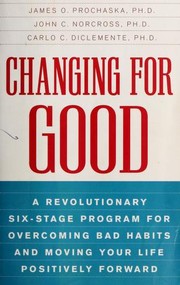
Presents the Transtheoretical Model (Stages of Change) — the clinical gold standard for understanding readiness to change, used in medicine, therapy, and coaching worldwide.
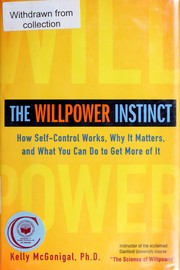
A Stanford course distilled into a book, it synthesizes neuroscience, psychology, and mindfulness into a rigorous, evidence-based capstone that ties together every thread in the curriculum.
Discussion
Keep reading
Paths that share books, cover the same subject, or open a related topic.