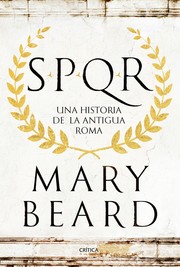
Start with Mary Beard's SPQR. It covers a millennium without ever reading like a survey, it is candid about how thin the evidence is for the early centuries, and it keeps asking what Roman history is evidence for, rather than just narrating it.
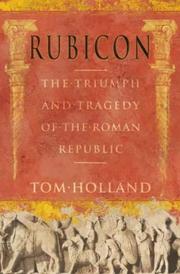
The obvious alternative is Tom Holland's Rubicon, and it is the better read of the two — genuinely thrilling narrative history. But it covers only the last century of the Republic, and starting there gives you the collapse without the thing that collapsed. Read it second, when you know what was being lost.
The fall, in three books that disagree about when it began
Holland takes you from Sulla to Actium. Michael Duncan's The storm before the storm deliberately backs up a century to the Gracchi, on the argument that the fatal damage was done long before Caesar was born. Edward J. Watts' Mortal Republic pulls back further and asks a question aimed squarely at modern readers: how does a republic with functioning institutions talk itself into accepting one-man rule?
Those three books are not telling the same story at different lengths. They disagree about where the rot started, and reading them in sequence is the point.
The Romans in their own words
Anthony Everitt's Cicero is the bridge — a modern biography of the one late Republican whose private letters survive in bulk, which makes him the most knowable person in the ancient world. Then Plutarch's Fall of the Roman Republic, which is where most of the anecdotes you already half-know come from, and Sallust's Catiline's War, The Jugurthine War, Histories, which is a contemporary writing about his own generation's corruption with the fury of a man who had participated in it.
Sallust is a moralist, not a neutral reporter. That is what makes him useful: he shows you what a Roman thought had gone wrong, which is a different thing from what modern historians think went wrong.
The scholarly end, where the argument lives
Ronald Syme's The Roman revolution was published in 1939 and reads as a study of how a faction captures a state — Syme was writing with contemporary Europe in view, and it shows. It remains the single most influential book on the subject.
Erich S. Gruen's The last generation of the Roman Republic argues almost the reverse: that the Republic was not in terminal decline, that its institutions were working, and that the civil wars were contingent rather than the culmination of long decay. Harriet I. Flower's Roman republics proposes that there was no single Republic at all but a series of distinct constitutional settlements, which dissolves the question of the fall by reframing it.
These three are irreconcilable and all three are serious. Anyone who tells you the Republic fell for one reason has not read the other two.
Tim Cornell's The beginnings of Rome goes the other direction entirely, into the archaeology of the early city, where the literary sources are least trustworthy.
Where to stop
Beard, Holland, Everitt and Plutarch is a genuine grounding and enough for most readers. Add Duncan and Watts if the constitutional question interests you more than the personalities. Syme, Gruen and Flower are for readers who want to argue about it rather than know about it — and they should be read as a set, because reading only one leaves you with a settled view of something that is not settled.
Follow the full ordered path here: The Roman Republic: The Best Books to Read, in Order.