The Ringworld Novels Reading Order: Where to Start
Ringworld is a standalone novel that acquired three sequels over thirty-four years, and it sits inside a much larger shared setting called Known Space that Larry Niven had been building in short stories since the early sixties. That is the source of every confused reading-order question here. The answer is simple: read Ringworld first and on its own, take the sequels in publication order if the first book worked for you, and treat the Known Space books as optional background you read afterwards rather than homework you do first.
Start Here: Ringworld Alone
BeginnerRead the novel the whole thing is named for, and understand the one idea it exists to deliver — an artificial ring a million miles wide built around a star.
▸ Study plan for this stage
Pace: About a week. Ringworld is roughly 340 pages and moves fast once the expedition launches. Do not start a sequel the same week you finish it; the book is better remembered as a standalone than as chapter one of anything.
- The object itself: a ribbon a million miles wide and six hundred million miles around, spun for gravity around a star, with a habitable surface area of roughly three million Earths. Everything else in the novel exists to walk you across it.
- Niven's method is to take one enormous physical premise seriously and derive consequences. Characters are instruments for exploring the object, and judging them as characters is judging the book by a standard it is not attempting.
- The four-species crew is the actual exposition device: a bored two-hundred-year-old human, a Kzin whose species has lost four wars to humanity, a Pierson's puppeteer who is a coward by evolutionary design, and Teela Brown.
- Puppeteer cowardice is a strategy, not a joke. Nessus manipulates the expedition into existing, and the reason he needs the other three is the novel's real plot.
- Teela Brown's luck as an inherited trait is the idea the entire series never lets go of, and the one that most divides readers.
- Ringworld is hard science fiction of the era when explanation happened in dialogue. Expect characters to lecture each other; the lecture is the payload.
- The famous erratum: readers, including MIT students, pointed out that the Ringworld as described is not orbitally stable. Niven accepted this, and the first sequel exists partly to fix it. Knowing that in advance makes the sequels legible.
- Why is a ring cheaper and more plausible than a full Dyson sphere, and what does the ring give up in exchange?
- Why does Nessus need a human, a Kzin and Teela specifically? What is each one selected for?
- Strip away the scenery and the plot of Ringworld is a crash and a long walk. Why does that structure suit the premise better than a conventional adventure plot would?
- What is Teela Brown for? Is her luck a genuine idea about probability and heredity, or a device that lets Niven move the plot when he needs to?
- Where does Niven stop explaining and expect you to infer? Find one thing about the Ringworld's builders that the novel never states outright.
- Work out the ring's surface area against Earth's before you finish the first fifty pages. The number, roughly three million Earths, is the thing the novel is actually about, and doing the arithmetic yourself lands it harder than reading the figure.
- Mark every passage where one character explains physics to another and ask who the explanation is really addressed to. It is a habit of the whole subgenre and it recurs throughout the sequels.
- Write one sentence, before opening any sequel, on whether you want more Ringworld or you are finished. A large number of readers should honestly stop here, and the next stage explains why.
Next up: You now hold the single idea the series exists to deliver, which is the only fair basis on which to decide whether three books of engineering revision and setting maintenance are something you want.

Start here and nowhere else. It won the Hugo and the Nebula, it explains everything it needs to as it goes, and none of the Known Space stories are prerequisites. If the enormous engineering set-piece at its centre does not thrill you, the sequels will not either.
The Sequels, in Publication Order
IntermediateFollow the three follow-up novels, knowing in advance that they are progressively more technical and more entangled with the wider setting.
▸ Study plan for this stage
Pace: 4-5 weeks if you read all three, but decide book by book rather than committing to the run. The Ringworld Engineers is the strongest and reads in a week; The Ringworld Throne is where readers most often abandon the series; Ringworld's Children is short and quick.
- Stated plainly, because selling all four equally would be dishonest: Ringworld is a landmark of hard science fiction and the sequels are not held in remotely the same regard. The Ringworld Engineers is a decent book with a real reason to exist, The Ringworld Throne is widely considered the weakest o
- The Ringworld Engineers is partly an erratum in novel form. The stability problem is addressed directly, along with the question of where the Ringworld's builders went, and much of its energy comes from correcting the first book rather than extending it.
- The Ringworld's hominid species are revealed to be many descendants of one stock filling every ecological niche, and this speciation idea gradually becomes the main subject in place of the engineering.
- Protectors and the Pak move from background to foreground. The sequels increasingly assume knowledge that lives in other Known Space books, which is why the next stage exists.
- Rishathra, sex between hominid species used as diplomacy, is introduced as worldbuilding and expands considerably across the sequels. Many readers find it tedious or off-putting rather than anthropologically interesting, and it is a common reason for abandoning The Ringworld Throne.
- Louis Wu's arc across the sequels, from addiction to reluctant responsibility, is the only sustained character work in the series.
- Plot progressively serves the setting. By the fourth book the questions being answered are ones about the Ringworld's operating system, not about anyone's fate.
- Does knowing that The Ringworld Engineers began as a correction change how you read its first half?
- Which questions left open by Ringworld do the sequels actually answer, and how many did they simply not care about?
- Ringworld's Children is markedly shorter than the others. What does it drop, and does the book lose anything by dropping it?
- Is rishathra doing worldbuilding work, or is it padding with a rationale? Argue it from the text rather than from taste.
- If a friend asked which of the four Ringworld books to read, what would you say, and would your answer differ for a hard-SF reader and a general one?
- Read The Ringworld Engineers, then stop and decide. Committing to all three in advance is the single commonest way readers end up resenting this series.
- Keep the list of open questions you noticed in Ringworld and tick them off as the sequels address them. The count is lower than most readers expect.
- If you abandon The Ringworld Throne, go straight to Ringworld's Children rather than quitting. It is readable without it, and the missing material is summarised in passing.
- Note every reference to Pak, protectors or puppeteer homeworld politics that the text does not explain. That list is your reading order for the next stage.
Next up: By the end you will have met protectors, the Pak and puppeteer politics without ever being shown their origins, which is exactly the gap the Known Space background fills.
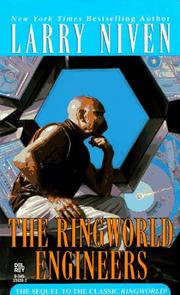
Written partly to fix engineering errors readers pointed out in the first book, which tells you everything about its priorities. Louis Wu returns to the Ringworld and the question becomes who built it and why. The best of the three sequels.

Third, and the weakest by general agreement — much of it follows Ringworld hominid species rather than the original cast. Read it for continuity into the fourth book, and do not judge the series by it.

Closes the sequence and resolves the Ringworld's fate. It assumes a great deal of Known Space background, which is precisely why the next stage exists — this is the book that sends most readers looking for it.
The Known Space Background
IntermediateFill in the setting the sequels increasingly assume — Pak protectors, Puppeteers, the Man-Kzin wars — as background rather than prerequisite.
▸ Study plan for this stage
Pace: 3-4 weeks. Neutron Star is a collection and can be read a story at a sitting; Protector and World of Ptavvs are both short novels by modern standards, under 250 pages each.
- Known Space is a story cycle Niven built across short fiction from the early 1960s, not a numbered series. There is no correct entry point, which is exactly why reading it after Ringworld works better than reading it first.
- Neutron Star collects the puzzle stories that made Niven's name, several of them featuring Beowulf Shaeffer. The title story is the cleanest example of the form: a physical situation, a deadline, and a solution that is derivable from information you were given.
- Protector is the single most load-bearing background book for the Ringworld sequels. It explains the Pak, the tree-of-life root, and what a protector is and wants, all of which the sequels assume you know.
- World of Ptavvs is very early Niven and reads like it. Its value is the slaver and stasis-field material that underlies the whole setting's deep history.
- Puppeteer economics, the General Products hull and the fleeing homeworlds are setting furniture that appears everywhere and is explained almost nowhere in the Ringworld books themselves.
- The tnuctipun and thrintun backstory, roughly a billion years before the novels, is why so much abandoned technology is lying around for characters to find.
- Niven's own consistency is imperfect across a cycle written over decades. Treat contradictions as artefacts of serial publication rather than puzzles to solve.
- After Protector, what does Teela Brown's luck mean, and does the explanation improve or damage the first novel?
- Which of the three books explained something you had been silently guessing at while reading the sequels?
- What does the Beowulf Shaeffer story form require of the reader that the Ringworld novels do not?
- Is World of Ptavvs worth the time on its own merits, or only for the setting it establishes?
- Does the shared-universe consistency hold up, and where does it visibly strain?
- Read the title story of Neutron Star first and stop before the reveal to work the physics yourself. That is the intended experience of the entire collection.
- Immediately after finishing Protector, re-read the last chapter of The Ringworld Engineers. It is a different scene once you know what a protector is.
- Build a one-page Known Space timeline from these three books alone, marking what you inferred rather than read. The gaps you find are what the last stage fills.
Next up: With the Pak, the puppeteers and the slaver deep history in place, the remaining books stop being explanation and become completism, which is a different kind of reading and should be chosen deliberately.
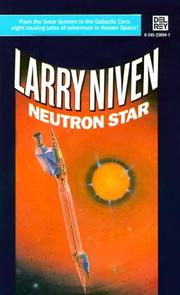
The short-story collection where Known Space was really built, including the Hugo-winning title story that introduces the Puppeteers properly. The single most useful non-Ringworld book, and readable in any order.
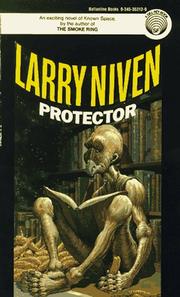
The Pak protector novel, and the one piece of background that genuinely changes how Ringworld's Children reads. If you only take one book from this stage, take this one.
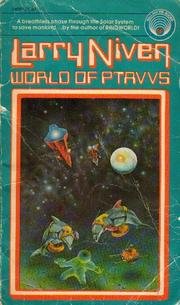
Niven's first novel and the earliest point in the Known Space timeline, about a telepathic alien thawed out after a billion years. Read it late — it is early work, and it explains the setting's deep history rather than its politics.
The Completist Tail
IntermediateGo as deep into Known Space as you want, at the point where you are reading for the setting rather than the story.
▸ Study plan for this stage
Pace: 3-4 weeks, and entirely optional. Read Tales of Known Space and Crashlander a story at a time over whatever period suits; Fleet of Worlds is a conventional novel and takes a week.
- These are companions and collections rather than continuations. Nothing here changes what happens in the Ringworld novels; the return is texture and coverage.
- Crashlander gathers the Beowulf Shaeffer stories into a single sequence with connecting frame material. It overlaps Neutron Star substantially, so expect to re-read stories you have already met, this time in intended order.
- Tales of Known Space includes Niven's own notes and timeline for the setting, which is the closest thing to an authorial map of the cycle.
- Fleet of Worlds is co-written with Edward M. Lerner and reads differently from solo Niven: more conventional plotting, more character interiority, less puzzle. It fills in puppeteer history the Ringworld books gesture at.
- Diminishing returns are real and worth naming. The setting is more interesting than most of the stories set in it at this depth.
- Reading order inside this stage barely matters, which is itself a sign you have left the series proper and entered the archive.
- Does reading the Beowulf Shaeffer stories in Crashlander's intended order change them, or only tidy them?
- What does Niven's own timeline in Tales of Known Space reveal about how the cycle was actually assembled?
- Where can you hear the co-author in Fleet of Worlds, and does the change in voice help or hurt the puppeteer material?
- Having finished, which single book after Ringworld would you keep, and which would you tell a friend to skip?
- Is Known Space a coherent future history or a set of stories retrofitted into one? Argue it from what you have now read.
- Read Niven's timeline and notes in Tales of Known Space before the stories in it, then check your one-page timeline from the previous stage against his.
- Skip any Crashlander story you read recently in Neutron Star unless you want the frame; the frame is the only new material for those.
- Write the honest four-line recommendation you would give someone asking about this series, ranking all ten books you have now read. That list is more useful than any completion badge.
Next up: Finishing here means you know the setting far better than the sequels ever required, which is the honest definition of completism rather than a claim that the last books were necessary.
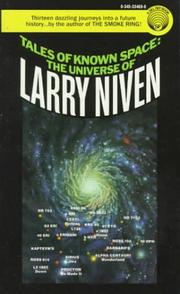
The gathering of the remaining short fiction, with Niven's own notes on how the future history fits together. This is the reference volume, and it is far more use once you have read the novels it annotates.
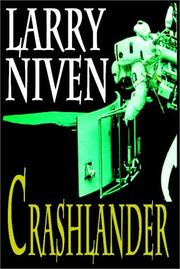
Collects the Beowulf Shaeffer stories — including several already in Neutron Star — with new connecting material. Worth it for the framing narrative; be aware you are re-reading some of the same stories.
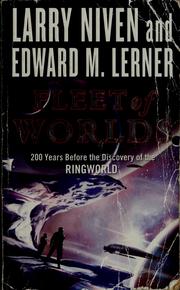
The first of the later Puppeteer-focused collaborations with Edward M. Lerner, set two centuries before Ringworld. Strictly optional continuation — read it only if Known Space itself, rather than the Ringworld, is what kept you here.
Discussion
Keep reading
Paths that share books, cover the same subject, or open a related topic.