Start with Ringworld. It is the first book, it is the best book, and it is the one the whole series exists to deliver — a ribbon a million miles wide and six hundred million miles around, spun for gravity about a star, with a habitable surface of roughly three million Earths. Everything else in the novel exists to walk you across that object.
The more useful advice is what to do when you finish. Do not start a sequel the same week. Ringworld is better remembered as a standalone than as chapter one of anything, and reading it alone leaves you holding the single idea the series was built to deliver, which is the only fair basis for deciding whether three more books of engineering revision and setting maintenance are something you want.
Reading the first book on its own terms
Niven takes one enormous physical premise seriously and derives consequences. Characters are instruments for exploring the object, so judging them as characters is judging the book by a standard it is not attempting. The four-species crew is the exposition device: a bored two-hundred-year-old human, a Kzin whose species has lost four wars to humanity, a Pierson's puppeteer who is a coward by evolutionary design, and Teela Brown, whose inherited luck is the idea the series never lets go of and the one that most divides readers.
This is hard science fiction from the era when explanation happened in dialogue. Characters lecture each other, and the lecture is the payload. One thing worth knowing in advance: readers, MIT students among them, pointed out that the Ringworld as described is not orbitally stable. Niven accepted this, and the first sequel exists partly to fix it — which is what makes the sequels legible rather than baffling.
The sequels, in publication order
Selling all four equally would be dishonest. Ringworld is a landmark; the sequels are not held in remotely the same regard. Decide book by book rather than committing to the run.
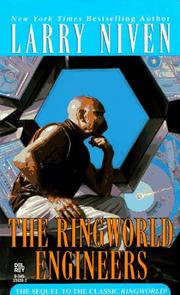
The Ringworld Engineers (Ringworld) is the strongest of the three and reads in a week. It is partly an erratum in novel form — the stability problem is addressed directly, along with the question of where the builders went — and much of its energy comes from correcting the first book rather than extending it. It also shifts the subject from engineering to speciation: the Ringworld's hominids turn out to be many descendants of one stock, filling every ecological niche.
The Ringworld throne is where readers most often abandon the series and is widely considered the weakest of the four. One specific reason: rishathra, sex between hominid species used as diplomacy, is introduced as worldbuilding and expands considerably. Plenty of readers find it tedious rather than anthropologically interesting.
Ringworld's Children is short, quick and a tidy but minor coda. By this point the questions being answered are about the Ringworld's operating system rather than anyone's fate. Louis Wu's arc from addiction to reluctant responsibility is the only sustained character work in the four.
The Known Space background
The sequels increasingly assume knowledge that lives in Niven's wider Known Space cycle — a body of short fiction begun in the early 1960s, not a numbered series. There is no correct entry point, which is exactly why reading it after Ringworld works better than reading it first.
Protector is the single most load-bearing book here: it explains the Pak, the tree-of-life root, and what a protector is and wants, all of which the sequels assume you know. Neutron Star collects the puzzle stories that made Niven's name, several featuring Beowulf Shaeffer; the title story is the cleanest example of the form. World of Ptavvs is very early Niven and reads like it, but carries the slaver and stasis-field material underlying the setting's deep history.
The completist tail
Crashlander, Tales of Known Space and Fleet of worlds are companions rather than continuations, and nothing in them changes what happens on the Ringworld. Crashlander overlaps Neutron Star substantially, so expect to re-read stories in intended order. Tales of Known Space carries Niven's own notes and timeline. Fleet of worlds, co-written with Edward M. Lerner, reads differently from solo Niven — more conventional plotting, more interiority, less puzzle.
Diminishing returns are real here, and reading order inside this stage barely matters, which is itself a sign you have left the series and entered the archive. Where to stop is genuinely a matter of appetite: after book one is respectable, after The Ringworld Engineers (Ringworld) is the common answer, and past that you are reading for the setting. More science fiction paths are on Discover.
Follow the full ordered path here: The Ringworld Novels Reading Order: Where to Start.