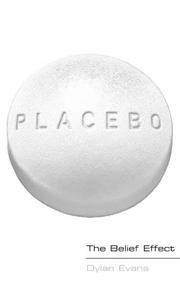
Start with Suggestible You. Erik Vance tours expectation effects including the nocebo side that most popular accounts skip, and he is unusually disciplined about saying where the evidence stops — which is the single most important quality in a first book on this subject. Read Cure next: Jo Marchant reports from the mind-body labs and consistently asks researchers what their result would look like if it were noise. She is more willing than Vance to entertain optimistic readings, so read them together and notice where they diverge.
This subject needs an order because it is an area with real science and a great deal of overclaiming, and the two are hard to tell apart from inside a single book. Placebos measurably affect pain, nausea, Parkinsonian motor symptoms and depression scores. They do not shrink tumours, clear infections or mend broken bones. Almost every inflated claim you will encounter depends on blurring a change in reported symptoms with a change in disease. One book you will not find on this path is Joe Dispenza's You Are the Placebo, which is widely sold and not supported by the evidence base the rest of this list is built on; it is named here in plain text rather than listed, because listing it would put a recommendation next to it.
The methodology stage, which is where most confusion actually lives
Testing treatments is a short primer — 116 pages, and free to read online — on how clinical evidence is generated and how it goes wrong, written for patients and unusually clear on randomisation and blinding. Read it before anything that makes a quantitative claim about placebo response rates.
The point it sets up is the one most placebo writing gets wrong: the placebo arm of a trial measures placebo response plus regression to the mean plus the natural history of the illness plus reporting bias. Without a no-treatment arm, a trial cannot isolate the placebo effect at all. Bad Science contains the best short explanation in print of why the effect is simultaneously fascinating and constantly misused, and the rest of the book teaches the trial-reading skills the later stages assume. Trick or Treatment? then works through the actual trial evidence for acupuncture, homeopathy, chiropractic and herbal medicine, where the placebo question is not academic. It reaches a sceptical verdict and says so; Edzard Ernst spent a career running those trials.
The mechanism
Placebo effects is the standard scientific monograph, by the neuroscientist who did much of the underlying work, covering conditioning, expectation and the neurochemistry system by system. It is written for researchers and it shows, but nothing in print is as rigorous or as cautious. Patient's Brain is the shorter companion on what the ritual of being treated does measurably to a patient, and it is the better entry point of the two.
What makes this stage worth the difficulty: placebo analgesia has an identified opioid pathway that naloxone blocks, and Parkinsonian placebo response shows dopamine release on imaging. Those findings are why the effect is a biology rather than a courtesy.
The reframing
Meaning, Medicine and the 'Placebo Effect' is the most intellectually important book here — an anthropologist's case that "placebo effect" is a misnomer for a response to meaning, expectation and clinical ritual, supported by cross-cultural variation in trial results that pure pharmacology cannot explain. If Daniel Moerman is right, this is a component of every treatment rather than a control condition. The placebo response is the practical counterpart, by a physician and bioethicist, on the deception problem and whether open-label placebos escape it. The Cure Within traces the recurring stories Western medicine has told about mind and healing, from mesmerism to stress to positive thinking, and is the best inoculation against the next round of them.
Where the claims break down
Placebo belongs with the sceptics as much as with the introductions: Dylan Evans argues the effect works largely through the inflammatory and pain systems rather than on everything, and that narrower claim has aged well. Snake oil science is a biostatistician on why placebo-controlled results in alternative medicine are so often misread; the tone is blunt and dismissive enough that some readers find it overcorrects, and the statistical argument stands regardless.
The Emperor's New Drugs is Irving Kirsch's meta-analysis of antidepressant trial data, including unpublished data obtained under freedom-of-information law, arguing that most of the measured benefit is placebo response. It is vigorously disputed by psychiatrists over its handling of severity subgroups and of clinical significance, and it is also one of the most consequential placebo arguments ever made — read the rebuttals alongside it. End with Doctor You, the most optimistic position on the path held by someone with the methodological credentials to defend it: that clinicians should deliberately harness placebo and self-healing effects. It is closer to advocacy than the monographs, which is why it comes last, once you can check its claims yourself.
None of this is medical advice, and nothing here is a reason to stop a treatment; that is a conversation with a clinician. The full ordered path, with stage goals, is at /paths/pt_ai_the-placebo-effect.