Three-Body Problem Reading Order and Guide
This curriculum guides an intermediate reader through a deep, sequential immersion in Liu Cixin's "Remembrance of Earth's Past" trilogy and its authorised sequel, with contextual scaffolding drawn from Chinese science fiction history, hard SF concepts, and philosophical background. Each stage builds the scientific intuition, cultural literacy, and narrative vocabulary needed to fully appreciate the next book in the sequence — so that by the final stage, the authorised sequel lands with maximum impact.
Context & On-Ramp
IntermediateBuild the cultural, scientific, and genre foundations — Chinese history, hard SF conventions, and Fermi Paradox thinking — so that The Three-Body Problem's layered references land fully on the first read.
▸ Study plan for this stage
Pace: 6–8 weeks total: Weeks 1–3 on Invisible Planets (~20–25 pages/day, including Liu's essays); Weeks 4–7 on A Brief History of Time (~15–18 pages/day with pauses for reflection); Week 8 as a synthesis/review week to connect both books before moving on.
- The Cultural Revolution and its trauma as a lens for Chinese science fiction — drawn directly from Ken Liu's editorial essays and author notes in Invisible Planets, which contextualize why Chinese SF grapples with collective memory, state power, and survival
- The distinctly Chinese SF imagination: how authors in Invisible Planets like Hao Jingfang and Chen Qiufan blend social realism with speculative extrapolation, differing from Western hard-SF traditions
- Ken Liu's concept of 'chineseness' as a fluid, contested identity in SF — his introductory and interstitial essays argue that Chinese SF is not a monolith, preparing readers to resist flattening Liu Cixin's worldview
- The Fermi Paradox as a narrative engine: Invisible Planets' stories (especially those dealing with alien contact and civilizational scale) prime the reader to ask 'where is everybody?' before the trilogy makes it central
- Newtonian mechanics, relativity, and spacetime from A Brief History of Time — the three-body gravitational problem is physically real, and Hawking's accessible treatment of orbital chaos and the arrow of time gives the science its teeth
- The nature of scientific revolutions and the limits of human knowledge — Hawking's chapters on uncertainty, quantum mechanics, and the boundaries of physics mirror the trilogy's philosophical anxiety about what intelligence can and cannot know
- Hard SF conventions: the contract between author and reader that speculative extrapolations must follow from real science — A Brief History of Time equips the reader to recognize when Liu Cixin is honoring or deliberately straining that contract
- Civilizational thinking and deep time — both books, in different registers, ask the reader to zoom out from the individual human lifespan to geological, cosmic, and evolutionary scales
- After reading Ken Liu's editorial essays in Invisible Planets, how did the Cultural Revolution shape the thematic preoccupations of Chinese SF, and why does that historical wound make a story set partly during the Cultural Revolution land differently than a Western dystopia?
- Invisible Planets presents a range of Chinese SF voices and aesthetics. What tensions or disagreements exist among them, and how does Ken Liu's framing warn against treating any single author as representative of 'Chinese SF'?
- Based on A Brief History of Time, what makes the three-body gravitational problem genuinely unsolvable in closed form, and why does that physical fact make it a powerful metaphor for unpredictability and civilizational precarity?
- How does Hawking's treatment of the arrow of time, entropy, and the expansion of the universe establish a cosmological backdrop against which a story about the fate of civilizations becomes scientifically grounded rather than merely fantastical?
- Several stories in Invisible Planets touch on contact with the alien or the radically Other. What ethical and survival frameworks do those stories propose, and how do they set up the reader to interrogate the trilogy's own answer to that question?
- Having read both books, how would you articulate the Fermi Paradox in your own words, and what assumptions — scientific, cultural, and philosophical — does any proposed 'solution' to it necessarily smuggle in?
- Annotation exercise on Invisible Planets essays: As you read each of Ken Liu's introductory and interstitial essays, write a 3–5 sentence summary of the historical or cultural claim he is making, then note one story in the collection that confirms it and one that complicates it.
- Fermi Paradox journal: After every third story in Invisible Planets, pause and write a one-paragraph 'civilizational status report' — what does this story imply about whether intelligent civilizations tend to survive, hide, or destroy each other? Accumulate these into a personal theory before you open the trilogy.
- Physics concept map from A Brief History of Time: Draw a single-page diagram connecting at least six concepts from the book (e.g., gravity, spacetime curvature, entropy, quantum uncertainty, the Big Bang, black holes) with labeled arrows showing how each concept constrains or enables the others. Keep it as a reference bookmark.
- 'Three-body' simulation thought experiment: Using only what Hawking teaches about gravity and orbital mechanics, write a one-page informal explanation of why a planet orbiting three suns cannot have a stable, predictable orbit. No equations required — argue it in plain language as if explaining to a friend.
- Cultural contrast essay (500 words): Choose one story from Invisible Planets and one concept from A Brief History of Time that feel unexpectedly connected. Write a short essay arguing for the connection — this trains the cross-domain thinking the trilogy constantly demands.
- Pre-reading prediction log: Before closing this stage, write down three specific predictions about the trilogy based only on what you've learned here — one historical/cultural, one scientific, and one about how the Fermi Paradox will be 'answered.' Seal it and return to it after finishing the trilogy.
Next up: By grounding the reader in Chinese historical trauma (via Invisible Planets) and the real physics of cosmic unpredictability (via A Brief History of Time), this stage ensures that when the trilogy opens on the Cultural Revolution and builds toward its Fermi Paradox resolution, every layer — emotional, scientific, and philosophical — is already primed to resonate rather than requiring mid-read rese

This anthology of contemporary Chinese SF, translated and introduced by the same translator as the trilogy, explains the cultural and political context of Chinese science fiction and introduces several authors who share Liu Cixin's sensibilities. Reading it first calibrates your expectations for the genre's distinctive voice.

The trilogy is saturated with cosmology, dark matter, and the nature of physical laws. Hawking's accessible classic ensures you arrive at the novels with solid intuitions about relativity, black holes, and the universe's scale — concepts the books weaponise as plot devices.
Book One — First Contact
IntermediateRead and deeply understand The Three-Body Problem: its Cultural Revolution framing, the Fermi Paradox as existential threat, and the game-world allegory — grasping why humanity's first contact is also its death sentence.
▸ Study plan for this stage
Pace: 6–8 weeks, ~25–35 pages/day — focus exclusively on The Three-Body Problem within the collected volume; treat The Wandering Earth short stories as optional supplementary reading to explore Liu's broader thematic universe after finishing the main novel
- The Cultural Revolution as moral and scientific trauma: Liu uses Ye Wenjie's witnessing of her father's public execution by Red Guards to establish how ideological fanaticism can permanently fracture a person's faith in humanity — this backstory is the emotional engine of the entire trilogy
- The Fermi Paradox reframed as a survival horror problem: the silence of the cosmos is not an absence of life but a symptom of universal predation; Liu transforms a classic astronomical puzzle into an existential dread that haunts every page
- The Dark Forest logic (introduced as foreshadowing in Book One): the universe is a dark forest where every civilization is a hunter — the mere act of revealing your location is potentially fatal, making Ye Wenjie's transmission the original sin of the trilogy
- The Three-Body game as allegory and exposition device: the VR game Wang Miao enters is Liu's elegant solution to explaining a real astrophysical problem (chaotic three-body orbital mechanics) while simultaneously recruiting scientists into the ETO conspiracy
- The Earth-Trisolaris Organization (ETO) and the spectrum of human betrayal: the ETO is not monolithic — factions range from those who want Trisolaran conquest to those who want partnership, illustrating how despair about humanity can manifest in radically different ideologies
- Sophon technology and the suppression of science: the unfolding of protons into higher dimensions to create supercomputers that can interfere with particle accelerators on Earth is Liu's hard-SF mechanism for explaining why human physics has been deliberately frozen — science itself becomes a battle
- Ye Wenjie vs. Wang Miao as dual protagonists: Ye represents the generation scarred by history making a cosmic-scale decision; Wang represents the present-day scientist slowly uncovering that decision's consequences — their arcs mirror each other across time
- First contact as irreversible threshold: Liu argues that contact is not a moment of hope but a point of no return — the trilogy's central tragedy is that the most consequential decision in human history was made unilaterally by one traumatized woman
- Why does Ye Wenjie decide to amplify and redirect the signal toward Trisolaris, and what does her reasoning reveal about her view of humanity after the Cultural Revolution?
- What does the three-body problem in orbital mechanics literally mean, and how does the VR game use it to make the Trisolaran civilization's desperation feel scientifically credible rather than fantastical?
- How does Liu use the countdown phenomenon (the numbers appearing on Wang Miao's photographs) as a narrative device, and what does it represent thematically about the relationship between science and existential threat?
- What distinguishes the Adventist, Redemptionist, and Survivor factions within the ETO, and why is this internal division important to understanding humanity's psychological response to the Trisolaran threat?
- In what ways does the Sophon's interference with particle accelerators constitute an act of war, and why is attacking the foundations of science more strategically devastating than any conventional weapon?
- How does The Three-Body Problem function as a story about the dangers of losing faith in humanity, and where do you see Liu either endorsing or complicating Ye Wenjie's ultimate conclusion?
- Timeline mapping: Draw a dual-timeline diagram with the Cultural Revolution chapters on one axis and the present-day Wang Miao investigation on the other. Mark every moment where a past event directly causes or foreshadows a present one — this will make Liu's non-linear structure visceral rather than abstract.
- Fermi Paradox research sprint: Before or after finishing the novel, read the Wikipedia articles on the Fermi Paradox and the actual three-body problem in physics (30–45 minutes total). Then write a one-page reflection on how Liu's fictional solutions differ from real scientific hypotheses — this sharpens your ability to separate hard SF from speculation.
- Character motivation audit: For Ye Wenjie, Wang Miao, Da Shi, and one ETO member of your choice, write a single paragraph per character answering: 'What does this character believe about human nature, and what event created that belief?' Comparing the four paragraphs reveals the novel's philosophical core.
- Game-world annotation: Each time Wang Miao enters the Three-Body VR game, pause and note (a) which real historical civilization is being depicted, (b) what orbital/climate catastrophe is occurring, and (c) what the game is teaching Wang — and the reader — about Trisolaran desperation. By the end you will have a mini-guide to the game's allegory.
- The Dark Forest letter: Write a 300-word in-universe letter from Ye Wenjie to humanity, written the moment after she sends the amplified signal, justifying her decision. Then write a 300-word rebuttal from Wang Miao. This forces you to inhabit both sides of the novel's central moral argument.
- Read The Wandering Earth (from the same collected volume) after finishing The Three-Body Problem and identify two or three thematic threads — humanity's collective survival instinct, the cost of long-term thinking, sacrifice across generations — that reappear in the novel. Note how the short story form lets Liu compress ideas that the novel expands across hundreds of pages.
Next up: Finishing The Three-Body Problem establishes the threat and its origin; moving into The Dark Forest (also in the collected volume) shifts the question from 'what is coming?' to 'how can humanity possibly survive?', demanding that you carry forward your understanding of Dark Forest logic and Sophon surveillance as the constraints within which every human strategy must now operate.

The entry point of the trilogy. Read it now with the cultural and scientific scaffolding already in place; the VR game sequences, the physics puzzles, and the political trauma of the opening chapters will resonate far more deeply.
Book Two — Deep Time & Civilisational Collapse
IntermediateComplete the core trilogy with Death's End, grappling with deep time, dimensional weapons, and the ultimate fate of the universe — and situate Liu Cixin's ideas within the broader tradition of grand-scale hard SF.
▸ Study plan for this stage
Pace: 1–2 weeks, ~20–30 pages/day — "The Wandering Earth" is a short-story collection, so aim for 1–2 stories per sitting, pausing after each to reflect before moving to the next
- Deep time and geological/cosmic timescales: Liu Cixin stretches human imagination across millions and billions of years, dwarfing individual lifetimes and even civilisations
- Civilisational survival as the supreme moral imperative: across the stories, collective human survival consistently overrides individual rights, comfort, and even ethics — a recurring philosophical stance
- Hard SF extrapolation from real physics: each story anchors its premise in genuine science (stellar evolution, orbital mechanics, relativistic travel) before pushing it to speculative extremes
- The indifference of the cosmos: nature, physics, and the universe are portrayed as utterly neutral forces — catastrophe is not malevolent, merely inevitable
- Sacrifice and generational burden: protagonists and entire generations are asked to give up everything for a future they will never see, raising questions about intergenerational justice
- The tension between hope and despair: Liu's stories oscillate between awe-inspiring human ambition and crushing cosmic futility, often within the same narrative
- Chinese cultural and historical resonance: themes of mass mobilisation, collective endurance, and civilisational continuity echo China's modern historical experience and classical cosmological thought
- The short story as a laboratory for ideas: each story in the collection functions as a thought experiment — a single 'what if' premise explored to its logical, often devastating, conclusion
- In the title story 'The Wandering Earth,' what scientific premise drives the plot, and how does Liu use orbital mechanics to create both the central conflict and its emotional stakes?
- How does Liu Cixin portray the relationship between individual human lives and the survival of the species — and do any stories in the collection challenge or complicate this hierarchy?
- Which stories in the collection most explicitly engage with deep time, and how does Liu make timescales of millions of years emotionally legible to the reader?
- How does the collection's treatment of nature and the cosmos differ from Western SF traditions you may have encountered — is the universe an adversary, a backdrop, or something else entirely?
- Select one story and trace its core scientific concept from real-world physics to speculative extrapolation: where does Liu stay faithful to science, and where does he deliberately leap beyond it?
- What recurring images, metaphors, or narrative structures appear across multiple stories, and what do they suggest about Liu Cixin's broader worldview?
- Story-by-story concept log: after finishing each story, write 3–5 sentences identifying (a) the core scientific premise, (b) the civilisational or ethical dilemma, and (c) the emotional register — hopeful, tragic, ambivalent. Review the log at the end to spot patterns.
- Timescale visualisation: for the stories that span vast time periods, draw a simple timeline to scale. Place human lifespans, historical events, and the story's events on the same axis to viscerally feel the disparity in scale.
- Comparative close reading: choose one story from the collection and find a thematically similar short story from a Western hard SF author (e.g. Clarke, Asimov, or Egan). Write a one-page comparison focusing specifically on how each author handles the relationship between the individual and the cosmos.
- Premise stress-test: pick the scientific conceit of one story (e.g. moving the Earth with fusion engines) and spend 20 minutes researching the real physics involved. Note two things Liu gets right and one place where he takes creative licence — then ask whether the licence serves the story's emotional truth.
- Rewrite an ending: choose the story whose ending you found most ambiguous or unsatisfying and write an alternative final paragraph. Then reflect in writing: does your version change the philosophical message, and is that a gain or a loss?
- Thematic bridge journal entry: after finishing the collection, write 300–400 words connecting the collection's central themes — deep time, civilisational survival, cosmic indifference — to what you already know about the Three-Body trilogy. Formulate two specific questions you expect Death's End to answer.
Next up: By internalising Liu Cixin's foundational themes — deep time, civilisational sacrifice, and the cosmos's absolute indifference — through the concentrated lens of his short fiction, the reader is primed to encounter those same ideas operating at their most ambitious and devastating scale in Death's End and the broader trilogy.

This collection of Liu Cixin's shorter fiction, published in English after the trilogy, deepens your understanding of his recurring obsessions — civilisational survival, cold utilitarianism, and cosmic indifference — and rewards re-reading after Death's End.
Philosophical & Scientific Deepening
ExpertEngage with the real scientific and philosophical ideas the trilogy dramatises — game theory, the Fermi Paradox, and the sociology of civilisations — so that the authorised sequel can be read as informed intellectual dialogue rather than mere entertainment.
▸ Study plan for this stage
Pace: 8–10 weeks total: spend weeks 1–4 on "The Eerie Silence" (~25–30 pages/day, including re-reading dense sections on SETI methodology and the Fermi Paradox), then weeks 5–10 on "Superintelligence" (~20–25 pages/day, given its argumentative density — budget extra time for chapters on control problems a
- The Fermi Paradox and its canonical resolutions (rare Earth, Great Filter, Zoo hypothesis, self-destruction) as laid out by Davies in 'The Eerie Silence' — the direct scientific scaffolding for Liu Cixin's Dark Forest theory
- Davies's critique of SETI assumptions: the anthropocentric bias in imagining what alien intelligence looks and communicates like, mirroring the trilogy's Trisolarans
- The concept of a 'cosmic silence' as evidence rather than absence — Davies's argument that silence itself is data, which underpins the Dark Forest axiom of mutual distrust
- Bostrom's taxonomy of AI takeoff scenarios (slow, fast, recursive self-improvement) and how they parallel the trilogy's portrayal of sophon-level intelligence and civilisational leaps
- Bostrom's 'control problem' and the orthogonality thesis: that a superintelligence need not share human values — a philosophical twin to the trilogy's portrayal of Trisolaran and post-human motivations
- Bostrom's concept of existential risk and the 'treacherous turn' — mapping directly onto the trilogy's civilisational-scale betrayals and the logic of pre-emptive strikes
- Game theory of mutual vulnerability: how both Davies (cosmic sociology) and Bostrom (AI arms races) converge on the idea that capability + opacity = existential threat
- The sociology of civilisations under scarcity: Davies's treatment of resource limits in the cosmos as the material basis for the Dark Forest's two axioms (survival instinct + suspicion chain)
- After reading Davies, can you articulate at least four distinct Fermi Paradox resolutions and explain which one most closely mirrors Liu Cixin's Dark Forest hypothesis — and where they diverge?
- Davies argues that our SETI searches are constrained by anthropocentric assumptions. How does this critique illuminate the trilogy's portrayal of human failure to understand Trisolaran communication and intent?
- Bostrom's orthogonality thesis states that intelligence and terminal goals are independent axes. How does this challenge or confirm the trilogy's depiction of Trisolaran and post-human civilisations as rational but alien in their values?
- How does Bostrom's 'control problem' reframe the trilogy's Wallfacer Project and the Darkness Insurance Egg as real-world-adjacent strategic dilemmas rather than pure science fiction?
- Both Davies and Bostrom treat silence or non-communication as a strategically loaded signal. Synthesise their arguments: under what conditions does silence become an act of aggression?
- Using concepts from both books, construct a two-axiom logical chain (as Liu Cixin does) grounded in Davies's cosmic sociology and Bostrom's game-theoretic risk reasoning — does it hold up to scrutiny?
- Dark Forest stress-test: After finishing Davies, write a one-page falsification argument — list every Fermi Paradox resolution Davies presents and note which ones, if true, would *collapse* the Dark Forest logic. This forces active engagement with the theory's fragility.
- Assumption audit: Davies critiques anthropocentric SETI assumptions. Make a two-column table: left column lists each assumption Davies identifies; right column maps it to a specific moment in the trilogy where humans make the same mistake with Trisolarans or other civilisations.
- Bostrom scenario mapping: For each of Bostrom's major AI takeoff and control-failure scenarios, write two to three sentences connecting it to a specific civilisational event in the trilogy (e.g., the sophon lock-down of physics = a form of capability suppression). Aim for at least five mappings.
- Game-theory matrix: Draw a simple 2×2 prisoner's dilemma matrix representing two cosmic civilisations choosing to 'signal' or 'stay silent.' Populate the payoff cells using Davies's resource-scarcity arguments and Bostrom's treacherous-turn logic. Annotate which cell the Dark Forest equilibrium occupies and why.
- Socratic dialogue: Write a one-to-two page imagined dialogue between Davies and Bostrom debating whether the universe's silence is better explained by civilisations being rare (Davies's preferred agnosticism) or by civilisations actively suppressing each other (the Dark Forest). Force each 'speaker' to use only arguments from their respective book.
- Pre-reading primer for the next stage: Before moving on, write a half-page personal thesis statement answering: 'Is the Dark Forest a logically necessary outcome of the universe as Davies and Bostrom describe it, or a contingent one?' Keep this document — you will revise it after the next stage.
Next up: By grounding the trilogy's speculative leaps in Davies's empirical cosmology and Bostrom's rigorous risk philosophy, the reader is now equipped to engage with any authorised sequel or deeper literary analysis not as a passive audience but as a critical interlocutor — able to judge whether new narrative developments are philosophically consistent with, or a departure from, the scientific and ethica
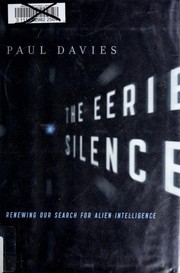
A rigorous, book-length treatment of the Fermi Paradox by a leading physicist. Reading this between the trilogy and the sequel sharpens your ability to evaluate the Dark Forest theory critically and spot where the sequel extends or challenges it.

The trilogy's later volumes hinge on questions of AI, civilisational risk, and long-term decision-making under existential threat — themes Bostrom analyses rigorously. This prepares you for the sequel's treatment of post-human intelligence.
The Authorised Sequel
ExpertRead the authorised continuation of the trilogy with full narrative, scientific, and philosophical preparation — experiencing it as a genuine extension of Liu Cixin's universe rather than a standalone novel.
▸ Study plan for this stage
Pace: 2–3 weeks, ~25–35 pages/day — the novel is roughly 350 pages; allow slower reading on the cosmological and philosophical chapters, which reward re-reading and annotation
- Canonical extension vs. fan fiction — understanding Baoshu's unusual status as an 'authorised' author and how that shapes the novel's narrative contract with the reader
- Yun Tianming's arc as the emotional and philosophical spine — his transformation from a passive, dying man into a cosmic-scale agent whose choices echo across civilisations
- The Singer and the Returners — the novel's original antagonists/catalysts and how they extend the Dark Forest logic into new ethical and existential territory
- Post-Dark-Forest cosmology — Baoshu's extrapolation of Liu Cixin's universe beyond the Broadcast, exploring what civilisations do after mutual deterrence collapses
- Dimensional reduction and cosmic entropy as narrative metaphors — the continued use of physics (dimension-striking, the heat death of the universe) as plot mechanics and philosophical commentary
- Memory, identity, and continuity of self — Yun Tianming's fragmented consciousness across vast timescales raises questions about what it means to persist as a person
- The ethics of survival at civilisational scale — the novel forces a reckoning with whether any act of species-preservation can be morally justified
- Dialogue with Liu Cixin's themes — recognising where Baoshu affirms, complicates, or quietly dissents from the original trilogy's conclusions about humanity and the cosmos
- How does Baoshu use Yun Tianming's subjective experience to humanise the otherwise abstract, inhuman scale of Dark Forest cosmology, and does this represent a tonal shift from Liu Cixin's approach?
- In what ways does the novel extend, challenge, or reinterpret the Dark Forest Theory — are there civilisations in The Redemption of Time that behave in ways the original theory cannot fully explain?
- What is the philosophical significance of 'redemption' in the title — who or what is being redeemed, and by what standard is that redemption measured?
- How does Baoshu handle the tension between individual moral agency and civilisational determinism, and how does this compare to the treatment of the same tension in the original trilogy?
- What new cosmological concepts or mechanisms does Baoshu introduce, and how faithfully do they extrapolate from the scientific framework Liu Cixin established?
- By the novel's end, has Baoshu offered a more hopeful, more despairing, or simply a different vision of humanity's place in the universe than the one Liu Cixin left readers with — and what textual evidence supports your reading?
- Continuity mapping: Before you begin, write a one-page summary of where each major thread of the trilogy ended (Yun Tianming, Cheng Xin, AA, the universe's dimensional state). After finishing the novel, annotate that summary to show exactly where Baoshu picks up each thread — noting any gaps, retcons, or creative liberties.
- Dual-voice annotation: As you read, mark passages in two colours — one for moments that feel unmistakably 'Liu Cixin' in style or philosophy, and one for moments that feel distinctly 'Baoshu'. Write a short reflection at the end of each reading session on what those differences reveal about authorial voice and intent.
- Dark Forest stress-test: Identify at least three civilisations or actors in the novel and apply the Dark Forest axioms (survival as prime directive, technological explosion, suspicion chains) to predict how they 'should' behave. Where the novel diverges from those predictions, write a paragraph arguing whether the divergence is a flaw, a deliberate critique, or a genuine extension of the theory.
- Physics-to-metaphor translation: Choose two of the novel's hard-science set pieces (e.g., a dimension-reduction event, an entropy-related passage). Write a short essay for each explaining the real physics involved and then analysing how Baoshu uses it as a metaphor for a human or civilisational condition.
- Redemption essay: Write a 500–700 word argumentative essay answering the question: 'Is the redemption Yun Tianming achieves earned within the moral logic of the trilogy's universe, or does Baoshu import an external ethical framework to grant it?' Use specific scenes as evidence.
- Comparative epilogue: Write a 300-word 'bridge paragraph' as if you were the editor connecting the end of The Redemption of Time to a hypothetical next volume — summarising the unresolved questions Baoshu leaves open and the thematic threads a future author would need to honour.
Next up: By completing The Redemption of Time, the reader has now engaged with the trilogy's universe at every level — original text, scientific context, philosophical tradition, and authorised extrapolation — and is fully equipped to step back and evaluate the trilogy as a unified cultural and literary artefact in a critical or comparative reading stage.
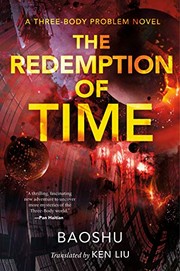
The sole Liu Cixin–authorised sequel to the trilogy, written by Chinese SF author Baoshu and translated by Ken Liu. It revisits key characters and cosmological ideas from a radically different vantage point; arriving here after all prior stages means every callback and divergence registers with maximum depth.
Discussion
Keep reading
Paths that share books, cover the same subject, or open a related topic.