The Long Earth Reading Order: Where to Start
Five novels by Terry Pratchett and Stephen Baxter about an infinite chain of parallel Earths that anyone can step to with a potato-powered box. Publication order is the only order — it is one continuous story across decades of in-world time — and the useful thing to know before starting is that this is far more Baxter than Pratchett. Readers arriving from Discworld expecting jokes are the ones who bounce off it.
Start here
BeginnerMeet the stepping premise and calibrate expectations: this is speculative sociology, not comic fantasy.
▸ Study plan for this stage
Pace: 2-3 weeks. The Long Earth is around 340 pages and reads quickly; 30-40 pages a day is comfortable. Calibrate expectations before you open it, because this is where most readers go wrong: if you are arriving from Discworld expecting jokes, this is not that book. The wry sentence-level voice is recogn
- Step Day: the plans for a stepper box — a potato, some wire, a switch — are posted online, and anyone can walk sideways into an empty parallel Earth
- The premise is deliberately anti-dramatic: land becomes infinite and free, and the book's real subject is what that does to property, cities, borders, taxation and money
- Iron does not step, which is the one hard constraint that makes the whole thing work — no guns, no engines, no industry carried across without effort
- Phobics and natural steppers: the minority who cannot step at all, and the minority who never needed a box
- Joshua Valienté and Lobsang — a wandering natural stepper and an AI who claims to be a reincarnated Tibetan motorcycle repairman, which is the most Pratchett thing in the series
- The Datum: the original Earth, immediately impoverished as its cities empty and its labour walks away
- The trolls and other humanoid species already living out along the chain, introduced quietly and central to book two
- Speculative sociology as the genre: the books ask what people would actually do, and answer at the level of institutions rather than heroes
- What happens to the value of land, and to a city like Madison, in the first year after Step Day?
- Why does the iron restriction matter so much to the shape of the whole series?
- What is Lobsang, and does the book ever settle it?
- What happens to phobics, and what does the series do with that social fault line?
- What is Joshua looking for as he goes out along the chain, and what does he find that changes the premise?
- How does this differ from a Discworld novel in structure, not just in jokes?
- List five institutions that break on Step Day and how. That list is essentially the plot of the next two books.
- Note every consequence the book works out that you had not thought of; the density of those is the measure of whether this series is for you.
- Do not expect a conventional plot in book one. It is a travelogue with an argument.
- If the tone disappoints you, decide now rather than at book three — it does not become more comic.
Next up: The first book establishes the premise and the frontier; the next two follow the consequences outward, into politics on the Datum and exploration at the far ends of the chain.

Step Day, when the plans for a stepper box appear online and humanity discovers endless empty Earths next door. The pleasure is the working-out — what happens to property, cities, borders and money when land becomes free. The wry voice is recognisably Pratchett, but the structure and the interest in deep time are Baxter's, and the book is closer to Discworld's Ankh-Morpork economics than to its comedy.
The core
BeginnerFollow the consequences outward, from political backlash on the original Earth to exploration at the far ends of the chain.
▸ Study plan for this stage
Pace: 5-6 weeks for the two. The Long War is around 420 pages and The Long Mars around 360; both read at the same steady pace as book one. Read them in order and reasonably close together — the political situation set up in The Long War is assumed by everything after it. Be warned about the title: The Lon
- The Datum government attempting to tax and govern colonies it physically cannot police, which is the constitutional crisis the second book is actually about
- The trolls as a civil-rights question — a non-human intelligence with a communal song, exploited across a thousand worlds with no legal standing anywhere
- The title's joke: a 'long war' that is a slow institutional argument rather than a conflict, which is the series being honest about its own interests
- China's stepwise expedition and the parallel colonisation programmes, giving the series a geopolitics rather than just an America
- The Long Mars opening a second chain — stepwise versions of Mars — and multiplying the scale by an order of magnitude
- The next-generation humans, the Next, who are genuinely more intelligent than ordinary people and do not pretend otherwise
- This is where the Baxter side of the collaboration takes over almost entirely: deep time, vast scale, and species-level questions
- Yellowstone and the Datum's fate, which reframes the whole series from expansion to survival
- What can the Datum government actually enforce, and how does it try to compensate for what it cannot?
- What legal status do trolls have, and what would granting them any require?
- Why is the second book called a war, and what is Pratchett and Baxter arguing by naming it that?
- What do the Next want, and what obligation do ordinary humans have to them?
- How does the stepwise Mars chain differ from the Long Earth, and what does that difference imply?
- After Yellowstone, what is the Datum for?
- Track the trolls' treatment across the two books as a single thread; it is the series' clearest moral argument.
- Sketch the political map: Datum, Valhalla, the colonies, China's expedition. The series assumes you hold it.
- Note where the prose stops sounding like Pratchett at all. It is a useful marker for the shift in the collaboration.
- Write one sentence on what the Next imply about humanity's future, then check it against book five.
Next up: With the Datum broken and a new kind of human loose on the chain, the last two books close the sequence under very different circumstances from the ones they were begun in.
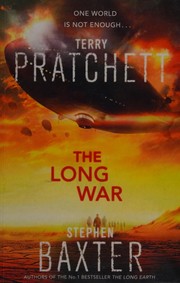
The Datum government tries to tax and govern colonies it cannot reach, and the trolls become a civil-rights question. Less a war than a slow constitutional crisis, which is the series being honest about its own interests.

A second chain of stepwise Mars opens up, and the next-generation humans start diverging from ordinary people. This is where the Baxter side takes over almost entirely, and the scale jumps.
The finish
IntermediateComplete the sequence, knowing that Pratchett's illness shaped the last two volumes.
▸ Study plan for this stage
Pace: 4-5 weeks for the two. The Long Utopia is around 380 pages and The Long Cosmos around 350. Read them together. Context worth having: Terry Pratchett had been ill throughout the writing of this series and died in 2015, before The Long Cosmos was published. The final volume was clearly completed by Ba
- The Long Utopia is the most conventionally plotted of the five: a colony world with a concrete, escalating problem that threatens the entire chain
- The backstory of how stepping came to exist, and the Valienté family history, which supplies the series' only real origin explanation
- The Beagle and the non-human intelligences along the chain, which the series has been building toward since the trolls
- The Long Cosmos opening on a message received from somewhere out along the chain: join us
- The Next, the assembly of the Thinker, and the series' final move from human history to cosmic scale
- A deliberately open ending rather than a resolution — the sequence closes on an invitation, not an answer
- Joshua and Lobsang's arcs concluding, with the series' warmest writing reserved for them
- Reading the five as one continuous story across decades of in-world time, which is why publication order was never optional
- What is the threat in The Long Utopia, and what does resolving it cost?
- Where did stepping come from, and does the explanation satisfy you?
- What is the message in The Long Cosmos, and who is it addressed to?
- Does the open ending feel like a choice or like an unfinished book?
- How has the series' subject changed between book one and book five?
- What did Pratchett contribute that is still visible in the last volume?
- Go back to your Step Day consequences list from stage one and check which the series eventually addressed.
- Read Joshua's final chapters against his first ones; the arc across five books is the emotional payoff.
- Note the point in The Long Cosmos where the scale stops being human. That transition is the series' thesis.
- Decide whether the ending works for you before reading commentary on it; opinions on the last volume are strongly coloured by the circumstances of its writing.
Next up: If the deep-time thinking rather than the characters was what held you, the solo Baxter novels are the pure form of it.

A colony world with a problem that threatens the whole chain, plus the backstory of how stepping came to exist. The most conventionally plotted book of the five.
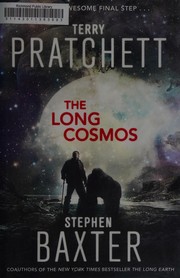
A message arrives from somewhere along the chain saying join us. Published after Pratchett's death and clearly finished by Baxter, it ends the series on a deliberately open note rather than a resolution.
The Baxter side of the collaboration
IntermediateRead the solo novels that explain what Baxter brought to the partnership, if the Long Earth's deep-time thinking was the part you liked.
▸ Study plan for this stage
Pace: 6-8 weeks for the two, and entirely optional. The Time Ships is around 500 pages and Evolution around 600, and both are harder and colder than the Long Earth books — Baxter without a collaborator softening him. 25-30 pages a day. Read these only if the geological patience of the Long Earth appealed
- The Time Ships is an authorised sequel to Wells's The Time Machine, and it takes one premise and follows it to the literal end of the universe
- The Long Earth's structure — a single conceptual device pushed relentlessly outward — is visible here in embryo, written nearly twenty years earlier
- Baxter's characteristic move: an idea is worth more than a character, and the narrative will abandon a protagonist to follow the idea
- Evolution tells six hundred million years of primate history in linked episodes, with no continuing characters at all
- Deep time as a subject in its own right, which is precisely what Baxter brought to the partnership
- The tonal difference from the Long Earth books is the measure of what Pratchett was contributing — warmth, ordinary people, and jokes
- Neither book is a sequel or prerequisite to anything in the Long Earth; they are context for the collaboration rather than continuations of it
- What does The Time Ships do with Wells's premise that Wells did not?
- Where in The Time Ships can you see the Long Earth's structure being prototyped?
- How does Evolution sustain a narrative with no recurring characters?
- What does Baxter treat as the unit of story, if not a person?
- Having read solo Baxter, what can you now identify as Pratchett's contribution to the Long Earth?
- Read the last fifty pages of The Time Ships and compare the sense of scale with the ending of The Long Cosmos.
- In Evolution, pick one episode and note how much emotional weight Baxter gets from a creature with no name.
- Write a paragraph on what each author brought to the Long Earth. Reading solo Baxter is the only reliable way to answer it.
Next up: This closes the path: the five Long Earth novels in order, plus the solo work that explains where half of them came from.
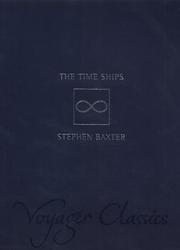
An authorised sequel to Wells's The Time Machine, and the clearest demonstration of Baxter's habit of taking one premise and following it to the end of the universe. The Long Earth's structure is visible here in embryo.

Six hundred million years of primate history told in linked episodes. If the geological patience of the Long Earth books appealed to you more than the characters did, this is the pure form of it.
Discussion
Keep reading
Paths that share books, cover the same subject, or open a related topic.