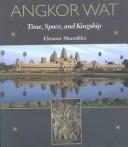
Angkor Wat
Eleanor Mannikka · 1974 · 416 pages
As an Amazon Associate we earn from qualifying purchases. Some book links are affiliate links; you pay the same price and we may earn a small commission.
About this book
In her exploration of Angkor Wat, Mannikka found that the key to understanding the temple lay in the measurement system used by its original builders. By translating meters into cubits, she uncovered a highly sophisticated system of philosophical and religious principles expressed in the temple measurements themselves. Their lengths record precise astronomical information, including a definition of the celestial ecliptic, the north-south oscillation of the sun each year, and equinox and solstice days. The meaning represented in the measurements and their patterns transforms ordinary space into a sacred environment. The measurements connect the temple to the stars and the cosmos, bridge the gap between human and divine realms, help unite the king and his deity - in short, they define how time, space, kingship, and divinity exist inseparably from each other. . Mannikka takes the reader on a detailed tour of Angkor Wat, moving from the western entrance bridge, across the long causeway to the central galleries, and up to the central tower itself, showing what the design of the temple tells us about Khmer beliefs regarding their king, their deities, and the world around them. Detailed temple plans illustrating measurement patterns and numerous photographs of all parts of the temple accompany the text. Angkor Wat: Time, Space, and Kingship shows clearly the role that astronomy, history, cosmology, and politics can play in determining a structure's format and dimensions. The new met
Appears in these reading paths


The Khmer Empire and Angkor: books to read, in order
Related reading guides
Reader reviews
Ratings and notes from readers — tagged with how deep into the subject they were.
Loading reviews…