The Khmer Empire ruled much of mainland Southeast Asia from the ninth century to the fifteenth, built the largest religious monument on earth, and left almost no narrative history of itself. What survives is stone: temples, reservoirs, roads, and around 1,200 inscriptions mostly recording religious donations. Everything we say about Khmer politics is inferred from that material plus a single foreign eyewitness.
This is why the reading order is not the usual one. There is no equivalent of a Roman historian to start with, so you begin with archaeologists, and you have to develop a tolerance for sentences that begin "the evidence suggests". Readers who go straight to the coffee-table temple books get magnificent photographs attached to confident-sounding claims that the specialists would not make.
Note also what this path is not about: modern Cambodia. The empire and the twentieth-century country are separate subjects with separate reading.
The archaeological foundation
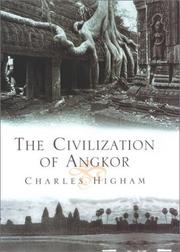
The civilization of Angkor is Charles Higham's synthesis and the correct first book — chronological, cautious, and built from excavation and inscription rather than from legend. It gives you the dynastic sequence, the water management debate and the collapse question in one manageable volume.
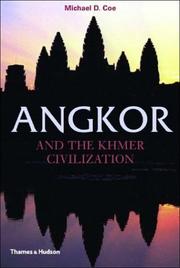
Angkor and the Khmer Civilization is Michael D. Coe's account in the Ancient Peoples and Places series: shorter, more readable, better illustrated, and a good second pass if Higham's caution leaves you wanting narrative. The two overlap substantially, so if you only want one introduction, Higham is the more rigorous and Coe the more enjoyable.
A history of Cambodia is on this path for a specific and limited reason. David P. Chandler's book is the standard general history of the country, and its early chapters — pre-Angkorian Funan and Chenla, the founding of the empire, the long decline after the fifteenth century — are the best short account of how the empire began and ended. The remaining three-quarters of the book covers the French protectorate, independence and the Khmer Rouge, which is a different subject entirely. Read the front of it and come back to the rest later if you want modern Cambodia.
The temples themselves
Ancient Angkor is Michael Freeman's site-by-site guide and the one to have open in front of the monuments, whether you are travelling or not: plans, dates, what each temple was for, who built it.
Angkor Cities and Temples is Claude Jacques writing as an epigrapher, which makes it unusually good on what the inscriptions actually say about the kings who commissioned each building. Angkor by Jon Ortner is the photographic volume, and it earns its place because the scale and the light are genuinely part of the argument about what these buildings were doing.
The one eyewitness
A Record of Cambodia is the single most valuable text on the list. Zhou Daguan was a Chinese envoy who spent 1296 to 1297 at Angkor and wrote down what he saw: the king's processions, slavery, taxation, clothing, festivals, food, the way justice worked. It is a few dozen pages long, it is the only sustained description of the empire by someone who visited it, and every other book on this path quotes it.
Interpretation and controversy
The Khmers is Ian W. Mabbett's account of Khmer society, religion and kingship, and the best treatment of how the god-king cult actually functioned.
Angkor Wat is Eleanor Mannikka's argument that the temple encodes solar and calendrical measurements and a specific theory of kingship in its dimensions. It is a serious book and it is genuinely contested — some specialists find the numerology unfalsifiable. Read it knowing that it sits outside the consensus rather than inside it.
Angkor, heart of an Asian Empire is Bruno Dagens on the European rediscovery and the making of the Angkor myth, which is a useful check on how much of what we think we know arrived through French colonial scholarship.
The wider region
Two Higham books close the path and you should take only one. The archaeology of mainland Southeast Asia and Early Cultures of Mainland Southeast Asia cover largely the same prehistoric ground, the second being the later and more current of the two. A History of Early Southeast Asia sets the Khmer alongside their neighbours and rivals, and Strange parallels is Victor B. Lieberman's comparative argument about why mainland Southeast Asian states rose and fell in rhythm with Eurasia — demanding, and the book that makes the empire stop looking like an isolated wonder.
More on adjacent empires at The Mali Empire.
Follow the full ordered path here: The Khmer Empire and Angkor: Books to Read, in Order.