The Mali Empire and Mansa Musa: books to read, in order
Mali dominated West Africa for roughly two centuries, controlled the gold that minted much of Europe's currency, and produced in Mansa Musa the most famous hajj in medieval history. The evidence for it comes from two incompatible directions — Arabic geographers and travellers writing from outside, and Mande oral tradition transmitted by griots — and this path is built around that split. It opens with a short modern overview, moves to the scholarly histories, then puts the actual sources in your hands, and ends with Timbuktu's manuscript culture and Mali's place in the Atlantic world that followed.
Orientation
BeginnerGet the sequence of Ghana, Mali and Songhay straight, along with the geography of the Niger bend and the gold-for-salt trade that funded all three.
▸ Study plan for this stage
Pace: Three to four weeks. Conrad's survey is around 130 pages and can be finished in a week — read it once quickly, then once with a map open. Fauvelle's thirty-four short chapters run to about 280 pages and are best taken two or three at a sitting over two weeks, since each is a self-contained problem.
- The sequence to fix first: Ghana, then Mali, then Songhay, three successive West African powers on and around the Niger bend, none of them in the territory of the modern state that shares its name in the first case.
- The geography does the explaining. The Niger's inland delta and the bend at Timbuktu put agricultural surplus, river transport and the southern end of Saharan caravan routes in the same place, which is why empire kept recurring there.
- The trade was gold moving north and salt moving south, and the asymmetry matters — salt was a genuine necessity in the savannah and gold was useless there except as a good to exchange, so the rulers' wealth was a function of controlling the exchange rather than of the metal itself.
- Conrad has worked directly with Mande oral traditions, so his survey is unusually careful about which parts of the standard narrative come from griots and which from Arabic writers. Note that habit; the whole path depends on it.
- Fauvelle builds each chapter from a single archaeological find or document — a coin hoard, a hilltop site, a letter — and the cumulative effect is to show how thin, scattered and surprising the physical evidence for medieval Africa actually is.
- That thinness is the methodological lesson of the stage: confident narratives about Mali rest on a small number of texts and a smaller number of excavated sites, and reading Fauvelle before the syntheses inoculates you against taking the confidence for granted.
- Fauvelle also covers the Swahili coast and Ethiopia, which is worth having: it prevents the reflex of treating West Africa as the whole of medieval Africa.
- Mansa Musa's hajj is the single most repeated fact about Mali. Note at this stage how few independent sources describe it, and revisit that when you reach the Arabic corpus.
- What is the geographical logic that put three successive empires in roughly the same region? Explain it without naming any ruler.
- Why was salt worth trading against gold? State the exchange in terms of what each side actually needed.
- Which elements of the standard Mali story does Conrad attribute to oral tradition, and which to Arabic writers?
- Pick three of Fauvelle's chapters. For each, what does the object or document establish, and what does it merely suggest?
- After Fauvelle, how would you describe the overall quality of evidence for medieval West Africa to someone who has read only a popular account?
- Draw a map of the Niger bend from memory after reading Conrad, marking Timbuktu, Gao, Jenne, the inland delta and the main desert routes. Then correct it against the book.
- Write a 300-word timeline of Ghana, Mali and Songhay with approximate dates, and mark each entry as securely attested or approximate.
- For five of Fauvelle's chapters, write one line stating the find and one line stating the inference drawn from it. The gap between the two columns is the discipline this path is teaching.
- List everything you believed about Timbuktu before starting, then note after Fauvelle which items have any evidence behind them.
Next up: With the framework and a proper scepticism about the evidence in place, you can read the scholarly reconstructions and see exactly what each historian is building on.

A short, clearly written survey of Ghana, Mali and Songhay aimed at students and general readers, by a scholar who has worked directly with Mande oral traditions. The fastest way to get the framework the rest of the path fills in.

Thirty-four short chapters, each built from one archaeological find or document, covering medieval Africa from the Sahara to the Swahili coast. Read second: it teaches you how thin and how surprising the physical evidence is before you meet the confident narratives.
The scholarly account
IntermediateUnderstand Mali as a state — its succession politics, its Islam, its army and its relationship to the Saharan trade — and how historians build that picture from very limited material.
▸ Study plan for this stage
Pace: Ten to twelve weeks for about 960 pages. African Dominion at roughly 520 pages is the substantial one and needs five to six weeks at a steady 20 pages a sitting. Levtzion at about 285 pages takes three weeks and should be read second, with Gomez still fresh. Austen is short at around 155 pages and c
- African Dominion is the major recent synthesis and its central move is to take West African political thought and imperial ideology seriously on their own terms, rather than treating Mali as a trading operation with a monarchy attached.
- Gomez argues for continuity of ideas about sacred kingship, lineage and legitimacy across Ghana, Mali and Songhay, and for Islam being absorbed into an existing framework of authority rather than replacing it. That argument is what makes the book the current anchor of the field.
- The Islam question runs through the whole stage: Mali's rulers were Muslim, publicly and in ways the Arabic sources recognised, while much of the population and much of royal practice remained outside the observant tradition. The Arabic writers' discomfort with that mixture is a source of evidence a
- Levtzion's study established the standard reconstruction from the Arabic sources and remains the most careful treatment of the chronology and the king lists. It is older than Gomez and superseded in places, which is precisely why reading them in that order is useful.
- Succession is the recurring political problem: Mali's throne passed by contested rules involving brothers, sons and maternal lineage, and much of what looks like decline in the sources is a succession dispute in progress.
- Austen reframes the Sahara as a connector rather than a barrier, and follows what actually moved across it — gold, salt, books, horses, and enslaved people — over a very long span.
- The trans-Saharan slave trade is part of this economy and both Austen and Gomez treat it as such. It long predates the Atlantic trade and is a separate system with different scale and structure, which is a distinction worth getting right before the final stage.
- Comparing Gomez with Levtzion on a specific point — Mansa Musa's succession, or the size of the army — is the fastest way to see how much of a historical reconstruction is source-critical judgement rather than reporting.
- What does Gomez mean by taking imperial ideology seriously? Give two concrete examples from the book of a claim that follows from that approach.
- Where do Gomez and Levtzion disagree, and is the disagreement about evidence, about interpretation, or about what counts as a good explanation?
- How did Mali's rulers hold together Islamic legitimacy and pre-Islamic sources of authority? Point to specific practices described in either book.
- What were the actual rules of succession as far as they can be reconstructed, and how much of Mali's political history is a consequence of their ambiguity?
- Austen treats the Sahara as a connector. What does that framing let you explain that a barrier framing cannot?
- How does the trans-Saharan trade in enslaved people differ in structure and scale from the Atlantic trade that follows? Be precise; the final stage depends on it.
- Build a Mali king list from Levtzion with dates, then annotate it with what Gomez says about each reign. The disagreements will be visible as gaps in your annotation.
- Take one contested episode — the hajj, the succession after Mansa Musa, the extent of the empire — and write 400 words on how the two historians handle it differently and why.
- From Austen, write 300 words describing the caravan economy: what moved, in what quantity, at what cost, and who profited at each stage.
- List every claim in Gomez that you can trace to a specific source in the Arabic corpus. Keep the list; you will check it in the next stage.
- Write a one-page account of the Mali empire as you now understand it, and mark each sentence as attested, inferred, or contested.
Next up: You have now read the reconstructions; the next stage puts the actual sources in your hands so you can check them.

The major recent synthesis of medieval West African empire, taking the region's political thought and imperial ideology seriously on its own terms. The most ambitious book here and the current anchor of the field.
The 1973 study that established the standard reconstruction from the Arabic sources, and still the most careful treatment of the chronology and the king lists. Older than Gomez and superseded in places, which is exactly why reading them in this order is useful.

Reframes the Sahara as a connector rather than a barrier and follows the trade — gold, salt, books, enslaved people — over a very long span. Short, and it supplies the economic logic the political histories assume.
The sources themselves
IntermediateRead the Arabic testimony and the Mande epic side by side, and be able to say what each kind of source can and cannot establish.
▸ Study plan for this stage
Pace: Eight to ten weeks, but read differently from the previous stages. Sundiata is about 105 pages and can be read in two evenings — read it twice. Ibn Battuta's Travels is a large volume of roughly 750 pages; read the West African section closely over two weeks and dip into the rest as interest takes y
- Sundiata is the founding epic of Mali, recorded from the griot Mamadou Kouyaté and rendered into French prose. It is short, gripping and structurally a hero narrative — exile, prophecy, disability overcome, a decisive battle against Soumaoro.
- Read it knowing what it is: a mid-twentieth-century literary version of a living oral tradition, shaped by a particular griot, a particular recording occasion and a translator's prose. It is not a medieval text and does not claim to be.
- Griot transmission is a formal institution with its own rules of authority, training and patronage, not an informal folk memory. That makes it a serious source about Mande political ideas — and a difficult one about dates and events.
- Ibn Battuta reached Mali in 1352 and is our only eyewitness account of the imperial court. That single fact should govern how much weight you place on him and how carefully you read him.
- His judgement is that of a north African Muslim jurist, and much of the West African section is disapproval — of women's freedom of movement, of court ceremonial, of what he considered lax observance. The disapproval is itself evidence about what he saw.
- The Corpus of Early Arabic Sources gathers every significant Arabic reference to West Africa from the eighth century onward in translation. Most of it is short, second-hand, and written by people who had never been there, which is exactly why having it to hand changes your reading of the syntheses.
- Comparing the epic and the Arabic material on the same events is the central exercise of the path: they rarely contradict each other directly, because they are answering different questions — one about legitimacy and lineage, one about wealth, ritual and Islam.
- The honest position is that neither source type can establish what the other is good at. Dates and external relations come from the Arabic writers; political ideology and internal legitimacy come from the Mande tradition; the join between them is where historians disagree.
- What does Sundiata establish about how Mande tradition understands legitimate power? Answer without reference to whether the events happened.
- Which elements of Sundiata appear in any Arabic source, and which do not? What follows from the absence?
- Where in the West African section is Ibn Battuta reporting and where is he judging? Mark the transitions in a specific passage.
- Ibn Battuta is a single eyewitness. Which claims in the modern syntheses ultimately rest on him alone?
- Take three entries from the Arabic corpus. How far was each author from West Africa, and how many hands did his information pass through?
- Given both source traditions, what can be said with confidence about Mansa Musa's hajj, and what is repeated more confidently than the evidence supports?
- Read Sundiata twice, the second time noting every point where the narrator addresses the audience or asserts his own authority. Those moments are the griot's institution showing itself.
- Take the list of Gomez claims you made in the previous stage and check each against the Arabic corpus. Record which are directly attested, which are inferred, and which you cannot locate at all.
- Write 400 words comparing what Sundiata and Ibn Battuta each say about the ruler's relationship to his subjects, without deciding which is more accurate.
- Extract Ibn Battuta's factual observations about Mali — distances, foods, prices, ceremonies — into a list separate from his opinions. Note how much shorter the first list is.
- Pick one event described in both the epic and an Arabic source and write a page on what a historian would have to assume to reconcile them.
Next up: Having handled the outside and inside sources for Mali itself, the last stage moves to the writing produced within the region and to what became of the world Mali built.
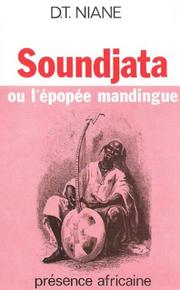
The founding epic of Mali as recorded from the griot Mamadou Kouyaté and rendered into French prose in 1960. Short and gripping, but read it knowing it is a mid-twentieth-century literary version of a living oral tradition, not a medieval text.
The Moroccan traveller reached Mali in 1352 and is our only eyewitness account of the imperial court. Read the West African section closely, and note how much of his judgement is a north African Muslim's disapproval of local practice.
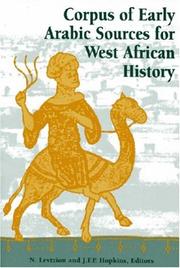
The translated collection of every significant Arabic reference to West Africa from the eighth century onward, edited with J. F. P. Hopkins. A reference volume rather than a read-through, and the raw material behind every book in the previous stage.
Timbuktu, scholarship and afterwards
IntermediateFollow the manuscript and legal culture of the Niger bend cities, and place Mali's gold economy in the longer story that ends with the Atlantic slave trade.
▸ Study plan for this stage
Pace: Four to five months for roughly 1,800 pages. Hunwick's translation and commentary runs to about 450 pages and should be read over five to six weeks with the commentary as much as the text. The Meanings of Timbuktu is an essay collection of around 395 pages — read selectively over three weeks. Carava
- Hunwick's volume is a translation with commentary of the Tarikh al-Sudan, the seventeenth-century Timbuktu chronicle — the major West African account of this history written from inside the region rather than by outsiders looking in.
- The Tarikh is a scholar's chronicle produced by the city's own learned class, with its own interests: it is strongest on Timbuktu's jurists, its relations with rulers, and the Moroccan invasion, and it looks back on Mali from the Songhay period rather than from within it.
- Reading Hunwick after Ibn Battuta reverses the vantage point, and the difference is the point of the stage: one is a foreign traveller describing a court, the other is a local scholar recording his own city's institutional life.
- The Meanings of Timbuktu covers the surviving manuscript libraries and what they actually contain — law, astronomy, theology, grammar, correspondence, commercial records — and dismantles the European image of the city as a place of remoteness and mystery.
- The manuscript collections are also a live conservation and political story, with questions about ownership, cataloguing, digitisation and the effects of recent conflict in northern Mali. The essays disagree with each other about several of these, which is worth noticing.
- Caravans of Gold assembles excavated objects tracing Saharan trade to Europe and Asia — fragments that turn the abstract trade routes into specific things that moved. It is the best visual complement to everything documentary you have read.
- A Fistful of Shells argues that West African monetary and political systems were reshaped by their terms of exchange with Europe from the sixteenth century onward, with currency and credit at the centre of the story rather than at its margins.
- Green's argument connects directly back to stage two's economics: if Mali's power rested on controlling an exchange, then a change in the terms of exchange is a change in the basis of power. The book is contested in parts and is best read as a strong thesis to test against what you now know.
- What does the Tarikh al-Sudan care about, and how does that differ from what Ibn Battuta cared about? Compare their treatment of a ruler.
- The Tarikh was written centuries after Mali's height. What kind of source does that make it for the Mali empire specifically?
- What do the Timbuktu manuscript libraries actually contain, and what does that tell you about the city's function in the region?
- Where do the contributors to The Meanings of Timbuktu disagree, and what is at stake in the disagreement?
- Green argues that terms of exchange reshaped West African political systems. What evidence does he rely on, and what would a critic point to?
- Looking back across the whole path: which two sources, if you had only two, would you keep — and what would you be unable to say without the others?
- Read Hunwick's commentary alongside the text and note ten places where the commentary corrects, contextualises or doubts the chronicle. That annotation is a working lesson in source criticism.
- Write 400 words on Timbuktu as an institution — who studied there, what they studied, who paid for it — using only The Meanings of Timbuktu and Hunwick.
- Take five objects from Caravans of Gold and trace each one's journey as far as the evidence allows. Mark where the trail becomes inference.
- Summarise Green's central argument in 300 words, then write 300 more testing it against Austen's account of the trans-Saharan economy from stage two.
- Return to the one-page account of Mali you wrote at the end of stage two and rewrite it now. Keep both and mark what changed.
- Write a short note on the difference between the trans-Saharan and Atlantic slave trades as you now understand them, being precise about period, scale and structure.
Next up: This closes the path: you have read the syntheses, the Arabic testimony, the Mande epic and the region's own chronicles, and can judge any claim about medieval West Africa by asking which of those it rests on.
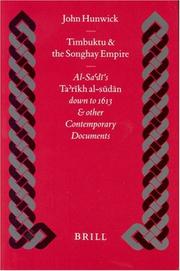
A translation with commentary of the Tarikh al-Sudan, the seventeenth-century Timbuktu chronicle — the major West African account written from inside the region rather than by outsiders.
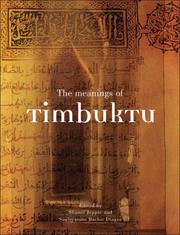
An essay collection on the surviving manuscript libraries and what they contain, which dismantles the European image of Timbuktu as a place of mystery rather than of law, astronomy and theology.

An exhibition volume built from excavated objects tracing medieval Saharan trade to Europe and Asia, with strong essays and unusually good images. The best visual complement to the documentary material.

Argues that West African monetary and political systems were reshaped by their terms of exchange with Europe from the sixteenth century on, which is the story of what happened to the world Mali built. The most demanding book here, and the right one to end on.
Discussion
Keep reading
Paths that share books, cover the same subject, or open a related topic.