Best Books on Open Source Software and Communities, in Reading Order
Open source is three things at once — a development method, a legal arrangement, and a set of communities that mostly run on unpaid attention — and reading about only one of them gives a badly distorted picture. This path starts with the history and the founding arguments, moves to the practical business of contributing to and running a project, then covers licensing properly before ending with the modern economic and social account of what open source has actually become.
Where it came from
BeginnerUnderstand the origins of hacker culture, the free software movement and the open source split, and be able to explain why the two camps still disagree.
▸ Study plan for this stage
Pace: Six to eight weeks for roughly 1,200 pages, all of it narrative and none of it slow. Hackers is 456 pages and takes two to three weeks. The Cathedral and the Bazaar is 256 pages and the title essay itself is short enough to read in an evening — read that essay first, then the rest of the collection.
- Levy's hacker ethic, which he states explicitly: access to computers should be unlimited, all information should be free, mistrust authority, judge by the work rather than by credentials, and the hands-on imperative. Every argument in the next three stages is a dispute about how to apply one of thes
- The three generations Levy traces — the MIT AI Lab in the sixties, the Homebrew Computer Club hardware hackers in the seventies, the game developers in the eighties — and how the value of sharing survived each transition to a more commercial environment less well
- Raymond's cathedral and bazaar distinction: closed, centrally planned development against open, parallel, release-early-release-often development. It named the model and it is a manifesto rather than a study
- Linus's Law as Raymond states it — given enough eyeballs, all bugs are shallow — which is the essay's most quoted and most contested claim. Heartbleed and Shellshock are the standing counterexamples and you should hold them alongside it
- Raymond's deliberate framing choice: he argued for open source on engineering and pragmatic grounds precisely to make it acceptable to business, which is the move that split the movement
- Torvalds as the corrective to Raymond's abstraction. Just for Fun shows the bazaar was messier, more accidental and far more dependent on one person's judgement and tolerance for argument than the essay's model implies
- Stallman's position in Free as in Freedom: software freedom as an ethical requirement, the four freedoms, and the GNU project as a deliberate political project that happened to produce software
- The split itself, which is the thing to come away with: free software is a moral claim about users' rights, open source is a pragmatic claim about development quality. They usually recommend the same actions and they disagree about why, which is exactly why the disagreement persists
- State Levy's hacker ethic in its component principles. Which of them is most obviously in tension with running a business?
- What is Linus's Law, and what is the strongest empirical case against it? Name a specific vulnerability that sat in widely-read code for years
- Raymond deliberately chose pragmatic rather than moral arguments. What did that choice gain, and what did Stallman say it cost?
- In what specific ways does Just for Fun contradict the bazaar model? Point to at least two of Torvalds's own accounts of how decisions actually got made
- State the four freedoms. Which one does a permissive licence fail to guarantee downstream, and does it matter?
- If free software and open source usually recommend the same action, why has the disagreement lasted forty years?
- Read the title essay of The Cathedral and the Bazaar in one sitting and write down its claims as a numbered list. Then, at the end of the whole path, mark which ones Asparouhova's data contradicts. Keep the list — it is the spine of the path.
- Take one project you use daily and find out which camp its licence belongs to and who chose it. Then find whether the project has ever changed licence and why.
- Write 200 words on why Torvalds's account of Linux's early governance is inconsistent with the bazaar model, using two specific episodes from Just for Fun.
- Write the free software argument and the open source argument for the same concrete decision — say, whether to accept a proprietary company's patch. Two paragraphs. If they reach the same conclusion for different reasons, you have understood the split.
Next up: The founding arguments are about why any of this should exist; the next stage is about the entirely unromantic daily work of making a project function.

Levy's history of MIT, the Homebrew Computer Club and the early game developers is where the culture's values — sharing code, hands-on imperative, distrust of gatekeepers — are first described. Everything later is downstream of this.
The essay that named the development model and launched the term open source. It is short, is argued rather than reported, and remains the reference point everyone in the field is agreeing or disagreeing with.
Torvalds's own account of building Linux, useful as the concrete case behind Raymond's abstraction and as a corrective to it — the bazaar was messier and more personality-driven than the essay suggests.

The Stallman biography, and the best route into the free software position that open source deliberately softened. Read after Raymond so you can see exactly what the split was about.
Contributing and running a project
BeginnerMake a first real contribution with confidence, and understand what it takes to run a project — issue triage, review, releases, governance, conflict — from the maintainer's side.
▸ Study plan for this stage
Pace: Two to three months, and this is the stage to read with a terminal open. Forge Your Future with Open Source is 224 pages and should be read in about a week — actively, with a project chosen and a first contribution attempted before you finish it. Producing Open Source Software is 291 pages and takes
- Brasseur's central practical insight: the barrier to a first contribution is almost never technical. It is not knowing the project's norms, and every project publishes them in files most newcomers never open
- The files that constitute a project's actual contract — CONTRIBUTING, CODE_OF_CONDUCT, LICENSE, the issue templates, the pull request template — and reading them before writing a line of code
- Fogel's infrastructure chapter: version control, issue tracker, mailing list or forum, and the rule underneath all of them, which is that discussion must happen in public and be archived, because a decision made in private did not happen as far as the project is concerned
- Fogel on communications: how to write a bug report, how to decline a patch without losing a contributor, and how tone in a mailing list scales into a project's reputation
- Governance models — benevolent dictator, consensus democracy, foundation-owned — and Fogel's unsentimental point that every project has a governance model whether or not it has written one down
- Money as a destabiliser: Fogel's chapter on paid developers in volunteer projects is the most useful thing he wrote, because the corrosion is subtle — paid contributors accumulate context and authority simply by being present more hours
- Bacon on the layer above code: onboarding funnels, moderation, events, and measurable community health. Read the metrics chapters sceptically — the ones he proposes are proxies and he is honest about it
- The maintainer's actual job as all three books describe it: mostly triage, review and saying no, with writing code as a small minority of the time
- Name every file you should read in a repository before opening your first pull request, and say what each one tells you
- Why does Fogel insist that project discussion happen in public archives? Give two failure modes of private decision-making
- What governance model does a project with no written governance actually have, and who holds power in it?
- Fogel argues paid developers change the dynamics of a volunteer project. What is the mechanism, and what mitigations does he suggest?
- How would you decline a well-intentioned but wrong patch in a way that keeps the contributor? Write the actual message
- Bacon proposes community health metrics. Pick two and state what they fail to capture
- Make one real contribution to a project you use, following Brasseur's process exactly: choose the project, read the contribution guide, find a good-first-issue, ask before starting, submit, and respond to review. Do not skip to a different project when the first one is slow to respond — the waiting is part of what you are learning.
- Triage ten open issues in a project without writing any code: reproduce them, add missing version information, close duplicates. This is the highest-value contribution most projects never receive and it teaches the maintainer's view faster than anything else.
- Take a project you know and write out its governance as it actually operates — who can merge, who decides direction, how disputes end. Then compare with what its documentation claims.
- Write a CONTRIBUTING file for a small project of your own following Fogel's guidance. Having to state your own norms explicitly is more clarifying than reading twenty other people's.
- Read one week of a large project's mailing list or issue tracker end to end, and count how the maintainer's time divides between review, triage, discussion and code. The ratio is the argument for stage four.
Next up: Everything you have just learned about running a project rests on the licence it chose, which is the one decision that cannot easily be reversed.
The most practical on-ramp available: how to choose a project, read its contribution guide, submit a first patch and handle review. Deliberately first in this stage because it removes the actual barrier.
The standard manual for running a project — infrastructure, communications, licensing, money, governance and managing volunteers. Fogel writes from long experience and is unsentimental about what does not work.
Extends Fogel from the codebase to the people around it: growth, moderation, events, and measuring community health. Read third, once you know what the project side of the work involves.
Licenses and the legal ground
IntermediateRead a licence properly — copyleft versus permissive, compatibility, distribution obligations, contributor agreements — and reason about the legal consequences of a project's choice.
▸ Study plan for this stage
Pace: Four to six weeks. Free Software, Free Society is 224 pages of essays and can be read selectively — the essays on the GNU project, on why software should be free, and on copyleft are the load-bearing ones, about two weeks. Understanding Open Source and Free Software Licensing is 224 pages and is a c
- Copyleft as a mechanism rather than a sentiment: it uses copyright to require that derivative works carry the same terms, so the licence is enforced by the same law it is reacting against. Stallman's essays are where this inversion is explained by its author
- The permissive family (MIT, BSD, Apache) versus the copyleft family (GPL, LGPL, AGPL), and the single question that separates them: whether a downstream recipient must be given the same rights you were given
- The distribution trigger, which is the most commonly misunderstood point in the whole area. The GPL's obligations attach on distribution, not on use, which is why running modified GPL software on a server internally triggers nothing — and why the AGPL exists to close exactly that gap
- Linking and derivative works: the static versus dynamic linking question, why the LGPL was written, and the honest position that the boundary has been argued far more than it has been litigated
- Licence compatibility as a directed rather than symmetric relation. Permissive code can generally be incorporated into a GPL work; the reverse does not hold, and combining two strong copyleft licences with different terms can be impossible
- Patent grants and retaliation clauses, which is where Apache 2.0 differs most consequentially from MIT and why corporate legal departments prefer it
- Contributor licence agreements and copyright assignment: what a project gains (the ability to relicense, standing to enforce) and what a contributor gives up. This is the mechanism behind most modern relicensing controversies
- The source-available licences that are not open source at all — the Business Source Licence, SSPL and similar — and why the distinction matters for the field's terms of art even when the practical difference for a given user is small
- Explain how copyleft uses copyright law to achieve the opposite of copyright's usual effect. What would happen to the GPL if copyright were abolished?
- What triggers the GPL's source-distribution obligation, and what does not? Why did the AGPL become necessary?
- Is licence compatibility symmetric? Give a concrete pair where combination works in one direction and not the other
- What does Apache 2.0 provide that MIT does not, and why do corporate legal teams care?
- What does a contributor licence agreement give the project, and name a real consequence a contributor might not have anticipated
- Is a source-available licence open source? Answer using the actual definitional criteria rather than intuition
- Read the full text of the MIT licence, Apache 2.0 and GPLv3 in one sitting with St. Laurent's commentary beside you. MIT takes two minutes and GPLv3 takes an hour, and that asymmetry is itself informative.
- Take a real project's dependency tree and list every distinct licence in it. Then identify any combination that would be a problem if you distributed a binary. Most developers have never done this for code they ship.
- Write 300 words advising a hypothetical project on whether to choose MIT, Apache 2.0 or GPLv3, given a stated goal. Then write the advice again for the opposite goal. The licence follows from what you want, and being able to reason both ways is the skill.
- Find a real relicensing controversy, read the project's CLA, and work out exactly which clause made the relicensing possible. This is the fastest way to understand why CLAs are contentious.
- Reread one Stallman essay after finishing St. Laurent and note every place where a moral commitment has become a specific clause. The mapping is remarkably tight and it is the point of reading the two together.
Next up: With the founding arguments, the practice and the legal machinery in place, the last stage asks the empirical question none of them answer: what open source actually turned into.

Stallman's own essays, including the arguments behind the GPL. Licensing choices are moral positions before they are legal ones, and this is where those positions are stated by their author.
A clause-by-clause walk through the major licences and how they interact. Read after Stallman for the mechanics behind the philosophy, and keep it as a reference when a compatibility question comes up.
What open source became
IntermediateAssess open source as an economic and social system — why firms fund it, how contributor communities actually behave, and why maintainer burnout is a structural problem rather than a personal one.
▸ Study plan for this stage
Pace: Two to three months. The Success of Open Source is 320 pages of political science and is the densest book in the path — three to four weeks. Coding Freedom is 271 pages of ethnography and reads more easily, about two weeks; it is also freely available. Working in Public is 256 pages and takes a week
- Weber's central puzzle, which is the best-framed question in the literature: conventional property theory says a good nobody can be excluded from will be underproduced, and complex open source software is a standing counterexample. His answer is a property regime organised around the right to distri
- Forking as the structural feature Weber assigns the most weight: the credible threat of exit is what disciplines maintainers and what keeps the property regime stable without formal enforcement
- Coleman on the tension between meritocracy as an ideal and its operation in practice — how technical authority is actually accumulated, how the new maintainer process works as a rite, and how much of the apparent flatness rests on shared unstated norms
- Asparouhova's reframing, which is where the path lands: analysis of contribution data shows most projects are not bazaars. They are one or a few maintainers absorbing an unbounded stream of issues, questions and pull requests from users who will never return
- Attention as the scarce resource, not code. Once you accept that, a pull request is a cost as well as a gift, and the maintainer's rational response to an unbounded queue is to close it — which explains behaviour that otherwise reads as rudeness
- The four project types she distinguishes by contributor and user growth — federations, clubs, toys, stadiums — and the argument that the stadium, with many users and few contributors, is now the dominant shape and is the one the founding literature never described
- Why burnout is structural rather than personal: an individual absorbing demand from a population that scales with the software's success will fail regardless of temperament, and no amount of individual resilience changes the arithmetic
- The funding question the three books leave genuinely open, and which the path should end honest about: corporate sponsorship, foundations and direct payment each solve part of the problem and each reintroduce the dependency issues Fogel warned about in stage two
- State Weber's puzzle and his answer. What exactly is a property regime organised around distribution rather than exclusion?
- What did Coleman observe in Debian that contradicts the flat-meritocracy self-description? Be specific about the mechanisms of authority
- How does Asparouhova's data change the picture Raymond drew? Which of his numbered claims survive?
- Define the stadium model. Why is it the shape most modern projects take, and why did the founding literature not anticipate it?
- Why is maintainer burnout structural? Construct the argument from contributor and user growth rates rather than from anecdote
- Which funding model would you back, and what problem from stage two does it reintroduce?
- Take your numbered list of Raymond's claims from stage one and mark each one against Asparouhova's evidence: supported, contradicted, or never tested. This is the single exercise the whole path was built for.
- Pick a popular project and count, from its public data, the number of contributors with more than ten commits against the number of distinct issue reporters over a year. The ratio tells you which of Asparouhova's four types it is.
- Read a month of a maintainer's public activity in a large project and classify every action as review, triage, discussion, code or emotional labour. Then compare with what the project's contribution guide implies the work is.
- Write 500 words arguing that open source is a spectacular success, then 500 arguing it is a fragile system running on donated attention. Both are supportable from these three books, which is the honest state of the question.
- Choose one dependency you rely on, find out who maintains it and how many people that is, and check whether they are funded. Then do something about it — a contribution, a sponsorship, or a triaged issue. It is the only exercise in this path with an effect outside your own head.
Next up: This is the end of the path — the founding arguments, the practice, the legal machinery and the modern economic account — and you can now read any argument about open source sustainability and identify which of the four conversations it belongs to.
A political scientist's account of how a property regime built on the right to distribute rather than exclude can produce complex goods. The best answer to the question of why any of this works at all.
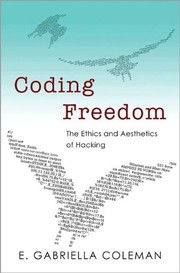
Anthropological fieldwork inside Debian, on how developers actually negotiate meritocracy, authority and free speech. It corrects the tidy narratives of the first stage with observed behaviour.

The modern reframing and the right place to finish: most projects are not bazaars but single maintainers absorbing an unbounded stream of demands. Turns burnout from an anecdote into an analysis of attention as the scarce resource.
Discussion
Keep reading
Paths that share books, cover the same subject, or open a related topic.