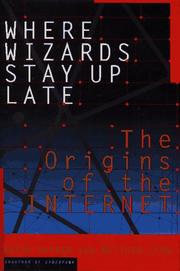
Start with Where wizards stay up late. Katie Hafner wrote it with Matthew Lyon — the catalogue record garbles the authorship, but it is one book by two people — and it remains the most readable narrative of how ARPANET was physically built: the Interface Message Processors at Bolt Beranek and Newman, the first four nodes, the graduate students who wrote the early Requests for Comments because nobody senior thought it mattered. It hands you the cast that every other book on this path refers back to.
The reason order matters here is that "the history of the internet" is at least four separate histories that popular accounts compress into one: a military-funded research network, a set of protocols argued out in public, a hypertext system built at a physics lab in Geneva, and a commercial industry that arrived last and now owns the result. Read them mixed together and you come away believing that Tim Berners-Lee invented the internet, or that the web and the internet are the same thing. This list keeps the four apart.
Stage one: how the network was built
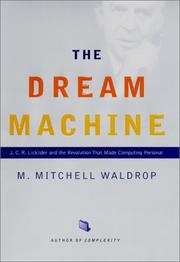
After Hafner, read The Dream Machine for the intellectual prehistory. It is a long biography of J. C. R. Licklider, the psychologist who ran ARPA's computing office and described interactive computing and an "intergalactic network" before either existed — the answer to why anyone funded the machine at all.
Inventing the Internet is the scholarly history and the one that takes the protocols seriously. Janet Abbate is the best source on TCP/IP, on the rival OSI standards effort that lost, and on how particular design decisions embedded particular assumptions. It is harder going than the first two and much the most useful if you want to know what was actually engineered. Close the stage with A history of the Internet and the digital future, a brisk single-volume overview that carries the story past the founding period — read it as a map rather than for depth.
Stage two: the web, and the machines it ran on
Weaving the Web is Berners-Lee's own account of URLs, HTTP and HTML, and of the decision not to patent any of it. It is a primary source and correspondingly partial: he is arguing for a particular vision of the web as much as recounting how it was made.
Dealers of Lightning covers Xerox PARC in the 1970s — the graphical interface, the mouse, Ethernet, the laser printer, and Xerox's failure to commercialise almost any of it. It sits here because the web only became usable on machines PARC's ideas had shaped. Then How the Internet happened supplies the commercial history the research books stop short of: Mosaic, Netscape, the browser wars, the bubble, Google, the iPhone. It is written from the industry's point of view and thin on the research era, which is exactly why it works fourth rather than first.
Stage three: hackers, hippies, and who got left out
Hackers is the 1984 book that defined the hacker ethic, and the source most later writing about computing culture is implicitly quoting; Steven Levy's admiration is itself a historical artefact. What the Dormouse Said makes the specific case that the personal computer emerged from the same Bay Area milieu as psychedelics and the antiwar movement, centred on Doug Engelbart's lab.
From counterculture to cyberculture is the scholarly version of that story and considerably more sceptical: Fred Turner follows Stewart Brand and the Whole Earth network to show how communal-movement ideas were converted into a market ideology. Read it third so you can watch it correcting the two before it. Then read Broad Band against all three deliberately — the ENIAC programmers, Grace Hopper, the women who built the early online communities. The omissions it documents are omissions in the books you have just finished.
Stage four: wires, money and law
Tubes is Andrew Blum going to look at the physical internet — exchange points, undersea landing stations, data centres — and it is the best correction to the metaphor of the cloud. The Master Switch sets the whole story inside Tim Wu's pattern: American information industries from telephone to television each ran from open to consolidated, and the question is whether the internet is exempt. Finish with Code, the 1999 book that established "code is law" — architecture regulates behaviour as effectively as statute, and it is written by people nobody elected.
The full sequence, with the stage goals and study plans, is at /paths/pt_ai_the-history-of-the-internet.