Best Books on the History of Syria, in Order
This curriculum moves from a broad historical foundation through the colonial and nationalist period, into the brutal mechanics of Baathist and Assad rule, and finally into the civil war and its aftermath. Because the learner starts at an intermediate level, the path skips basic introductions and instead builds analytical depth stage by stage — each book adding a new layer of political, social, or human texture to what came before.
Foundations: Ottoman & Mandate Syria
IntermediateUnderstand Syria's pre-modern and colonial roots — Ottoman provincial life, the French Mandate, the rise of Arab nationalism, and the social forces that shaped the modern Syrian state.
▸ Study plan for this stage
Pace: 8–10 weeks, ~40–50 pages/day (McHugo first: 4–5 weeks; Rogan second: 4–5 weeks)
- Ottoman provincial administration and the millet system as the framework for Syrian religious and social organization
- The decline of Ottoman power and the impact of 19th-century reforms (Tanzimat) on Syrian society and economy
- The French Mandate (1920–1946) as a colonial system: its institutions, economic policies, and relationship to Syrian nationalism
- The emergence of Arab nationalism as a response to Ottoman decline and European colonialism, including its ideological variants
- The role of urban elites, merchants, and intellectuals in driving nationalist movements and state formation
- Social fragmentation along sectarian, ethnic, and class lines and how these divisions shaped political competition in the mandate period
- The transition from Ottoman to Mandate rule and the creation of the Syrian nation-state as a colonial construct
- How economic integration into global markets under both Ottoman and French rule transformed Syrian society and fueled grievances
- How did the Ottoman millet system organize Syrian society, and what were its strengths and weaknesses as a governing framework?
- What were the main causes and consequences of Ottoman decline in the 18th and 19th centuries, and how did this affect Syria specifically?
- What were the key features of the French Mandate system in Syria, and how did it differ from direct Ottoman rule?
- How did Arab nationalism emerge in Syria, and what social groups drove it during the late Ottoman and Mandate periods?
- What role did sectarian, tribal, and class divisions play in Syrian politics during the Mandate era, and why did they persist?
- How did economic changes under Ottoman and French rule contribute to social discontent and nationalist sentiment?
- Create a timeline comparing Ottoman administrative structures in Syria (16th–19th centuries) with French Mandate institutions (1920–1946), noting continuities and ruptures
- Map the geographic distribution of Syria's major religious and ethnic communities during the Ottoman period, then track how French administrative divisions reshaped these boundaries
- Read and annotate McHugo's chapters on the Tanzimat reforms and Rogan's discussion of Ottoman economic integration; write a 2–3 page essay on how modernization destabilized traditional Syrian society
- Identify 3–4 key nationalist figures or movements discussed in both books (e.g., Arab Revolt, urban intellectuals); create a comparison chart of their ideologies, constituencies, and goals
- Analyze primary source excerpts (if available in the books or supplementary materials) from nationalist manifestos or French administrative reports; annotate them for evidence of sectarian tensions and class conflict
- Write a short analytical piece (3–4 pages) on how the French Mandate's economic policies (taxation, land tenure, trade) affected different Syrian social classes and fueled nationalist grievances
Next up: This stage establishes the deep structural and ideological foundations—Ottoman legacies, colonial rule, and nationalist awakening—that will enable you to understand the post-independence political struggles, military interventions, and state-building projects covered in the next stage.

Complements Moubayed by foregrounding the Mandate period and the contradictions of French rule, helping the reader understand why sectarian and regional fault lines were baked into the Syrian state from the start.

A sweeping regional history that contextualizes Syria within the broader Arab experience of empire, colonialism, and nationalism — essential for understanding why Syria's story is inseparable from pan-Arab politics.
The Ba'ath Party & the Road to Assad
IntermediateGrasp how the Ba'ath Party seized power, how Hafez al-Assad consolidated a durable authoritarian state, and what the machinery of that state looked like from the inside.
▸ Study plan for this stage
Pace: 4–5 weeks, ~40–50 pages/day (Seale's book is ~450 pages; accounts for note-taking and review)
- The Ba'ath Party's ideological foundations (Arab nationalism, socialism) and its appeal across the Levant before 1963
- The mechanics of the 1963 coup: which factions led it, what grievances they exploited, and how they consolidated initial power
- Hafez al-Assad's rise within the military and Ba'ath hierarchy, including his role in the 1966 coup and the 1970 Corrective Movement
- The construction of the security state: the role of the Mukhabarat (secret police), party cells, and military intelligence in controlling society
- Assad's consolidation strategy: balancing Alawite patronage networks with pan-Arab legitimacy, suppressing internal party rivals, and managing regional conflicts
- The institutional architecture of Ba'athist rule: how the party, military, and security apparatus reinforced each other to create a durable authoritarian system
- Syria's regional position under Assad: the conflict with Iraq, relations with the Soviet Union, and the Palestinian question as tools of internal legitimacy
- What were the core ideological tenets of the Ba'ath Party, and why did it appeal to Syrian and broader Arab elites in the 1950s and early 1960s?
- Describe the sequence of events and key actors in the 1963 coup that brought the Ba'ath to power. What made this coup different from previous Syrian military interventions?
- How did Hafez al-Assad use the 1966 coup and the 1970 Corrective Movement to consolidate personal power within the Ba'ath Party and military?
- Explain the role of the Mukhabarat and other security institutions in maintaining Ba'athist control. How did surveillance and repression function as tools of state consolidation?
- How did Assad balance his reliance on Alawite military and security officers with the need to maintain pan-Arab legitimacy and Ba'athist ideology?
- What external conflicts (Iraq, Israel, Palestinian movements) did Assad use to reinforce internal party discipline and state legitimacy, and how effective were these strategies?
- Create a timeline of major coups and power shifts in Syria from 1949–1970, marking Seale's key turning points and identifying which actors benefited from each transition
- Map the Ba'ath Party's organizational structure as described by Seale: identify the party cells, military command, security apparatus, and patronage networks, then annotate how each reinforced the others
- Write a 2–3 page character study of Hafez al-Assad based on Seale's account: trace his career from military officer to defense minister to president, noting the decisions and alliances that enabled his rise
- Analyze one major internal party conflict Seale describes (e.g., between ideological factions or regional power centers) and explain how Assad resolved it and what it reveals about his consolidation strategy
- Create a comparison table: list the security institutions Seale mentions (Mukhabarat, military intelligence, party security), their reported functions, and how they overlapped or competed
- Identify 3–4 regional crises Seale discusses (e.g., conflicts with Iraq, the Palestinian question, Soviet relations) and for each, explain how Assad leveraged it domestically to strengthen party discipline or suppress rivals
Next up: This stage establishes the foundational logic of Assad's authoritarian system—how it was built, who staffed it, and what held it together—preparing you to examine how that system responded to crises, adapted over decades, and ultimately shaped Syria's trajectory into civil war.

Seale's earlier work traces the chaotic Ba'athist coups and inter-Arab rivalries of the 1940s–60s, providing the political prehistory that makes the Assad consolidation intelligible.
Society, Sect & Repression Under the Assads
IntermediateMove beyond elite politics to understand how ordinary Syrians lived under authoritarianism — the role of sect, class, and patronage networks — and how the regime sustained itself through violence and co-optation.
▸ Study plan for this stage
Pace: 4–5 weeks, ~40–50 pages/day (approximately 250–300 pages total)
- The concept of 'ambiguities of domination': how authoritarian regimes maintain power through contradictory, unstable mechanisms rather than pure coercion
- Sect and sectarian identity as a tool of regime control and social fragmentation in Syria under the Assads
- The role of patronage networks, clientelism, and informal power structures in sustaining authoritarianism
- How ordinary Syrians navigate, accommodate, and resist regime authority in everyday life
- The distinction between public compliance and private dissent: the gap between official ideology and lived experience
- Violence and co-optation as dual mechanisms of regime consolidation
- The Ba'ath party's use of ideology and ritual to legitimize rule among diverse populations
- What does Wedeen mean by 'ambiguities of domination,' and how does this concept challenge traditional understandings of authoritarian power?
- How did the Assad regime use sect and sectarian identity to maintain control over Syrian society?
- What role did patronage networks and informal power structures play in sustaining the regime's authority?
- How did ordinary Syrians experience and navigate daily life under Assad authoritarianism—what strategies did they use to cope with or resist regime control?
- How did the regime employ both violence and co-optation simultaneously, and what was the relationship between these two strategies?
- What was the gap between public performance (compliance with regime ideology) and private belief among Syrian citizens, and why does this gap matter?
- Create a concept map showing how sect, patronage, violence, and ideology interconnect as mechanisms of regime control in Wedeen's analysis
- Identify and analyze 3–4 specific examples from the book where ordinary Syrians' public behavior contradicted their private beliefs; explain what this reveals about regime stability
- Write a 2–3 page analytical essay on how the Assad regime's use of sectarian identity differed from or resembled other authoritarian regimes' use of identity politics
- Develop a case study of one patronage network or informal power structure described in the book; trace how it functioned and what it reveals about regime sustainability
- Conduct a close reading of Wedeen's discussion of Ba'ath party ritual and ideology; explain how symbolic performance functioned as a tool of domination
- Create a comparative chart: list instances where the regime used violence vs. co-optation; analyze whether one strategy was more effective than the other in specific contexts
Next up: This stage equips you with a bottom-up understanding of how authoritarianism actually functioned in Syrian society—the informal mechanisms, sectarian divisions, and everyday accommodations—providing essential context for understanding how these structures fractured during the civil war and how different social groups experienced the conflict.

A landmark political-science study of how Assad's cult of personality worked not through belief but through performance of loyalty — reframes how the reader thinks about authoritarian power in Syria.
The Civil War: Origins, Dynamics & Outside Powers
ExpertDevelop a rigorous, multi-causal understanding of how the 2011 uprising became a full-scale civil war, how jihadist groups emerged, and how regional and global powers shaped the conflict.
▸ Study plan for this stage
Pace: 12–14 weeks, ~40–50 pages/day. Allocate 4–5 weeks to each book with overlap for synthesis: Weeks 1–5 for "The Syrian Jihad," Weeks 4–8 for "No Turning Back," Weeks 8–12 for "Syria," with Weeks 12–14 reserved for integration and review.
- The 2011 uprising's roots in economic grievance, sectarian tension, and state repression, and how initial peaceful protest escalated into armed rebellion
- The fragmentation of the Syrian opposition into competing ideological factions (secular, Islamist, jihadist) and how organizational weakness enabled extremist takeover
- The rise of jihadist groups (ISIS, al-Nusra, Ahrar al-Sham) from marginalized actors to major military forces, their funding sources, and ideological appeal
- The role of regional powers (Turkey, Saudi Arabia, Iran, Iraq) in arming, financing, and directing proxy forces to advance geopolitical interests
- The intervention of global powers (Russia, United States) and how their strategic objectives shaped military outcomes and prolonged the conflict
- The sectarian dimension of the conflict: how Alawite minority rule, Sunni majority grievance, and external sectarian narratives weaponized identity
- The transformation of Syria's state institutions, military, and society under the pressure of civil war and foreign intervention
- How the conflict's trajectory was shaped by the interaction of internal dynamics (opposition fragmentation, jihadist ascendancy) and external power competition
- What were the specific economic, political, and social conditions that transformed the 2011 uprising from a protest movement into an armed civil war?
- How did the Syrian opposition fragment into competing factions, and why did jihadist groups ultimately gain disproportionate military influence despite initial marginalization?
- What were the origins, funding sources, and ideological motivations of major jihadist organizations (ISIS, al-Nusra Front, Ahrar al-Sham), and how did they differ from one another?
- How did regional powers (Iran, Saudi Arabia, Turkey, Iraq) intervene in the conflict, what were their strategic objectives, and how did their competition shape the war's trajectory?
- What were the strategic interests of Russia and the United States in Syria, and how did their involvement affect the military balance and prospects for resolution?
- To what extent did sectarian identity drive the conflict, and how did regional and global actors exploit or amplify sectarian narratives for strategic advantage?
- How did the Syrian state's institutions, military capacity, and territorial control evolve throughout the civil war, and what role did external support play in regime survival?
- Create a detailed timeline (2011–2015) mapping the escalation from peaceful protest to civil war, marking key turning points (militarization, jihadist emergence, foreign intervention) and explaining the causal mechanisms at each stage using evidence from all three books.
- Construct an organizational chart of Syrian opposition and jihadist groups, showing their ideological orientation (secular, Islamist, jihadist), funding sources, foreign backers, and relationships to one another; update it as the conflict evolves through the books.
- Write a comparative analysis (2,000–2,500 words) of how Lister, Abouzeid, and Lesch each explain the rise of jihadist groups—what explanations do they emphasize (ideology, organizational capacity, foreign support, opposition weakness) and where do they diverge?
- Map the geopolitical interests of regional and global powers (Iran, Saudi Arabia, Turkey, Russia, USA) in Syria, identify their preferred outcomes, and trace how their proxy support and military actions shaped specific conflicts or turning points described in the books.
- Analyze 3–4 key moments of escalation (e.g., the shift from peaceful protest to armed rebellion, the emergence of ISIS, the Russian intervention) by identifying the internal Syrian dynamics and external pressures that converged at each point.
- Create a sectarian analysis document examining how Alawite minority rule, Sunni majority grievance, and Shia-Sunni regional competition were weaponized in the conflict, using specific examples from the books to distinguish between genuine sectarian drivers and externally amplified narratives.
Next up: This stage establishes the multi-causal foundations of the Syrian conflict—internal fragmentation, jihadist ascendancy, and external power competition—preparing you to examine the conflict's regional spillover effects, humanitarian consequences, and long-term political and social transformation in subsequent stages.

The most thorough account of the armed opposition — from the Free Syrian Army to ISIS and Jabhat al-Nusra — essential for understanding the fragmentation that doomed the rebellion and prolonged the war.

Award-winning on-the-ground journalism following multiple Syrians across the war's arc; after Lister's strategic overview, this book restores the human scale and emotional truth of the conflict.
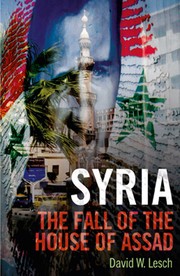
Focuses specifically on Bashar al-Assad's miscalculations and the regime's decision to crush rather than accommodate the 2011 protests, offering a tight political narrative of how the war began.
Aftermath: Displacement, Reconstruction & What Comes Next
ExpertReckon with the war's consequences — the refugee crisis, the logic of reconstruction under a victorious but hollowed-out regime, and the unresolved questions about Syria's political future.
▸ Study plan for this stage
Pace: 4–5 weeks, ~40–50 pages/day. Week 1: "Naked Don't Fear the Water" (approx. 300 pages); Weeks 2–5: "Syria after the Uprisings" (approx. 400 pages), with overlap for reflection and note-taking.
- The refugee crisis as a direct consequence of Syria's conflict: displacement patterns, motivations, and the human cost of forced migration documented through Aikins' personal narrative
- The logic and contradictions of reconstruction under Assad's victorious but economically and socially depleted regime, including sanctions, infrastructure collapse, and sectarian fractures
- The role of external powers (Russia, Iran, Turkey, the US) in shaping Syria's post-war trajectory and limiting genuine political resolution
- The distinction between military victory and political legitimacy: why Assad's military win does not resolve underlying grievances or sectarian tensions
- Competing visions for Syria's future: regime consolidation vs. democratic reform vs. continued fragmentation across Kurdish, Sunni, and Alawite lines
- The economics of displacement and return: why refugees cannot simply go home when infrastructure, livelihoods, and trust are destroyed
- Documentation and accountability: the gap between documenting war crimes and achieving justice or reconciliation in a post-conflict state
- What does Aikins' journey in 'Naked Don't Fear the Water' reveal about the lived experience of Syrian refugees and migrants, and how does his narrative complicate Western assumptions about displacement?
- According to Daher, what are the main obstacles to genuine reconstruction in Syria, and how do they differ from post-conflict recovery in other countries?
- How does Daher characterize the Assad regime's position after its military victory, and what contradictions does he identify between military control and political legitimacy?
- What role do Russia, Iran, and other external powers play in Syria's post-war trajectory according to Daher, and how do their interests constrain Syria's political future?
- What are the competing visions for Syria's political future that Daher outlines, and why has no single vision achieved consensus?
- How do the personal narratives in Aikins' book and the structural analysis in Daher's book together illustrate the gap between individual suffering and geopolitical resolution?
- Create a detailed timeline of Aikins' journey in 'Naked Don't Fear the Water,' marking key decision points and emotional turning points. Annotate each with a reflection on what it reveals about refugee motivations and desperation.
- Map the external powers involved in Syria's post-war reconstruction (Russia, Iran, Turkey, US, Gulf states) using Daher's analysis. For each, list their stated interests, actual interventions, and how these interests conflict with Syrian self-determination.
- Write a 2–3 page comparative analysis: How does Aikins' micro-level narrative of one refugee's journey illustrate or complicate Daher's macro-level analysis of the refugee crisis as a structural consequence of the war?
- Identify 3–4 'unresolved questions' about Syria's political future that Daher raises but does not definitively answer. For each, sketch out competing possible answers and the evidence that would support them.
- Create a visual diagram showing the relationship between military victory (Assad's control of territory), political legitimacy (popular support), economic capacity (reconstruction), and sectarian trust. Use Daher's analysis to explain why Assad has one but lacks the others.
- Research and write a 1–2 page update on one aspect of Syrian reconstruction or refugee return since these books were published. How has the situation evolved, and what predictions from Daher have or have not come to pass?
Next up: This stage grounds you in the human and structural consequences of Syria's conflict, preparing you to examine in the next stage how different Syrian communities, diaspora groups, and international actors are imagining and contesting Syria's political and cultural future beyond mere survival and reconstruction.

An immersive account of the refugee journey from Afghanistan and Syria to Europe; situates the Syrian displacement crisis in its full human and geopolitical complexity, essential for understanding the war's global footprint.

A rigorous political-economy analysis of how the Assad regime, Russia, and Gulf states are shaping post-war reconstruction — the ideal capstone that asks what kind of Syria, if any, can emerge from the rubble.
Discussion
Keep reading
Paths that share books, cover the same subject, or open a related topic.