The Gulf War is deceptively easy to summarise — Iraq invaded Kuwait in August 1990, a coalition assembled, a five-week air campaign preceded a hundred-hour ground offensive, and Kuwait was liberated. What makes it worth reading properly are the questions that summary hides: how the decision to fight was reached in Washington, what the air campaign actually accomplished versus what was claimed for it, why the coalition stopped short of Baghdad, and what happened to the Iraqis who rose up afterwards on American encouragement.
The reading order therefore runs from the decision, to the campaign, to the Iraqi side, and only then to the memoirs — which are excellent sources on intent and unreliable narrators about controversy.
The decision and the campaign
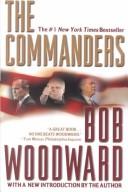
Start with The commanders, Bob Woodward's account of how the Bush administration and the Pentagon moved from the invasion to Desert Storm. Its value is in the internal argument: Colin Powell's caution, the pressure for a quicker military answer, and how the coalition strategy was assembled. Woodward's sourcing method means the people who talked to him tend to come off best, which is worth holding in mind throughout.
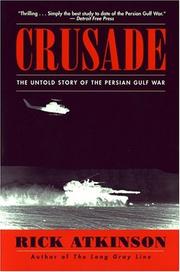
Then read Crusade, Rick Atkinson's narrative history of the war itself. It is the strongest single account of the campaign — the air plan, the ground manoeuvre, the friendly-fire incidents, the highway out of Kuwait City — and Atkinson is clear-eyed about the gap between the war as televised and the war as fought.
The other side, and the air war
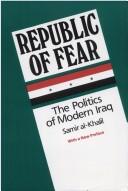
Republic of fear is essential and predates the invasion. Kanan Makiya's anatomy of Ba'athist Iraq — the security apparatus, the cult of Saddam, the mechanics of terror as governance — was published in 1989 under a pseudonym and explains the regime the coalition was fighting far better than any wartime account. Read it before the operational books if you can.
The Gulf conflict, 1990-1991 is Lawrence Freedman's scholarly diplomatic and strategic history, and it is the best account of the coalition-building, the UN resolutions, and the strategic reasoning on all sides. Pair it with Airpower in the Gulf for the air campaign in detail, and Certain Victory for the US Army's own official account of the ground war — an institutional history, thorough on units and manoeuvre, and written from inside the service, which shapes what it emphasises.
The commanders, read carefully
It doesn't take a hero is Norman Schwarzkopf's memoir, and My American Journey is Colin Powell's. Both are useful on how the war looked from the top and both are self-interested about the decisions later criticised — most obviously the timing of the ceasefire and the terms that let Iraqi helicopters fly, which mattered enormously when the Shia and Kurdish uprisings were crushed weeks later.
Which is why The generals' war comes last. Michael Gordon and Bernard Trainor's reporting is the corrective: a critical reconstruction of the command decisions, the friction between Schwarzkopf and his subordinates, the intelligence disputes over bomb damage, and the premature end of the ground campaign. Read after the memoirs, it lets you see exactly where the participants' accounts are doing defensive work.
That sequence — decision, campaign, regime, memoir, correction — gives you a war you can argue about with evidence. Follow the full path to keep it in order.
Follow the full ordered path here: Best Books on the Gulf War, in Reading Order.