Frank Bascombe Reading Order and Guide
Richard Ford's Bascombe books are five novels written across thirty-seven years, following a failed novelist turned sportswriter turned realtor through middle age and into his seventies. There is almost no plot to carry over — each book is a few days in Frank's life, usually around a holiday — but they must be read in publication order, because the whole project is a measurement of one consciousness against elapsed time, and the elapsed time is real. Read the five in sequence, then go outward into the Ford who wrote about Montana and violence, which is a completely different writer.
Start Here
IntermediateMeet Frank at his lowest and learn what the books are actually doing — a man narrating his way around a grief he will not name.
▸ Study plan for this stage
Pace: 3 weeks for 375 pages, which is slow for the length and correct. Twenty or thirty pages a sitting. The sportswriter has almost no plot — it is one Easter weekend — and reading it fast turns it into nothing at all. Read the first sixty pages attentively and then make a decision.
- Set expectations honestly, because this series divides readers more sharply than almost anything in American fiction. It is slow, interior and largely uneventful. The pleasure is entirely in the sentences and in the texture of one man's consciousness. Readers who want that consider these among the b
- The sixty-page test is real. If the first sixty pages of The sportswriter bore you rather than intrigue you, the remaining four novels will not convert you. Nothing changes in the method
- Frank Bascombe is a failed novelist turned sports journalist, thirty-eight, living in the New Jersey suburb of Haddam. He narrates in the present tense, at length, about everything
- The whole thing takes place across one Easter weekend and almost nothing happens: he visits his ex-wife, sees a girlfriend, goes on an assignment, attends a Divorced Men's Club meeting
- Under all of it is the death of his son Ralph from Reye's syndrome, and the end of his marriage. Frank narrates his way around that grief continuously and almost never at it. That evasion is the book's actual technique
- Frank's term for his own state is dreaminess, and it is worth tracking every time it appears. It is his name for the condition of not being fully present, which is what the novel is about
- The holiday structure starts here — each Bascombe book is set around an American holiday, and the choice of holiday is always a comment on the book
- Frank is complacent, self-absorbed and often obtuse about women and about race. The novels are aware of this and do not always distance themselves from it. Some readers find that honest, others find it indulgent
- What has Frank stopped doing since Ralph died, and how does the narration avoid saying so directly?
- Frank was a novelist and quit. What does the book think happened, and does Frank's account of it hold up?
- What does dreaminess mean in Frank's usage, and is it a diagnosis or an excuse?
- The Divorced Men's Club scenes are comic and awful at once. What does Ford want from that tone?
- Almost nothing happens across the weekend. Where does the forward pressure come from instead?
- Read the first sixty pages carefully and then decide, deliberately, whether to continue. That is the honest test and there is no shame in stopping
- Mark every use of the word dreaminess and read the marked passages together at the end
- Count how many pages pass before Ralph is mentioned, and how many before Frank says anything direct about him
- Pick one sentence per chapter that you would call beautiful. If you cannot find them, this series is not for you and you have learned it cheaply
- Note which holiday this book is set around and what the choice implies
Next up: You now know Frank's voice and what it is built to avoid, which is the only equipment needed for the two long central novels where Ford runs the same method at three times the scale.
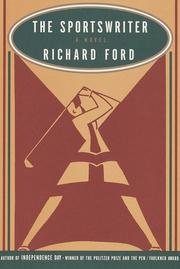
Easter weekend in New Jersey, two years after the death of Frank's son and the end of his marriage. Start here; the voice — genial, evasive, relentlessly reasonable — is the whole series, and this is where you decide whether you can spend five books inside it.
The Great Middle
IntermediateRead the two long central novels, including the one that won both the Pulitzer and the PEN/Faulkner, and watch the method scale up.
▸ Study plan for this stage
Pace: 8 to 10 weeks for about 950 pages. Independence day over four to five weeks, The Lay of the Land over four to five. These are long, dense and deliberately uneventful, and thirty pages a sitting is a sustainable pace. Leave at least a week between them.
- Independence day won both the Pulitzer Prize and the PEN/Faulkner Award, the first novel ever to take both. It is set over the Fourth of July weekend and Frank is now a real-estate agent, in what he calls his Existence Period
- The plot, such as it is: Frank takes his troubled teenage son Paul on a trip to two sports halls of fame. That is genuinely the whole armature, and what happens on it is one of the most affecting things in American fiction
- The Existence Period is Frank's name for a deliberate strategy of reduced attachment — a way of getting through life by wanting less. Watch how the novel tests it and where it fails
- Real estate is not an incidental job. Ford uses it to make Frank a professional interpreter of American places, and the descriptions of towns, roads and houses are the series' great achievement
- The Lay of the Land is set over Thanksgiving 2000, during the disputed presidential election, with Frank in his fifties, remarried, and diagnosed with prostate cancer. He now calls this the Permanent Period
- Each of Frank's named periods is a theory of how to live, adopted after the last one failed. Tracking that sequence is the most reliable way through all five books
- The Lay of the Land is the longest and least loved of the five, and it is where readers most often stop. It is also the one that most directly asks what Frank has actually understood in twenty years
- The elapsed time is real: ten years between books one and two, eleven more to book three. The novels are a measurement of one consciousness against actual decades, and reading them close together is how you feel that
- What is the Existence Period a solution to, and where in Independence day does it stop working?
- The trip with Paul is the plot. What does Frank want from it, and what does Paul want?
- Ford spends enormous space on houses and roads. What is real-estate description doing that ordinary scene-setting would not?
- By The Lay of the Land Frank has a new theory of living. Is the Permanent Period an advance on the Existence Period or a retreat?
- The disputed election runs behind the whole of book three. Is the national material earning its place or decorating the personal story?
- Frank keeps naming his periods. Is that self-knowledge or another form of the evasion the first book established?
- Keep a list of Frank's named periods with a one-line definition of each. It is the clearest map of the series
- Read the last forty pages of Independence day in one sitting
- Mark every passage where Frank describes a property. Read six of them consecutively and note what he never mentions about the people who live there
- Track Paul across both books. He is the series' best argument that Frank is not a reliable reader of other people
- After The Lay of the Land, write two sentences on what has actually changed in Frank since 1986
Next up: Ford has now run the long-novel version twice; the late books switch form entirely, which is how the series avoids simply repeating itself into old age.
Frank selling houses and driving his troubled son to sports halls of fame over a Fourth of July weekend. The book the series is remembered for and the only novel to take the Pulitzer and the PEN/Faulkner in the same year. Read it second — the Existence Period only makes sense against The Sportswriter's numbness.

Thanksgiving 2000, Frank at fifty-five with prostate cancer and a wife who has left him for a man presumed dead. The longest and baggiest of the five, and the one where the comedy gets darkest. Third, and worth its length.
The Late Bascombe
IntermediateFinish with the two short late books, where Ford switches from the long novel to compressed novellas and lets Frank get old.
▸ Study plan for this stage
Pace: 5 to 6 weeks. Let me be frank with you is four novellas across 240 pages — read one per sitting with a couple of days between, since they are separate pieces rather than chapters. Be Mine is a full novel and needs three weeks. The tonal shift between the two is severe, so do not run them together.
- Let me be frank with you is not a novel. It is four linked novellas set around Christmas in the aftermath of Hurricane Sandy, with Frank in his late sixties, retired, and deliberately reducing his obligations
- The compression suits him. Each novella is one encounter — a man wanting to see his destroyed house, an ex-wife with Parkinson's, a stranger at the door, a dying friend — and Frank's evasiveness has nowhere to hide in forty pages
- The hurricane is the book's controlling image: a ruined coastline, houses in the wrong places, and a man taking inventory of what is gone. Ford does not push the metaphor and does not need to
- Be Mine is set around Valentine's Day and is the hardest book in the series. Frank's son Paul has ALS, and the novel is a road trip to Mount Rushmore while Paul is on an experimental treatment
- Paul has been the series' running wound since Independence day, and Be Mine finally gives him the foreground. The father-son material that book two set up pays off here forty years later
- It is a bleak book and it is also very funny, sometimes in the same paragraph, largely because Paul is relentlessly and aggressively unfunny on purpose. That tonal collision is the point
- Ford has said Be Mine is the last Bascombe novel. Read as an ending it is unsentimental to the edge of coldness, and it declines every consolation the series could have reached for
- The five books together span 1986 to 2023 and Frank ages in real time from thirty-eight to seventy-four. Very little else in fiction does this, and the accumulated effect is the actual reason to read the series
- What does the novella form force Frank to do that a 500-page novel let him avoid?
- The Sandy aftermath is everywhere in book four and almost never commented on. Why does Ford keep it in the background?
- Be Mine gives Paul the foreground at last. Does the novel understand him, or only observe him?
- Frank has spent five books not saying things directly. Does he say anything directly in Be Mine, and where?
- Is Be Mine a satisfying ending, and does this series owe you one?
- Across thirty-seven years, what has Frank actually learned? Answer without being generous to him
- Read the four novellas separately with a day or two between. Read straight through, they blur
- Mark the passages in Be Mine where the comedy and the horror occupy the same paragraph
- Reread the Paul sections of Independence day before starting Be Mine. The payoff needs the setup fresh
- Write down what you think Frank believes at seventy-four, then find the sentence in the last twenty pages that most contradicts you
- Lay the five books out by year of publication and by Frank's age. The chart is the series' whole argument
Next up: Frank's voice is now the only Richard Ford you know, and the non-Bascombe work shows that it was a deliberate performance rather than the writer's natural register.

Four linked novellas after Hurricane Sandy, Frank retired and visiting the wreckage of his own past addresses. A change of form that the series had earned — read it fourth, and note how much less Frank now explains.

Frank driving his adult son, who has ALS, to Mount Rushmore. The last Bascombe book and the one that finally makes the thirty-seven years of narration mean something. Do not read it out of order under any circumstances.
The Other Richard Ford
IntermediateRead the non-Bascombe work — the Montana stories and novels that show the harder, more violent writer underneath the suburban voice.
▸ Study plan for this stage
Pace: 8 to 9 weeks for about 1,130 pages. Rock Springs over two weeks, reading one story per sitting. Wildlife in a few days at 170 pages. Canada over three to four weeks. A Piece of My Heart over two. Take Rock Springs first — it is the fastest route to the other Ford.
- Rock Springs is the book that made Ford's reputation before Bascombe, and it is a completely different writer: ten short stories set in Montana, about men who are broke, armed, leaving, or about to do something irreversible
- The stories are spare where Frank is expansive. Short sentences, flat declarative openings, violence just off the page. Reading them after five Bascombe novels is genuinely disorienting
- Wildlife is a short novel narrated by a sixteen-year-old boy watching his parents' marriage end during a Montana forest fire in 1960. It is the most controlled thing Ford has written and takes an evening or two
- Canada opens with a bank robbery committed by the narrator's parents and then spends four hundred pages on the consequences. It is the fullest fusion of the two Fords — the Montana material told in something closer to the Bascombe voice
- A Piece of My Heart is his first novel, from 1976, and reads as Southern gothic under obvious Faulkner influence. It is the weakest book in this path and is worth reading only for how completely he later abandoned that mode
- The pattern across all four: Ford's non-Bascombe fiction is about people who have no property, no periods and no theories, which throws Frank's suburban self-narration into relief
- Reading these makes clear that Frank's expansiveness is a character choice rather than an authorial tic. Ford can write short, hard and cold whenever he wants to
- What is the difference between a Rock Springs sentence and a Bascombe sentence? Quote one of each
- Wildlife is narrated by a boy watching adults. How does the limited vantage do work that Frank's total access cannot?
- Canada blends the two modes. Which one wins, and in which sections?
- A Piece of My Heart is heavily influenced by another writer. What did Ford keep from that apprenticeship and what did he throw away?
- Frank owns property, has periods and has theories. What do the Montana characters have instead?
- Having read all nine books, is the Bascombe voice Ford's achievement or his limitation?
- Read Rock Springs one story per sitting. They are corrosive in bulk
- Read the opening paragraph of Rock Springs and the opening paragraph of The sportswriter back to back
- In Wildlife, mark every fact the narrator reports without understanding. The gap between reporting and understanding is the whole book
- Read the first fifty pages of Canada and identify which of the two Fords is writing them
- Write a paragraph on why a writer who could produce Rock Springs spent thirty-seven years on one talkative realtor in New Jersey
Next up: That is the working Richard Ford, and the natural neighbours are Updike's Rabbit novels for the other great American serial consciousness, or Alice Munro for what the Montana stories are reaching toward.
The story collection that made his reputation, set among broke people in Montana. Start the non-Bascombe shelf here: it is the best thing he has written and the clearest evidence that Frank's amiability is a construction.

A short novel about a Great Falls teenager watching his parents' marriage end over one autumn. Perfectly compressed, and the tonal opposite of the Bascombe books' expansiveness.
A boy whose parents rob a bank and who is then driven across the border to a worse situation. His best late non-Bascombe novel and the one that most rewards a reader who already knows his sentences.

The 1976 debut, Southern and heavily indebted to Faulkner, and interesting mainly for how little it predicts. Read it last, as an origin document rather than a novel.
Discussion
Keep reading
Paths that share books, cover the same subject, or open a related topic.