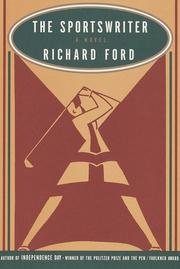
Start with The sportswriter, the 1986 first novel, and read the five in publication order. There is no alternative arrangement worth considering — the books are a measurement of one consciousness against actual decades, and reading them out of sequence destroys the only thing they are doing.
Set expectations honestly first, because this series divides readers more sharply than almost anything in American fiction. It is slow, interior and largely uneventful. The pleasure is entirely in the sentences and in the texture of one man's consciousness. Readers who want that consider these among the best American novels of the last forty years; readers who do not find them insufferable. Both reactions are reasonable.
So the sixty-page test is the practical advice. Read the first sixty pages of The sportswriter attentively and then decide, deliberately, whether to continue. If they bore you rather than intrigue you, the remaining four novels will not convert you, because nothing about the method changes. There is no shame in stopping and you will have learned it cheaply.
Book one
Frank Bascombe is a failed novelist turned sports journalist, thirty-eight, living in the New Jersey suburb of Haddam. He narrates in the present tense, at length, about everything. The whole novel takes place across one Easter weekend and almost nothing happens: he visits his ex-wife, sees a girlfriend, goes on an assignment, attends a Divorced Men's Club meeting.
Under all of it is the death of his son Ralph and the end of his marriage. Frank narrates his way around that grief continuously and almost never at it, and that evasion is the book's actual technique. His own word for his condition is dreaminess; mark it every time it appears.
Two things start here and run through all five books. Each novel is set around an American holiday, and the choice of holiday is always a comment on the book. And Frank is complacent, self-absorbed and often obtuse about women and about race — the novels are aware of this and do not always distance themselves from it, which some readers find honest and others find indulgent.
The great middle
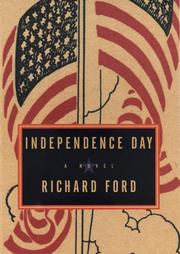
Independence day won both the Pulitzer Prize and the PEN/Faulkner Award, the first novel ever to take both. Frank is now a real-estate agent, in what he calls his Existence Period, and the plot is a Fourth of July trip with his troubled teenage son Paul to two sports halls of fame. That is genuinely the whole armature, and what happens on it is one of the most affecting things in American fiction.
The Lay of the Land is set over Thanksgiving 2000, during the disputed presidential election, with Frank in his fifties, remarried and diagnosed with prostate cancer. He now calls this the Permanent Period. It is the longest and least loved of the five and it is where readers most often stop, though it is also the book that most directly asks what Frank has understood in twenty years.
Each of Frank's named periods is a theory of how to live, adopted after the last one failed. Keeping a list of them with a one-line definition each is the clearest map of the series. Give these two four to five weeks apiece at about thirty pages a sitting; they are long, dense and deliberately uneventful.
The late books
Let me be frank with you is not a novel. It is four linked novellas set around Christmas in the aftermath of Hurricane Sandy, with Frank in his late sixties and retired. The compression suits him: each piece is one encounter, and his evasiveness has nowhere to hide in forty pages. Read one per sitting with a couple of days between.
Be Mine is set around Valentine's Day and is the hardest book in the series. Paul has ALS, and the novel is a road trip to Mount Rushmore while he is on an experimental treatment. Paul has been the running wound since Independence day, and this is where the father-son material finally pays off. It is bleak and it is also very funny, often in the same paragraph. Ford has said it is the last Bascombe novel, and read as an ending it is unsentimental to the edge of coldness.
The rest of Richard Ford
Rock Springs is the story collection that made his name and is the fastest way to test whether the prose is for you — it is far tauter than the Bascombe books. Wildlife is a short, cold novel about a boy watching his parents' marriage end. Canada is his best-regarded book outside the series. A Piece of My Heart is the 1976 debut and is for completists.
Browse more literary fiction reading paths on Discover.
Follow the full ordered path here: Frank Bascombe Reading Order and Guide.