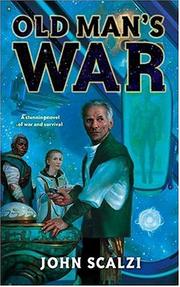
Start with Old Man’s War, the first book, published in 2005. There is no argument to have here — it is the entry point by design, and it is also the best-constructed book in the sequence. Seventy-five-year-olds are recruited into an interstellar military on the promise of a new body, and the novel spends its first half on the mundane logistics of that trade before it spends its second half on the consequences. The premise does all the work.
Set expectations correctly, though. This is deliberately in the tradition of Heinlein's Starship Troopers and Joe Haldeman's The Forever War, and Scalzi has never pretended otherwise. It is fast, funny, dialogue-heavy and structurally conventional. If you want dense worldbuilding or difficult prose, this is not that; if you want a novel that goes down in two sittings and keeps landing its jokes, it is close to ideal.
The core trilogy
Old Man’s War, then The Ghost Brigades, then The Last Colony. Read these three in order and you have the complete arc.
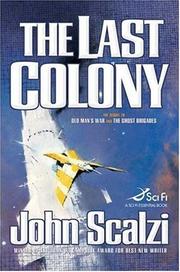
The Ghost Brigades shifts to the Special Forces — soldiers grown from the DNA of the dead, with no prior lives — and it is the most thematically interesting book in the series, because it takes the throwaway concept from book one and asks what personhood means for someone assembled to order. The Last Colony returns to John Perry and closes the political story that the first two books set up. It is the intended ending, and the trilogy is genuinely complete there.
Zoe's Tale: read it, but read it after
This is the one that confuses people. Zoe's Tale covers the same events as The Last Colony, retold from the perspective of a teenage character who was largely offstage in the original. It is not a sequel and it does not advance the plot.
It exists because The Last Colony left a substantial gap — things happen while Zoë is away that Perry simply cannot narrate — and the fourth book fills them. Read it directly after The Last Colony while the events are fresh, or skip it entirely if retellings irritate you. What you must not do is read it instead of The Last Colony.
The later books
The human division and The End of All Things were both originally published as serialised episodes before being collected, and it shows. Each is a sequence of connected novellas rather than a single novel, and the pacing is choppier as a result — you get repeated setups and repeated resolutions rather than one accumulating arc.
They are enjoyable and they move the political story of the Colonial Union forward considerably, particularly around Earth's relationship to the organisation that has been quietly exploiting it. But they are for readers who want more of this world, not for readers who want the story to escalate.
The book that is not in this series
The Kaiju Preservation Society is in this collection but is not an Old Man's War book at all. It is a completely separate standalone comedy about an alternate dimension full of enormous monsters, written in the same voice. Read it if you like the voice; do not go looking for connections, because there are none.
Where to stop
Stop after The Last Colony. That is the honest recommendation. The first three books form a complete, well-shaped trilogy with a real ending, and everything after is optional extension.
If you loved all three, add Zoe's Tale immediately, then treat The human division and The End of All Things as a bonus season rather than as required reading.
If military science fiction with a political spine appeals, the Foundation series is the obvious next stop.
Follow the full ordered path here: Old Man's War Reading Order and Guide.