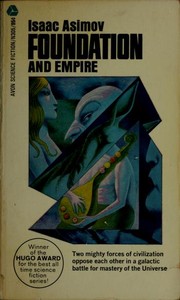
Start with Foundation, the 1951 fix-up of stories Asimov published in the 1940s. Read the series in publication order. That is the whole answer, and the rest of this guide is the argument for it plus the warnings you should have before you commit.
The competing option is chronological order, which Asimov endorsed late in life and which many editions now print on the copyright page. It begins with the robot novels, moves to the prequels he wrote in the 1980s, and only then reaches Foundation. It is a bad first reading. The prequels and the late sequels are written to reward readers who already know the original trilogy, and reading them first converts two of the best reveals in science fiction into things you already knew. Chronological order is a good second read; it is a poor first one.
The recommended order
The original trilogy first:
- Foundation
- Foundation and Empire
- Second Foundation
Then, if you want to continue, the robot novels — read as detective stories, which is what they are:
4. The Caves of Steel
5. The Naked Sun
6. The Robots of Dawn
Robots and Empire, which bridges the robot books to the Foundation timeline, is not currently in our catalogue; it is the fourth of the robot novels and the one that matters most for the connection.
Then the late sequels:
7. Foundation's Edge
8. Foundation and Earth
And finally the prequels, which read beautifully as a coda once you know how everything turns out:
9. Prelude to Foundation
10. Forward the Foundation
The one adjustment worth making: read the robot novels before Foundation and Earth rather than after. That book's ending depends directly on material Asimov established in them, and it is close to incomprehensible otherwise.
The honest warnings
The original trilogy is a series of talking-heads stories. People sit in rooms and out-argue each other; the crises are resolved by someone explaining why the crisis was never a crisis. This is the appeal for a lot of readers and a dealbreaker for others. There is very little action, almost no interiority, and — a genuine feature of 1940s magazine science fiction — almost no women at all until the character of Bayta in Foundation and Empire, who is the best thing in the trilogy.
The prose is functional. Asimov was not aiming for style and did not achieve it accidentally. If you want sentences, this is not the series.
The late sequels, written thirty years later, are longer, chattier and more concerned with tying the whole of Asimov's fiction into one universe. Whether that project improves the Foundation books is genuinely disputed among readers.
Where to stop
Most readers should stop after Second Foundation. The trilogy resolves its central question, the final reveal is the best thing in the series, and the ending is a real ending. This is the single most useful piece of advice in this guide.
If you continue, the next honest stopping point is Foundation's Edge, which won a Hugo and works reasonably as a fourth book. Foundation and Earth ends on an open, unsettling note that Asimov never resolved — he wrote prequels instead — and readers who go that far often report frustration rather than closure. Go in knowing that.
For a very different, far more modern take on interstellar politics, browse the Old Man’s War series.
Follow the full ordered path here: Foundation Reading Order: Publication or Chronological?.