Ender's Game Reading Order: Where to Start
The Ender books split into two tracks that both begin at the same moment. The Ender quartet follows Ender himself three thousand years forward into a slow philosophical series about guilt and xenology; the Shadow series stays on Earth with Bean, covering the same Battle School events and then a geopolitical thriller. They are not sequential — after Ender's Game the two tracks run in parallel and you choose which to take first. The standard advice, and the advice here, is to read the quartet first, because Speaker for the Dead is the book Card actually wanted to write and Ender's Game was written to set it up.
Start Here
BeginnerRead the one book everything else branches from, and reach the fork.
▸ Study plan for this stage
Pace: One week for 330 pages. Ender's Game is the fastest-reading book in the whole path — short chapters, constant forward motion, and most readers finish it in three or four sittings. Do not rush from the last page into the next stage; stop and decide which branch you are taking.
- Everything in this path branches from this one book, so read it first regardless of which track you eventually take
- One thing to state plainly and then move past: Orson Scott Card has been a prominent public opponent of same-sex marriage, including service on the board of a national campaign against it, which has made his books contested for many readers. Some people decline to buy them on that basis, some separa
- The novel was expanded from a 1977 novelette and won both the Hugo and the Nebula. The prose is plain to the point of transparency and the pacing is close to perfect, which is why it is still the most-assigned science fiction novel in American schools
- Ender Wiggin is a six-year-old taken to Battle School to be trained as a commander against an alien species. The book's method is to isolate him deliberately and repeatedly, and to make you complicit in wanting him to win anyway
- The battleroom games are the engine and the reason the book works for readers who do not otherwise read science fiction. The tactics are legible and the escalation is precisely paced
- The ending contains the most famous twist in the genre. If you have somehow avoided it, avoid discussion of the book entirely until you finish
- The subplot with Ender's siblings Peter and Valentine writing political essays under pseudonyms is widely considered the weakest thread in the novel. It is also load-bearing for the entire Shadow track, so do not skim it
- This is where the fork happens. After this book the two tracks run in parallel from the same moment, and you choose which to take first
- The adults in Battle School isolate Ender on purpose and say so to each other. What does the novel want you to think about the reader's own investment in his victories?
- The battleroom is a game with rules. At what point does the book stop distinguishing the game from the war?
- Why does the twist work, and what does the novel have to do for two hundred pages to make it work?
- The Peter and Valentine essays feel like a different book. What are they actually setting up?
- Is Ender responsible for what he does? The novel has a clear position — what is it, and do you accept it?
- Read it in as few sittings as you can. The compression is most of the effect
- Note every time an adult explains their reasoning to another adult. Card gives you the manipulation in plain sight and readers still fall for it
- After the ending, go back and reread chapter one. It reads completely differently
- Stop here and decide deliberately which track to take next rather than drifting into whichever book is on the shelf
Next up: The fork is now in front of you: the quartet takes Ender three thousand years forward into philosophy, and the Shadow books stay on Earth with Bean. Take the quartet first.
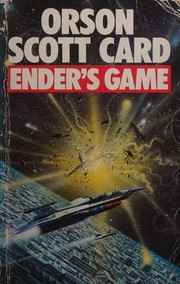
Battle School, the games, and an ending that reframes everything before it. Start here without exception — both tracks of the saga begin the moment this book finishes, and its final chapter is the seed of the entire quartet.
The Ender Quartet
IntermediateTake the first track — a three-thousand-year jump into a much slower, stranger series about xenology, guilt and what counts as a person.
▸ Study plan for this stage
Pace: 8 to 10 weeks for about 1,370 pages. Speaker for the Dead over two to three weeks, Xenocide over three — it is 569 pages and the slowest book in the path — and Children of the Mind over two. Read Speaker and then take a real break before Xenocide; the last two are one long argument and are best take
- Speaker for the Dead jumps three thousand years and is a completely different novel: an anthropological mystery on a colony world, about a human xenologist murdered by the native species. Card has said this is the book he actually wanted to write and that Ender's Game was constructed to set it up
- Many readers who loved Ender's Game bounce hard off Speaker. It is slow, talky, Catholic, densely populated with a Portuguese-speaking colonial family, and it has no battles. If you go in expecting more military science fiction you will be disappointed by the best book in the sequence
- The hierarchy of foreignness — utlanning, framling, raman, varelse — is the quartet's central idea and worth learning properly. It is a graded scale of how alien something has to be before you stop owing it moral consideration
- The Speaker for the Dead of the title is a role: someone who tells the complete truth about a dead person, including what the family would rather not hear. That practice is the emotional core of the whole quartet
- The pequeninos, called piggies, have a life cycle that explains the apparent murder. Working out that biology is the actual plot, and the reveal is the best piece of construction Card has managed
- Xenocide and Children of the Mind were written as a single manuscript and split for publication. This is why Xenocide has no proper ending — it simply stops. Do not read one without the other
- The last two books go a long way into metaphysics, including a theory of consciousness and instantaneous travel that many readers find unpersuasive. The philosophical ambition is real and the execution divides people sharply
- The descolada, a virus that rewrites the genes of everything it infects, is the ethical problem the quartet builds toward: what do you owe something that is alive, intelligent, and will kill you
- What is the hierarchy of foreignness for, and does the quartet ever apply it consistently?
- Speaker for the Dead is a mystery whose solution is a biology. When did you work it out, and what clue did you miss?
- Speaking a death means saying everything true, including what wounds the living. What is that practice a solution to?
- Xenocide poses the descolada problem. Is the answer the books eventually reach earned, or evaded?
- The philosophical machinery in Children of the Mind is a real departure. Does it belong to the same series?
- Speaker was the book Card wanted to write. Having read both, does Ender's Game work better as a setup or as a standalone?
- Write the four terms of the hierarchy of foreignness on a card and keep it in the book. You will use it constantly
- Before Speaker, accept that this is a different genre. Readers who set expectations here almost always love the book
- In Speaker, keep a family tree of the Ribeira household. Card does not simplify it and the names are unfamiliar to English readers
- Read Xenocide and Children of the Mind consecutively with no other book in between. They are one work
- After finishing, write two sentences on whether the quartet's ethics survive its metaphysics
Next up: You have Ender's whole arc and the philosophical track; going back to the Battle School from Bean's side now works as a reinterpretation rather than as a repetition.
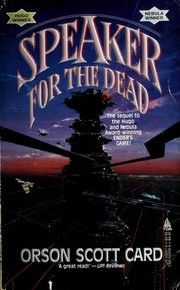
Ender as an itinerant funeral-speaker on a colony world with a second alien species nobody understands. Almost nothing like Ender's Game — no battles, adult characters, anthropological pace. If you only read two books in the saga, read this one second.
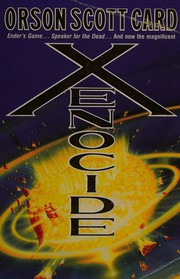
The philosophical arguments of Speaker taken to their limit, with a virus, a planet under quarantine and a great deal of talking. The most divisive volume; read it knowing it is half of a story.
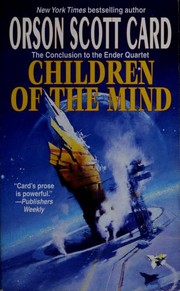
Literally the second half of Xenocide, split by the publisher. Read it directly after, or not at all — it makes no sense standing alone and it closes Ender's story.
The Shadow Series — the Parallel Track
BeginnerGo back to Ender's Game and read the other track: the same Battle School from Bean's side, then a near-future war on Earth.
▸ Study plan for this stage
Pace: 8 weeks for about 1,620 pages. Ender's Shadow over two to three weeks, then Shadow of the Hegemon, Shadow Puppets and Shadow of the Giant at about two weeks each. These read faster than the quartet — they are thrillers rather than philosophy — and the last three are one continuous story.
- Ender's Shadow is a parallel novel, not a sequel. It covers the same Battle School years from Bean's point of view and Card designed it so that either book can be read first. Read after the quartet, as here, it functions as a commentary
- Bean is the anti-Ender: genetically altered, starving on the streets of Rotterdam before Battle School, superhumanly intelligent and entirely without Ender's moral discomfort. He understands the manipulation from the start
- The two books contradict each other in small ways and Card has acknowledged it. Treat them as two accounts rather than one continuous record — which is, conveniently, exactly how Bean would treat them
- After Ender's Shadow the series changes genre completely. Shadow of the Hegemon, Shadow Puppets and Shadow of the Giant are near-future geopolitical thrillers set on Earth, with the Battle School children as national assets in a scramble for global power
- Peter Wiggin is the real protagonist of that trilogy, which is why the Locke and Demosthenes subplot in Ender's Game matters more than it seemed to
- The geopolitics has not aged well and is frequently strange, with nations treated as fixed characters and a great deal of confidence about how the twenty-first century would go. Read it as a thriller rather than as prediction
- Bean's genetic condition gives him a hard time limit, and that ticking clock is what holds the last three books together emotionally
- The two tracks barely touch after the fork. They do not reconverge in any satisfying way, so do not read the Shadow books expecting them to answer questions from the quartet
- Ender's Shadow retells known events. What does Bean see that Ender could not, and what does he miss that Ender saw?
- The two books contradict each other. Does that damage them, and does having two accounts make the Battle School more or less legible?
- Bean never has Ender's guilt. What does the series lose without it, and what does it gain?
- The Shadow trilogy is a geopolitical thriller. What assumptions about nations and power does it make, and which have held up?
- Peter Wiggin was a monster in book one. What does this trilogy decide about him, and is the decision persuasive?
- Which track is the better series, and are you judging by ideas or by pace?
- Read the Battle School sections of Ender's Shadow with the corresponding chapters of Ender's Game in reach. Comparing two accounts of one scene is the point of the exercise
- List three concrete contradictions between the two Battle School books
- When the trilogy turns to geopolitics, note where you stop believing it. Being specific is more useful than a general complaint
- Track Bean's remaining time as a countdown across the three books. It is the structure
- Write a paragraph on which track you would recommend to a new reader after Ender's Game, and why
Next up: Both tracks are now complete, which leaves the later-written books that sit in the gaps between them — genuinely optional, and only worth it if you still want more.
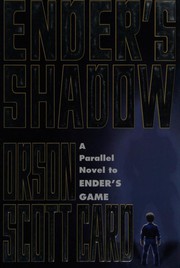
Battle School again, from the smallest and cleverest child in it. A parallel novel rather than a sequel — it shares scenes with Ender's Game and reads them differently. Start the second track here, after the quartet.
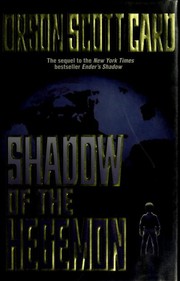
The Battle School children returned to Earth and immediately weaponised by their governments. The genre changes to geopolitical thriller and stays there — this is where the two tracks stop resembling each other.
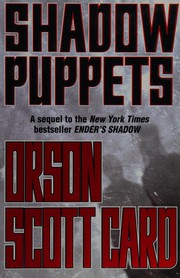
Bean and Petra against Achilles, with the world war escalating. The middle of a tight three-book arc; read it straight through from the previous volume.
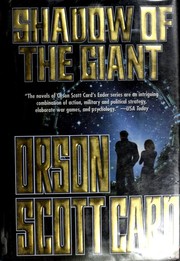
The Earth-side arc concludes and Peter Wiggin's hegemony resolves. The end of the Shadow series proper, and the point where the two tracks have fully diverged.
The Completist Tail
BeginnerFill the gaps between the tracks with the later-written bridge novels and the one short book that is worth the detour.
▸ Study plan for this stage
Pace: 3 to 4 weeks for about 750 pages. Ender in Exile over one to two weeks, Shadows in flight in a few sittings at 224 pages, and A War of Gifts in a single evening at 128. All three are optional and none of them changes anything you have already read.
- Ender in Exile was written more than twenty years after Ender's Game and slots into the gap between its final chapter and Speaker for the Dead, covering Ender's departure from Earth and his first colony
- It also tries to reconcile some of the contradictions between the two tracks, particularly around a loose end from the end of Shadow of the Giant. Whether it succeeds is contested, and it produces some retconning that irritates readers of the Shadow books
- Read it only after both tracks. Read in publication order it is unremarkable; read here it functions as a bridge and a tidying-up
- Shadows in flight continues Bean's story off Earth and is short, strange and much more interested in biology than politics. It is the closest the Shadow track comes to the quartet's mode
- A War of Gifts is a 128-page Christmas novella set at Battle School during the events of Ender's Game, about religious observance in an institution that has banned it. It is slight, and it is the best-written short thing Card has done in this universe
- None of these three are necessary. The two tracks each have a real ending and this stage exists for readers who want more time in the setting rather than for readers who need answers
- Card has continued to publish in this universe with co-authors beyond these books. This is the sensible place to stop
- What does Ender in Exile actually resolve, and does resolving it improve either track?
- The bridge novel contradicts details in the Shadow books. Is a late-written reconciliation better or worse than leaving the inconsistency?
- Shadows in flight is Bean without geopolitics. Does the character survive the change of subject?
- A War of Gifts is about religion inside an institution that has outlawed it. Why is that a natural subject for this setting?
- Having read eleven books, what is the Ender saga actually about — command, guilt, empathy, or the justification of harm?
- Read A War of Gifts first of the three. It is the shortest and the best, and it will tell you whether you still want the other two
- Note the specific points where Ender in Exile revises something you already read, and decide case by case which version you keep
- Write half a page on the branch structure: given what you now know, what order would you tell a new reader to use?
- Reread the last chapter of Ender's Game one final time. After eleven books it is still the strongest thing in the sequence
Next up: That is the whole saga in both directions, and if the anthropological turn of the quartet was what held you, the natural next steps are Le Guin or Cherryh, who do first contact with far more patience.
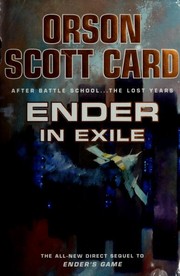
Written twenty-three years later to fill the gap between the last chapter of Ender's Game and Speaker for the Dead. Read it here, not there — as an interpolation it is a fine epilogue and a poor sequel.
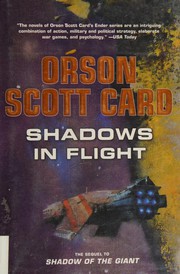
A short novel following Bean and his children off Earth, connecting the Shadow track back to the quartet's universe. Only for readers who finished both tracks.
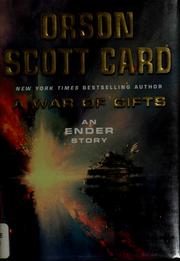
A Christmas novella set inside Battle School during Ender's Game. Slight, self-contained, and the right place to stop before the Formic War prequels, which are co-written and a different proposition entirely.
Discussion
Keep reading
Paths that share books, cover the same subject, or open a related topic.