The Chronicles of Thomas Covenant Reading Order: Where to Start
Donaldson's ten Covenant novels are read in strict publication order, which is also their internal order, so there is no debate to settle here. The real question is whether to start at all: the protagonist is a leper who commits a rape in the first hundred pages, and the series never lets you forget it. This path takes the three trilogies and quartet in sequence and is honest about where the difficulty sits.
The First Chronicles
IntermediateGet through the opening that stops most readers, and understand what Donaldson is doing with a fantasy hero who refuses to believe in the world he is saving.
▸ Study plan for this stage
Pace: 8-10 weeks for the three. Before scheduling anything, know the one thing that matters most about this series: about a hundred pages into Lord Foul's Bane, Covenant rapes Lena, a sixteen-year-old girl who has just helped him. It is written on the page, it is not ambiguous, and it is not incidental —
- Covenant is a leper, and leprosy in this series is a discipline as much as a disease — the VSE, the daily inspection, the refusal of hope, all of which he brings into the Land as a survival protocol
- The rape of Lena: an act the narrative treats as a crime rather than a lapse, whose consequences supply the plot of the next two volumes and the moral question of the next eight
- Unbelief as Covenant's central strategy: he refuses to accept the Land is real because accepting it would kill him back home, and that refusal is what makes him useless and dangerous
- The Land as a place of health so intense that a leper's nerves come back, which is exactly why he cannot afford to believe in it
- Donaldson writing directly against the Tolkien template — the chosen one who declines the role, and a fantasy world whose beauty is presented as a trap
- Hile Troy in The Illearth War as the contrast case: a visitor who commits totally to the Land and produces a different kind of catastrophe
- The white gold ring as power Covenant cannot control and will not use, which is the plot engine of all three books
- The First Chronicles as a complete story — many readers stop after The Power That Preserves with no sense of loss
- What does Covenant's leprosy require of him, and how does each requirement translate into his behaviour in the Land?
- What are the direct consequences of the rape across the three books, and who bears them?
- Does the series ask you to forgive Covenant, or only to keep reading him? Where does it make that distinction?
- How does Hile Troy's total belief produce a disaster of its own, and what is Donaldson arguing by pairing him with Covenant?
- Why can Covenant not simply use the ring, and what changes by the end of the third book?
- Is Lord Foul a character or a condition?
- Read to the end of chapter seven of Lord Foul's Bane and then decide whether to continue. That is the honest decision point.
- Keep a note of every time a character in the Land tells Covenant what he owes them; the accumulation is the moral argument.
- After The Illearth War, write down what Elena's existence costs the Land. The plot is the answer to the first book's crime.
- If you find volume one's prose overwrought, push to volume two before judging — it settles substantially.
- Decide consciously at the end of The Power That Preserves whether to continue. It is a real ending.
Next up: The first trilogy closes Covenant's story on his own terms; the second reopens it by putting a second consciousness beside him who can see what he refuses to.
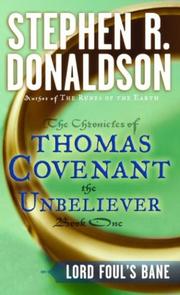
Thomas Covenant, a leper abandoned by his wife and shunned by his town, is pulled into the Land and heals instantly, which he takes as proof it is a delusion. A warning worth having in advance: early in the book he rapes a girl who helped him, and the entire series is the consequence of that act. It is deliberate, not incidental, and if it is a hard no for you, stop here rather than three books in.

The Land at war and a second visitor from our world who takes to it with none of Covenant's reluctance. The contrast is the point, and the prose settles considerably from the first volume.
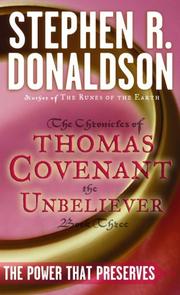
Covenant walks to Foul's Creche to end it. This closes the first trilogy properly, and a great many readers stop here with a complete story.
The Second Chronicles
BeginnerReturn to a Land that has been poisoned in the interval, with a second protagonist who changes the whole moral temperature of the series.
▸ Study plan for this stage
Pace: 9-11 weeks for the three. The Wounded Land is bleak and slow to start; The One Tree is the most conventionally enjoyable stretch in all ten books and will go fast; White Gold Wielder is short but heavy. About 30 pages a day. Do not leave more than a few weeks between the first trilogy and this one —
- The Sunbane: the Land's natural law replaced by a rotating cycle of sun-phases that force growth, rain, pestilence and drought — corruption expressed as ecology
- Linden Avery as co-protagonist and the reason many readers prefer this trilogy: a doctor whose percipience makes her feel other people's illness, so she cannot look away from anything
- Linden's own history of complicity and guilt, deliberately built to rhyme with Covenant's without excusing his
- Covenant ten years on — still refusing power, but now refusing it as a choice rather than a defence
- The quest for the One Tree as Donaldson writing a straight adventure, and what it reveals that the grim material could not
- The Haruchai and the Giants as the series' two moral counterweights, and the different ways each fails
- White Gold Wielder as the intended ending of the whole work — Donaldson wrote it believing he was done, and it reads that way
- How the Second Chronicles reframe the first: the same events seen by someone who is not lying to herself
- How does the Sunbane work mechanically, and why is that specific design worse than simple devastation?
- What does Linden see that Covenant cannot, and what does she refuse to see about herself?
- Why does the sea voyage of The One Tree feel like relief, and what is Donaldson doing by placing it there?
- What is the cost Covenant accepts at the end of White Gold Wielder, and is it a redemption?
- Does Linden's guilt function as a parallel to Covenant's crime, or as a contrast to it?
- If the series had ended here, would it be complete?
- Chart the Sunbane cycle as it is described; the plot's logistics depend on it and it is easy to lose.
- Track what Linden's percipience tells her at each major decision, and whether she acts on it.
- Compare the Land of Lord Foul's Bane with the Land of The Wounded Land scene by scene for the first fifty pages.
- At the end of White Gold Wielder, decide deliberately whether to go on. The Last Chronicles are a different reading experience and there is no shame in stopping.
Next up: White Gold Wielder is a genuine ending, so the four books that follow — written nearly twenty years later — are best approached as a separate and much more demanding work.

Ten years later, Covenant comes back to find the Land corrupted by a Sunbane, accompanied by Linden Avery, a doctor who can feel other people's illness. Linden is the reason many readers prefer the Second Chronicles, and she carries the rest of the series.

A sea voyage to find the wood for a new Staff of Law. The most conventionally enjoyable stretch of the ten books and a real change of pace.
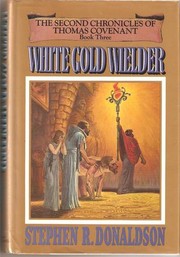
The ending Donaldson wrote believing he was finished with Covenant. Read it as the true conclusion; the Last Chronicles came nearly twenty years afterwards.
The Last Chronicles
BeginnerTake on the four-book coda written two decades later, with Linden as the lead and a far denser, more demanding style.
▸ Study plan for this stage
Pace: 16-20 weeks for the four, and be realistic: these are the longest, densest and hardest books of the ten, and the most commonly abandoned. Donaldson wrote them nearly two decades after White Gold Wielder and they assume near-total recall of the first six — read them soon after the earlier trilogies,
- Linden is now the lead: the Last Chronicles are her story, and Covenant's absence is structural rather than incidental
- Thousands of years have passed in the Land since White Gold Wielder, so almost every institution and people you know has changed or gone
- Jeremiah, Linden's adopted son, as the emotional engine — the series' late move from guilt to parenthood
- Time travel through the Land's own history in Fatal Revenant, which rewards detailed memory of the first six books and punishes hazy memory brutally
- The prose is denser and more interior than the earlier trilogies; long passages are argument and grief rather than event
- The Worm of the World's End as a threat of a wholly different order to Lord Foul, and what it means that the series escalates past its own villain
- The Last Dark resolves arcs opened in Lord Foul's Bane forty years of publication earlier — the reward for the whole path is that it actually closes
- There is no eleventh book; this is the complete work
- Why does Linden go back, and is her reason better or worse than Covenant's ever was?
- What happened to the Land in the intervening millennia, and which of the old peoples survive?
- In Fatal Revenant, which historical episodes are revisited, and what do they change about your reading of the First Chronicles?
- What is the Worm, and why does Lord Foul stop being the largest problem?
- Does the ending settle the moral question raised in the first hundred pages of Lord Foul's Bane, and should it?
- What does Jeremiah's arc do that neither Covenant's nor Linden's could?
- Before starting The Runes of the Earth, write a page of notes on the six earlier books — the names, the peoples, the artefacts. You will use it constantly.
- In Against All Things Ending, set a low daily page target and keep it rather than trying to power through; the volume defeats binge readers specifically.
- Track what Linden is willing to destroy for Jeremiah, and compare it with what Covenant was willing to destroy for the Land.
- After The Last Dark, reread the first chapter of Lord Foul's Bane and decide what the ten books were about.
Next up: This is the end of the path — ten novels, one story, and no further volumes to read.
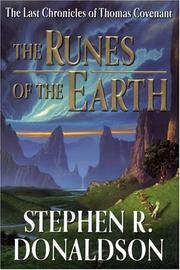
Linden returns alone, thousands of years after White Gold Wielder, to a Land she barely recognises. Do not attempt this without the first six books fresh; it assumes total recall of them.

Time travel through the Land's history, which rewards readers who know the earlier books in detail and baffles those who do not.
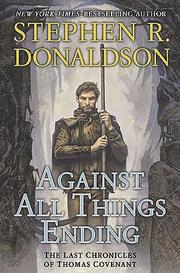
The slowest volume of the ten and the one most often abandoned. Worth knowing that going in rather than concluding the series has failed you.
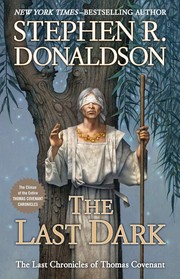
The final book, resolving arcs opened in Lord Foul's Bane forty years earlier. Finishing the tenth novel is the whole reward, and there is no eleventh.
Discussion
Keep reading
Paths that share books, cover the same subject, or open a related topic.