The Cairo Trilogy Reading Order and Guide
This curriculum guides an intermediate reader through a deep, layered engagement with Naguib Mahfouz's Cairo Trilogy. It begins by building historical and cultural context for early-20th-century Egypt, moves through the three novels in sequence, and then deepens understanding through Mahfouz's broader work and critical reflection — so each stage meaningfully enriches the next.
Foundations: Egypt, History & Mahfouz's World
IntermediateBuild the historical, social, and cultural backdrop of early 20th-century Cairo — the British occupation, Egyptian nationalism, and the traditional al-Gamaliya quarter — so that the Trilogy's setting and tensions feel vivid and grounded.
▸ Study plan for this stage
Pace: 6–7 weeks total: Weeks 1–3 cover "Cairo the City Victorious" (~25–30 pages/day, reading in thematic chunks by chapter); Weeks 4–6 cover "A History of the Arab Peoples" — focus on Parts III–V covering the Ottoman period through the 20th century (~25 pages/day, skimming earlier sections and reading th
- The layered urban identity of Cairo — Pharaonic, Islamic, Ottoman, and colonial strata — as Rodenbeck traces it, and how the al-Gamaliya quarter fits within that palimpsest
- British occupation of Egypt (1882 onward): the political fiction of the Khedivate, the reality of imperial control, and the daily humiliations that fueled nationalist sentiment
- The 1919 Revolution and the Wafd movement as the defining political watershed of Mahfouz's Cairo — the moment when the street became a political actor
- Ottoman and post-Ottoman Arab identity: Hourani's framework for understanding how Arabic-speaking peoples negotiated religion, ethnicity, and modernity simultaneously
- The tension between tradition and modernity in Arab urban life — the 'ulama, the merchant class, the coffeehouse, and the harem as social institutions under pressure
- Islamic reform movements (Salafiyya, al-Afghani, Abduh) as Hourani presents them — the intellectual backdrop to the religious conservatism and skepticism Mahfouz dramatizes
- The social geography of class in early 20th-century Cairo: how neighborhood, occupation, dress, and gender norms mapped onto one another
- Nahda (Arab cultural renaissance): the literary and intellectual awakening that shaped Mahfouz's own formation as a writer
- According to Rodenbeck, how did Cairo's successive waves of conquest and settlement — Arab, Fatimid, Mamluk, Ottoman, and British — leave distinct physical and cultural imprints on the city, and which of those layers is most visible in the old Islamic quarter where the Trilogy is set?
- How does Hourani characterize the internal contradictions of Arab nationalism in the early 20th century — particularly the tension between pan-Islamic solidarity, pan-Arab ethnicity, and Egyptian territorial nationalism — and why does that tension matter for reading a novel set in 1917–1944?
- What was the everyday texture of British occupation as Rodenbeck describes it? How did it manifest in law, commerce, and public space rather than only in military terms?
- How does Hourani's account of Islamic reformist thought (especially Abduh and his successors) help explain why religious faith in this period was neither simply traditional nor simply modernist, but actively contested?
- Using both books together, how would you describe the social world of a prosperous merchant family in al-Gamaliya circa 1917 — their economic position, their relationship to religion, their attitudes toward women's seclusion, and their awareness of nationalist politics?
- What does Rodenbeck mean when he calls Cairo a 'city victorious,' and how does that idea of resilience and continuity complicate any simple narrative of colonial victimhood or nationalist triumph?
- MAP EXERCISE — Using Rodenbeck's descriptions of Cairo's quarters, draw a rough annotated sketch-map of Islamic Cairo: mark al-Gamaliya, al-Azhar, Khan el-Khalili, and the Muski. Add one-sentence notes on the social character of each area. Keep this map at hand when you begin Palace Walk.
- TIMELINE CONSTRUCTION — Build a dual-column timeline (1800–1952) with political events (from Hourani) in one column and Cairo's urban/social changes (from Rodenbeck) in the other. Identify at least five moments where the two columns illuminate each other.
- CONCEPT JOURNAL — After finishing each book, write a 300–400 word entry answering: 'What would a literate, pious, middle-class Egyptian merchant in 1917 believe about God, the British, women, and Egypt's future?' Revise the entry after the second book to show how your picture deepened.
- CLOSE-READING COMPARISON — Select one passage from Rodenbeck on the 1919 Revolution and one passage from Hourani on Arab nationalism in the same period. Write a one-page comparison: where do they agree, where do they diverge, and what does each author's disciplinary lens (urban history vs. intellectual history) make visible or invisible?
- VOCABULARY GLOSSARY — Compile a running glossary of at least 20 Arabic and historical terms encountered across both books (e.g., Khedive, Wafd, 'ulama, hara, mashrabiyya, nahda, fellah). Write definitions in your own words and note the page where you first encountered each term.
- ANTICIPATION EXERCISE — Before moving to the Trilogy, write one page predicting: which of the social tensions identified in these two books do you expect Mahfouz to dramatize most directly? Revisit and annotate this page after finishing Palace Walk.
Next up: By grounding the reader in Cairo's physical streets, its colonial political atmosphere, and the intellectual currents reshaping Arab identity, this stage transforms the Trilogy's opening pages from unfamiliar domestic scenes into a richly legible world — so that when al-Sayyid Ahmad Abd al-Jawad locks his door in Palace Walk, the reader already understands exactly what kind of city, history, and s
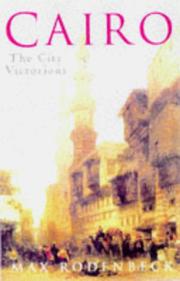
A richly readable history of Cairo from antiquity to the modern era. Reading it first gives you a living map of the city and its neighborhoods, making Mahfouz's streets, coffeehouses, and mosques immediately recognizable.
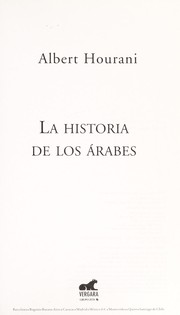
The definitive one-volume survey of Arab civilization, society, and identity. It supplies the broader Islamic and Arab cultural framework — family structure, religion, class — that the Trilogy dramatizes at the household level.
The Trilogy, Parts Two & Three: Palace of Desire & Sugar Street
IntermediateComplete the Trilogy in sequence, tracing the family across two generations as Egypt moves through the 1919 Revolution and into the 1940s, and grasping Mahfouz's epic arc of tradition versus modernity.
▸ Study plan for this stage
Pace: 4–5 weeks, approximately 25–30 pages per day. Palace of Desire is roughly 400 pages; aim to read it in 3 weeks, then use the remaining 1–2 weeks for review, journaling, and completing the exercises. Set aside one longer session per week (60–90 minutes) for reflective note-taking on character arcs an
- Generational fracture: al-Sayyid Ahmad Abd al-Jawad's loosening grip on patriarchal authority as his sons Yasin and Fahmy (and later Kamal) forge their own identities
- The 1919 Revolution as a structural and thematic turning point — nationalism, street protest, and martyrdom woven into domestic life
- Kamal's intellectual awakening and the crisis of faith versus reason, embodying Egypt's encounter with Western secular thought
- Romantic idealism and disillusionment: Kamal's obsessive, unrequited love for Aida as a mirror of Egypt's longing for an unattainable modernity
- The role of women across generations — Amina's continued confinement contrasted with the freer movement of younger women like Aida and Maryam
- Mahfouz's use of time compression and ellipsis: years pass between chapters, forcing the reader to infer change rather than witness it
- The coffeehouse and the street as democratic public spaces set against the sealed domestic world of the Jawad household
- Tradition versus modernity as a lived, embodied tension rather than an abstract debate — shown through dress, education, music, and marriage choices
- How does al-Sayyid Ahmad's authority erode across Palace of Desire compared to his dominance in Palace Walk, and what specific events accelerate that erosion?
- In what ways does Kamal's infatuation with Aida function as an allegory for Egypt's ambivalent relationship with Western culture and ideals?
- How does Mahfouz use the 1919 Revolution not merely as historical backdrop but as a force that directly reshapes the Jawad family's structure and values?
- Compare Amina's inner world in Palace of Desire with her characterization in Palace Walk — has she changed, or has the world around her changed while she remains static? What does that choice suggest thematically?
- What does Mahfouz imply about the costs of modernization through the fates of the novel's young male characters (Fahmy's legacy, Yasin's repeated failures, Kamal's paralysis)?
- How does the novel's handling of time — its jumps, silences, and sudden aging of characters — shape the reader's emotional experience of the family saga?
- Character evolution timeline: Create a two-column chart for each major character (al-Sayyid Ahmad, Amina, Kamal, Yasin). In column one, record their defining traits and beliefs at the opening of Palace of Desire; in column two, record how each has shifted by the novel's close. Annotate with specific page references.
- Historical annotation log: Each time a real historical event (the 1919 Revolution, British occupation policies, nationalist figures) appears in the text, pause and write 3–4 sentences connecting the fictional moment to its actual historical context. Use a brief outside source (encyclopedia entry or reputable website) to verify details.
- Close-reading passage analysis: Select the scene in which Kamal first fully articulates his philosophical crisis (faith vs. Darwinism/Western thought). Write a 300–400 word analysis of Mahfouz's language choices, imagery, and tone — how does the prose style itself reflect Kamal's internal fracture?
- Comparative essay prompt (500–700 words): Argue whether Palace of Desire is ultimately optimistic or pessimistic about Egypt's capacity to modernize without losing its soul. Use at least three specific scenes as evidence.
- Dialogue rewrite exercise: Choose one scene in which a father–son or mother–son conversation occurs largely through silence, implication, or avoidance. Rewrite it as a fully explicit exchange where the characters say exactly what they mean. Then write a short reflection (150 words) on what Mahfouz gains by keeping the original scene indirect.
- Thematic map: Draw or digitally sketch a simple diagram placing the novel's key characters on a spectrum from 'tradition' to 'modernity.' Connect characters with lines labeled with the specific relationships or conflicts that link them. Revisit and revise the map after finishing the novel to see how your initial reading shifted.
Next up: Completing Palace of Desire establishes the full emotional and ideological stakes of the Jawad family's transformation, positioning the reader to enter Sugar Street — the Trilogy's culmination — with a clear sense of which threads (Kamal's paralysis, Yasin's dissolution, the women's quiet endurance) Mahfouz must resolve as Egypt lurches toward World War II and the end of an era.

The second volume, set in the 1920s, shifts focus to the sons and their collisions with secular politics, romantic love, and religious doubt. Read immediately after Palace Walk to feel the generational rupture in real time.
Mahfouz in Depth: Companion Novels
IntermediateEncounter Mahfouz's other major fictional worlds to see how the Trilogy fits within his larger artistic vision — his use of allegory, myth, and social realism across different registers.
▸ Study plan for this stage
Pace: 2–3 weeks, ~20–25 pages/day — Midaq Alley is a compact novel (~280 pages), so a relaxed but consistent pace allows time for annotation, reflection, and comparison with the Trilogy without rushing the rich ensemble cast and layered social commentary.
- The alley as microcosm: how Mahfouz uses the confined physical space of Midaq Alley to represent Egyptian society as a whole, mirroring his use of the Trilogy's al-Sayyid Ahmad's household and neighborhood as social stages
- Social realism vs. allegory: identifying moments where Mahfouz shifts from documentary-style realism into symbolic or allegorical registers — characters as types, the alley itself as a moral arena
- The tension between tradition and modernity: how characters like Hamida embody the pull of Western influence, consumerism, and individual ambition against the inertia of the old quarter, a theme central to the Trilogy
- Gender, agency, and entrapment: close reading of female characters — especially Hamida — as figures whose aspirations are simultaneously enabled and crushed by patriarchal and economic structures
- The ensemble cast technique: Mahfouz's method of weaving multiple storylines through a single locale, and how this differs from the Trilogy's multigenerational, single-family focus
- Moral ambiguity and authorial sympathy: how Mahfouz withholds easy judgment on characters who make destructive choices, inviting the reader to locate blame in social conditions rather than individual will
- Cairo's wartime backdrop: the role of World War II and the British military presence as an off-stage force that reshapes the alley's economy, morality, and aspirations — a specific historical grounding absent from the Trilogy's broader sweep
- Narrative voice and irony: Mahfouz's use of free indirect discourse and quiet irony to expose the gap between characters' self-perceptions and their actual circumstances
- How does the physical space of Midaq Alley function as more than a setting — what social and symbolic work does it perform, and how does this compare to the role of place in the Cairo Trilogy?
- In what ways is Hamida's trajectory a critique of modernity, and in what ways is it a critique of the society that leaves her with so few viable choices? Does Mahfouz's narrative voice take a side?
- How does Mahfouz use the ensemble of alley characters (Abbas, Kirsha, Radwan Hussainy, Zaita, etc.) to map different responses to tradition, faith, corruption, and desire — and what does their collective fate suggest?
- What specific effects does the World War II context have on the plot and themes of Midaq Alley, and how does this historically anchored allegory differ from the Trilogy's longer historical arc?
- Where do you detect allegorical or mythic dimensions in Midaq Alley — moments where characters or events seem to reach beyond realism into something more symbolic — and how do these sit alongside the novel's social documentary impulse?
- Having now read Midaq Alley alongside (or after) the Trilogy, how would you describe Mahfouz's consistent artistic preoccupations, and what does this novel reveal about the Trilogy that you might not have noticed from the Trilogy alone?
- Mapping exercise: Draw a literal map of Midaq Alley, placing each major character in their physical location (café, shop, flat, street corner). Then annotate each location with the social force or theme that character embodies. Reflect in writing on what the spatial arrangement reveals about the novel's moral geography.
- Character comparison chart: Create a two-column table pairing a character from Midaq Alley with their closest thematic counterpart in the Cairo Trilogy (e.g., Hamida ↔ Yasin's wives; Kirsha ↔ al-Sayyid Ahmad). Write 2–3 sentences on where the parallel holds and where it breaks down — the gaps are as instructive as the similarities.
- Close reading journal: Select three passages where Mahfouz's narrative voice shifts into irony or free indirect discourse. Copy each passage out, then write a paragraph analyzing how the technique creates distance or sympathy between the reader and the character. Compare one of these passages to a similar moment in Palace Walk or Palace of Desire.
- Thematic essay (500–700 words): Argue for or against the following claim — 'In Midaq Alley, the alley itself is the true protagonist.' Use specific scenes and characters as evidence, and address at least one strong counterargument.
- Contextual research sprint: Spend 60–90 minutes reading about Cairo under British occupation during WWII (a short encyclopedia article or chapter from a history of modern Egypt will suffice). Return to the novel and annotate 4–5 passages that take on new meaning in light of this context. Write a brief note on how historical grounding changes your reading.
- Synthesis reflection (one page): After finishing Midaq Alley, write a personal response to this question — 'What does this novel teach me about the Cairo Trilogy that the Trilogy could not teach me about itself?' Focus on Mahfouz's artistic vision: his recurring symbols, his social concerns, his narrative strategies.
Next up: By seeing how Mahfouz deploys his signature techniques — the enclosed social world, the tension between tradition and modernity, the morally complex ensemble — in a different register and historical moment, the reader is now equipped to engage the Trilogy not as a standalone monument but as one expression of a coherent, evolving artistic vision, ready to analyze it with the critical vocabulary and
Set in the same Cairo alleyways, this standalone novel is a perfect companion piece — shorter and more concentrated, it sharpens your eye for Mahfouz's technique of using a single street as a microcosm of Egyptian society.
Critical Reflection: Understanding Mahfouz's Legacy
ExpertEngage with scholarly and critical perspectives on the Trilogy and on Mahfouz's place in world literature, enabling a fully informed, analytical appreciation of what you have read.
▸ Study plan for this stage
Pace: 6–8 weeks; spend roughly 3 weeks on Beard's "Naguib Mahfouz" (~20–25 pages/day, including re-reading dense critical passages) and 3–4 weeks on Allen's "The Arabic Novel" (~25–30 pages/day, focusing chapters most relevant to Mahfouz and the realist tradition). Reserve the final 3–4 days for comparati
- Mahfouz's narrative technique and structural experimentation as analyzed by Beard, including his use of omniscient narration, time compression, and symbolic geography in the Cairo Trilogy
- The biographical and socio-political context Beard foregrounds — Egyptian nationalism, the 1952 Revolution, colonial modernity — and how these shape the Trilogy's ideological tensions
- Beard's reading of Mahfouz's literary influences (Zola, Tolstoy, Dickens) and how the Trilogy negotiates between Western realist models and an authentically Arabic narrative tradition
- Allen's historical framework for the emergence and evolution of the Arabic novel as a genre, from its 19th-century origins through mid-20th-century maturity
- Allen's criteria for evaluating the Arabic novel's engagement with social realism, political allegory, and the representation of collective identity — all directly applicable to the Trilogy
- The concept of 'committed literature' (adab multazim) and how Mahfouz's work both embodies and complicates this tradition as discussed across both books
- Mahfouz's Nobel Prize (1988) as a watershed moment for Arabic literature's global reception, and the critical debates it opened about translation, cultural mediation, and canonization
- Intertextuality and the Trilogy's place within a broader Arabic literary canon, using Allen's comparative mapping of novelists and movements as a reference grid
- According to Beard, what specific narrative and stylistic devices does Mahfouz deploy across the three volumes of the Trilogy, and how do they evolve from Palace Walk to Sugar Street?
- How does Allen's genealogy of the Arabic novel situate Mahfouz historically — what writers and movements preceded him, and what did he synthesize or transcend?
- Both Beard and Allen address the tension between Western literary form and Arabic cultural content. What solutions or compromises does each critic identify in Mahfouz's practice?
- What does Allen's concept of social realism in the Arabic novel reveal about the Trilogy's treatment of class, gender, and religion that a purely plot-level reading might miss?
- How do Beard and Allen each assess Mahfouz's legacy for subsequent generations of Arabic novelists, and where do their evaluations converge or diverge?
- In what ways does the Nobel Prize, as discussed in these critical texts, both validate and distort the reception of the Trilogy in non-Arabic-speaking contexts?
- Annotated bibliography exercise: For each critical argument Beard makes about a specific scene or passage in the Trilogy, locate that passage in the novel and write a 100-word note linking the textual evidence to Beard's claim — aim for at least eight such annotations.
- Comparative matrix: Create a two-column table mapping Allen's historical stages of the Arabic novel's development against specific features of the Trilogy (e.g., narrative voice, plot structure, social themes), identifying where the Trilogy fits and where it departs from Allen's framework.
- Scholarly dialogue essay: Write a 600–800 word essay in which you stage a 'conversation' between Beard and Allen on one contested question — such as whether the Trilogy is primarily a nationalist document or a universal humanist work — citing both texts directly.
- Reception history timeline: Using evidence from both books, construct a timeline of the Trilogy's critical reception from its Arabic publication in the 1950s through the post-Nobel international moment, noting how interpretive emphases shifted at each stage.
- Close-reading with critical lens: Select one chapter from any volume of the Trilogy and write a 400-word close reading that explicitly applies one concept from Beard and one from Allen (e.g., Beard's analysis of spatial symbolism + Allen's framework of committed literature).
- Socratic self-quiz: Without consulting the books, write out answers to all six 'questions' in this study plan from memory, then re-open Beard and Allen to check, correct, and expand your answers — note every gap as a targeted re-reading prompt.
Next up: By internalizing Beard's author-focused criticism and Allen's genre-historical framework, the reader now possesses the analytical vocabulary and comparative context needed to engage independently with primary Arabic literary texts and original research, the natural next horizon of advanced study.
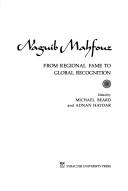
A focused critical study of Mahfouz's work and his path to the Nobel Prize. It contextualizes the Trilogy within Arabic literary tradition and explains why it resonated globally, giving you a framework for your own critical response.
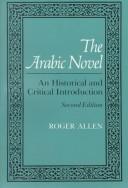
The authoritative scholarly survey of the modern Arabic novel as a form. Reading it last places the Trilogy within the full arc of Arabic literary history, completing the journey from cultural context to deep critical understanding.
Discussion
Keep reading
Paths that share books, cover the same subject, or open a related topic.