Naguib Mahfouz Reading Order: Where to Start
Mahfouz wrote more than thirty novels and the standard advice — start with the Cairo Trilogy — sends people to fifteen hundred pages of nineteenth-century family chronicle before they know whether they like him. This path does it the other way: the short, hard-edged novels first, then the experimental 1960s books, then the allegories, with the Trilogy as one stage rather than the spine, and the deeper cuts last.
The Short Way In
BeginnerMeet Mahfouz at his most concentrated — one Cairo neighbourhood, a small cast, and no historical scaffolding to climb.
▸ Study plan for this stage
Pace: 3 weeks. Midaq Alley runs to roughly 280 pages in most editions and moves quickly once you have the cast straight — two weeks at 20 pages a day. The Thief and the Dogs is about 150 pages but is stream of consciousness and should be read in two or three long sittings rather than in daily instalments;
- Mahfouz was Egyptian, wrote in Arabic, published more than thirty novels, and won the Nobel Prize in Literature in 1988 — the only Arabic-language writer to have done so. Everything in this path is in translation
- Midaq Alley is a single dead-end alley in Cairo during the Second World War, with British troops in the city, and its subject is everyone who lives off that alley: the cafe owner, the barber, the dentist with stolen teeth, the matchmaker, and the girl who leaves for the soldiers
- The alley itself is the protagonist. Mahfouz moves between a dozen lives without a central character, and the neighbourhood's opinion functions as a kind of chorus that judges everyone in it
- Hamida's decision to leave is the engine of the book, and the novel is careful to show exactly how few options she is choosing between. Read her as an economic actor before reading her as a moral one
- The Thief and the Dogs is the hinge of Mahfouz's whole career: a thief released from prison hunting the wife and the friend who betrayed him, told from inside his head in stream of consciousness
- It is the exact point where he stops writing like a nineteenth-century realist and starts writing like a modernist, and the change was deliberate — it came after the Cairo Trilogy, when he had finished with the long chronicle form
- Its politics are pointed: the betrayer has become a wealthy journalist for the new regime, and the thief's private revenge is also a judgement on who profited from the 1952 revolution
- Two books in and you have Mahfouz's two modes — the crowded social panorama and the compressed interior monologue — which is the whole reason for starting here rather than with the Trilogy
- Midaq Alley has no protagonist. What holds it together, and how does Mahfouz make an entire street function as a single character?
- What are Hamida's actual options at the start of the novel? List them, and then decide whether the book condemns her choice.
- The British army is in Cairo throughout and almost never on the page. How does the war reach the alley, and what does keeping it offstage achieve?
- In The Thief and the Dogs, how much of what Said tells you can you trust? Find a place where the narration and the events plainly diverge.
- Said's targets are a journalist and a former mentor who have both done well out of the new order. Is the novel's anger personal, political, or unable to tell the difference?
- Set the two books side by side. What has Mahfouz gained by moving inside one head, and what has he given up?
- Draw the alley. Put every character where they live or work — cafe, barber, bakery, the upper flats — before you are fifty pages in. The novel assumes you can see the geography and the reading gets much easier once you can.
- Read the first chapter of Midaq Alley aloud. Mahfouz opens by addressing the alley as a survivor of centuries of Cairo history, and the register of that opening tells you what kind of book it is.
- Read The Thief and the Dogs in one sitting if you can manage it. Its effect is cumulative pressure and it dissipates over a week.
- After both, write one paragraph on what the 1952 revolution has done to the people in these books. You will be asked variations of that question for the next two stages.
Next up: The thief's grievance against the men who prospered under the new regime is the whole subject of the next stage, where Mahfouz stops implying it and writes about it directly.
A single dead-end alley in wartime Cairo and everyone living off it, from the cafe owner to the girl who leaves for the British soldiers. Start here: it is short, it is his most vivid book, and it teaches his method — the street as the real protagonist.
A thief released from prison hunts the friends who betrayed him, told in stream of consciousness. Read second — barely 150 pages, and the exact point where Mahfouz stops writing like a realist and starts writing like a modernist.
The Nasser-Era Novels
IntermediateRead the tight, disillusioned 1960s books where the revolution has arrived and turned out badly.
▸ Study plan for this stage
Pace: 3 weeks. Autumn Quail is short — around 170 pages in the usual translation — and takes a week. Adrift on the Nile is 176 pages and reads even faster, but it is worth slowing over: the comedy is doing serious work and it is easy to laugh through the point. Two evenings a week for a fortnight is a bet
- These are the 1960s books, written after the 1952 revolution that removed the monarchy and brought Nasser to power, and they are about what happened to people once the new order settled
- Mahfouz supported the revolution's aims and wrote some of the sharpest fiction about its results. That ambivalence — not opposition, not endorsement — is the register of this entire stage
- Autumn Quail follows a senior official of the old regime purged after 1952, who refuses to adapt, retreats to Alexandria, and organises his whole remaining life around a refusal that costs him everything
- The novel's difficulty, and its quality, is that his refusal is both pathetic and the only principled thing about him. Mahfouz will not resolve which
- Adrift on the Nile puts a group of civil servants on a houseboat smoking hashish every night, talking brilliantly and doing nothing, while the country goes on without them — until an accidental death forces the question of whether anyone on the boat is responsible for anything
- It is his funniest book and his most damning. The talk on the houseboat is genuinely entertaining, which is the trap: you are enjoying the company of people the novel is convicting
- Published shortly before the 1967 war, it reads in hindsight as a diagnosis of a governing class that had stopped paying attention, and it was received that way afterwards
- Mahfouz spent his own working life as a civil servant, writing in the mornings and evenings around the job, which is why the bureaucratic detail in both novels is exact and unglamorous
- What exactly is Isa refusing in Autumn Quail, and what would adapting have required of him? Is the novel on his side?
- He forms a relationship with a woman far below his former station. What is that relationship for, in the novel's argument about his character?
- In Adrift on the Nile, what do the houseboat conversations actually consist of? Summarise one, plainly, and see what survives the summary.
- When the death occurs, how does the group respond, and what does the response establish about the whole preceding hundred pages?
- Both novels are about people who have opted out. Is Mahfouz's charge against them political, moral, or simply that they are wasting their lives?
- Compare the corrupt official of Autumn Quail with the prospering journalist of The Thief and the Dogs. Which one does Mahfouz find more damaging?
- Read a one-page summary of the 1952 Free Officers coup and Nasser's first decade before starting. These novels assume the political timeline and are considerably flatter without it.
- In Adrift on the Nile, keep a list of the topics the houseboat talks about and how each conversation ends. The pattern of unfinished argument is the structure of the book.
- Mark the sentence in Autumn Quail where you stop sympathising with Isa. Different readers put it in very different places and the disagreement is the novel working.
- Write two paragraphs — one arguing Adrift on the Nile is a comedy, one arguing it is a tragedy. Both are supportable and the tension between them is the point.
Next up: Realism has now given Mahfouz two verdicts on his country; the next books abandon it entirely and go after the whole shape of history instead.

A corrupt official purged after the 1952 revolution, refusing to adapt. The clearest statement of Mahfouz's ambivalence about the new order.
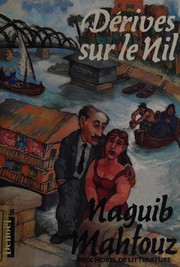
Civil servants smoking hashish on a houseboat while the country goes on without them, until a death forces the question of responsibility. His funniest and most damning book.
The Allegories
IntermediateTake on the books where Mahfouz abandons realism entirely for parable, myth and the shape of history.
▸ Study plan for this stage
Pace: 8 weeks. Children of the Alley is 448 pages and needs three weeks; The Harafish (411) another three; Arabian Nights and Days (240) two. Around 20 pages a day. Read them in this order — Children of the Alley establishes the allegorical grammar that The Harafish then runs for ten generations, and Arab
- Children of the Alley retells the history of religion as generations of one Cairo alley quarrelling over the estate of a founding ancestor who has withdrawn to a great house and will not be seen. The figures corresponding to Adam, Moses, Jesus and Muhammad each appear as an alley tough or reformer i
- The book was banned in Egypt for decades after serialisation and circulated in Arabic mainly in a Beirut edition. Its treatment of prophecy as a recurring social event, and of the founder's death, was the objection
- In 1994, an extremist stabbed Mahfouz in the neck outside his home in Cairo over this book. He was in his eighties, survived, and lost much of the use of his writing hand. This is a matter of record and it is the single most consequential fact about the reception of any of his novels
- The final generation replaces the alley's strongmen with a scientist, and what that figure does to the founder's house is the book's actual argument. Read the last section closely
- The Harafish is the most sustained thing Mahfouz wrote after the Cairo Trilogy: ten generations of one clan of alley toughs, rising into wealth and corruption and collapsing back into poverty, over and over, with a Sufi lodge singing in a language nobody understands throughout
- Its structure is the argument — the cycle repeats because the conditions repeat, and no individual virtue interrupts it for more than a generation. The word harafish refers to the common people, the rabble, and the title is a claim about who the story belongs to
- Arabian Nights and Days picks up after Shahrzad has told her last story and the sultan has spared her, then follows the city she lives in through a sequence of linked tales with genies loose in it
- It is the same fatalism worked in folk material rather than in myth, and it is the most enjoyable of the three — which is why it goes last, as relief
- In Children of the Alley, what does the founder's withdrawal to the great house mean? The allegory turns on his absence rather than on his existence.
- Each reformer generation improves the alley and each improvement decays. What does Mahfouz think causes the decay — human nature, the estate, or the arrangement of the alley itself?
- What does the scientist do at the end, and is the novel hopeful about it? Be careful; readers take this ending in opposite directions.
- In The Harafish, what breaks the cycle, if anything? Track what each generation inherits from the last and what it fails to inherit.
- The Sufi chanting recurs across all ten generations and is never translated or explained. What is it doing structurally?
- In Arabian Nights and Days, the genies tempt ordinary people into power. What is the political reading of that, given the two previous books?
- For Children of the Alley, keep a generation chart — founder, then each strongman and each reformer in turn, with what each one changes. The allegory is legible once the chart exists and confusing before it.
- Read the opening of Midaq Alley again before starting this stage. The physical alley in the realist novel is the same space the allegory abstracts, and the continuity is deliberate.
- In The Harafish, note what happens to the fortune in each generation. Money is the mechanism of the cycle and tracking it is faster than tracking the characters.
- Look up the 1994 attack and the book's publication history in Egypt. Knowing what a novel cost its author is part of reading it responsibly, and Mahfouz continued to defend other writers' freedom to publish after it.
- Write a paragraph on whether the allegorical Mahfouz is better or worse than the realist one. It is the live critical question about him and it is worth forming your own answer before reading anyone else's.
Next up: With the alley understood both literally and as a figure for the world, the Trilogy's fifteen hundred pages of one household stop looking like a commitment and start looking like the payoff.
The history of religion retold as generations of one Cairo alley quarrelling over a founding father's estate. Banned in Egypt for decades and the reason a fundamentalist stabbed him in 1994. Read it once the alley novels have made the setting legible.

Ten generations of a clan of alley toughs, rising into corruption and falling back. The most sustained thing he wrote after the Trilogy and the fullest version of the allegorical mode.
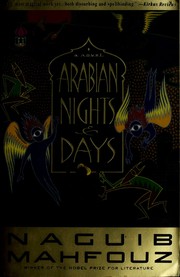
A sequel of sorts to the Thousand and One Nights, picking up after Shahrzad's last story. Read after The Harafish; it is the same fatalism worked in folk material.
The Cairo Trilogy
IntermediateRead the three-novel family chronicle that won him the Nobel — in order, and only once you know you like him.
▸ Study plan for this stage
Pace: 10 to 12 weeks. Palace Walk is 499 pages, Palace of Desire is comparable, Sugar Street is 326 — call it 1,300 pages of nineteenth-century-style family chronicle, and roughly a month per volume at 20 pages a day. Read them strictly in order; the second and third are unreadable out of sequence. ⚠️ Thi
- The Trilogy is the work the Nobel citation leaned on hardest, and the standard advice is to start with it. This path deliberately puts it fourth, so that you commit 1,300 pages only after you already know you like the writer
- Palace Walk covers a Cairo merchant household during and after the 1919 revolt against British rule: al-Sayyid Ahmad, an absolute tyrant at home and a genial reveller outside it, his wife who has not left the house in years, and five children arranged around his moods
- The double life of the father is the novel's central invention. He is not a hypocrite in his own account of himself, and the book is more interesting for taking his self-understanding seriously
- Amina's confinement to the house is presented as ordinary rather than exceptional, and the one occasion she leaves it is the most consequential event in the first volume
- Palace of Desire moves to the 1920s with the children grown, the father physically diminished, and the son Kamal — the closest thing to a self-portrait Mahfouz wrote — losing his faith at university
- Sugar Street reaches the third generation, split between communism and the Muslim Brotherhood, and ends on the eve of the Second World War. The two grandsons taking opposite paths is the whole chronicle's destination
- Read as one book, the Trilogy is about religion, authority and the family as a political structure — the father's rule over the household and Britain's rule over Egypt described in the same terms and dismantled on the same schedule
- It is realist and unhurried, closer to Galsworthy or Zola than to anything in the previous stage, and readers who came for the allegories should expect a completely different pace
- How does al-Sayyid Ahmad justify his two lives to himself? Reconstruct his position as he would state it, not as his children see it.
- Amina leaves the house once. What happens, and what does the household's reaction reveal about the terms of her life?
- Kamal loses his religious faith across the second volume. What replaces it, and does Mahfouz think the exchange was worth it?
- By Sugar Street the grandsons have gone to communism and to the Muslim Brotherhood. What does the novel say about how each arrived there, and does it prefer one?
- The 1919 revolt runs through the first volume. How does a political uprising reach a family that is trying not to be involved?
- Compare the father in Palace Walk with the founder in Children of the Alley. Mahfouz wrote about paternal authority twice, once literally and once as myth — what does each version get?
- Build a family tree before you are a hundred pages into Palace Walk and keep it beside you for all three volumes. Three generations across 1,300 pages defeats most readers' memory unaided.
- Note the date at the start of each volume and what was happening in Egypt then — 1919, the 1920s under the constitutional monarchy, the late 1930s. The chronicle is pinned to the national timeline throughout.
- Track Amina across all three books. She is the most consistently underestimated character by everyone inside the novel, and the reader is invited to do the same.
- After Sugar Street, go back to the first chapter of Palace Walk. The household as first described is unrecognisable by the end, and the distance is the point of writing three books.
- If any of this leaves you wanting more, follow the site's dedicated Cairo Trilogy path rather than rereading this stage — it takes the three volumes at their own scale.
Next up: Having done the major work, the last stage is what is left for readers who want more — short, strange late books that assume everything you now know.

A Cairo merchant, tyrant at home and reveller outside it, and the household he controls during the 1919 revolt. The first volume and the best; read it here rather than first, because it is a long commitment.

The children grown, the father diminished, the 1920s pulling the family apart. Second volume, unreadable out of sequence.
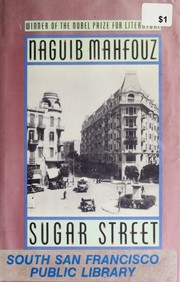
The third generation split between communism and the Muslim Brotherhood, ending on the eve of a war. The closing volume, and the place the whole chronicle has been going.
The Deeper Cuts
IntermediateFinish with the late, short, strange novels for readers who want more after the major work.
▸ Study plan for this stage
Pace: 3 weeks for two short books. Akhenaten, Dweller in Truth is 168 pages and The Journey of Ibn Fattouma 148 — either could be read in a couple of sittings, and both are better slowed down, since each is built from a repeated structural unit and reading fast turns the repetition into monotony. A week e
- These are the late, short, formally odd novels, and they are placed last because they assume you already know what Mahfouz does at full length
- Akhenaten, Dweller in Truth reconstructs the heretic pharaoh who abolished Egypt's gods in favour of one, entirely through the testimony of fourteen people who knew him, interviewed after his fall by a young man trying to find out what happened
- No two witnesses agree, and Mahfouz never adjudicates. The book is a formal experiment in whether a person can be recovered from contradictory accounts, and its answer is not encouraging
- It is also a return to the ancient-Egyptian subjects Mahfouz began his career with in the 1930s before turning to modern Cairo, so the last stage of this path closes a circle back to his first books
- The obvious reading — a ruler who imposes a single truth on a whole society and is erased for it — has clear application to the twentieth century, and Mahfouz leaves the application entirely to the reader
- The Journey of Ibn Fattouma sends a traveller through a sequence of invented countries, each organised on a different political principle: primitive freedom, autocracy, wealth, order, justice, and finally a perfect land he never reaches
- The form is medieval — a deliberate echo of the travel narratives of Ibn Battuta — and the fable's point is what the traveller loses in each country while assessing it
- It is a clean place to stop: short, complete, and it restates in a hundred and fifty pages the argument the allegories took a thousand to make
- Which of the fourteen witnesses in Akhenaten do you believe, and what makes their account more credible than the others? Notice that the novel gives you no external evidence to check against.
- Does a coherent Akhenaten emerge from the contradictions, or does the book demonstrate that he cannot be recovered? Defend your answer from the structure rather than the content.
- What is Mahfouz saying about a ruler who imposes one truth? Where would you place the modern parallel, and does the novel invite it or merely allow it?
- In Ibn Fattouma, what is wrong with each land the traveller passes through? Name the specific failure of each system.
- The traveller never reaches Gebel, the perfect land. Is that pessimism, or a claim about what a journey is for?
- Having finished the path, which Mahfouz do you prefer — the realist of Midaq Alley, the modernist of The Thief and the Dogs, or the allegorist of The Harafish? Say what the other two cannot do.
- For Akhenaten, list the fourteen witnesses with their relationship to him and their interest in the story. Reading it as testimony rather than as narrative is the only way the form pays off.
- Look up the historical Akhenaten in a paragraph or two before starting, then note what Mahfouz keeps and what he invents.
- For Ibn Fattouma, write down each land's governing principle in a single word as you reach it. The sequence is an argument and it is only visible as a list.
- Reread the first ten pages of Midaq Alley one last time. Having gone through the whole path, the alley that opens it now has ten generations, an allegorical double and a national history behind it — which is what a reading order is for.
Next up: That is Mahfouz across sixty years and five modes, and it is enough to read any modern Arabic novelist and hear at once whose alley they are standing in.

The heretic pharaoh reconstructed from fourteen contradictory witnesses. Late, brief, and a return to the ancient-Egyptian subjects he began his career with.

A traveller passes through a sequence of invented societies, each a different political system. A short allegorical fable and a clean place to stop.
Discussion
Keep reading
Paths that share books, cover the same subject, or open a related topic.