The Bronte Sisters in Reading Order: Where to Start with Charlotte, Emily and Anne
Three sisters published seven novels between 1847 and 1853 and then were dead, and most readers only ever meet two of those books. The path starts with Jane Eyre and Wuthering Heights because they really are the doors, then makes the case that Anne — long dismissed as the minor Bronte — wrote the most morally serious novel of the three in The Tenant of Wildfell Hall. Charlotte's harder later books come next, and the biography and the juvenilia last, once you know the work well enough not to read the lives back into it uncritically.
Start Here: The Two Famous Ones
BeginnerRead the two novels of 1847 that everyone has heard of, and register how completely unalike they are — which is the first correction to thinking of the Brontes as a single writer.
▸ Study plan for this stage
Pace: Six to seven weeks. Jane Eyre is around 500 pages and reads quickly because the narration pulls you forward; give it three weeks. Wuthering Heights is shorter, around 350 pages, and will take you just as long, because the first hundred pages require you to work out who is speaking, who is whose chil
- Jane's voice as the innovation. A plain, self-possessed first-person narrator who addresses the reader directly and insists on her own worth is what makes the book still readable, more than any element of the plot
- The five settings of Jane Eyre — Gateshead, Lowood, Thornfield, Moor House, Ferndean — as five separate tests, each with a different form of power over her
- The proposal that Jane refuses and the proposal she accepts, and the fact that she has to be made financially independent before the second one is possible
- Wuthering Heights's double frame: Lockwood receiving the story from Nelly Dean, so that everything reaches you through two narrators, both of them limited and one of them heavily involved
- Two generations, not one. The novel's second half repeats the first with different people, and readers who stop at Catherine's death have read half a book
- The absence of any moral centre. Nobody in Wuthering Heights is admirable, no narrator arbitrates, and there is no consolation offered anywhere in it
- How unalike they are. These two novels were published within months of each other by sisters in the same house, and treating the Brontes as one writer is the first thing this stage should destroy
- Why does Jane refuse Rochester the first time, and why is her reason not the one a modern reader might supply?
- What does St John Rivers offer, and why is he a more serious threat to Jane than Rochester?
- Reassemble the chronology of Wuthering Heights on paper. Where does the novel begin in relation to the events it narrates, and what does the arrangement do?
- How reliable is Nelly Dean? Find two places where her interests plainly shape the telling.
- Wuthering Heights offers no moral guide. What does the novel gain by refusing one?
- Set the two books side by side: what does each sister think a novel is for?
- Draw the Earnshaw and Linton family tree with dates as you read Wuthering Heights. Most confusion with this novel is genealogical and the tree eliminates it in ten minutes.
- Mark every place in Jane Eyre where the narrator addresses the reader directly, and write 200 words on the effect of the most famous of them.
- Write a one-page account of Jane's finances across the novel — what she has, what she earns, what she inherits. The plot turns on this more than on the romance.
- Take one episode of Wuthering Heights and retell it in 200 words from the point of view of someone other than Nelly. The gaps you have to fill are what the double frame is hiding.
Next up: Having read the two novels everyone reads, you are in a position to meet the sister almost nobody does — and to notice that one of the reasons for that goes back to Charlotte.
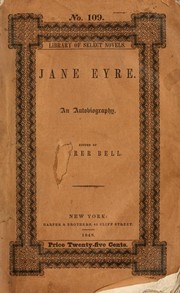
Start here rather than with Wuthering Heights. It is the more conventional narrative — a first-person life story moving forward in time — and its plainness of voice is what makes the first-person novel possible for everyone after it.
Read second, because it is structurally much harder: two narrators, two generations, and a chronology that has to be reassembled. Emily's only novel, and there is no comfort anywhere in it. Coming to it after Jane Eyre makes the strangeness legible rather than off-putting.
The Third Sister
BeginnerRead Anne, and revise the standard verdict that she was the lesser talent — a verdict Charlotte helped establish by suppressing her second novel after her death.
▸ Study plan for this stage
Pace: Five to six weeks. Agnes Grey is short, around 250 pages, and can be read in a week — do it in as few sittings as possible, because its effect is cumulative and depends on the monotony. The Tenant of Wildfell Hall is around 500 pages and needs three to four weeks. A plain warning before the second:
- Agnes Grey's deliberate flatness. There is no glamour, no mystery in the attic and no reversal of fortune — just the daily reality of being employed by families who regard you as neither servant nor guest
- The corrective function. Read directly against Jane Eyre's version of the same profession, Agnes Grey looks like an argument about what governessing was actually like, from a sister who had done it
- The Tenant of Wildfell Hall's central act: a woman leaves an abusive, alcoholic husband, takes their child with her, and supports herself by selling her paintings — at a date when she had no legal right to any of those things
- The diary at the centre of the book, which hands the narration to Helen herself so that the marriage is described from inside it rather than reported
- The frame that surrounds the diary, narrated by Gilbert Markham, and the question of what Anne gains by making a man deliver her heroine's account
- Charlotte's suppression. After Anne's death Charlotte blocked republication of The Tenant of Wildfell Hall, which is a substantial part of why the standard verdict on Anne took hold and lasted
- Moral seriousness as a distinct quality. Anne is less lyrical than Emily and less compelling than Charlotte, and she is more interested than either in whether a course of action is actually right
- The unreliability of received verdicts. The judgement that Anne was the lesser Bronte has a traceable history, and knowing that history is different from disagreeing with it
- What does Agnes Grey say about the governess's position that Jane Eyre does not? Be specific about scenes rather than general about tone.
- Is the plainness of Agnes Grey a limitation or a technique? Argue it from the text.
- Why does Anne put Helen's account in a diary rather than narrating it directly?
- What does the Gilbert Markham frame do to the reader's access to Helen, and would the novel be stronger without it?
- The Tenant of Wildfell Hall was found coarse by contemporary reviewers. What in it produced that response, and what does the objection tell you about what Anne was doing?
- Having read all three sisters' first published novels, is the standard ranking of them defensible?
- Put the governess scenes of Agnes Grey beside the Lowood and Thornfield sections of Jane Eyre and write 300 words on the two accounts of the same job.
- Write a one-paragraph summary of Helen's legal position when she leaves her husband, using only what the novel makes clear. Do not go looking for outside material — the exercise is in seeing how much Anne puts on the page.
- Track Helen's income across the second half of the novel. Her independence is financial before it is anything else, and Anne is precise about it.
- Write 200 words on why Charlotte might have suppressed the book, then 200 on whether the reason is defensible. Both halves are required.
Next up: With all three sisters' first novels behind you, you can go back to Charlotte for the books she wrote after Jane Eyre made her famous, which are harder, less accommodating and in at least one case better.

A short, flat, deliberately unglamorous account of what governessing was actually like, published alongside Wuthering Heights and overshadowed by it. The plainness is the argument — read it as the corrective to Jane Eyre's version of the same job.
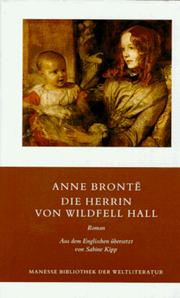
The one to make time for. A woman leaves an alcoholic and abusive husband, takes their child and supports herself by painting — in 1848. Charlotte blocked its republication after Anne died. Read it fourth and the case for Anne as the most clear-sighted of the three becomes hard to argue with.
Charlotte's Harder Books
IntermediateGo past Jane Eyre to the novels where Charlotte is more ambitious and much less accommodating, and see why Villette has slowly overtaken her famous book in critical standing.
▸ Study plan for this stage
Pace: Nine to ten weeks. Villette is around 500 pages and is the slowest and most rewarding reading in the path — give it a month and read the last thirty pages in one sitting. Shirley is longer, around 600 pages, and genuinely uneven; three to four weeks. The Professor is short, under 300 pages, and read
- Lucy Snowe as a narrator who actively withholds. She conceals a character's identity from the reader for hundreds of pages although she has recognised him, and the concealment is characterisation rather than trickery
- Solitude as the actual subject of Villette. The novel is about a woman with no money, no family and no standing, alone in a foreign country, and the romance is secondary to that condition
- The refusal to resolve. Villette's ending declines to state what happened, reportedly at the insistence of Charlotte's father, and the ambiguity has become the most discussed thing in her work
- Why Villette has slowly overtaken Jane Eyre in critical standing: it is bleaker, more psychologically exact and far less willing to give the reader what she wants
- Shirley as the industrial novel — Luddite machine-breaking, two heroines rather than one, and an attempt at a social panorama that Charlotte had not attempted before
- The circumstances of Shirley's composition. Charlotte wrote it while her three surviving siblings died in succession, and the book's unevenness cannot honestly be separated from that
- The Professor as the draft underneath Villette. Written first, rejected by every publisher, printed after her death, and later reworked into the better novel — reading it last shows exactly what the mature book added
- Ambition as a variable. Across four novels Charlotte tries first-person confession, industrial panorama and withholding narration, which is a wider range than her reputation suggests
- Where does Lucy Snowe first conceal something from you, and when do you realise it? Find the pages.
- What is Villette's ending, and what does Charlotte gain by refusing to say?
- Villette and Jane Eyre have similar raw materials. Why does one console and the other not?
- What is Shirley trying to do that neither of Charlotte's other completed novels attempts, and where does it fail?
- Does knowing the circumstances of Shirley's composition change how you judge it? Should it?
- Compare The Professor with Villette scene for scene where they overlap. What did Charlotte learn in the intervening years?
- Reread the last chapter of Villette twice and write two 150-word accounts of what happens, one for each reading of the ending. Both have to be defensible from the text.
- List every fact Lucy Snowe knows and does not tell you at the point she learns it. The list is a working study of unreliable narration.
- In Shirley, mark where the industrial plot and the marriage plots touch. The weakness of the novel is largely in how rarely they do.
- Set the Brussels sections of The Professor beside the corresponding material in Villette and write 300 words on what changed — in structure, in narrator, and in what is withheld.
- Rank Charlotte's four novels and write one sentence defending your bottom placement. The defence is harder than the ranking.
Next up: You now know all seven novels, which is the only safe position from which to read the lives — because the biographies have shaped what everyone thinks the books mean, and you can now check them against the books themselves.
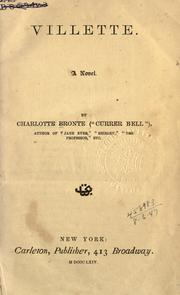
A solitary Englishwoman teaching in a Belgian boarding school, narrated by someone who actively withholds information from the reader. Bleaker and better than Jane Eyre, with an ending that refuses to resolve. This is the payoff of the whole path.

Her industrial novel, written while her three surviving siblings died in succession. Two heroines, a Luddite machine-breaking plot, and an unevenness that is impossible to separate from the circumstances. Read after Villette, when its ambitions are easier to see.

Written first, rejected by every publisher, printed after her death — and later reworked into Villette. Read last of Charlotte's four, as the draft that shows how much the mature novel gained.
The Poems and the Lives
IntermediateFinish with the book that started their public career and the biographies that shaped everything readers think they know, and learn to separate the myth from the evidence.
▸ Study plan for this stage
Pace: Ten to twelve weeks. Poems by Currer, Ellis, and Acton Bell is short and should be read a few poems at a time over a fortnight. The Life of Charlotte Bronte runs around 500 pages and reads as narrative. The modern scholarly biography titled The Brontes is very long — well over 800 pages — and is wor
- The 1846 poems as the beginning of the public story: three sisters self-publishing under the deliberately ambiguous names Currer, Ellis and Acton Bell, and selling two copies
- Emily's poems standing entirely on their own. She wrote one novel and a body of verse, and the verse is not a footnote to the novel — for some readers it is the stronger achievement
- The pseudonyms as a considered choice rather than mere concealment, and what it means that all three were unsexed rather than male
- The Life of Charlotte Bronte as both a primary document and an argument. Written by a friend and fellow novelist within two years of Charlotte's death, it is the source of nearly every image the world holds of the family — and it was written to defend a reputation, which shows
- Myth-making with a purpose. Gaskell's portrait of isolation, a harsh father and a dissolute brother served a defensive strategy, and separating what she witnessed from what she shaped is the central skill of this stage
- The modern scholarly biography as the counterweight, built from manuscripts and correspondence, dismantling a great deal of the legend — particularly around Branwell and around Patrick Bronte
- Letters as the check on both. A documentary volume lets you verify a biographer's claim against what the family actually wrote, which very few reading paths ever put within reach
- Reading the lives after the works, not before. The order is the point of this stage: biography read first turns novels into evidence about their authors, which is the commonest way these seven books get misread
- How do Emily's poems relate to Wuthering Heights — do they read as the same imagination, and where do they diverge?
- Why did the sisters choose names that concealed their sex rather than plainly male ones, and what did they say about it?
- What is Gaskell defending Charlotte against, and which of her choices are shaped by that defence?
- Name three things in Gaskell that the modern scholarly biography corrects. What is at stake in each correction?
- Take one claim from either biography and check it against the letters. What did you find?
- Having read the lives last, what would have been distorted if you had read them first? Be specific about which novel.
- Read five of Emily's poems aloud, then reread any passage of Wuthering Heights. Write 200 words on what the two forms share.
- Pick one famous story about the family — the parsonage isolation, Branwell's decline, the father's severity — and trace it from Gaskell to the modern biography to the letters. Write a paragraph on how it changed at each stage.
- Write 300 words on what The Life of Charlotte Bronte is trying to achieve, treating it as a work with an argument rather than as a source.
- Using the letters volume, find one document that complicates something you believed after reading the biographies, and write a paragraph on it.
- Draw up the reading order you would now give a friend who has read only Jane Eyre, and justify every departure from the one you have just followed.
Next up: This is the end of the path — seven novels, the poems and three books about the lives — and the natural next step is a reread of Wuthering Heights, which is a considerably stranger book once you have read Emily's poems and stopped reading her through Charlotte's account of her.
The 1846 volume they self-published under male pseudonyms, which sold two copies. Emily's poems in particular stand entirely on their own. It is where the whole public story starts, and it reads best once you know the novels it preceded.
Written by a friend and fellow novelist within two years of Charlotte's death, and the source of nearly every image the world holds of the family. Read it as a primary document and a shaped one at the same time — Gaskell was defending a reputation, and it shows.
The modern scholarly biography, built from the manuscripts and correspondence, and the necessary counterweight to Gaskell. It dismantles a great deal of the legend, including much of what everyone believes about Branwell and about Patrick.

The documents themselves, arranged chronologically by the same biographer. The last stop, and the one that lets you check every claim made in the two books above against what the family actually wrote.
Discussion
Keep reading
Paths that share books, cover the same subject, or open a related topic.