Elizabeth Gaskell in Order: Which Novel to Read First
Gaskell wrote three different kinds of book — industrial protest novels, village comedy, and one of the great Victorian biographies — and readers who start with the wrong one conclude she is only that kind of writer. Begin with Cranford, which is short, funny and disarming, move to North and South, where the same eye is turned on the Manchester cotton strike, and then to Wives and Daughters, the unfinished late masterpiece. The industrial and scandal novels come after, and the Life of Charlotte Bronte last, when you can see what a novelist's instincts did to a biography.
Start Here: Cranford
BeginnerMeet Gaskell at her lightest and see the quality that carries the heavier books: an unshowy attention to how ordinary people manage each other's dignity.
▸ Study plan for this stage
Pace: A week for both, and genuinely no more. Cranford is under 250 pages and was written as separate magazine sketches, so it reads a chapter at a sitting without losing anything; Cousin Phillis is a 150-page novella you can finish in one afternoon. Read Cranford first and Cousin Phillis immediately afte
- Genteel poverty as Cranford's actual subject: a village of women with almost no money maintaining the forms of a class they can no longer afford, and the elaborate courtesies by which everyone agrees not to notice
- The episodic origin — Cranford was published as instalments, which is why it has almost no plot and why the deaths, when they arrive, are so abrupt
- Gaskell's characteristic move, present from the first book: the person the chapter invites you to laugh at turns out to have the moral weight in it. Miss Matty is the test case
- The narrator who is not quite of the place — Mary Smith visits, reports and withdraws, which is what lets the comedy stay affectionate rather than superior
- Cousin Phillis as compression: a farm, a railway engineer and a first love that comes to nothing, told with almost no incident and enormous restraint
- The railway arriving in Cousin Phillis as an early instance of the theme that drives North and South — industry pushing into a settled world that has no vocabulary for it
- Why the comic book is the right entry point: it disproves the assumption that a Victorian social novelist must be heavy going, and it teaches you to read her tone before you need to
- Cranford has scarcely any plot. What is holding it together instead, and how does Gaskell get you to keep turning pages without one?
- Identify the two or three moments where the comedy stops. What has changed on the page — the subject, the sentence rhythm, the narrator's distance?
- What is Mary Smith's function as narrator, and how would the book differ if a resident of Cranford were telling it?
- Cousin Phillis is a fraction of the length of the novels. What does Gaskell leave out, and what does the reader have to supply?
- By the end of these two, what would you say Gaskell is unusually good at — and what have you not yet seen her attempt?
- Write 200 words on Miss Matty's financial disaster and how the community responds to it. It is the clearest single demonstration of what the book is about, and stating it plainly is harder than it sounds.
- Mark every place in Cranford where a character's poverty is visible but not named aloud. The list is the book's technique in miniature.
- Read the last chapter of Cousin Phillis twice, then write down exactly what you are told happened and what you have inferred. The gap between the two is the point.
- Note your current one-sentence description of Gaskell as a writer, and keep it. You will be revising it after North and South and revising it again after the biography.
Next up: Cranford and Cousin Phillis show you Gaskell's ear and her refusal to write anybody off, which is exactly the equipment you need for the industrial novels, where she has to give a mill owner and a striking workforce equally good arguments.
The right first Gaskell — a small book about a village of genteel women with no money, funny on almost every page and quietly devastating in two or three places. It also disproves the assumption that a Victorian social novelist must be heavy going.
A novella, and by some distance the most perfect thing she wrote: a farm, a railway engineer, and a first love that goes nowhere. Read straight after Cranford — it takes an afternoon and it will settle whether you want the novels.
The Great Industrial Novel
BeginnerRead the book Gaskell is most often taught for, and understand why she gives the mill owner arguments as good as the union's rather than writing a tract.
▸ Study plan for this stage
Pace: Four to five weeks. North and South runs past 450 pages and Mary Barton past 400, and both were serialised, so the chapters are short and the natural unit is three or four an evening. Read North and South first even though Mary Barton was written six years earlier — the earlier book is the rawer ver
- The structural symmetry of North and South: a southern clergyman's daughter and a northern cotton manufacturer, each of whom has to be wrong in public before either can be right in private
- Thornton's case is genuinely strong, and this is the novel's real achievement. Gaskell gives the employer arguments about risk, capital and the consequences of a failed mill that the book never simply demolishes
- The strike itself — Gaskell stages it as a collision of two defensible positions rather than as a morality play, and the riot scene is deliberately the point where argument stops working
- Margaret Hale's education as the plot's engine: she arrives able to see only manners and leaves able to see economics, and the romance rides on that rather than the reverse
- Mary Barton as the angrier and cruder book, written after the death of Gaskell's son, and much more willing to let the reader hate somebody
- The Chartist petition and the trade-union material in Mary Barton, and how differently that same politics is handled once Gaskell has learned to distribute sympathy
- Six years of technical development visible between the two books — plotting, dialogue, and above all the ability to write a character whose position she opposes
- The pressure of serialisation on North and South, which Gaskell complained was cramped by Dickens's word limits, and which shows in the compressed ending
- State Thornton's best argument in his own terms, without editorialising. If you cannot, reread the mill scenes — the novel's ambition depends on that argument being answerable rather than absurd.
- What does Margaret understand at the end of North and South that she could not have understood in Helstone, and where in the book does each part of that shift happen?
- Mary Barton and North and South are about the same city and the same conflict. What has changed in how Gaskell handles the workers between them?
- Both novels reach for a reconciliation between masters and men. Is either ending earned by the plot, or does the argument outrun what the story can deliver?
- Gaskell was attacked from both directions for these books. On the evidence of the text, which side had the better case against her?
- Summarise the strike in 200 words as Thornton would report it, then in 200 words as Higgins would. Using only material actually in the novel is the constraint that makes this useful.
- Find the point in North and South at which the industrial argument and the romance plot become the same plot. Mark the chapter and write two sentences defending your choice.
- Read the murder sequence in Mary Barton and the riot sequence in North and South back to back, then note what Gaskell has learned about staging violence.
- List every character in Mary Barton whom the novel invites you to condemn, then check the list against North and South. The shrinking of that list is the six years of development.
- Write down the strongest objection you have to either novel's politics, and keep it for the biography stage — Gaskell's instincts as an advocate turn up again there in a different form.
Next up: Having watched Gaskell learn to give her opponents real arguments, you are ready for the late novel, where that even-handedness is turned on private life instead of public conflict and produces the subtlest thing she wrote.

A southern clergyman's daughter moves to an industrial northern city and argues with a cotton manufacturer for six hundred pages. Read third, not first: the romance is what people come for, but the achievement is that Thornton's case against Margaret is genuinely strong.

Her first novel, written after the death of her son, and the angrier and cruder of the two Manchester books. Read it after North and South rather than before — it is the raw version of the same argument, and it shows how much she learned in six years.
The Late Masterpiece
IntermediateTake on the long final novel, which most critics now rank as her best, and decide how much its famous unfinished ending actually matters.
▸ Study plan for this stage
Pace: Six weeks or so for the pair. Wives and Daughters is well over 600 pages and is the longest book in the path; Sylvia's Lovers is around 450 but is much heavier going emotionally. Read Wives and Daughters first, at a steady 40 or 50 pages a day, then Sylvia's Lovers after a short break — taking the s
- Hyacinth Kirkpatrick as Gaskell's finest creation: entirely self-interested, entirely charming, and never once denounced by the narrator. The reader has to do the judging unaided
- Molly Gibson as the hard technical problem — a good heroine who is not dull — and the specific devices Gaskell uses to solve it, chiefly giving her a temper and letting her be wrong
- The Austen comparison and its limits: the same social precision over a much wider range of class, from the Towers to the tenant farms, which Austen never attempted
- Cynthia Kirkpatrick as the novel's live wire, and the way her secret is played for suspense in a book with no crime in it
- The unfinished ending — Gaskell died with a few chapters to go, and the plot is close enough to resolution that the loss is real but small. Decide for yourself how much it costs
- Roger Hamley's science and the Hamley estate's decline as the book's quiet historical argument about what kind of gentleman was about to matter
- Sylvia's Lovers as the late technique turned to opposite purpose: a press gang, a lie, and three lives destroyed, with the same refusal to nominate a villain
- Why Gaskell called Sylvia's Lovers the saddest story she ever wrote, and what makes it sad in a way the industrial novels are not
- The narrator of Wives and Daughters never condemns Mrs Gibson. How does the novel make sure you do it anyway?
- What exactly makes Molly readable where so many virtuous Victorian heroines are not? Point to specific scenes rather than to her character in general.
- The novel breaks off a few chapters from the end. Reconstruct what remains to be resolved, then argue how much is actually lost.
- In Sylvia's Lovers, the lie at the centre is told for love. Does the novel treat it as forgivable, and how can you tell?
- Wives and Daughters is comic and Sylvia's Lovers is tragic, but they were written within a few years of each other. What technique is common to both?
- Copy out three consecutive speeches by Mrs Gibson and annotate what each is actually attempting. Her dialogue is doing two jobs at once in almost every line, and slowing down is the only way to see it.
- Write 200 words on what Cynthia wants. It is genuinely difficult, and it is the surest test of whether you are reading the novel or only the plot.
- Read a modern editor's note on the unfinished ending only after you have written your own reconstruction. Compare the two and see what you assumed.
- Track the press-gang plot in Sylvia's Lovers as a sequence of decisions, marking who could have stopped it at each point. It is the structure of the tragedy laid bare.
- Return to your one-sentence description of Gaskell from stage one and rewrite it. The version you had after Cranford will not survive these two books.
Next up: These are the novels of Gaskell at full command and largely in respectable territory, which is the right vantage point for the two books that got her into serious trouble with her own congregation.
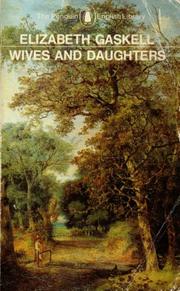
A country town, a stepmother of pure self-interested charm, and a heroine who is good without being dull — the closest any Victorian came to Jane Austen with a wider social range. Gaskell died with a few chapters to go, and the plot is close enough to resolution that this hardly registers.
Her own choice for the saddest story she ever wrote — a Yorkshire whaling town, the press gang, and a lie that destroys three lives. The bleakest thing here, and the right companion to Wives and Daughters because it shows the same late technique put to opposite use.
The Scandal Novels
IntermediateRead the books that cost Gaskell readers in her own lifetime, and see how far a respectable minister's wife was prepared to push a Victorian audience.
▸ Study plan for this stage
Pace: Two weeks. Ruth is a full-length novel and The Moorland Cottage is a short Christmas book of about 120 pages that reads in an evening. Take the short one first as a warm-up, then Ruth. Our catalogue holds the novel under the form Ruth: A Novel — the bare title returns only a partial volume record, s
- The provocation: Ruth is seduced, abandoned, taken in and then passed off as a widow, and Gaskell asks a Victorian readership to keep its sympathy on her throughout. Copies were burned by members of her husband's own congregation
- The lie as the novel's structural problem — the household's kindness depends on a deception, and Gaskell will not let the reader treat that as costless
- Mr Bradshaw as the book's real target: respectable, charitable, and unable to survive contact with an actual fallen woman. The critique is of the congregation, not of the seducer
- The ending, which has divided readers since publication. Whether it is a moral capitulation to the audience or the only ending the argument allows is a live disagreement worth entering rather than settling
- The Moorland Cottage as the seed: a sister ruining herself for a worthless brother, in miniature and without the scandal
- The lineage running out of that short book — the same situation reappears in Ruth and, much later and much more famously, in The Mill on the Floss
- How much a minister's wife was actually able to push, and where in both books you can feel Gaskell calculating what her readership would bear
- Gaskell keeps Ruth sympathetic without making her a passive victim. What does the novel let her do, and what does it withhold from her?
- Is the ending of Ruth a concession to Victorian morality or the conclusion the book's own logic requires? Argue one side, then argue the other before deciding.
- The Bensons lie to protect Ruth. How does the novel weigh that lie, and does its judgement change by the end?
- What does Bradshaw's collapse tell you about the target of Gaskell's anger, given who is left comparatively untouched?
- Reading The Moorland Cottage after Ruth, what did Gaskell learn in the intervening years about how to make this situation bearable to read?
- Write 200 words stating Bradshaw's position in his own terms and as sympathetically as the text allows. Gaskell's method throughout the path has been to make the opposition answerable; test whether she does it here.
- Mark every scene in Ruth in which someone decides whether or not to tell the truth. Reading only those scenes in sequence gives you the novel's actual spine.
- Read the last chapter of The Moorland Cottage and the last chapter of Ruth in one sitting and note what the two endings have in common. The repetition is deliberate and slightly awkward, which is the interesting part.
- Compose the objection a member of the congregation would have made in 1853, in one paragraph, using only what is on the page. It is the fastest way to see what the book was risking.
Next up: You have now read the fiction in every register Gaskell worked in, which is the only position from which the biography is properly legible — because what she does to Charlotte Bronte is what a novelist does.

A seduced and abandoned young woman is taken in and passed off as a widow. Copies were burned by members of her husband's own congregation. Catalogued as Ruth: A Novel — the bare title returns a partial volume record, so this is the form to look for.

A short Christmas book about a sister sacrificing everything for a worthless brother. Slight, but it is the seed of both Ruth and The Mill on the Floss, and it reads in an evening.
The Biography and the Short Fiction
IntermediateFinish with the non-fiction and the ghost stories, and see the two sides of Gaskell that the novels keep separate: the careful biographer and the writer of frank supernatural horror.
▸ Study plan for this stage
Pace: Four weeks for the three. The Life of Charlotte Bronte runs to about 450 pages and should be read first and slowly, with the novels still fresh. Gothic Tales is a 360-page collection to be dipped into rather than marched through — two or three stories a week is right. My Lady Ludlow is a short novel
- The Life created the Bronte legend as most readers still hold it — the parsonage, the moors, the doomed siblings, the isolation — and it is worth reading knowing that a century of readers took the shaping for the facts
- Gaskell was defending a friend, and that purpose organises the book: Charlotte is presented as a dutiful daughter whom circumstance drove to write, which conveniently answers the charge of coarseness levelled at Jane Eyre
- Selection as the biographer's real instrument. Watch what is emphasised, what is compressed, and where an anecdote is doing the work an argument would have to defend
- The libel problem — passages had to be withdrawn after publication, and the incident marks the point where a novelist's instincts collided with the constraints of writing about living people
- Gothic Tales as the strongest single argument against Gaskell's cosy reputation: The Old Nurse's Story is genuinely frightening, and nothing in Cranford prepares you for it
- The supernatural stories as a different use of the same materials — houses, servants, family secrets, class — with the social machinery left intact and the consolation removed
- My Lady Ludlow as the last word on Gaskell's method: an aristocrat who believes teaching the poor to read leads to revolution, and who is not simply mocked for believing it
- Her refusal to write villains, visible across the whole path, stated most economically in this final novella
- Name three specific choices in The Life that a novelist would make and a modern biographer would not. What does each one buy?
- How does the biography answer the accusation that Jane Eyre was a coarse book, and is that answer offered as argument or as atmosphere?
- Having read the industrial novels, where can you see Gaskell the advocate at work in the biography — and does knowing her purpose make it more or less trustworthy?
- The Old Nurse's Story uses the same social furniture as Cranford to entirely opposite effect. What is the mechanism?
- Lady Ludlow's belief about literacy is presented seriously. What does Gaskell get from taking it seriously that satirising it would have cost her?
- Across all five stages, which Gaskell do you think is the real one — and does the question even survive the evidence?
- Pick one episode from The Life and write 200 words on what a hostile biographer could have made of the same material. This is the clearest possible demonstration of what selection does.
- Read The Old Nurse's Story immediately after any chapter of Cranford and list the elements the two share. The overlap is much larger than the effect suggests.
- Write down the passage in My Lady Ludlow where you most expected Gaskell to condemn a character and she did not, and say what she does instead.
- Rewrite your one-sentence description of Gaskell for the last time, then compare all three versions from stages one, three and five. The distance between them is the case for reading her in this order rather than starting with North and South.
Next up: This is the end of the path; the obvious next move is Charlotte Bronte's own novels read against the biography you have just finished, which is where Gaskell's shaping becomes visible as shaping.
The book that created the Bronte legend — the parsonage, the moors, the doomed siblings — and the reason a century of readers saw them that way. Shaped by a novelist's instincts and by Gaskell's determination to defend a friend, which is exactly what makes it worth reading late, once you can spot her doing it.
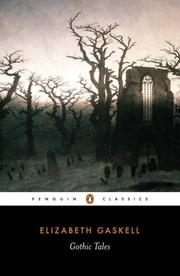
The collected supernatural and gothic stories, including The Old Nurse's Story. Genuinely frightening, and the strongest evidence that the author of Cranford had a much wider range than her reputation allows.
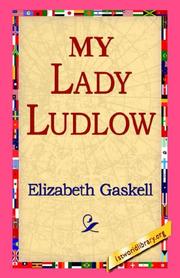
A novella about an aristocrat who believes teaching the poor to read leads to revolution, and who is not simply mocked for it. The last stop for anyone who wants the whole Gaskell, and a good final demonstration of her refusal to write villains.
Discussion
Keep reading
Paths that share books, cover the same subject, or open a related topic.