Best Books on Fish Biology and Ichthyology, in Order
Fishes are not a group so much as everything left over once you remove the tetrapods, which is why more than half of all vertebrate species are fishes and why the subject is so much larger than it looks. This path keeps two literatures apart on purpose. The popular natural history is genuinely excellent and needs no background at all; the ichthyology textbooks are university courses that assume comparative anatomy, some physiology and a working grasp of evolution, and they cost accordingly. Read the first four books for pleasure, then decide whether you want the second half. One warning that runs throughout: the standard texts here are long-lived and our catalogue records are frequently early editions, so check before buying.
Popular entries: what fishes are actually like
BeginnerReplace the default picture of fishes as simple, insensible animals with an evidence-based one, and see why classifying them is a genuinely hard problem rather than a solved one.
▸ Study plan for this stage
Pace: Five to seven weeks for 1,100 pages, all of it at ordinary trade pace of 30-40 pages an evening and none of it assuming any background. Balcombe's What a Fish Knows is 296 pages and comes first: a survey of fish sensory biology, cognition and social behaviour built on the primary literature and cite
- Fish sensory systems: lateral line, electroreception, colour vision beyond the human range, and chemoreception
- Evidence for learning, memory and social recognition in fishes, and how it is obtained
- Nociception in fishes, and why the question of pain is both empirical and definitional
- The eel life cycle, and the specific gap in it that has never been observed
- Shoaling and schooling as distinct behaviours with different functions
- Why 'fish' is not a clade, and what a paraphyletic group is
- The difference between a book building a case and a book surveying a field, and how to read each
- What is the lateral line and what does it detect that no human sense does?
- What is the current state of the evidence on nociception in fishes, and what would settle the pain question if anything could?
- What exactly has never been observed about eel reproduction, and what is inferred instead and from what?
- Why is 'fish' paraphyletic, and what would you have to include to make it monophyletic?
- Where is Balcombe making an argument rather than reporting, and does his evidence support the argument as strongly as the reporting?
- Take three of Balcombe's more striking claims, find the cited primary papers, and check whether the study designs support the claim as stated
- Draw the eel life cycle from Svensson, marking clearly which stages have been directly observed and which are inferred
- Compare Balcombe and Scales on a single topic — fish communication is a good choice — and note what the behavioural and the physiological framings each miss
- Sketch a vertebrate cladogram showing why tetrapods sit inside the fishes, and use it to explain Miller's title to somebody else
- Write down what you assumed about fish cognition before this stage and mark which assumptions the evidence in these books actually addresses
Next up: Miller's provocation is a taxonomic claim; the next stage makes it concrete by placing fishes properly in vertebrate phylogeny.

The best popular entry: a survey of fish sensory biology, cognition and social behaviour, built on the primary literature and cited throughout. Balcombe has an animal-welfare argument to make and is open about it, which is easier to read around than a hidden one.
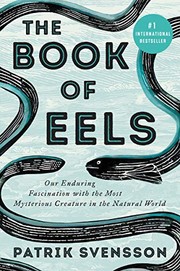
The eel question — nobody has ever seen them breed — braided with a memoir of Svensson's father. The right second book because it is the clearest demonstration on this path of how much basic natural history is still unknown. Note that our record lists Alex Wyndham alongside the author; he narrated the audiobook rather than writing it.
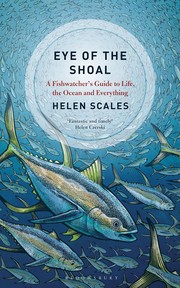
A marine biologist's tour of fish colour, sound, venom and shoaling behaviour, and the most scientifically dense of the three popular books. Read it after Balcombe for the physiology his behavioural focus skips.
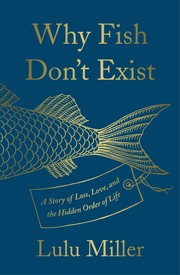
Part biography of David Starr Jordan — the ichthyologist who named a fifth of the fish species known in his lifetime, and was a committed eugenicist — and part argument that fish are not a valid taxonomic category at all. Placed last in this stage because the cladistics joke only lands once you have some fishes in your head.
Deep time and the shape of the group
IntermediatePlace fishes in vertebrate phylogeny — jawless, cartilaginous, ray-finned and lobe-finned lineages — and understand why the tetrapods sit inside the group rather than beside it.
▸ Study plan for this stage
Pace: Six to eight weeks, and the two books here are used in completely different ways. Shubin's Your inner fish is 240 pages of narrative by the palaeontologist who found Tiktaalik, and is a week's reading at 30-40 pages an evening — the most enjoyable route into the fish-to-tetrapod transition and compa
- The major vertebrate lineages: hagfishes and lampreys, chondrichthyans, actinopterygians, sarcopterygians
- Why tetrapods are nested inside the sarcopterygians rather than sitting beside the fishes
- The fin-to-limb transition and the fossils that document it
- Teleost diversity and the whole-genome duplication associated with it
- Homology versus analogy, and the evidence used to distinguish them
- How a modern classification is built — characters, cladistic analysis, molecular data — and where they conflict
- Family-level organisation as the working unit of ichthyology
- What features of Tiktaalik make it transitional, and what does Shubin say it does not show?
- Why are lungfishes more closely related to you than to a trout, and what evidence establishes that?
- What accounts for the extraordinary species richness of teleosts relative to other fish lineages?
- How does Nelson's arrangement differ from the classification you would have learned twenty years ago, and what drove the change?
- Where do molecular and morphological data currently conflict in fish phylogeny, and how is the conflict handled?
- Draw a cladogram of the major fish lineages with tetrapods included, using Nelson's arrangement, and mark the characters supporting each node
- Trace one of your own anatomical features back through Shubin's account to its fish precursor, then locate the relevant lineage in Nelson
- Look up three families in Nelson that you have never heard of and record what makes each distinctive
- Compare the number of families in two orders in Nelson and think about whether the disparity is biological or reflects collecting effort
- Take a local fish you can identify and place it precisely in Nelson's classification, order through family
Next up: You have the shape of the group; the next stage is the discipline itself, at the level a university course would take you.
By the palaeontologist who found Tiktaalik, and the most enjoyable route into the fish-to-tetrapod transition and comparative anatomy generally. Read it here because it explains, better than any textbook, why studying fishes is how you understand your own body.

The systematic reference: every family of fishes, with the current phylogenetic arrangement. Not read but consulted, and the book that makes Miller's provocation concrete. Now maintained by Grande and Wilson alongside Nelson, and revised often enough that our record's stated year should be ignored.
The standard ichthyology courses
IntermediateWork through the discipline proper — structure, function, systematics, zoogeography and ecology of fishes — at the level a university course would take you.
▸ Study plan for this stage
Pace: Six to eight months, and this is where the path stops being pleasure reading — these are university textbooks assuming comparative anatomy, some physiology and a working grasp of evolution. We hold no page count for Moyle and Cech's Fishes: An Introduction to Ichthyology, which is the standard under
- Fish anatomy: skeletal, muscular, circulatory and digestive systems, and the terminology that describes them
- Gill structure and countercurrent gas exchange
- The swim bladder, buoyancy control, and its physostome and physoclist forms
- Locomotion: body and caudal fin swimming modes, and the hydrodynamics behind them
- Reproductive strategies across fishes — oviparity, viviparity, hermaphroditism, parental care
- Zoogeography: freshwater faunal regions and the historical processes that produced them
- Life history theory as applied to fishes, and the tradeoffs among growth, reproduction and survival
- Community ecology of fish assemblages, and the role of competition and predation
- How does countercurrent exchange in a gill achieve extraction efficiencies impossible in a lung, and what does it cost?
- What is the difference between a physostome and a physoclist swim bladder, and what does it imply about vertical movement?
- Which swimming mode does a given body shape imply, and what does that predict about a fish's ecology?
- Why is hermaphroditism common in fishes and rare in other vertebrates, and under what conditions is each direction of sex change favoured?
- What historical processes explain the freshwater faunal regions, and where does the pattern break down?
- Which parts of Lagler are still authoritative, and which have been superseded — how did you decide?
- Dissect a fish following Lagler's procedure, identifying every structure his account names before consulting the figures
- Work through Moyle's chapter on osmoregulation and draw the ion and water flows for a freshwater and a marine teleost side by side
- Take three local species and classify their swimming modes, reproductive strategies and trophic positions using Helfman's frameworks
- Compare Moyle and Helfman on a topic they both cover in depth — reproductive ecology is a good choice — and note where the more advanced book adds an argument rather than detail
- Use Lagler's descriptive methods to write a formal morphological description of one specimen, then check the characters against the family account in Nelson
Next up: The courses give you the whole discipline at survey depth; the next stage goes deep on physiology and ecology, and on one lineage in particular.

Moyle and Cech, and the standard undergraduate text: the best-organised route through anatomy, physiology, systematics and ecology, and the one to work through first. Our record's display title carries a stray edition marker; it is the right book, and later editions exist.
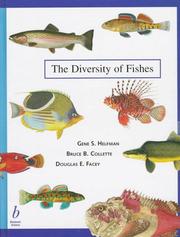
The more advanced companion, stronger on evolution, behaviour and conservation, and better written than most textbooks in any field. Read it after Moyle rather than instead — the two are complementary, not competing. The record is the first edition; the second is current.

The classic mid-century text by Lagler, Bardach, Miller and Passino, and still the best on gross anatomy, dissection and the traditional descriptive methods that the modern books compress. Included as a historical and practical reference; do not use it for phylogeny, which has changed completely since.
Physiology, ecology, and one group in depth
IntermediateUnderstand how a fish solves the physiological problems of its medium — osmoregulation, gas exchange, buoyancy, temperature — and how populations behave in real ecosystems.
▸ Study plan for this stage
Pace: Five to seven months, and the three books are used at three different depths. Evans and Horn's The physiology of fishes is 568 pages and is a multi-author reference read chapter by chapter rather than cover to cover — gills and osmoregulation, cardiovascular and respiratory function, endocrinology,
- Osmoregulation in freshwater and marine teleosts, and the chloride cell as the machinery
- Gill ventilation, oxygen uptake, and the responses to hypoxia
- Cardiovascular architecture, and the specialisations of tunas and other regional endotherms
- Buoyancy strategies without a swim bladder, including the shark liver
- Temperature and metabolic scaling, and the consequences for growth
- Growth models, mortality estimation and the von Bertalanffy framework
- Life history strategies and the tradeoffs that generate them
- Elasmobranch sensory biology, including electroreception and geomagnetic navigation
- How does a chloride cell move ions against the gradient, and how does its role reverse between fresh and salt water?
- How does a tuna keep its muscle above ambient temperature, and what does regional endothermy cost it?
- How does a shark maintain buoyancy without a swim bladder, and what constraints does that solution impose?
- What does the von Bertalanffy growth model assume, and where does it fail for real populations?
- What is the evidence that hammerheads navigate by geomagnetic features, and how did Klimley obtain it?
- Which of Wootton's life history tradeoffs best explains the difference between a small, fast-maturing species and a large, slow one?
- Fit a von Bertalanffy growth curve to a published length-at-age dataset and estimate the growth parameters, then compare with the published values
- Draw the ion transport pathways at the gill for freshwater and seawater from Evans and Horn, and confirm you can explain each direction
- Compute the metabolic scaling exponent from a published dataset of fish oxygen consumption against body mass, and compare with the value Wootton reports
- Read Klimley's account of one tracking study and reconstruct the inference chain from the data he had to the navigation conclusion he drew
- Take a species you studied in the previous stage and build its life history profile from Wootton's framework, identifying which tradeoff dominates
Next up: The organism and the population are covered; the last stage is the field skill the discipline is built on and the applied science that manages the animals.

The standard multi-author reference on fish physiology: gills and osmoregulation, cardiovascular and respiratory function, endocrinology, sensory systems. Chapter by chapter rather than cover to cover. Our record is an early edition of a book since heavily revised.

The ecological half: feeding, growth, reproduction, life histories and population dynamics, treated quantitatively. The bridge between the organismal chapters above and the fisheries science below.
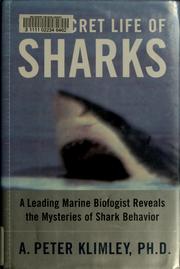
One lineage in depth, by the biologist who tracked hammerheads to seamounts and worked out how they navigate. Included because reading a specialist on a single group shows what the survey texts flatten — and because the cartilaginous fishes are the half of the subject the general courses hurry past.
Field identification and fisheries
IntermediateIdentify fishes in hand and in the water, and understand stock assessment well enough to read a fisheries management argument critically.
▸ Study plan for this stage
Pace: Three to four months for 1,063 pages, but the two books call for entirely different treatment. Page and Burr's Peterson field guide to freshwater fishes of North America north of Mexico is 663 pages and is a reference, not a text — schedule it as consultation. Read the introductory keys and the anat
- Meristic and morphometric characters, and how a dichotomous key uses them
- Field identification in hand versus in the water, and what each situation allows you to see
- Voucher specimens and photographic records as documentation
- Recruitment, growth, natural mortality and fishing mortality as the four rates a stock assessment needs
- Yield per recruit and spawning stock biomass per recruit as management reference points
- Surplus production and age-structured models, and the data each requires
- Maximum sustainable yield, its assumptions, and the reasons it has been criticised as a target
- Uncertainty in stock assessment, and how it propagates into a quota
- Which meristic characters are most reliable for separating similar species, and why can counts be more diagnostic than proportions?
- How would you distinguish two similar minnow species in hand, and which characters would be unusable underwater?
- Why is natural mortality the hardest of the four rates to estimate, and what does an assessment do when it cannot be estimated?
- What does yield per recruit optimise, and what does it ignore that spawning stock biomass per recruit captures?
- What are the standing criticisms of maximum sustainable yield as a management target?
- Where does King say the uncertainty in a typical assessment is largest, and how should that change a manager's decision?
- Key out ten specimens or clear photographs to species using Page and Burr, writing down the character at each decision point before checking
- Spend an afternoon at a river or lake identifying every fish you see or catch, and record which identifications you could not resolve and why
- Estimate total mortality from a catch curve on a published age-frequency dataset, following King, and then decompose it into natural and fishing components
- Run a yield-per-recruit analysis for a stock and find the fishing mortality that maximises yield, then compare it with the one that protects spawning biomass
- Take a real fisheries management dispute in the news, find the assessment behind it, and identify which of King's uncertainty sources each side is exploiting
Next up: This is the end of the path: from here the natural continuations are regional field guides and the taxonomic literature, the primary physiology journals Evans and Horn's chapters cite, and the stock assessment software that implements King's models.

A field guide rather than a text: Page and Burr's is the standard North American freshwater identification reference, with keys and range maps. Included because ichthyology is still a field science and the identification skill is the entry qualification.

The closing book, and the applied end of the subject: growth and mortality estimation, stock assessment models, and the management measures that follow. King is unusually clear about the uncertainty in the numbers, which is what most arguments about fishing quotas are really about.
Discussion
Keep reading
Paths that share books, cover the same subject, or open a related topic.