Systems biology is the claim that a cell's behaviour lives in the wiring rather than in the parts, and that the wiring can be modelled. That makes it an awkward subject to read into, because it demands two literacies at once — molecular biology and applied mathematics — and almost everyone arrives with one.
Be honest with yourself about the mathematics, because this is where reading lists mislead. The first two stages need no more than curiosity. From the third stage onward you need differential equations and comfort with linear algebra, and the last stage assumes those plus some probability. Nothing in the field is unusually deep mathematically, but none of it is optional either.
Why treat a cell as a system at all
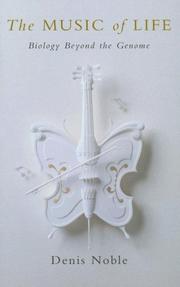
The Music of Life is the conceptual opener, by the physiologist who built the first computational model of a heart cell in 1960. Denis Noble's case against genetic reductionism is short, polemical and needs no mathematics, and it gives you the reason the rest of this path exists.
Dance to the Tune of Life is his fuller and more careful statement of the same argument a decade later, with the principle of biological relativity — that no level of causation is privileged. Read it second if the first book convinced you and you want the version with the objections answered. Both are arguments in a live debate about reductionism, not settled results; read them as positions.
Cell Biology by the Numbers is Milo and Phillips on the quantities a modeller needs and biology courses never supply: how many proteins in a cell, how fast a ribosome runs, how long a signal takes to cross a cytoplasm. Order-of-magnitude intuition is what turns a diagram into a model.
Repairing whichever half you are missing
Molecular Biology of the Cell is the reference for the biology. If you come from physics, maths or engineering, work the relevant chapters — gene regulation, signalling, the cell cycle — and do not read it through. Our record is an early edition of a text many editions on, so buy current.
Physical Biology of the Cell bridges in the other direction: physics applied to cells, with estimation and simple models throughout, written for people who want the numbers to mean something. It is the best single preparation for Alon. Our record is the first edition and a second exists.
Nonlinear dynamics and Chaos is the mathematics prerequisite, and famously the most enjoyable book on differential equations there is: fixed points, stability, bifurcations, oscillators. Every switch, oscillator and bistable circuit in the next stage is one of Strogatz's phase portraits. Buy the second edition rather than the first-edition record we hold.
The standard course
An introduction to systems biology is the standard course text and the most influential book in the field. Uri Alon builds everything from network motifs, showing that the same handful of circuits recur across organisms because they solve recurring problems. This is the core of the path. Our record is an early printing; the second edition is substantially revised and is the one now taught.
A first course in systems biology is Eberhard Voit's gentler and broader alternative, and the better choice if you want more biology and less design-principle argument: parameter estimation, metabolic and signalling systems, and how a model actually gets built rather than presented finished.
Mathematical Modeling in Systems Biology is Brian Ingalls on the mathematics itself — nondimensionalisation, quasi-steady-state approximation, sensitivity and bifurcation analysis — worked on biological examples. Read it alongside Alon whenever a derivation he compresses stops making sense.
The modelling toolkit
Systems Biology, under that bare title, is Klipp and colleagues: the most complete single reference on methods — kinetic modelling, metabolic control analysis, network analysis, model fitting, and the standards and software the field runs on. Encyclopaedic where Alon is argumentative.
Stochastic Modelling for Systems Biology, Third Edition is the necessary correction to the deterministic picture. When a transcription factor is present in tens of copies, averages lie. Darren Wilkinson covers the Gillespie algorithm and Bayesian inference for stochastic kinetic models, with code, and our record is the current third edition.
Robustness and evolvability in living systems is the evolutionary question the modelling raises and rarely answers: why biological networks tolerate perturbation at all, and how robustness and the capacity to evolve can coexist. Read Andreas Wagner as the biological interpretation of what the models keep showing.
Genome scale
Systems Biology, Properties of Reconstructed Networks is Palsson's founding text of constraint-based modelling — the route to whole-cell metabolic models when you have no kinetic parameters and never will. His stoichiometric approach is what industrial metabolic engineering actually runs on. Note the comma in place of a colon in our display title, and note that it shares a stem with the Klipp textbook above, so buy by author.
Network Science closes with the general theory of networks — degree distributions, hubs, robustness, community structure — from Barabási and Pósfai, using biological networks as examples throughout. It is the right last book because it shows which properties of a cell's wiring are biological and which are simply what large networks do. The stages, with what each assumes mathematically, are at /paths/pt_ai_systems-biology.