Human origins reading path: from early hominins to modern humans
This curriculum traces the full arc of human origins and evolution — from the basic mechanics of natural selection to the fossil record of our hominin ancestors, and finally to the genetic and archaeological story of how Homo sapiens spread across the globe. Each stage builds conceptual vocabulary and scientific intuition needed for the next, taking a beginner from first principles all the way to cutting-edge paleoanthropology.
Foundations: Evolution & Deep Time
BeginnerUnderstand natural selection, common descent, and the vast timescales that make human evolution possible — the essential framework for everything that follows.
▸ Study plan for this stage
Pace: 6–7 weeks, ~25–30 pages/day (alternating between both books; ~2 weeks per book with overlap)
- Natural selection as the mechanism of evolution: how differential reproduction of heritable traits shapes populations over time
- The gene as the unit of selection: understanding replicators and how genes propagate themselves across generations
- Common descent and homology: recognizing shared evolutionary ancestry through anatomical, genetic, and developmental similarities
- Deep time and geological timescales: grasping millions of years of evolutionary change and the age of the Earth
- The evolutionary perspective on human anatomy: recognizing vestigial structures and evolutionary 'constraints' in the human body
- Evolutionary constraints and developmental pathways: why evolution works with existing body plans rather than designing from scratch
- Evidence for evolution: fossil records, comparative anatomy, embryology, and molecular biology as converging lines of evidence
- How does natural selection work, and why does it lead to adaptation without requiring conscious design or foresight?
- What does Dawkins mean by the 'selfish gene,' and how does thinking about genes as replicators change our understanding of evolution?
- What is common descent, and what anatomical evidence in your own body demonstrates your evolutionary relationship to fish?
- Why do humans retain structures like the coccyx, wisdom teeth, and a vestigial tailbone, and what do these tell us about our evolutionary history?
- How do embryological similarities (e.g., gill slits in human embryos) and genetic homologies support the idea of common ancestry?
- What timescales are we talking about when we discuss human evolution, and how does deep time make gradual evolutionary change plausible?
- Map your own body for vestigial and homologous structures: identify at least 5 features in your skeleton, muscles, or organs that reflect fish ancestry or are now functionless (e.g., tailbone, ear muscles, appendix). Sketch or photograph them with annotations.
- Create a timeline of deep time: draw or construct a visual representation of Earth's history (4.6 billion years) and mark where humans appear. Use this to viscerally grasp the vastness of evolutionary time.
- Trace a gene through a family: using your own family or a fictional pedigree, follow how a heritable trait (eye color, height tendency, etc.) passes through generations and discuss why some variants persist or disappear.
- Comparative anatomy exercise: obtain images or models of a fish skeleton, amphibian limb, bird wing, and human arm. Identify homologous bones and explain why the same structures are modified for different functions.
- Embryo observation: study images or videos of human embryonic development (especially weeks 3–8) and identify structures that resemble fish features (pharyngeal arches, notochord, tail). Write a short reflection on what this reveals about our ancestry.
- Debate or essay: 'Why is natural selection not a conscious process, and why does this matter?' Use examples from Dawkins to explain how complexity and apparent design emerge without a designer.
Next up: This stage establishes the core mechanisms (natural selection, common descent) and the timescale framework that make human evolution possible, preparing you to explore the actual fossil record, anatomical transitions, and molecular evidence that document our specific lineage in subsequent stages.
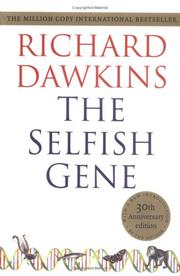
Establishes the gene-centered view of natural selection with clarity and vivid examples, giving the reader a solid intuitive grasp of how evolution actually works before encountering the fossil record.
Bridges deep evolutionary time and human anatomy by tracing our body's features back hundreds of millions of years, making the concept of common descent feel concrete and personal.
The Hominin Story: Fossils & Our Family Tree
BeginnerLearn who our hominin ancestors and relatives were — Australopithecus, Homo erectus, Neanderthals, and more — and how paleoanthropologists reconstruct their lives from bones and stone tools.
▸ Study plan for this stage
Pace: 8–10 weeks, ~25–30 pages/day. Start with "Lucy" (4 weeks), move to "Becoming Human" (3 weeks), finish with "The Strange Case of the Rickety Cossack" (1–2 weeks).
- The fossil record of human evolution: how bones and artifacts reveal the timeline and characteristics of hominin species from Australopithecus to modern humans
- Lucy (Australopithecus afarensis) as a pivotal ancestor: bipedalism, brain size, and what her skeleton tells us about early hominin life
- Homo erectus as a transitional form: larger brains, tool use, and the emergence of behaviors that bridge early hominins and later humans
- Neanderthals and other archaic humans: their adaptations, tool technologies, and relationship to modern humans
- Paleoanthropological methods: how scientists date fossils, interpret skeletal anatomy, reconstruct behavior, and debate evolutionary relationships
- The hominin family tree: understanding branching lineages, extinct relatives, and why our evolutionary path was not a simple ladder
- Tool evolution as a window into cognitive and behavioral change across hominin species
- The role of environment and climate in shaping hominin evolution and adaptation
- Who was Lucy, and why is Australopithecus afarensis considered a crucial link in human evolution?
- What evidence from fossils and tools shows that Homo erectus represented a major shift toward modern human behavior and cognition?
- How do paleoanthropologists use skeletal anatomy, stone tools, and dating techniques to reconstruct the lives and relationships of extinct hominins?
- What made Neanderthals distinct from modern humans, and what does the fossil and archaeological record tell us about their capabilities and extinction?
- How did bipedalism, brain size, and tool use evolve across the hominin lineage, and what does each change reveal about selective pressures?
- Why is the hominin family tree better described as a branching bush than a linear ladder, and what does this tell us about human evolution?
- Create a visual timeline of hominin species (Australopithecus, Homo habilis, Homo erectus, Neanderthals, modern humans) with key dates, brain sizes, and tool technologies based on Johanson and Tattersall's accounts.
- Sketch or annotate a hominin skeleton (Lucy's or Homo erectus) and label the anatomical features that reveal bipedalism, tool use, and brain capacity—then explain what each feature suggests about behavior.
- Write a 500-word 'day in the life' narrative for a member of one hominin species (e.g., Lucy, an H. erectus hunter, a Neanderthal) based on fossil and archaeological evidence from the books.
- Compare and contrast two hominin species using a Venn diagram: identify shared traits, unique adaptations, and what these differences suggest about evolutionary relationships.
- Analyze a stone tool description or image from the books (e.g., Oldowan vs. Acheulean) and explain what its complexity reveals about the maker's cognitive abilities and social behavior.
- Debate or write a short essay: 'Were Neanderthals fully human?' using evidence from Tattersall on their tools, anatomy, and extinction to support your argument.
Next up: This stage establishes the fossil and archaeological foundation of human ancestry, preparing you to explore how modern humans emerged, spread across the globe, and developed language, culture, and consciousness in the next stage.

A firsthand account of discovering one of the most famous hominin fossils ever found; it introduces the reader to fieldwork, fossil interpretation, and the Australopithecus lineage in an accessible narrative style.
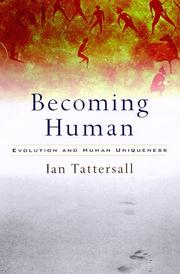
Provides a clear, authoritative survey of the entire hominin fossil record, helping the reader build a mental map of our family tree before diving into more specialized accounts.

Examines how paleoanthropologists have debated and revised the human family tree over time, teaching critical thinking about fossil evidence and scientific disagreement — essential before tackling advanced texts.
What Made Us Human: Behavior, Language & Culture
IntermediateExplore the cognitive and behavioral revolutions — language, symbolic thought, tool use, and social complexity — that distinguish Homo sapiens from earlier hominins.
▸ Study plan for this stage
Pace: 4–5 weeks, ~40–50 pages/day. Week 1–2: "The Human Story" (Dunbar); Week 3–5: "Sapiens" (Harari). Allocate 2–3 days per book for review and synthesis.
- The role of social group size and theory of mind in human cognitive evolution (Dunbar's group size hypothesis and the social brain)
- Language as a uniquely human adaptation for bonding, cooperation, and transmitting knowledge across generations
- Symbolic thought and imagination: the ability to believe in shared fictions and abstract concepts that don't exist in nature
- Tool use and technology as extensions of human cognition and drivers of cultural evolution
- The Agricultural Revolution as a pivotal transition that reshaped human society, biology, and psychology
- How cooperation at scale enabled the rise of complex societies, hierarchies, and institutions
- The distinction between biological evolution (slow, genetic) and cultural evolution (fast, memetic) in shaping modern humans
- Cognitive and behavioral modernity: what separates Homo sapiens from Neanderthals and other hominins
- According to Dunbar, how does group size relate to brain size and language evolution, and why is the 150-person limit significant?
- What role does language play in human cooperation and the transmission of culture, as discussed in both books?
- How do Harari and Dunbar explain the emergence of shared fictions and symbolic thought, and why are these uniquely human?
- What was the Agricultural Revolution, and what were its major consequences for human biology, society, and psychology?
- How did tool use and technology drive human cognitive and cultural evolution differently than in other species?
- What is the distinction between biological and cultural evolution, and how does this help explain modern human diversity?
- Map your own social network: identify your closest circle (~5 people), your extended circle (~15), and your broader social group (~150). Reflect on Dunbar's hypothesis—does the 150-person limit resonate with your experience? Write a 1-page reflection.
- Language analysis: record a 10-minute conversation (with permission) and transcribe it. Identify instances where language is used for bonding, information transfer, and coordination. Compare your findings to Dunbar's discussion of language functions.
- Fictional belief exercise: choose a shared fiction (e.g., a nation, a corporation, a religion, money) and trace how it shapes behavior and cooperation. Write a 2-page analysis of how this fiction enables large-scale coordination.
- Tool-use timeline: create a visual timeline of 10–15 key technologies from stone tools to the present. For each, note how it extended human capability and enabled new forms of social organization. Connect this to Harari's argument about technology and culture.
- Agricultural Revolution roleplay: in a small group, simulate the transition from hunter-gatherer to agricultural life. Discuss the trade-offs: what was gained (food surplus, population growth) and what was lost (leisure, health, equality)? Document your insights.
- Comparative cognition: read a primary source excerpt (e.g., Dunbar on Neanderthal cognition or Harari on Homo sapiens vs. other hominins). Write a 1-page summary of the key cognitive differences and their evolutionary significance.
Next up: This stage establishes the cognitive and behavioral foundations of modern humans—language, symbolic thought, and cooperation—which set the stage for the next stage's exploration of how these capacities enabled the rise of civilizations, empires, and the complex institutions that shape our world today.

Focuses on the social brain hypothesis and the evolution of language and community, adding a behavioral and neurological dimension to the anatomical story built in the previous stage.
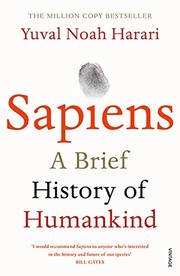
Synthesizes biology, anthropology, and history into a sweeping narrative of how Homo sapiens came to dominate the planet; best read here, after the fossil foundations are in place, so its big-picture claims can be evaluated critically.
Out of Africa: Migration, Genetics & Ancient DNA
ExpertUnderstand how modern genomics and ancient DNA have revolutionized our knowledge of human migration routes, interbreeding with Neanderthals and Denisovans, and the peopling of the world.
▸ Study plan for this stage
Pace: 8–10 weeks, ~40–50 pages/day. Start with "The Journey of Man" (4–5 weeks), then move to "Who We Are and How We Got Here" (4–5 weeks). Allocate 1 week for review, synthesis, and exercises.
- Y-chromosome and mitochondrial DNA as molecular clocks for tracking human migration patterns and divergence times
- The Out of Africa hypothesis: evidence for a single origin of modern humans in Africa ~200,000 years ago and subsequent global dispersal
- Ancient DNA extraction and analysis techniques that allow direct genetic study of extinct hominins and ancient human populations
- Neanderthal and Denisovan genomes: evidence of interbreeding with modern humans and the genetic legacy in non-African populations
- Population admixture and gene flow: how genetic mixing between different human groups shaped modern genetic diversity
- Paleogenomics as a tool for understanding human prehistory: connecting genetic data with archaeological and anthropological evidence
- Regional variation in human ancestry: how different populations carry different proportions of archaic hominin DNA and show distinct migration histories
- The limitations and power of genetic inference: understanding what DNA can and cannot tell us about human origins, behavior, and cultural development
- How did Spencer Wells use Y-chromosome and mitochondrial DNA markers to trace human migration routes out of Africa, and what are the main limitations of this approach?
- What does David Reich's research reveal about interbreeding between modern humans and Neanderthals/Denisovans, and how much archaic DNA do non-African populations carry today?
- Explain the difference between the multiregional evolution model and the Out of Africa model, and what genetic evidence supports the latter.
- How has ancient DNA technology changed our understanding of human prehistory compared to earlier methods based on living populations alone?
- What does the genetic evidence tell us about the timing and routes of human migration to different continents (Europe, Asia, Americas, Australia)?
- How do admixture events between modern humans and archaic hominins explain patterns of genetic variation in contemporary populations?
- Create a timeline map: Plot major human migration events (Africa → Middle East → Europe/Asia → Americas/Australia) using dates and genetic evidence from both books; annotate with key hominin encounters (Neanderthals, Denisovans).
- Analyze a haplogroup tree: Study Y-chromosome or mitochondrial haplogroup diagrams from Wells' work; trace your own hypothetical lineage and explain what each branch represents in terms of population history.
- Compare two populations' genomes: Using Reich's framework, create a table showing archaic DNA percentages in different modern populations (Europeans, East Asians, Africans) and explain why these differ.
- Ancient DNA case study: Select one ancient human genome discussed in Reich's book (e.g., Ötzi, Denisova Cave individual); write a 2–3 page summary of what that genome revealed about migration, admixture, or population structure.
- Debate multiregional vs. Out of Africa: Prepare arguments for both models using specific genetic evidence from the books; identify which evidence is most compelling and why.
- Design a genetic study: Propose how you would use ancient and modern DNA to answer a specific question about human prehistory (e.g., 'When did humans first reach the Americas?'); justify your methodology.
Next up: This stage establishes the genetic and molecular foundation for understanding human diversity and adaptation; the next stage will likely explore how these migration patterns and admixture events shaped phenotypic variation, disease susceptibility, and local adaptations across different environments and climates.
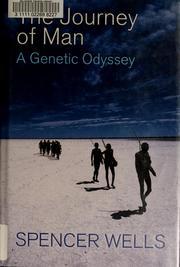
Uses Y-chromosome genetics to reconstruct the routes by which Homo sapiens spread out of Africa, serving as an accessible introduction to population genetics before tackling ancient DNA research.

Written by one of the world's leading ancient-DNA scientists, this book presents the latest genomic evidence for human migration, admixture with archaic hominins, and the complex mosaic of our ancestry — the most rigorous and up-to-date capstone for this curriculum.
Discussion
Keep reading
Paths that share books, cover the same subject, or open a related topic.