Fishes are not really a group. They are everything left over once you remove the tetrapods, which is why more than half of all vertebrate species are fishes and why this subject is so much bigger than it looks from outside. It also means the literature splits cleanly in two, and keeping the halves apart is the single most useful thing a reading order can do here.
On one side is the popular natural history, which is genuinely excellent and needs no background at all. On the other are the ichthyology textbooks, which are university courses assuming comparative anatomy, some physiology and a working grasp of evolution, and which are priced accordingly. Read the first four books for pleasure and then decide whether you want the second half. One caution runs throughout: the standard texts here are long-lived and our catalogue records are frequently early editions, so check the edition before buying.
The popular entries
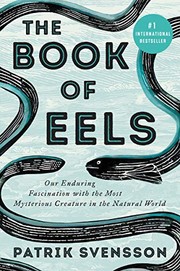
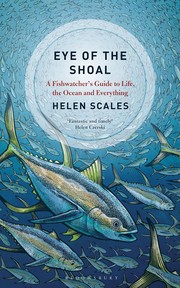
What a Fish Knows (Jonathan Balcombe, 296 pages) is the best starting point — a survey of fish sensory biology, cognition and social behaviour built on the primary literature and cited throughout. Balcombe has an animal-welfare argument to make and is open about it, which is easier to read around than a hidden one. The Book of Eels (Patrik Svensson, 256 pages) braids the eel question — nobody has ever observed them breeding — with a memoir of the author's father, and is the clearest demonstration on this list of how much basic natural history remains unknown. Our record lists Alex Wyndham alongside Svensson; he narrated the audiobook rather than co-writing it. Eye of the shoal (Helen Scales, 320 pages) is the most scientifically dense of the popular books, on colour, sound, venom and shoaling, and covers the physiology Balcombe's behavioural focus skips. Why Fish Don't Exist (Lulu Miller, 228 pages) goes last in this group: part biography of David Starr Jordan, the ichthyologist who named a fifth of the fish species known in his lifetime and was a committed eugenicist, and part argument that fish are not a valid taxonomic category. The cladistics joke only lands once you have some fishes in your head.
Deep time, and one reference to consult
Your inner fish (Neil Shubin, 240 pages) is by the palaeontologist who found Tiktaalik and is the most enjoyable route into the fish-to-tetrapod transition — it explains better than any textbook why studying fishes is how you understand your own body. Fishes of the world is the systematic reference covering every family with the current phylogenetic arrangement, and it belongs in a different category from everything around it: this is a book to consult, not to read. It is now maintained by Grande and Wilson alongside Nelson and is revised often, so ignore our record's stated year.
The textbooks
Fishes An Introduction To Ichthyology 5E is Moyle and Cech's standard undergraduate text and the best-organised route through anatomy, physiology, systematics and ecology; the stray edition marker in our display title is a catalogue artefact, and later editions exist. The diversity of fishes (528 pages) is the more advanced companion, stronger on evolution, behaviour and conservation, and better written than most textbooks in any field — read it after Moyle rather than instead, since the two are complementary. Our record is the first edition; the second is current. Ichthyology (545 pages) is the classic mid-century text by Lagler, Bardach, Miller and Passino, still the best on gross anatomy, dissection and traditional descriptive method. Use it for that and not for phylogeny, which has changed completely since 1962.
Physiology, ecology, and one lineage
The physiology of fishes (568 pages) is the standard multi-author reference — gills and osmoregulation, cardiovascular and respiratory function, endocrinology, sensory systems — and is read chapter by chapter rather than cover to cover; our record is an early edition of a book since heavily revised. Fish Ecology covers feeding, growth, reproduction, life histories and population dynamics quantitatively, and bridges the organismal chapters to the fisheries science below. The secret life of sharks (298 pages) is one lineage in depth by the biologist who tracked hammerheads to seamounts, and it shows what the survey texts flatten about the cartilaginous fishes.
Field guide and fisheries
Peterson field guide to freshwater fishes of North America north of Mexico is the second book here to consult rather than read: Page and Burr's standard North American freshwater identification reference, with keys and range maps. It is on the path because ichthyology is still a field science and identification is the entry qualification. Fisheries biology, assessment, and management (400 pages) closes at the applied end — growth and mortality estimation, stock assessment models, and the management measures that follow. King is unusually clear about the uncertainty in those numbers, which is what most arguments about fishing quotas are really about.
The staged sequence, with what each stage assumes of you, is at /paths/pt_ai_the-biology-of-fishes.