Terry Pratchett Reading Order: Where to Start
Terry Pratchett's Discworld is a vast, interconnected universe best entered through its most accessible and beloved sub-series before branching into the broader canon. This curriculum moves from the perfect beginner entry points, through the major sub-series pillars, into the richer and more satirically dense standalone arcs, and finally into Pratchett's celebrated non-Discworld work — building familiarity, affection, and literary appreciation at every step.
The Perfect Entry Point
BeginnerGet hooked on Pratchett's voice, humour, and the Discworld setting without needing any prior knowledge — and understand why he is considered a master of comic fantasy.
▸ Study plan for this stage
Pace: 4–5 weeks total: spend the first 2 weeks on The Colour of Magic (~25–30 pages/day, reading leisurely to savour the prose) and the next 2–3 weeks on Guards! Guards! (~30–35 pages/day). Allow yourself to slow down — Pratchett rewards re-reading sentences for hidden jokes.
- Pratchett's satirical voice: how he uses fantasy tropes as a mirror for real-world institutions, human folly, and social structures
- The Discworld setting: a flat world on the back of four elephants standing on the Great A'Tuin — understanding how this absurdist cosmology is played completely straight for comic effect
- Footnote humour and narrative intrusion: Pratchett's footnotes are not asides but punchlines and world-building tools in their own right
- Comic fantasy as serious literature: how Pratchett uses jokes to deliver genuine insight about courage, power, and the human condition
- Character archetypes subverted: Rincewind as the anti-hero coward-wizard in The Colour of Magic; Sam Vimes as the cynical, world-weary everyman hero in Guards! Guards!
- Parody and pastiche: The Colour of Magic parodies sword-and-sorcery and pulp fantasy (echoing Leiber, Howard, and Lovecraft); Guards! Guards! parodies the 'chosen hero' trope and corrupt civic institutions
- The role of the City Watch and Ankh-Morpork: Guards! Guards! introduces the city as a living, breathing character — corrupt, smelly, and deeply human
- Pratchett's moral compass: beneath the comedy, both books argue that ordinary, flawed people matter more than destiny or magic
- In The Colour of Magic, how does Rincewind's cowardice and incompetence subvert the traditional fantasy hero archetype, and why is this choice funny AND meaningful?
- What is the Discworld, and how does Pratchett use its deliberately ridiculous cosmology to ground rather than undermine the emotional stakes of the stories?
- In Guards! Guards!, how does the plot involving the summoned dragon satirise the 'chosen one' narrative, and what does Pratchett seem to be saying about destiny versus individual agency?
- Pick one of Pratchett's footnotes from either book and explain how it functions — is it a joke, a world-building detail, a philosophical aside, or all three at once?
- How does Sam Vimes in Guards! Guards! differ from Rincewind in The Colour of Magic as a protagonist, and what does each character reveal about Pratchett's view of heroism?
- By the end of both books, what would you say is Pratchett's central argument about power — who holds it, who deserves it, and what it does to people?
- The Footnote Journal: Every time you encounter a footnote in either book, copy it into a notebook and write one sentence on whether it is primarily a joke, a world-building tool, or a philosophical comment — then tally the results at the end to see Pratchett's technique in action.
- Trope Tracker: As you read The Colour of Magic, keep a running list of classic fantasy tropes you spot (the reluctant guide, the naive tourist, the ancient evil, the tavern brawl). Next to each, note what Pratchett does differently or what he is poking fun at.
- The Vimes Test: After finishing Guards! Guards!, write a short paragraph (150–200 words) from Sam Vimes's point of view describing something mundane in your own city or town — try to capture his weary, seen-it-all, but quietly principled voice.
- Rewrite the Hero: Choose the scene in Guards! Guards! where the 'chosen hero' is revealed. Rewrite half a page as if Pratchett had played it completely straight, with no irony. Then reflect in writing: what is lost, and what does the irony add?
- Ankh-Morpork City Map Exercise: Sketch a rough map of Ankh-Morpork as described in Guards! Guards!, labelling the Patrician's Palace, the Watch House, the Shades, and the river. This forces close reading of descriptive passages and helps the city feel real.
- Compare & Contrast Essay (300–400 words): Write a short informal essay comparing Rincewind and Sam Vimes as Pratchett protagonists — their fears, their competencies, their moral cores, and what each says about what it means to be an ordinary person in an extraordinary situation.
Next up: Having established Pratchett's comedic voice, the Discworld's rules, and the city of Ankh-Morpork as a foundation, the reader is now ready to go deeper into individual sub-series — following characters like the Watch or the Witches through more complex, emotionally layered, and thematically ambitious novels.
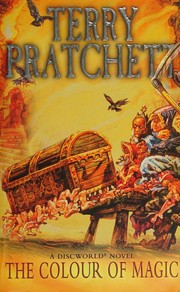
The very first Discworld novel, introducing the flat world, the city of Ankh-Morpork, and the hapless wizard Rincewind. It establishes the universe's rules and Pratchett's satirical tone from the ground up.

The first City Watch novel and widely considered the ideal true entry point — funnier, more emotionally resonant, and more thematically mature than the earliest books. Reading it second gives you the world-context to fully appreciate it.
The Major Sub-Series
BeginnerExplore the three most beloved Discworld sub-series — the Witches, Death, and the Watch — understanding how Pratchett uses recurring characters to build deep, evolving narratives.
▸ Study plan for this stage
Pace: 6–8 weeks total; read roughly 20–25 pages per day. Suggested pacing: Equal Rites (week 1–2), Wyrd Sisters (weeks 2–3), Mort (weeks 4–5), Men at Arms (weeks 6–7), with week 8 reserved for reflection, re-reading favourite passages, and completing exercises.
- Recurring character arcs: how Pratchett builds personality, growth, and contradiction across multiple books featuring the same cast (Granny Weatherwax, Death, Carrot, Angua)
- Sub-series as thematic lenses: the Witches explore power and feminism, Death explores mortality and humanity, the Watch explores justice and social change — each sub-series has its own philosophical 'beat'
- Pratchett's use of satire and parody: Equal Rites parodies fantasy gender tropes, Wyrd Sisters parodies Shakespeare (Macbeth/Hamlet), Mort parodies the Grim Reaper myth, Men at Arms parodies the police procedural
- The Discworld as a mirror for real-world society: class, race (species), gender, and institutional power are all examined through the safe distance of fantasy
- Character foils and contrasts: Granny Weatherwax vs. Nanny Ogg, Mort vs. Death, Carrot vs. Vimes — Pratchett uses paired characters to illuminate each other's traits
- 'Headology' and the power of belief: a recurring Pratchett idea that what people believe shapes reality, seen most explicitly in the Witches books but present throughout
- Narrative voice and comic timing: Pratchett's footnotes, asides, and free indirect discourse as storytelling tools that carry both jokes and serious philosophical weight
- Beginnings of the Watch's diversity theme: Men at Arms introduces Angua (werewolf) and Cuddy (dwarf) as a deliberate commentary on multiculturalism and institutional prejudice
- In Equal Rites and Wyrd Sisters, how does Granny Weatherwax's attitude toward power — especially power she could take but chooses not to — define her character, and how does it evolve between the two books?
- Wyrd Sisters is heavily indebted to Shakespeare. Which specific plays does Pratchett draw on, what plot elements does he borrow, and how does he subvert or satirise them?
- In Mort, Death becomes fascinated with humanity while Mort begins to embody Death's detachment. What does this role-reversal say about Pratchett's view of mortality and what makes life meaningful?
- Men at Arms introduces the concept of 'the right man' (Carrot as the true king) but deliberately refuses to resolve it neatly. Why might Pratchett avoid the traditional 'chosen one' payoff, and what does that say about his view of leadership and democracy?
- Across all four books, how does Pratchett use humour not just for comedy but as a vehicle for genuine emotional or philosophical impact? Choose one scene from each book as evidence.
- How do the three sub-series (Witches, Death, Watch) each use their genre conventions differently to critique real-world institutions — and what do those institutions have in common?
- Character journal: After finishing each book, write a one-page 'character profile' for the central figure (Granny Weatherwax, Death, Commander Vimes). Note their defining beliefs, contradictions, and one moment where they surprised you. Compare profiles at the end of the stage.
- Spot the parody: As you read Wyrd Sisters, keep a running list of every Shakespearean reference, line echo, or plot parallel you notice. After finishing, look up the source plays and write two or three sentences on what Pratchett changed and why the change is funnier or more pointed than the original.
- Thematic comparison essay (300–500 words): Choose one theme — e.g. 'the abuse of power', 'what it means to be human', or 'the role of institutions' — and trace how it appears differently in at least three of the four books. Use specific scenes as evidence.
- Footnote audit: Pick any 20 consecutive pages from each book and highlight every footnote or narrative aside. Categorise each one: is it primarily a joke, a piece of worldbuilding, a philosophical observation, or all three? Reflect on how the footnotes change the reading experience.
- Rewrite a scene: Choose one short scene (1–2 pages) from any of the four books and rewrite it without Pratchett's comic voice — make it straight, serious fantasy prose. Then reflect in a paragraph: what is lost, and what does that tell you about why the humour is essential rather than decorative?
- Sub-series comparison chart: Draw a simple three-column table (Witches / Death / Watch). For each sub-series, fill in: the real-world institution being satirised, the central philosophical question, the emotional tone, and the type of reader you'd recommend it to first. Use only evidence from the four books in this stage.
Next up: Mastering these four books gives you a firm grip on Pratchett's major character-driven sub-series and his satirical method, which equips you to tackle his more ambitious, thematically dense standalone and late-series works where the comedy deepens into outright social critique.
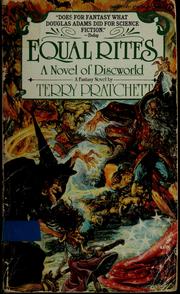
The first Witches novel, introducing the Ramtops and the indomitable Granny Weatherwax. It establishes the feminist and folkloric themes that run through the entire Witches arc.
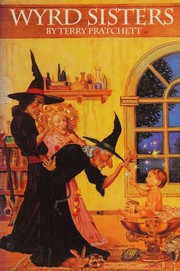
The Witches sub-series hits its stride here with a brilliant Shakespearean parody. Read after Equal Rites so the characters and setting feel fully familiar.

The first Death novel and one of the most beloved Discworld books overall. Pratchett's Death is one of literature's great characters, and this is his perfect introduction.
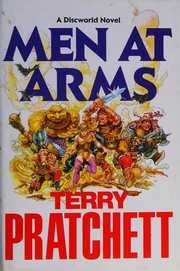
The second City Watch novel, building directly on Guards! Guards! and expanding the cast. It deepens Pratchett's social commentary on race, class, and justice — themes that define the Watch arc.
Going Deeper — The Richer Discworld
IntermediateTackle Pratchett's most ambitious and thematically complex Discworld novels, where the satire sharpens into genuine insight about economics, religion, journalism, and human nature.
▸ Study plan for this stage
Pace: 8–10 weeks total; roughly 2–3 weeks per book at ~25–35 pages per day. Suggested pacing: Small Gods (weeks 1–3), Hogfather (weeks 4–6), Night Watch (weeks 7–10, allowing extra time for its emotional and structural density). Read in order — each book builds thematic sophistication.
- The nature of belief and its power to create or destroy gods — explored through Om and Brutha in Small Gods: faith as a two-way transaction between worshipper and deity
- Institutional religion vs. personal spirituality: how the Omnian Church in Small Gods becomes a machine of power that has almost nothing to do with its own god
- The philosophy of humanity and narrative necessity in Hogfather: Pratchett's argument (via Death and Susan) that the 'little lies' — Santa Claus, the Tooth Fairy — train humans to believe in the 'big' abstractions like Justice and Mercy
- The Auditors of Reality as a recurring symbol of bureaucratic, anti-human thinking: order without meaning, efficiency without compassion
- Revolutionary politics, moral compromise, and the cost of idealism in Night Watch: Vimes's time-travel forces him to confront what his city was, what it became, and what it could have been
- The mentor–student relationship as a vehicle for ethical transmission: Vimes-as-Keel passing on hard-won wisdom to young Sam Vimes in Night Watch
- Pratchett's use of genre parody as a Trojan horse — detective fiction, epic fantasy, fairy tale — to smuggle in serious philosophical and political content across all three books
- The tension between cynicism and hope: all three protagonists (Brutha, Susan, Vimes) are clear-eyed about human failure yet choose decency anyway
- In Small Gods, Om loses almost all his power because people worship the Church rather than him directly — what does Pratchett suggest this says about the relationship between institutions and the ideals they claim to represent?
- Hogfather's central thesis is delivered by Death: 'Humans need fantasy to be human.' Do you agree with Pratchett's argument? How does the novel's plot — the attempted assassination of the Hogfather — dramatise what is lost when that fantasy is destroyed?
- In Night Watch, Vimes knows the revolution will fail and the idealists will die, yet he still helps them and tries to make their deaths meaningful. What does this say about Pratchett's view of political action and historical inevitability?
- How does Brutha in Small Gods and young Sam Vimes in Night Watch each function as a kind of 'innocent' through whose eyes the reader sees a corrupt system — and how does each author use that innocence differently?
- All three books feature a protagonist who is fundamentally out of place in their own time or world (Brutha among the powerful, Susan among the human, Vimes in the past). How does displacement serve as a tool for social criticism across the three novels?
- Pratchett is often described as a humanist. Drawing on specific moments from Small Gods, Hogfather, and Night Watch, construct an argument for what Pratchett believes human beings are capable of, both for good and for ill.
- Belief Audit (Small Gods): After finishing Small Gods, write a one-page 'belief audit' — choose any real-world institution (a church, a political party, a corporation) and apply Pratchett's framework: Has the institution become the thing people worship instead of the ideal it was founded on? Use specific textual evidence from the novel to support your analysis.
- Death's Speech Close Reading (Hogfather): Locate Death's famous speech to Susan about humanity needing fantasy ('You need to believe in things that aren't true'). Write a 500-word close reading: unpack every clause, identify the philosophical tradition Pratchett is drawing on (hint: consider Kant's 'necessary fictions'), and evaluate whether the novel's plot earns this conclusion.
- Parallel Timeline Comparison (Night Watch): Create a two-column chart mapping events and characters from the 'past' timeline in Night Watch against their equivalents in Vimes's 'present.' Then write a paragraph answering: what has improved, what has stayed the same, and what has gotten worse — and what does that pattern argue about the nature of social progress?
- Character Voice Journal: After each book, write a one-page journal entry in the first person from the perspective of the protagonist (Brutha, Susan, Vimes) at the moment of their greatest moral crisis. Focus on capturing their specific voice and the ethical dilemma they face — this forces you to deeply inhabit Pratchett's characterisation.
- Thematic Thread Essay: Write a 750–1,000 word comparative essay arguing for one thematic thread that connects all three books. Possible threads: the cost of institutional power, the ethics of lying, the relationship between memory and justice. You must cite at least two specific scenes from each of the three books.
- Satirical Target Map: For each book, create a simple diagram or list identifying (a) the real-world target of Pratchett's satire, (b) the Discworld stand-in he uses, and (c) the specific technique (exaggeration, inversion, analogy) he deploys. Compare your three maps — what patterns emerge in how Pratchett constructs satire?
Next up: Mastering how Pratchett uses Discworld as a philosophical and political lens in these three novels equips the reader to appreciate his later, even more structurally experimental works — where the satire expands beyond single targets to interrogate entire systems of modernity such as economics, media, and technology.

A standalone masterpiece and Pratchett's most direct meditation on religion, faith, and institutional power. No prior sub-series knowledge is needed, making it ideal at this stage.
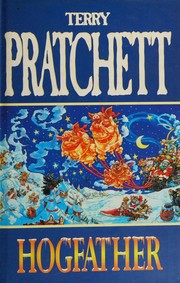
A Death-arc novel and a profound exploration of belief, myth, and why humans need stories — best appreciated after Mort has established your affection for Death as a character.
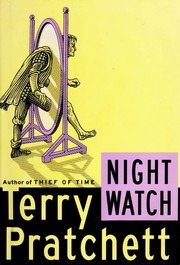
Widely regarded as Pratchett's greatest novel — a time-travel story, a war narrative, and a meditation on justice and revolution. It rewards readers who have followed the Watch from Guards! Guards! onward.
Beyond Discworld — The Non-Discworld Work
IntermediateDiscover that Pratchett's genius extended far beyond the Disc, including his landmark collaboration with Neil Gaiman and his celebrated young-adult fiction.
▸ Study plan for this stage
Pace: 6–8 weeks total: Week 1–3 — Good Omens (~30–35 pages/day, savoring the dual authorial voice); Week 4–5 — The Amazing Maurice and His Educated Rodents (~25 pages/day, ideal for close reading of its fairy-tale structure); Week 6–8 — Nation (~25–30 pages/day, with journaling pauses after emotionally he
- Collaborative authorship and voice blending: how Pratchett and Gaiman's distinct styles merge seamlessly in Good Omens to create a unified satirical tone
- Apocalyptic satire and theological comedy: Good Omens uses the End of Days as a lens to examine human free will, bureaucratic inefficiency in Heaven and Hell, and the absurdity of predestination
- Metafiction and fairy-tale deconstruction: The Amazing Maurice consciously dismantles the Pied Piper myth, forcing characters — and readers — to interrogate the stories they live inside
- Sapient animal consciousness and moral agency: Maurice and the educated rodents grapple with what it means to develop self-awareness, empathy, and ethical responsibility when you were not 'meant' to have them
- Grief, myth-making, and cultural identity: Nation explores how a young survivor reconstructs meaning, community, and belief after catastrophic loss, questioning inherited religion and tradition
- Young-adult fiction as serious philosophical literature: both Nation and The Amazing Maurice tackle death, identity, and moral complexity without condescension, treating young readers as capable of genuine philosophical engagement
- Pratchett's humanism as a throughline: across all three books, a consistent moral vision emerges — compassion, skepticism of authority, and the redemptive power of choosing to be good — independent of the Discworld setting
- The role of the 'outsider' protagonist: Aziraphale/Crowley, Maurice, and Mau/Daphne are all figures who exist between worlds or categories, and their liminality drives each narrative's central tension
- In Good Omens, how do Aziraphale and Crowley's respective relationships with their 'sides' (Heaven and Hell) satirize institutional religion and blind obedience to authority, and what does their friendship ultimately argue about the nature of good and evil?
- The Amazing Maurice is explicitly aware that it is a story — characters discuss narratives, plots, and 'the way stories go.' How does Pratchett use this metafictional layer to subvert reader expectations, and what moral point does it make about the stories societies tell themselves?
- In Nation, Mau rejects the gods of his ancestors after the tsunami destroys his people. How does Pratchett frame this rejection — is it portrayed as loss, liberation, or something more complicated? What does the novel ultimately say about the relationship between faith and evidence?
- All three books feature protagonists who must choose between following a predetermined 'script' (prophecy, instinct, tradition) and exercising independent moral judgment. Compare how this tension is resolved differently across Good Omens, The Amazing Maurice, and Nation.
- How does the collaboration with Neil Gaiman in Good Omens differ in texture and tone from Pratchett's solo voice in The Amazing Maurice and Nation? Where do you detect each author's fingerprints in Good Omens, and what does this reveal about Pratchett's own stylistic identity?
- Nation is often cited as Pratchett's most emotionally raw and personally revealing novel. Based on the text, what themes suggest a more autobiographical or philosophical urgency compared to the other two books in this stage?
- Voice dissection exercise (Good Omens): Select three passages of roughly one page each from different chapters. For each, argue in writing whether you think it was primarily drafted by Pratchett or Gaiman, citing specific word choices, comic rhythms, and thematic preoccupations. Then research interviews where the authors discuss their process and compare your instincts to their accounts.
- Story-within-a-story map (The Amazing Maurice): Draw a diagram showing every layer of storytelling in the novel — the Pied Piper myth, the rat-catcher conspiracy, the stories the rats tell themselves, and the frame of the novel itself. Annotate each layer with the question: 'Who benefits from this story being believed?'
- Philosophical dialogue rewrite (Good Omens): Choose any scene where Aziraphale and Crowley debate good, evil, or humanity. Rewrite it as a formal philosophical dialogue (in the style of Plato's Socratic dialogues), stripping away the comedy. Reflect: what is lost and what is clarified by removing the humor?
- Grief and reconstruction journal (Nation): After finishing Nation, write a 500-word personal reflection from Mau's point of view at the novel's end — not a summary, but an interior monologue capturing his emotional and philosophical state. Focus on what he has kept, what he has discarded, and what he has invented anew.
- Comparative humanism essay: Write a 600–800 word essay arguing that a single moral proposition — of your choosing — is present in all three books. Use at least two specific textual examples from each book. This forces you to read across the stage rather than treating each novel in isolation.
- Adaptation pitch: Choose one of the three books and write a one-page pitch for adapting it into a different medium (graphic novel, stage play, animated film). Identify which elements of Pratchett's prose style present the greatest adaptation challenges and how you would solve them.
Next up: By establishing that Pratchett's core humanist philosophy, satirical intelligence, and emotional depth operate powerfully outside the Discworld, the reader is now equipped to return to the Disc with fresh eyes — recognizing its themes not as fantasy world-building quirks but as expressions of a coherent, lifelong moral vision, which prepares them to engage with the later, more thematically ambitio
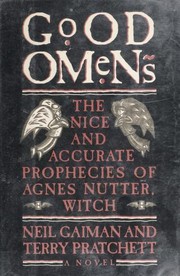
Co-written with Neil Gaiman, this apocalyptic comedy is one of the best-loved fantasy novels of the 20th century. By this stage you know Pratchett's voice well enough to hear exactly where he and Gaiman interweave.
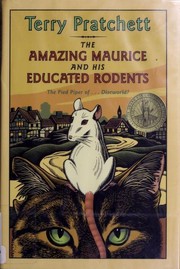
Pratchett's Carnegie Medal-winning standalone novel — a dark, witty retelling of the Pied Piper that shows his range as a storyteller outside the main Discworld continuity.

Pratchett's most emotionally powerful non-Discworld novel, dealing with grief, survival, and the collision of cultures. It reveals the full depth of his humanism and is a perfect capstone to the curriculum.
Discussion
Keep reading
Paths that share books, cover the same subject, or open a related topic.