Discworld Reading Order: Where to Start and What Comes Next
Discworld is a 41-novel series by Terry Pratchett best approached not by publication order, but by sub-series — each strand has its own cast, tone, and entry point. This curriculum starts with the two most accessible standalone entry points, then dives into each major sub-series in a logical reading order, and finally zooms out to appreciate the series as a whole through its meta-narrative and critical context.
The Best Entry Points
BeginnerGet a feel for Pratchett's voice, humour, and the Discworld setting without needing any prior knowledge — and understand why most fans recommend skipping Book 1 as a starting point.
▸ Study plan for this stage
Pace: 3–4 weeks total: spend ~2.5 weeks on Guards! Guards! (~25–30 pages/day), then ~1–1.5 weeks on The Colour of Magic (~30–35 pages/day). Read Guards! Guards! first to establish a strong, accessible foothold in Pratchett's style before encountering the rougher, more experimental early work.
- Pratchett's satirical voice: how he uses fantasy tropes as a mirror for real-world institutions, bureaucracy, and human nature — seen most clearly in the City Watch's hapless incompetence in Guards! Guards!
- The Discworld as a setting: a flat world on the back of four elephants standing on the Great A'Tuin, and how Pratchett uses this absurd cosmology seriously and consistently
- Character-driven humour vs. situation-driven humour: Guards! Guards! builds comedy through character (Carrot's naive literalism, Vimes's weary cynicism, the Patrician's cold logic), while The Colour of Magic leans more on satirical set-pieces and genre parody
- The role of footnotes: Pratchett's footnotes are not asides — they carry jokes, world-building, and philosophical observations that are integral to the reading experience
- Genre parody and intertextuality: The Colour of Magic directly parodies sword-and-sorcery fantasy (Conan, Fafhrd and the Gray Mouser), tourism, and insurance — understanding what is being parodied deepens the humour
- Why Guards! Guards! is the recommended entry point: it has a self-contained plot, immediately lovable characters, and requires zero prior Discworld knowledge, whereas The Colour of Magic assumes familiarity with the genre tropes it is subverting
- Ankh-Morpork as a character: the city's smell, corruption, guilds, and social hierarchy are established in Guards! Guards! as a living, breathing backdrop that recurs throughout the series
- Rincewind and Twoflower as a comedic duo: the dynamic between the world's worst wizard and the Disc's first tourist introduces the 'reluctant hero dragged into chaos' archetype Pratchett returns to repeatedly
- After reading Guards! Guards!, can you explain in your own words why Sam Vimes and the Night Watch are considered 'useless' at the story's start, and what changes by the end — and what does this say about Pratchett's view of institutions?
- The Patrician of Ankh-Morpork barely appears in Guards! Guards! yet feels menacing and fully realised. How does Pratchett achieve this, and what does it tell you about his approach to world-building through implication?
- The Colour of Magic was written years before Guards! Guards! yet is read second in this stage. After finishing both, can you articulate at least three specific ways the writing style, plot structure, or humour feels different or less refined in The Colour of Magic?
- Rincewind spends most of The Colour of Magic trying to escape every situation. How does this inversion of the classic fantasy hero serve Pratchett's satirical goals, and does it work as well as the character-driven heroism in Guards! Guards!?
- Both books use footnotes. Find one footnote in each book that you feel is essential to the joke or idea it accompanies — why would the joke fail if it were placed in the main text?
- Having now read both books, why do you think the fan consensus recommends Guards! Guards! over The Colour of Magic as a starting point? Use specific evidence from both texts to support your answer.
- The Voice Test: After finishing Guards! Guards!, write a single paragraph (150–200 words) describing a mundane real-world event (a traffic jam, a work meeting, a trip to the supermarket) in Pratchett's satirical voice, including at least one footnote. This forces you to internalise his rhythm before moving to The Colour of Magic.
- Character Contrast Map: Draw a simple two-column comparison chart of Carrot vs. Rincewind as protagonists — list their motivations, their relationship to danger, their effect on the people around them, and the type of humour they generate. This makes the structural difference between the two books tangible.
- The Footnote Audit: As you read The Colour of Magic, mark every footnote and categorise it as: (a) pure joke, (b) world-building, (c) philosophical aside, or (d) genre commentary. Tally the results and compare your findings to what you remember from Guards! Guards! — which book uses footnotes more purposefully?
- Spot the Parody: While reading The Colour of Magic, keep a running list of every fantasy trope, real-world concept, or identifiable genre (tourism, insurance, sword-and-sorcery adventure) that Pratchett is clearly sending up. After finishing, pick the one you found funniest and write two sentences explaining why the parody works.
- The Recommendation Letter: Once both books are done, write a short (one paragraph) 'recommendation letter' to a fictional friend who has never read fantasy, explaining which of the two books you would give them first and why — drawing only on evidence from the texts themselves.
- Reread the Opening Pages: Go back and reread just the first three pages of each book back-to-back. Write down one sentence about what each opening immediately signals about tone, protagonist, and the kind of story you are about to read. This sharpens your awareness of how Pratchett calibrates entry points.
Next up: Having established Pratchett's voice and understood why different entry points serve different readers, the next stage can confidently explore a specific Discworld sub-series or thematic thread — armed with the ability to recognise his satirical targets, appreciate his footnote style, and navigate Ankh-Morpork as a familiar home base.

Widely considered the single best entry point to Discworld — it launches the City Watch sub-series with a self-contained, funny, and emotionally resonant story that requires zero prior knowledge.
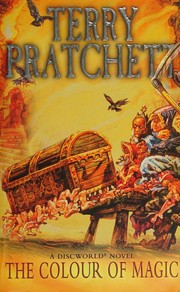
The actual first Discworld novel, read second here so you already love the world before encountering its rougher, more parody-driven early style — now you can appreciate it as an origin rather than a first impression.
The Witches Sub-Series
BeginnerFollow Granny Weatherwax, Nanny Ogg, and Magrat through their arc — understanding how Pratchett uses fairy-tale deconstruction and strong female characters to explore power, belief, and identity.
▸ Study plan for this stage
Pace: 9–11 weeks total: ~2–3 weeks per book at a relaxed beginner pace of 20–25 pages/day. Suggested breakdown — "Equal Rites": weeks 1–3; "Wyrd Sisters": weeks 4–6; "Witches Abroad": weeks 7–10; week 11 reserved for review, reflection, and completing exercises.
- Fairy-tale deconstruction: Pratchett systematically inverts, subverts, and interrogates classic fairy-tale and fantasy tropes — 'Equal Rites' challenges the 'chosen hero' trope by making the chosen one a girl, 'Wyrd Sisters' dismantles the Shakespearean tragic-king narrative, and 'Witches Abroad' ex
- The nature of witchcraft as headology: Pratchett's witches derive their power less from magic spells and more from psychology, force of personality, and an acute understanding of human nature — best embodied by Granny Weatherwax's philosophy throughout all three books.
- Power and its responsibilities: Each book interrogates who holds power, how they got it, and whether they use it wisely — from the Unseen University's gatekeeping of magic in 'Equal Rites', to the usurping Duke and Duchess in 'Wyrd Sisters', to Lilith's totalitarian story-control in 'Witches Abroad'
- Belief as a constructive force: Across all three books, what people believe — about witches, about royalty, about fairy tales — shapes reality on the Disc. Pratchett treats collective belief as genuinely powerful and politically significant.
- Strong female identity and the rejection of prescribed roles: Esk in 'Equal Rites', the coven dynamic in 'Wyrd Sisters', and Magrat's journey in 'Witches Abroad' all explore women defining themselves against what society, tradition, or narrative expects of them.
- The Maiden/Mother/Crone archetype: By 'Wyrd Sisters' and especially 'Witches Abroad', Pratchett consciously plays with this triadic archetype — assigning and then complicating the roles of Magrat, Nanny Ogg, and Granny Weatherwax to question what those labels really mean.
- Stories as power structures: 'Witches Abroad' makes this theme most explicit — Lilith weaponises narrative to control people, and the witches must fight story logic itself, establishing Pratchett's idea that the stories we tell are never politically neutral.
- Comedy as philosophical argument: Pratchett's humour is never mere decoration; jokes in these three books consistently carry the weight of the thematic argument — learning to read the comedy as critique is essential to understanding Discworld at any level.
- In 'Equal Rites', why does the Unseen University resist admitting Esk, and what does that institutional resistance reveal about how power structures perpetuate themselves through tradition rather than merit?
- How does Granny Weatherwax's concept of 'headology' differ from conventional fictional magic, and what is Pratchett arguing about the real-world sources of authority and influence through this distinction?
- In 'Wyrd Sisters', the witches debate whether they should intervene in the kingdom's political crisis. What principles guide Granny's eventual decision, and how does this tension between non-interference and responsibility recur across all three books?
- How does 'Witches Abroad' use the villain Lilith and her mirror magic to make an argument about the danger of stories that insist on a single, 'correct' ending — and how does this connect to real-world ideologies?
- Trace Magrat Garlick's arc across 'Wyrd Sisters' and 'Witches Abroad': in what ways does she begin as a stereotype of the 'New Age' witch, and how does Pratchett use her character to both affectionately mock and ultimately validate her worldview?
- All three books feature a clash between an 'outsider' perspective and an entrenched institution or power (the University, the Duke's court, Genua's fairy-tale regime). What common satirical point is Pratchett making across these three different settings?
- Fairy-tale autopsy: After finishing 'Witches Abroad', list every fairy tale or folk story Pratchett references across all three books. For each one, write one sentence describing the original trope and one sentence describing how Pratchett twists or subverts it. Aim for at least eight entries.
- Character voice journal: While reading, keep a running log of at least five memorable lines or exchanges for each of the three main witches (Granny, Nanny, Magrat). After finishing all three books, review your log and write a short paragraph (100–150 words) summarising each witch's distinct worldview purely through her own words.
- Power map: For each book, draw a simple diagram showing who holds power at the start, who challenges it, and who holds it (or refuses it) at the end. Then write two or three sentences comparing the three diagrams — what pattern do you notice about how Pratchett resolves power struggles?
- Rewrite a scene with the roles reversed: Choose one scene from 'Equal Rites' in which a male character dismisses or underestimates Esk or Granny. Rewrite it (one page maximum) with the gender dynamics flipped, then reflect briefly on what changes — and what Pratchett's original version is quietly arguing.
- The 'headology' test: Identify one moment in each of the three books where a witch solves a problem through psychology, reputation, or sheer force of will rather than literal magic. Write a brief explanation of the technique used and why it works within the story's logic.
- Reading-group discussion prompt: Draft three open-ended discussion questions of your own about any of the three books — questions that have no single right answer. This forces active synthesis of the themes and prepares you for engaging with Discworld's later, more complex instalments.
Next up: Mastering Pratchett's fairy-tale deconstruction, his witches' philosophy of power-through-belief, and his use of comedy as critique in these three foundational books equips the reader with the thematic vocabulary and tonal fluency needed to engage with the broader Discworld canon, where these same tools are applied to satire of death, war, journalism, and beyond.
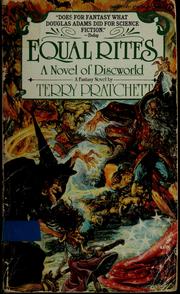
The first book to introduce the Witches strand and Granny Weatherwax; its themes of gender and magic set the philosophical tone for the whole sub-series.
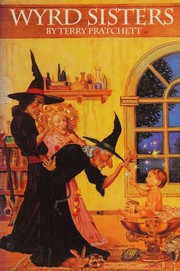
The true launch of the core Witches trio, riffing on Macbeth and Hamlet — read after Equal Rites to see the coven dynamic fully formed.
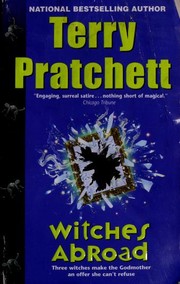
Deepens the sub-series by deconstructing fairy-tale narrative itself; best appreciated after Wyrd Sisters has established the characters.
The City Watch Sub-Series
IntermediateFollow Sam Vimes and the Ankh-Morpork City Watch through their full arc, understanding how Pratchett uses the police-procedural genre to explore justice, class, race, and power.
▸ Study plan for this stage
Pace: 8–10 weeks total: ~2.5–3 weeks per book at roughly 20–25 pages/day. Men at Arms (Week 1–3), Feet of Clay (Week 4–6), Night Watch (Week 7–10, slightly slower pace to absorb its deeper political weight). Allow one buffer day per week for reflection and note-taking.
- Genre subversion as social commentary: Pratchett uses the police-procedural framework not for escapism but to interrogate who law serves, who enforces it, and at whose expense — visible across all three books.
- Sam Vimes as a class-conscious hero: A man of the streets who rises in rank yet never loses his working-class identity; his internal tension between personal integrity and institutional power is the emotional spine of the sub-series.
- The 'Boots' theory of socioeconomic inequality: Introduced in Men at Arms, this economic parable about the hidden cost of poverty recurs as a lens for reading Vimes's worldview throughout the arc.
- Race, species, and otherness in Ankh-Morpork: Men at Arms uses trolls, dwarfs, and werewolves to allegorize real-world racism and tokenism; Feet of Clay extends this to golems as a meditation on labor, sentience, and the rights of the created.
- Institutional power vs. individual conscience: Feet of Clay dissects how authority is manufactured and legitimized — through heraldry, poison, and paperwork — and asks whether the system can ever be just.
- History, trauma, and revolutionary memory: Night Watch is a time-travel narrative that forces Vimes to relive the Glorious Revolution of the 25th of May, examining how political idealism curdles into myth and how ordinary people survive history.
- The nature of justice vs. the nature of law: All three books distinguish between what is legal and what is right, with Vimes repeatedly forced to choose — and Pratchett consistently rewarding moral courage over procedural compliance.
- Pratchett's satirical craft — footnotes, naming, and bathos: The use of comic deflation, ironic footnotes, and absurdist naming conventions (Carrot, Angua, Dorfl) as deliberate rhetorical tools that lower the reader's guard before delivering serious ethical blows.
- How does the introduction of the gonne (gun) in Men at Arms function as more than a plot device — what does it say about technology, power, and the arms race between individuals and institutions?
- In Feet of Clay, golems are beings who work without pay, without complaint, and without rights. How does Pratchett use them to comment on labor exploitation, and what does Dorfl's eventual 'freedom' suggest about the limits of liberation within a capitalist system?
- Night Watch is structured around a historical revolution that failed to live up to its ideals. How does Vimes's dual perspective — as both a young constable and a seasoned commander — allow Pratchett to critique both revolutionary romanticism and cynical pragmatism?
- Carrot is repeatedly described as the 'rightful king' of Ankh-Morpork yet consistently refuses power. What does his refusal reveal about Pratchett's view of legitimate authority, and how does it contrast with Vimes's own complicated relationship to rank?
- How do the three books collectively build a portrait of Ankh-Morpork as a city? Is it a place of progress, stagnation, or something more ambiguous — and what evidence from each book supports your reading?
- Pratchett is often described as a 'humanist' writer. Using specific moments from Men at Arms, Feet of Clay, and Night Watch, argue for or against the claim that his humanism has clear political limits or blind spots.
- The Boots Audit: After finishing Men at Arms, write a one-page personal reflection applying the 'Boots theory' to a real-world economic system or policy you are familiar with. Then revisit it after Night Watch to see if your thinking has evolved.
- Character Arc Timeline: Create a visual timeline of Sam Vimes across all three books — tracking his rank, his relationships, his moral crises, and his moments of doubt. Annotate each major turning point with a direct quote from the text.
- Allegory Mapping for Feet of Clay: Draw a two-column table listing each major non-human group or character (golems, dwarfs, werewolves, etc.) and the real-world social group or historical condition Pratchett appears to be allegorizing. Include textual evidence and note where the allegory breaks down or complicates itself.
- Genre Deconstruction Essay (500–700 words): Choose one scene from any of the three books where Pratchett sets up a classic police-procedural trope (the interrogation, the chase, the revelation of the killer) and then subverts it. Analyze how the subversion creates meaning beyond mere comedy.
- The 25th of May Close Read: Select the climactic sequence of the Glorious Revolution in Night Watch and annotate it in detail — marking every instance of irony, every moment where idealism meets reality, and every echo of real historical revolutionary rhetoric. Compare your annotations with a brief summary of a real historical revolution of your choice.
- Debate Prep — 'Vimes is the hero Ankh-Morpork deserves, not the one it wants': Prepare a structured argument both FOR and AGAINST this proposition, drawing evidence from all three books. Then write a short paragraph explaining which side you actually find more convincing and why.
Next up: By tracing Vimes and the Watch through crime, labor, and revolution, the reader has developed Pratchett's core toolkit for social satire — making them well-equipped to recognize the same techniques applied to new institutions, genres, and character types in the next stage of the Discworld curriculum.
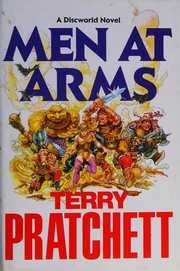
The direct sequel to Guards! Guards! — expands the Watch cast and introduces the series' sharpest satire on racism and institutional power; the natural next step after the first stage.
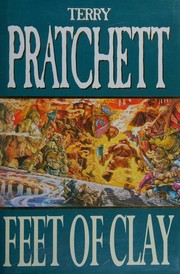
Continues the Watch arc with a murder mystery and a meditation on slavery and free will; Pratchett's plotting is at its most intricate here.
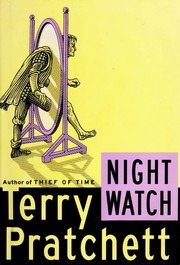
Widely regarded as one of the greatest Discworld novels — a time-travel story and a meditation on revolution, sacrifice, and what it means to be a good man; requires the prior Watch books to land emotionally.
Death & Rincewind Sub-Series
IntermediateExplore the two remaining major sub-series — Death's philosophical strand and Rincewind's comedic adventures — to complete your map of Discworld's tonal range from slapstick to profound.
▸ Study plan for this stage
Pace: 3–4 weeks, roughly 50–60 pages per day; read Mort in Week 1, Reaper Man in Week 2, and The Light Fantastic in Weeks 3–4 (it is slightly denser with world-building callbacks). Allow one buffer day between each book for reflection notes.
- Death as a character, not a concept: across Mort and Reaper Man, Pratchett transforms the Grim Reaper from a symbol into a fully realised personality — curious, compassionate, and existentially adrift — challenging readers to track how his characterisation deepens book to book.
- Mortality and meaning: Mort and Reaper Man both interrogate what life is worth when death is inevitable (or suddenly absent); readers should notice how Pratchett uses fantasy logic to pose genuinely philosophical questions about purpose, legacy, and the value of finite time.
- Entropy and the cost of immortality: Reaper Man's 'life-force' overflow — souls backing up, objects becoming animate, the city of Ankh-Morpork filling with poltergeist energy — is a sustained metaphor for what happens when natural endings are denied.
- Comedic world-building as satire: The Light Fantastic continues Rincewind's story from The Colour of Magic and uses slapstick, parody, and absurdist set-pieces to satirise heroic-fantasy tropes, academic institutions (Unseen University), and the nature of 'chosen one' narratives.
- The Octavo and the nature of dangerous knowledge: The Light Fantastic centres on a spell lodged inside Rincewind's head, making knowledge itself a source of peril — a recurring Pratchett theme about the responsibility that comes with what you know.
- Tonal contrast as a reading skill: placing the profound melancholy of Reaper Man alongside the farcical energy of The Light Fantastic trains the reader to appreciate Discworld's full tonal spectrum and understand that both registers serve serious thematic purposes.
- Apprenticeship and identity: Mort's apprenticeship to Death, and Rincewind's reluctant 'heroism', both explore characters who do not fit the roles assigned to them — a key Pratchett motif about self-determination versus destiny.
- Ankh-Morpork as a living setting: all three books use the city (or its cosmic neighbourhood) as a backdrop; readers should begin mapping how Pratchett builds a consistent, evolving world whose rules have real consequences.
- In Mort, how does taking on Death's duties change Mort himself, and what does his gradual transformation suggest about the relationship between a role and personal identity?
- Reaper Man presents a world where Death has been forcibly retired — what specific consequences does this cause in Ankh-Morpork, and what is Pratchett arguing about the necessity of endings?
- How does the spell trapped inside Rincewind's mind in The Light Fantastic function as both a plot device and a thematic statement about the burden of knowledge?
- Compare Death's characterisation in Mort versus Reaper Man: in what ways has he grown or changed, and what experiences in Mort seem to have influenced the Death we meet in Reaper Man?
- The Light Fantastic uses parody and slapstick to comment on heroic-fantasy conventions — identify at least two specific tropes it subverts and explain how the subversion serves Pratchett's satirical goals.
- Across all three books, Pratchett's protagonists (Mort, Death-as-Bill-Door, Rincewind) are reluctant or misfit figures. What does this pattern suggest about how Pratchett views heroism and agency?
- Tonal comparison journal: after finishing each book, write a one-page entry describing its dominant tone (comedic, melancholic, satirical, philosophical). After all three, write a short comparative essay arguing which book sits at which end of Pratchett's tonal spectrum and why.
- Character-arc timeline: create a visual timeline for Death across Mort and Reaper Man, noting specific scenes or lines where his personality, values, or understanding of humanity visibly shifts. Annotate each entry with a page reference and a one-sentence interpretation.
- Trope-hunting exercise for The Light Fantastic: as you read, keep a running list of classic fantasy tropes (the prophecy, the reluctant hero, the ancient evil, the magical MacGuffin). For each, note how Pratchett deploys it straight, subverts it, or plays it for comedy — then reflect on whether the subversion undermines or reinforces the trope's emotional power.
- Philosophical dialogue exercise: choose one scene from Mort or Reaper Man that raises a question about mortality or meaning, then write a short (300–400 word) Socratic dialogue between two characters debating the question — using Pratchett's own characters or inventing your own.
- World-building map: sketch a rough annotated map or diagram of Ankh-Morpork and the Disc as described across all three books, noting locations, institutions (Unseen University, Death's Domain), and any rules of the world's physics or magic that are established or reinforced.
- Reaper Man metaphor unpacking: the novel uses the image of shopping trolleys multiplying and a mall-like structure growing in Ankh-Morpork as a metaphor. Write a 200-word analysis identifying what Pratchett is satirising with this imagery and connect it to the book's central theme of entropy and consumerism.
Next up: By completing the Death and Rincewind sub-series, the reader has now experienced Discworld's full tonal range — from Rincewind's anarchic farce to Death's quiet profundity — which provides the critical vocabulary and thematic grounding needed to appreciate the more socially focused and character-driven sub-series that follow, such as the Watch or the Witches, where Pratchett fuses both registers i

The first and best entry point to the Death sub-series — a standalone story about Death's apprentice that perfectly balances comedy and genuine feeling about mortality.
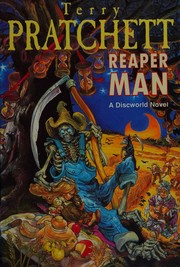
The emotional peak of the Death strand; read after Mort so you have a relationship with Death as a character before this story asks you to feel for him.
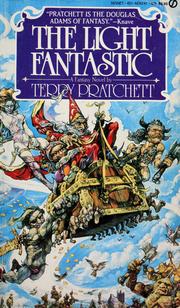
The direct sequel to The Colour of Magic and the conclusion of Rincewind's first adventure — now that you've read the early book, this closes that loop and shows how Pratchett's craft was already evolving.
The Big Picture: Publication vs. Thematic Order & the Series as Literature
ExpertStep back and understand the publication-versus-thematic debate consciously, appreciate how Discworld evolved as a unified body of work, and read one late-series masterpiece that synthesises everything Pratchett built.
▸ Study plan for this stage
Pace: 6–8 weeks total: Weeks 1–4 devoted to "Small Gods" (~80–100 pages per sitting, 3 sittings per week, with journaling time built in); Weeks 5–8 devoted to "The Discworld Companion" used as a reference-and-browse text (~20–30 pages of focused reading per day alongside active cross-referencing back to "
- Publication vs. thematic order: understanding why 'Small Gods' (published 13th) is often placed at the philosophical heart of the series despite being a standalone, and what that tension reveals about how Pratchett's intent evolved
- Discworld as a unified literary body: recognising recurring thematic DNA — belief, power, institutional corruption, the dignity of the ordinary person — that threads across all sub-series and is crystallised in 'Small Gods'
- The role of belief in constructing reality: 'Small Gods' argues that gods are made powerful by the faith of their followers, not the reverse — a central Pratchett thesis about how human systems (religion, monarchy, law) derive authority from collective belief
- Satire as serious literature: how Pratchett uses the comic fantasy mode in 'Small Gods' not merely for laughs but to mount a sustained, philosophically rigorous critique of organised religion, fanaticism, and the abuse of institutional power
- The 'small' protagonist as moral lens: Om and Brutha as a paired study in humility, genuine faith versus performative faith, and the idea that moral clarity often lives in the margins rather than the centre of power
- The Discworld Companion as meta-text: how a companion volume functions as both encyclopaedia and authorial commentary, revealing the constructed, internally consistent world-building logic beneath the comedy
- World-building coherence vs. organic growth: using 'The Discworld Companion' to trace how Pratchett retconned, expanded, and deepened the Disc's geography, history, and cosmology across publications — and what that reveals about serial literary creation
- Pratchett's humanism: identifying the consistent ethical core — compassion, scepticism of authority, defence of the vulnerable — that makes Discworld a coherent moral universe regardless of reading order
- How does 'Small Gods' function as a standalone entry point to Discworld's philosophical concerns, and what does its placement in publication order (13th) versus its thematic centrality tell us about the difference between when a book was written and what it means within the whole?
- In 'Small Gods', Pratchett argues that the Church of Om has become more powerful than Om himself — what does this inversion say about the relationship between institutions and the ideals they claim to represent, and where do you see this pattern in other Discworld works you have read?
- How does Brutha's character embody Pratchett's humanist ethics, and in what ways does his arc challenge the reader to distinguish between genuine moral conviction and the performance of religious or ideological loyalty?
- After working through 'The Discworld Companion', how would you describe the internal consistency of the Disc as a constructed world — where does Pratchett prioritise comic or satirical effect over strict continuity, and what does that choice reveal about his priorities as an author?
- Using both books, make the case either for or against reading Discworld in publication order: what is gained, what is lost, and which approach better serves a reader whose primary interest is Discworld as serious literature?
- How does 'The Discworld Companion' change or deepen your reading of 'Small Gods' — does the encyclopaedic, behind-the-scenes perspective enhance or deflate the novel's satirical and emotional power?
- Close-reading annotation: Re-read the opening 30 pages of 'Small Gods' and annotate every moment where Pratchett signals the gap between institutional religion and genuine faith — then write a one-page thesis statement arguing what the novel's central philosophical claim is, using only textual evidence
- Thematic mapping: Create a visual diagram (hand-drawn or digital) placing 'Small Gods' at the centre and drawing spokes outward to every other Discworld book you have read, labelling each spoke with the specific thematic or character thread that connects it to 'Small Gods' — use 'The Discworld Companion' to verify and enrich your connections
- Publication-vs-thematic order essay: Write a 600–800 word structured argument for the reading order you would recommend to a new Discworld reader, explicitly engaging with the evidence provided by both books in this stage
- Companion cross-reference drill: Choose any 10 proper nouns (characters, places, institutions) from 'Small Gods' and look each one up in 'The Discworld Companion' — note where the Companion adds context that changes your interpretation of a scene, and where it reveals a deliberate authorial choice you had not noticed
- Character ethics comparison: Write a 400-word character study comparing Om and Brutha as two models of what it means to 'believe' in something — draw on specific scenes from 'Small Gods' and consider how their dynamic maps onto Pratchett's broader humanist project as described in 'The Discworld Companion's' introductory material
- Satirical target inventory: Go through 'Small Gods' and list every real-world institution, ideology, or historical phenomenon that Pratchett is clearly satirising (e.g. the Inquisition, Alexandrian scholarship, imperial conquest) — then write a brief note on whether the satire has sharpened, softened, or remained equally relevant since the novel's 1992 publication
Next up: Mastering the publication-vs-thematic debate and Discworld's unified ethical core through these two books equips the reader to approach any remaining sub-series or deep-cut novels with the critical vocabulary and world-building confidence needed to read them as conscious, informed literary choices rather than arbitrary sequence.

A standalone novel — no sub-series required — and Pratchett's most direct philosophical statement about religion, power, and belief; often cited as the proof that Discworld is serious literature.
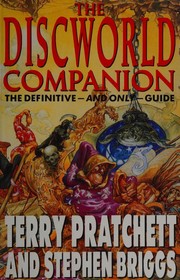
Co-written with Stephen Briggs, this is the canonical A-to-Z reference guide to the entire world — the ideal capstone for mapping every sub-series, character, and location you've encountered and resolving the publication-vs-thematic order debate with full context.
Discussion
Keep reading
Paths that share books, cover the same subject, or open a related topic.