There is no agreed definition of terrorism. That is not a preliminary annoyance to be cleared up on page one before the real subject starts — it is the substance of the argument. A definition decides who counts as a terrorist and who counts as a state exercising legitimate force, which makes choosing one a political act, and every author below has chosen. The reason to read this subject in an order is so you can see each choice being made.
The second thing that trips people up is that the literature dates fast. A great deal of what was published between 2002 and 2010 is really about one decade's threat, written while it was live. The sequence here starts with definition and history, sets three incompatible causal explanations against each other, tests them on one case, then moves to the far less-read literature on how campaigns actually end, and finishes with sustained criticism of what states did in the name of counterterrorism.
Definition, and why there isn't one
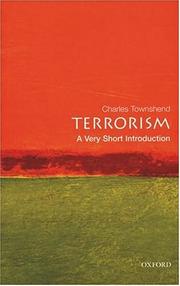
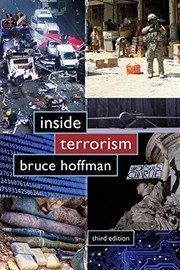
Terrorism is Charles Townshend's Oxford Very Short Introduction, catalogued here under the bare title and running 161 pages. It is the shortest honest orientation available and unusually direct about the definitional problem rather than declaring it solved. Inside Terrorism (Bruce Hoffman, 492 pages) is the field's standard survey and the closest thing to a shared reference point; its definitional chapter is the one most syllabuses assign. Note the standpoint: Hoffman writes from inside the policy-facing mainstream, which critical scholars treat as a position rather than a neutral vantage. A History of Terrorism (Walter Laqueur, 297 pages) supplies the long view — anarchists, Fenians, Russian revolutionaries, anti-colonial campaigns — and is the antidote to treating any current threat as unprecedented. Laqueur is a firm realist, sceptical of structural-cause arguments; know that before you start.
Three explanations that cannot all be right
This is the stage that makes the field a field. Dying to win (Robert Pape, 347 pages) argues from a coded database of suicide attacks that the campaigns are a strategic response to foreign occupation — the most quantitatively serious claim anyone has made here, and heavily contested on its coding decisions. Terror in the Mind of God (Mark Juergensmeyer, 331 pages) is built from interviews across Christian, Jewish, Islamic, Sikh and Buddhist militant movements and argues that religious violence follows a logic of cosmic war that strategic models miss. Understanding Terror Networks (Marc Sageman, 234 pages) codes the biographies of roughly 170 jihadists and finds kinship and friendship doing the recruiting rather than poverty or ideology; his follow-up, Leaderless Jihad, extends it and started a public quarrel with Hoffman.
Each rests on a different kind of evidence — a database, interviews, biographies — so their disagreement is partly a disagreement about what counts as evidence. This path does not adjudicate between them, and you should be suspicious of any list that does.
One case, in enough depth to test them
Ghost Wars 12-copy floor is how our catalogue displays Steve Coll's 736-page account of the CIA, Saudi Arabia and Pakistan in Afghanistan from 1979 to 2001; the junk title is a marketplace artefact, and the book is his 2004 Pulitzer winner. The Looming Tower (Lawrence Wright, 550 pages) is the narrative history from Qutb to 2001 and the best test of Sageman's network claim, though it is journalism and more interested in individuals than in structures. The rise and fall of Al-Qaeda (Fawaz Gerges, 259 pages) is the deliberate corrective: a Middle East scholar arguing the organisation was strategically defeated and Western threat assessments wildly overstated it. It was published in 2011, before Islamic State, which is the obvious objection to it.
Endings, and the state's own conduct
How Terrorism Ends (Audrey Kurth Cronin, 336 pages) is the most useful book on the list, converting an emotive subject into a comparative question about decapitation, negotiation, repression, splintering and burnout. Talking to Terrorists is Jonathan Powell's practitioner argument that governments always end up negotiating — advocacy by a participant in the events he describes, not a study. Talking to the enemy (Scott Atran, 558 pages) is the methodological outlier: fieldwork with militants and their families, arguing that devoted actors motivated by sacred values do not respond to the cost-benefit levers policy assumes.
Two openly adversarial books close it. The dark side (Jane Mayer, 412 pages) reconstructs how the legal machinery of detention, rendition and interrogation was built, naming the lawyers who built it. Overblown (John Mueller, 266 pages) argues the threat was systematically exaggerated and the response cost more than the attacks it prevented. Both are cases for the prosecution and say so.
One notable absence: Daniel Benjamin and Steven Simon's The Age of Sacred Terror does not resolve in our catalogue, so it is named here rather than listed. The staged sequence, with study plans and the standpoint labels attached to each book, is at /paths/pt_ai_terrorism-and-counterterrorism.