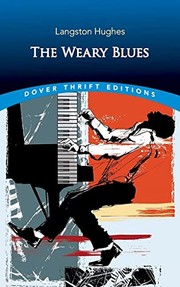
Start with The weary blues, his first book, published in 1926. It is 109 pages, and the temptation is to finish it in an evening and move on. Do not. Ten to fifteen poems a sitting is plenty, and every one should be read aloud at least twice — once for the sense, once for the beat. If you are not moving slightly while you read, the poem is not working yet, and the fault is in the delivery.
The obvious alternative is to start with a Collected or Selected Poems, which is how most people meet Hughes. It is the wrong entry, because his early books are organised as books — the blues stanza, the speaker, the twelve-bar shape are being worked out in sequence — and an anthology dissolves that into a greatest-hits shuffle. Read the first two collections whole and the rest of his career becomes legible.
The blues poems
The weary blues and Fine clothes to the Jew are the pair. The second title needs explaining before you open the book rather than after: it is a period idiom about pawning your clothes, and readers regularly mistake it for something else. It was also attacked in the Black press at the time for taking its subjects from the poorest part of Black life, an argument about respectability and representation that Hughes spent decades answering.
The fiction
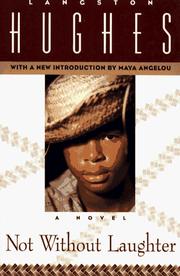
Not without laughter is a 309-page novel about a boy growing up in small-town Kansas and moves easily. The ways of white folks is the important one: 248 pages of short stories, each built to land as a single blow, and they blur if you read them straight through. Two or three a sitting. Laughing to keep from crying is the optional third and can be skipped if time is short.
Simple
Simple speaks his mind and The best of Simple collect the newspaper columns Hughes wrote for the Chicago Defender, in which a Harlem barfly named Jesse B. Semple argues with a college-educated narrator. They were written to be read one at a time with a week in between, and reading twenty in a sitting flattens the joke. Four or five an evening is right.
The life
The big sea and I wonder as I wander are the two longest books here and the fastest reading, because they are memoirs. Read them in order — the second opens where the first closes and assumes it. Between them they cover Harlem in the twenties, a working passage to West Africa, Paris, Haiti, the Soviet Union and Spain during the civil war.
They also mark the point where the biography gets contested. Hughes's politics were far to the left through the thirties, he was called before Joseph McCarthy's subcommittee in 1953, and what he said there is still argued over; biographers also disagree about his sexuality, on evidence that is thin in both directions. The memoirs are notably reticent about his private life, and readers should know that is a choice the books are making.
The mature poetry
Three short books, and slower per page than anything else. Shakespeare in Harlem is 124 pages of blues and ballad forms. Montage of a dream deferred is 75 pages that must be read whole, in order, in one or two sittings, the way you would listen to a record — it is a single bebop-structured sequence, and the famous poem about a dream deferred is one movement of it rather than a standalone. The panther and the lash, published after his death in 1967, is the angriest thing he wrote and the clearest answer to anyone who filed him as gentle.
Where to stop
Nowhere in particular — the path is complete as a picture of the writer. If you want only four books, take The weary blues, The ways of white folks, The big sea and Montage of a dream deferred.
Follow the full ordered path here: Langston Hughes Reading Order: Where to Start.