Start with Chess Story. It is around eighty pages, it was the last thing he finished, and it is the concentrate of everything he does: a frame narrative on an ocean liner, a stranger who turns out to have a history, and a single confession that reorganises the whole story. It also appears in English as The Royal Game, so do not buy both.
The obvious alternatives are Beware of Pity, the only full-length novel he completed, and The World of Yesterday, the memoir everybody quotes about pre-1914 Europe. Both are further down this list and both are better once you know the shape of a Zweig story, because the memoir is in part an explanation of where that shape came from.
The novellas
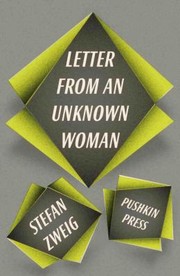
This is his real form. Letter From an Unknown Woman and Other Stories, Burning Secret and Journey into the Past run to the same design: an ordinary life, one hour that turns it, and a narrator who cannot stop telling you about it. A twelve-year-old boy half-understanding an affair. A woman writing to a man who never once recognised her. A return that comes years too late.
Read two of them, not four. The method is deliberate and it repeats, and read in bulk the machinery starts to show. That repetition is also the heart of the case against Zweig: his reputation is genuinely contested, with admirers calling the novellas psychologically exact and detractors calling them slick and sentimental. It is a real argument among serious readers and you will form your own view by the third one.
The two novels
Beware of Pity is the one he finished, published in 1939 — a young cavalry officer, a paralysed girl, and kindness that becomes a trap. It is his most sustained piece of work and the best demonstration that he could hold a structure for four hundred pages.
The post-office girl is the more surprising book. He left it unfinished among his papers and it was published decades after his death. A postal clerk in a poor Austrian village is briefly shown wealth and then sent back. It is angrier and more political than anything else here, and readers who find the novellas too smooth often like this one most.
The memoir
The World of Yesterday is Zweig's account of the Europe that formed him and then destroyed itself: Vienna before 1914, the war, the interwar years, exile. He sent the manuscript to his publisher the day before he and his wife died by suicide in Petrópolis, Brazil, in February 1942. Read it after some of the fiction. It is the book that makes the rest legible, and it is not a neutral history — it is an elegy by someone who had lost the argument.
The biographies
Zweig wrote popular lives, and they are still readable. Marie Antoinette and Mary Stuart are the narrative ones, built on the same instinct for a life turning on a private decision. Erasmus of Rotterdam and Montaigne are the personal ones — readers often note that both are portraits of a moderate man trapped between fanaticisms, written by a moderate man trapped between fanaticisms. Take these as optional. Nobody needs all four.
Editions, and a warning about duplicates
Zweig is a minefield of overlapping collections. The same novellas appear under different titles, in different groupings, in different translations, and Chess Story and The Royal Game are the same text. Check the contents page before buying a second collection, or you will own Burning Secret three times.
Where to stop
Four books make a full Zweig: Chess Story, one of the novella collections, The Post-Office Girl and The World of Yesterday. Add Beware of Pity if you want the long form and the biographies only if the historical mode appeals. Browse more author reading orders if you want a companion for the same vanished Europe.
Follow the full ordered path here: Stefan Zweig Reading Order: Where to Start.