The Best Books on Sports Card Collecting, in Order
This curriculum takes a beginner sports card collector from zero knowledge to expert-level mastery across four progressive stages. It starts with the hobby's culture and language, moves into grading and valuation mechanics, then dives into vintage sets and market strategy, and finally addresses long-term collection building and investment thinking — each stage equipping the reader with the vocabulary and intuition needed for the next.
Foundations: The Hobby & Its Language
BeginnerUnderstand what sports card collecting is, how the modern hobby works, key terminology (rookies, parallels, autos, grading tiers), and how to avoid beginner mistakes.
▸ Study plan for this stage
Pace: 2–3 weeks, ~20–30 pages/day (accounting for reference lookups and price comparisons)
- What sports card collecting is and why people collect (investment, nostalgia, sport fandom)
- How the modern card market works: primary market (new releases), secondary market (resale), and pricing dynamics
- Key card types and terminology: rookies, parallels, autographs (autos), game-used cards, and their relative value
- Grading systems and tiers (PSA, Beckett, SGC scales) and why condition matters for pricing
- How to read and interpret the Beckett Price Guide: set codes, card numbers, player names, and price columns
- Common beginner mistakes: overpaying for hype, ignoring condition, chasing every parallel, not researching before buying
- Authentication and counterfeits: how to spot fakes and why grading services protect collectors
- What is the difference between the primary market and secondary market in sports card collecting, and how do prices differ between them?
- How do grading tiers (e.g., PSA 8 vs. PSA 9) affect card value, and why is condition so important?
- What are parallels and autographed cards, and how do they differ in rarity and pricing compared to base cards?
- How do you use the Beckett Price Guide to look up a specific card's estimated value, and what do the different price columns represent?
- What are three common beginner mistakes in sports card collecting, and how can you avoid them?
- Why do rookie cards typically command higher prices, and what should you know before investing in them?
- Look up 5 cards from your favorite sport/team in the Beckett Price Guide and record their set, card number, player, and price range; compare prices across different grading tiers for the same card
- Visit an online marketplace (eBay, PWCC, or a hobby shop) and find 3 listings for the same rookie card in different conditions; note the price differences and explain why condition affects value
- Create a glossary of 15–20 key terms from the guide (rookie, parallel, auto, PSA, BGS, etc.) with definitions and real examples from actual cards you find online
- Analyze 3 cards you own or want to buy: identify the set, card type (base/parallel/auto), estimated grade, and estimated value using the Beckett guide
- Research and write a 1-page summary of one common beginner mistake (e.g., overpaying for hype, buying ungraded cards) and how the Beckett guide helps prevent it
- Compare pricing for the same card across 2–3 different grading services or market sources; document why prices vary and what this teaches you about market dynamics
Next up: This stage equips you with the language and market knowledge to confidently evaluate cards and understand pricing, preparing you to move into the next stage where you'll learn how to build a focused collection strategy and develop buying criteria aligned with your collecting goals.

The industry-standard reference for card identification and pricing; reading through it early teaches set nomenclature, manufacturer history, and how the hobby organizes and values cards — foundational knowledge every collector needs.
Grading & Condition: The Science of Card Value
BeginnerLearn how professional grading companies (PSA, BGS, SGC) evaluate cards, what centering, corners, edges, and surface mean in practice, and how grade differences dramatically affect value.
▸ Study plan for this stage
Pace: 2–3 weeks, ~20–25 pages/day, focusing on grading sections and condition guides
- The four pillars of card grading: centering, corners, edges, and surface condition—how each is assessed independently
- Beckett's numerical grading scale (1–10) and what each grade level represents in practical terms
- How centering is measured and why off-center cards lose significant value
- Corner wear patterns and how to distinguish minor wear from heavy damage
- Edge condition assessment: printing defects vs. wear-induced damage
- Surface quality including gloss, scratches, spots, and print lines as value determinants
- The relationship between grade and market price: how one grade difference can mean 50–200% value swings
- Practical grading terminology and abbreviations used by professional graders and collectors
- What are the four main condition factors Beckett evaluates, and how does each independently affect a card's grade?
- Explain the Beckett 1–10 grading scale and describe what a PSA 7, PSA 8, and PSA 9 card looks like in real terms
- How does centering impact card value, and what percentage of off-center cards are typically rejected or downgraded?
- What is the difference between factory corner wear and wear from handling, and why does this distinction matter for grading?
- How do surface defects (scratches, spots, print lines) affect a card's final grade compared to corner or edge issues?
- Using the price guide data in Beckett, show how a single grade difference (e.g., 8 vs. 9) changes the market value of a specific football card
- Examine 5–10 football cards from your own collection under bright light and a magnifying glass; assess each card's centering, corners, edges, and surface independently using Beckett's criteria
- Compare 3–4 cards of the same player/year but different grades (if available); document visible differences and correlate them to the price guide values
- Create a personal grading worksheet for 10 cards, estimating what grade each would receive and then checking your estimates against actual PSA/Beckett grades online
- Study high-resolution photos of graded cards (PSA/BGS websites) at grades 6, 7, 8, 9, and 10 for the same card; write detailed observations about what changes between each level
- Practice measuring centering on 5 cards using the Beckett method (top/bottom margin ratio, left/right margin ratio); record your measurements
- Research 3 specific football cards in the Beckett price guide and calculate the percentage value increase from a grade 7 to a grade 9
Next up: This stage establishes the technical foundation for understanding card value, preparing you to evaluate authentication concerns, identify counterfeits, and make informed buying decisions in the next stage.
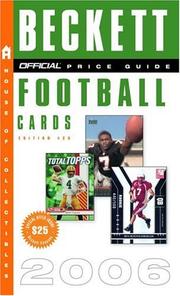
Beckett's sport-specific guides include detailed condition and grading glossaries; reading this after the general guide reinforces grading concepts in a focused context and introduces condition-sensitive pricing.
Vintage Sets & Historical Context
IntermediateDevelop deep knowledge of the landmark vintage card sets (T206, 1952 Topps, 1986 Fleer, etc.), understand why certain eras and manufacturers matter, and learn to authenticate and contextualize older cards.
▸ Study plan for this stage
Pace: 4–5 weeks, ~40–50 pages/day (mix of reading and reference consultation)
- Landmark vintage sets and their historical significance: T206, T207, T208, 1952 Topps, 1957 Topps, 1968 Topps, 1986 Fleer, and why each represents a turning point in card manufacturing or collecting culture
- Manufacturer differences and production methods: American Tobacco Company, Topps, Fleer, Donruss, and how their printing techniques, card stock, and distribution affected scarcity and condition
- Grading and condition assessment for vintage cards: understanding wear patterns, centering, corners, edges, and surface quality specific to older card stock and printing eras
- Authentication techniques: identifying reprints, counterfeits, and altered cards; recognizing genuine vintage characteristics like printing dots, ink bleeding, and cardstock composition
- Market valuation and pricing factors: rarity, condition, player demand, set completion status, and how the Beckett Price Guide establishes and tracks value across eras
- Contextualizing cards within their era: understanding the cultural and economic conditions that shaped production runs, distribution, and survival rates for different decades
- Provenance and documentation: the role of PSA/BGS grading, population reports, and auction history in establishing authenticity and value for high-end vintage pieces
- What are the defining characteristics of the T206 set, and why is it considered the foundation of modern card collecting?
- How did Topps' manufacturing process and distribution strategy in 1952 differ from earlier tobacco card companies, and what impact did this have on card survival and rarity?
- Describe the key differences in card stock, printing quality, and centering between 1950s Topps cards and 1986 Fleer cards, and what these differences tell you about condition grading.
- What are the most common authentication red flags for counterfeit or reprinted vintage cards, and how would you verify the legitimacy of a high-value T206 or 1952 Topps card?
- How does the Beckett Price Guide determine value for vintage cards, and what factors (beyond player name and set) most significantly affect pricing across different eras?
- Compare the collecting landscape and card availability for pre-1940 tobacco cards versus post-1950 Topps cards—what historical and production factors explain these differences?
- Create a comparative timeline chart mapping five landmark sets (T206, 1952 Topps, 1957 Topps, 1968 Topps, 1986 Fleer) with production dates, manufacturers, print run estimates, and key innovations for each.
- Using the Standard Catalog, select three cards from different eras (one pre-1940, one 1950s, one 1980s) and write a 1–2 page analysis of each card's historical context, rarity factors, and current market value according to the Beckett guide.
- Examine 5–10 high-resolution images of vintage cards from different decades and practice identifying condition issues (centering, corners, edges, surface wear) using the grading framework from both books; assign estimated PSA grades.
- Research and document a specific counterfeit or reprinted set mentioned in the Standard Catalog; compile visual comparisons (printing dots, cardstock texture, ink characteristics) that distinguish genuine from fake examples.
- Build a mock vintage collection budget: select 10 cards spanning different eras and price points using the Beckett Price Guide, then justify your selections based on rarity, condition, and historical significance.
- Interview or survey 2–3 experienced vintage card collectors about their authentication methods, grading philosophy, and how they use the Beckett guide in purchasing decisions; synthesize findings into a brief report.
Next up: This stage equips you with the historical knowledge, authentication skills, and valuation literacy needed to move into specialized collecting strategies—whether that's building a complete vintage set, investing in high-grade key cards, or exploring niche markets like regional or error cards.

The most comprehensive reference catalog for pre-1980 cards, covering every major set with photos, print-run context, and values — an essential desk reference once the reader has historical grounding.

One of the earliest and most respected annual price guides, valuable here not just for prices but for its set-by-set historical annotations that help collectors understand why certain vintage issues command premiums.
Strategy & Building a Collection That Lasts
ExpertThink like a sophisticated collector and investor — understand market cycles, portfolio strategy, which cards hold value over decades, how to store and insure a collection, and how to buy and sell strategically.
▸ Study plan for this stage
Pace: 8–10 weeks, ~40–50 pages/day, with 1–2 weeks between books for reflection and exercises
- Market cycles and bubble dynamics in sports card collecting — how speculation drives prices and how to recognize inflated markets
- Portfolio strategy for collectors: diversification across eras, players, conditions, and card types to minimize risk and maximize long-term value
- Grading, authentication, and condition assessment as the foundation of card valuation and investment decisions
- Storage, preservation, and insurance best practices to protect collection integrity and maintain resale value over decades
- The psychology of collecting versus investing — understanding your own motivations and avoiding emotional decision-making in buying and selling
- Strategic buying and selling: timing the market, identifying undervalued cards, and knowing when to liquidate positions
- The role of scarcity, historical significance, and player legacy in determining which cards hold value across market cycles
- What are the key warning signs of a speculative bubble in the sports card market, and how can you protect your collection when one is forming?
- How should you structure a diversified card portfolio to weather market downturns and ensure long-term value retention?
- What is the relationship between card condition, grading standards, and resale value, and how do you assess condition accurately?
- What storage, preservation, and insurance measures are essential to protect a collection's value over 10, 20, or 30+ years?
- How do you distinguish between collecting for passion and investing for profit, and how should that distinction shape your buying strategy?
- What criteria should guide your decision to buy a card (or sell one), and how do you time these decisions relative to market cycles?
- Read 'The Card' and create a timeline of the 1952 Topps Mickey Mantle's price history — identify the bubble periods and note what external factors drove each spike
- After 'Mint Condition,' audit your own collection (or a hypothetical one) and categorize cards by era, player, condition, and rarity; assess portfolio concentration risk
- Grade 5–10 cards from your collection using PSA/BGS standards; compare your grades to actual certified grades and identify where your assessment differs
- Research and document the storage setup for a high-value card (e.g., acid-free holders, climate control, insurance); calculate the annual cost of proper preservation
- Write a one-page investment thesis for a single card: Why will it hold or gain value over the next 10 years? What are the risks? When would you sell?
- Simulate a market downturn: choose a card you own (or would own) and research its price history during past recessions; decide whether you'd hold or sell
Next up: This stage equips you with the strategic mindset and practical tools to manage a collection as both a passion project and a financial asset, preparing you to navigate real-world buying, selling, and long-term stewardship decisions in the next stage.
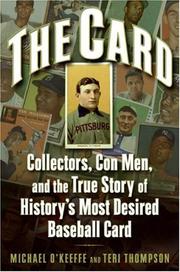
A gripping investigative narrative centered on the T206 Honus Wagner card — the hobby's most famous piece — that teaches advanced lessons about authentication, fraud, market manipulation, and what makes a card truly irreplaceable.

A richly researched history of the entire sports card industry from tobacco inserts to the modern boom; at this stage it synthesizes everything learned so far into a big-picture understanding of market forces and cultural value.
Discussion
Keep reading
Paths that share books, cover the same subject, or open a related topic.