Slough House Reading Order: Where to Start
Mick Herron's Slough House books are read in publication order and nothing else works — the running joke of the series is that characters die, and later books casually assume you know who is gone. Start with Slow Horses, which is the least polished of the run but establishes the premise, then read straight through; the writing gets sharper and the political satire gets angrier as the series goes on. The novellas are genuinely optional: they fill in between books, and belong at the end rather than interleaved on a first read.
Start Here
BeginnerMeet Jackson Lamb and the disgraced spies dumped in Slough House, and decide whether the comedy-in-a-thriller balance is for you.
▸ Study plan for this stage
Pace: About a week for 333 pages. These are short, fast books - Herron writes in short scenes with a lot of dialogue and most readers take a Slough House novel in three or four sittings. Slow Horses is the least polished of the run and the slowest starter; the first sixty pages set up an office and a prem
- Slough House is administrative purgatory: MI5 officers who have failed publicly are exiled there to do meaningless paperwork until they resign
- The joke is bureaucratic - nobody can be sacked, so the service bores them out instead, and the whole series runs on that mechanism
- Jackson Lamb is a genuinely repellent man who is also the best operator in the building, and the series never resolves that into likeability
- River Cartwright is the nominal protagonist and the least interesting person in the room, which is deliberate
- Regent's Park - the real service - is the actual antagonist far more often than any foreign power
- Publication order is the only order: characters die, and later books casually assume you know who is gone
- The satire is aimed at British institutions rather than at espionage, which is what separates Herron from the tradition he is working in
- What is Slough House for, institutionally, and why can nobody simply be dismissed?
- What does Lamb's offensiveness protect, and does the book let you like him?
- How does the plot use the slow horses' incompetence, and how much of it is actually incompetence?
- Who is the real opposition in this book - the plotters or the service?
- Is the comedy landing for you? Be honest now, because the tone does not change.
- Keep a roster of who works in the building and what disgrace put them there. Herron reintroduces them briskly each book and the backstories accumulate.
- Note every joke Lamb makes at a subordinate's expense in one chapter. The density is the point and counting it clarifies whether you find the series funny or unpleasant.
- Read the first chapter twice. Herron's opening set-pieces are stylistically the most ambitious writing in each book and they are easy to skim past.
- If you have seen the television adaptation, note where the book differs. Deciding now whether to keep reading ahead of the series or behind it will save you spoilers later.
Next up: The premise, the building and Lamb are established, and the next four books are where Herron works out what the formula can actually do.

The first book, introducing River Cartwright, Jackson Lamb and the administrative purgatory the whole series runs on. It is slower and more conventional than what follows, so judge the series on book two if this one only half-works.
The Core Run
BeginnerRead the four novels where Herron settles the formula and the series becomes the best thing in modern British spy fiction.
▸ Study plan for this stage
Pace: 5-6 weeks for about 1,440 pages across four novels (Dead Lions 364, Real Tigers 368, Spook Street 352, London Rules 352). At roughly 350 pages each these go down in a week apiece without effort - this is the most easily readable stretch in the path. Read them consecutively and in order. The books ar
- Dead Lions is where the series clicks: a Cold War sleeper plot in the English countryside, and the book that won the CWA Gold Dagger
- Herron's structure settles here - a cold open on a set piece, parallel threads, and a convergence that puts the slow horses somewhere they should not be
- Real Tigers turns the threat internal, with Regent's Park politics driving the plot, and assumes you know the hierarchy Dead Lions established
- Spook Street is the series' most emotionally direct book, built on River's grandfather losing his memory, and it only lands because three books have made you care
- London Rules aims the satire openly at contemporary British politics - populist MPs, press manipulation, party machinery - underneath a terror plot
- The prose gets noticeably sharper across these four books; Herron is a much better writer by London Rules than in Slow Horses
- Deaths in this stretch are permanent and are referred to casually afterwards, which is the strongest argument for strict publication order
- What does Dead Lions do that Slow Horses does not, and why do most readers point to it as the moment the series works?
- How does making Regent's Park the antagonist change the shape of the plots?
- Spook Street is the most sentimental book in the run. Does Herron earn it, and how does he keep it from going soft?
- What is London Rules satirising specifically, and does aiming at current politics date the book?
- Which character has changed most across these four books, and did you notice at the time?
- Track the office roster across all four books. People leave and are replaced, and the turnover is a running joke that only works if you notice it.
- Note the opening set-piece of each novel and what it establishes. Herron uses the same structural slot every time and comparing four of them shows you the machine.
- After Spook Street, reread the first Lamb scene in Slow Horses. His treatment of River reads differently once the grandfather material exists.
- Keep a note of who has died. Sounds morbid; it is genuinely necessary, because the later books mention them in passing and expect recognition.
Next up: The formula is now established and the cast is people you care about, which is exactly the position Herron needs you in before the second half starts taking them away.

A Cold War sleeper agent plot in the English countryside, and the book that won the CWA Gold Dagger. Most readers point to this as the moment the series clicks.

The threat turns internal, with Regent's Park politics driving the plot. It assumes you already know the Slough House hierarchy Dead Lions established.
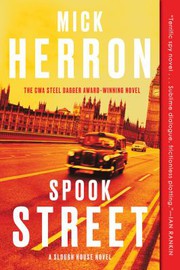
River's grandfather, a legendary spook losing his memory, and the series' most emotionally direct book. It only lands because three books have made you care about that family.

The satire turns openly toward contemporary British politics, with a terror plot running underneath. The jokes depend on knowing the office and the players.
The Later Novels
IntermediateFollow the run into its darker second half, where the losses accumulate and the political bite gets sharper.
▸ Study plan for this stage
Pace: 5-6 weeks for four novels, roughly a week each. Joe Country is a bleak, cold, funeral-shaped book and the point at which the series stops protecting anyone; it is short but heavier going emotionally than anything before it. The novel that shares the series' name is the most despairing entry, and the
- The second half of the run is where losses accumulate and where the comedy is set against real grief rather than only against embarrassment
- Joe Country is a winter book in every sense, and it marks the moment the series' rules change
- The title novel deals directly with the aftermath and with a Britain remaking its own intelligence service, and it is the angriest thing Herron has written
- The satire sharpens from institutional to explicitly political: government advisers, press management and the machinery of modern British power
- Herron is writing close to current events in these books, which gives them urgency and will eventually date them - worth reading with that in mind
- Long-running arcs are closed in this stretch, so several threads planted in the core run finally pay off
- The most recent novel is the current stopping point for a caught-up reader, and it presumes the full history of the house behind it
- What changes about the series' contract with the reader in Joe Country?
- How does Herron keep the comedy running through the bleakest books, and does it ever curdle?
- What is the political target of the later novels, and is the satire aimed at individuals or at a system?
- Which long-running arc gets the most satisfying resolution, and which is left deliberately open?
- Has Lamb changed across nine books, or only your understanding of him?
- Before Joe Country, reread the last chapter of the previous novel. The continuity between them is tighter than anywhere else in the series.
- Note every joke in the bleakest book you read in this stage. The ratio of comedy to grief is Herron's most precise craft achievement and it is measurable.
- Track one long-running arc - the succession at Regent's Park is the clearest - across all nine novels. It is a genuine subplot hiding in plain sight.
- After the most recent novel, list the surviving cast. It is much shorter than at the end of the core run, which is the series' honest signature.
- Avoid discussion of the later books online. Herron kills characters with no foreshadowing and the run is heavily spoiled.
Next up: With the main sequence finished and the losses absorbed, the short fiction can be read for what it is - filler between novels, best taken when nothing is at stake.
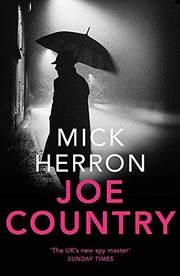
A bleak, cold, funeral-shaped book, and the point at which the series stops protecting anyone. Reading it out of order would spoil several earlier volumes at once.

The book that shares the series' name, dealing directly with the aftermath of Joe Country and with a Britain remaking its own intelligence service. The most despairing entry.

A missing government adviser and the Park's internal knife-fighting, with the satire aimed squarely at political advisers. It closes several long-running arcs.

The most recent novel in the sequence, and the current stopping point for anyone caught up. It presumes the full history of the house behind it.
The Novellas
IntermediatePick up the short fiction that sits between the novels, once the main sequence is finished.
▸ Study plan for this stage
Pace: A week, at most. The collected novellas gather the short Slough House pieces in one volume, which is the tidiest way to read them; individually they were published as slim seasonal books and are easy to miss or to buy twice. These are genuinely optional. They fill gaps between the novels, they are m
- The novellas are short pieces set between the novels, usually built around a single incident and a small part of the cast
- Collected in one volume they read as a set of sketches, and the repetition of structure is more visible than it is when read years apart
- They are completist material: no novel depends on them and no plot requires them
- The adjacent standalone featuring the ex-spook John Bachelor sits beside the main series rather than inside it, and is worth it only if the collection left you wanting more
- Herron's minor-key writing is genuinely good, and the novellas are a fair demonstration of how much of the series is voice rather than plot
- Reading these last means you can enjoy them as coda rather than distraction
- This is the end of the sequence as it currently stands
- What can a novella do with this cast that a novel cannot?
- Do the short pieces add anything to the novels, or are they self-contained entertainments?
- How much of Herron's appeal survives when the plot is small? What does that tell you about what the series actually runs on?
- Which character is best served by the short form, and why?
- Having read everything, where would you now tell a new reader to start - and would you still say the first novel?
- Read the collected volume rather than hunting the individual editions. The seasonal originals are easy to duplicate and offer nothing extra.
- Place each novella in the gap between the novels it belongs to. Doing it yourself is more useful than a chronology you look up.
- Compare a novella's opening with a novel's. Herron uses the same set-piece instinct at a quarter of the length and the compression is instructive.
- Write a two-line pitch for the series for someone who has never read spy fiction. After twelve books you can do it, and doing it will tell you what you actually think Herron is for.
Next up: The path ends at the current edge of the series; from here the natural step is the British spy-fiction tradition Herron is writing against, or waiting for the next novel.

The collected Slough House novellas in one volume, which is the tidiest way to read them. They are minor by design, so this is a completist stage rather than a required one.

A short standalone featuring the ex-spook John Bachelor, adjacent to the main series rather than inside it. Worth it only if the collected novellas left you wanting more.
Discussion
Keep reading
Paths that share books, cover the same subject, or open a related topic.