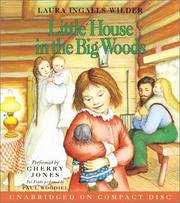
Start with Little House in the Big Woods, not with Little House on the Prairie. The book that gave the series its name and the television show its title is the third one, and readers who begin there meet a family already on the move without ever seeing what they left. Big Woods is also the gentlest opening — a year in a Wisconsin cabin, told to a very young child, structured around food, work and seasons rather than plot. It is where Laura Ingalls Wilder began, in 1932, and it is still the right door.
It is also the right calibration. Big Woods sets the register of the whole series: close attention to how things are made, almost no interiority, a narrator who reports hardship without commenting on it. If that works for you, the rest will — and if it does not, you know after eighty pages rather than after four books.
The main sequence
After Big Woods the order is straightforward, because publication order and the internal chronology agree. Little House on the Prairie takes the family to Kansas. On the Banks of Plum Creek is the Minnesota dugout, the grasshoppers and Laura's first school. By the Shores of Silver Lake moves to Dakota Territory and is the book where the tone shifts — Mary has lost her sight, Laura is older, and the writing stops being addressed to a small child.
The Long Winter is the one many readers consider the best, and the least like a children's book: seven months of blizzards, a town cut off, the family grinding seed wheat in a coffee mill to eat. Little Town on the Prairie and These Happy Golden Years carry Laura through teaching, courtship and marriage. Golden Years is the intended ending and functions as one.
Where Farmer Boy goes
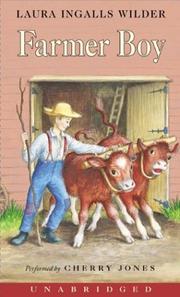
This is the only real order question in the series. Farmer Boy was published second, and most editions number it second, but it is not about the Ingalls family at all — it is a year in the boyhood of Almanzo Wilder on a prosperous farm in New York State, and it interrupts the westward story completely.
Two defensible positions. Read it in publication order, second, as a deliberate contrast: settled eastern plenty against the precarious frontier, which is arguably the point Wilder was making. Or hold it until Almanzo appears as a character, around Silver Lake or Little Town, so the boy in New York and the young man driving the sleigh become the same person.
The recommendation here is to read it second, but to tell a child what it is first. Its reputation as the boring one comes almost entirely from readers who expected Laura and got a stranger. Read knowing that, it is one of the most vivid books in the set.
Where to stop
These Happy Golden Years is the end of the series proper. What follows is different in kind.
The First Four Years is a manuscript found after Wilder's death and published unrevised in 1971. It covers the early years of the marriage — debt, illness, a failed crop, a house fire, the death of an infant son — in a flatter, bleaker voice, because it never went through the editing the other books received. Worth reading, but as an appendix rather than a conclusion, and a poor choice for a young reader who has just finished Golden Years.
On the Way Home is not a novel at all: it is Wilder's own 1894 diary of the family's move from South Dakota to Missouri, published with a framing narrative by her daughter. Read it as a document. Her 1915 letters from San Francisco appeared separately as West from Home; that volume is missing from our catalogue, and the gap is ours rather than a judgement on the book.
Two things worth knowing before you start
The books are fiction built from memory, not memoir. Events are rearranged, ages are altered, and Laura was a toddler during the Kansas period she narrates in the third book. How much of the writing is Wilder's and how much her daughter's is a live scholarly disagreement — Rose Wilder Lane was a professional writer who worked on the manuscripts extensively, and scholars disagree over whether that amounts to heavy editing or to collaboration.
The books also contain depictions of Native Americans that are hostile, including dialogue that is explicitly so, and the family in the Kansas book are living illegally on Osage land during the period of their removal. In 2018 the American Library Association renamed its Laura Ingalls Wilder Award, citing those depictions. Readers going through these books with children often pair the relevant passages with Louise Erdrich's The Birchbark House; Caroline Fraser's biography Prairie Fires is the standard account of what the historical record shows.
Follow the full path for the sequence with notes on each book.
Follow the full ordered path here: Little House on the Prairie Reading Order: Where to Start.