Raising anxious kids: the best books to help worried children thrive
This four-stage curriculum moves parents from understanding what childhood anxiety actually is, through proven parenting strategies, into the deeper science of emotion regulation and resilience-building. Each stage builds the vocabulary and confidence needed for the next, so that by the end parents can work as informed, calm partners alongside their child's mental-health professional.
Foundations: Understanding Childhood Anxiety
BeginnerUnderstand what anxiety is, how it shows up in children, and why common instincts (reassurance, avoidance) can accidentally make it worse.
▸ Study plan for this stage
Pace: 4–5 weeks, ~25–30 pages/day. Start with "Anxious Kids, Anxious Parents" (weeks 1–2), then move to "Freeing Your Child from Anxiety" (weeks 3–5). Allow 2–3 days between books for reflection and note consolidation.
- Anxiety in children is a normal emotion that becomes problematic when it persists, intensifies, or limits functioning—not something to eliminate entirely
- The anxiety cycle: how avoidance and reassurance-seeking reinforce anxiety rather than resolve it
- How parental anxiety, modeling, and well-intentioned protective behaviors can inadvertently amplify a child's anxiety
- The difference between helping a child feel safe and enabling anxiety-driven avoidance
- Anxiety manifests differently across ages and temperaments—physical symptoms, behavioral avoidance, perfectionism, social withdrawal, and intrusive thoughts
- The neurobiology of anxiety: fight-flight-freeze responses and how the anxious brain perceives threat
- Exposure and habituation as the evidence-based path to anxiety reduction, versus the temporary relief trap of avoidance
- Parental self-awareness: recognizing your own anxiety patterns and how they influence your parenting responses
- What is the difference between normal childhood anxiety and an anxiety disorder, and why does this distinction matter for how you respond?
- How do reassurance and avoidance temporarily reduce anxiety but ultimately strengthen it over time?
- What are three different ways anxiety shows up in children, and how might you recognize each in your own child?
- How can a parent's own anxiety or protective instincts accidentally reinforce their child's anxious behaviors?
- What is the anxiety cycle, and where are the key points where a parent can interrupt it?
- Why is exposure (gradual, supported confrontation of feared situations) more effective long-term than avoidance, and what makes it difficult for parents to implement?
- Anxiety audit: Spend 3–5 days observing and documenting your child's anxiety triggers, physical symptoms, and avoidance patterns without trying to fix them. Note your own automatic responses (reassurance, accommodation, worry).
- Parent anxiety inventory: Reflect on your own anxiety history and current triggers. Write down 2–3 ways your anxiety might be influencing how you respond to your child's anxiety. Share with a partner or journal.
- Cycle mapping: Draw or describe the anxiety cycle for one specific worry your child has (e.g., school refusal, social anxiety). Label the trigger, the anxious thought, the physical sensation, the avoidance/reassurance-seeking, and the temporary relief.
- Reassurance audit: For one week, track every time you reassure your child about their worry. Note what triggered the reassurance and what happened next. Reflect on whether the reassurance reduced anxiety long-term.
- Reframe practice: Take 3 anxiety situations from your child's life and rewrite your typical response using principles from the books (e.g., validate without reassuring, encourage small exposure instead of avoidance).
- Video or role-play reflection: Watch a video of yourself (or role-play with a partner) responding to your child's anxiety. Identify moments where you're reinforcing the anxiety cycle versus interrupting it.
Next up: This stage establishes the foundational understanding that anxiety is maintained by avoidance and parental accommodation, setting up the next stage to focus on concrete, evidence-based strategies for gradually exposing children to feared situations and building parental confidence in tolerating their child's discomfort.
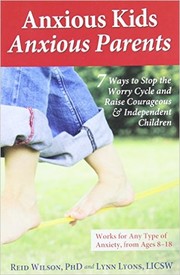
A warm, accessible starting point that explains the anxiety cycle in plain language and introduces the counterintuitive idea that approaching — not avoiding — fear is the path to relief. Sets the conceptual foundation for everything that follows.
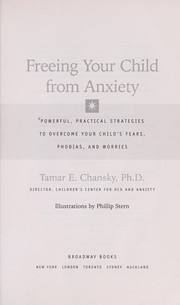
Expands on the foundation with age-specific guidance and practical scripts parents can use right away. Reading it second lets you apply Wilson's cycle model to Chansky's concrete, disorder-by-disorder examples.
Core Strategies: Evidence-Based Parenting Tools
BeginnerLearn and practice the main evidence-based techniques — gradual exposure, cognitive restructuring, and calm parental response — that complement professional CBT treatment.
▸ Study plan for this stage
Pace: 4–5 weeks, ~25–30 pages/day, with 2–3 days per week dedicated to practice exercises and reflection
- Gradual exposure (systematic desensitization) as the cornerstone of anxiety reduction
- Cognitive restructuring: identifying and reframing anxious thoughts in children
- Parental anxiety management and modeling calm, non-avoidant behavior
- The role of parental accommodation and how to reduce it strategically
- Play-based and creative approaches to exposure and anxiety processing
- Distinguishing between helpful support and anxiety-reinforcing overprotection
- Building a child's confidence through mastery experiences and graduated challenges
- What is gradual exposure and how does it differ from forcing a child to face fears all at once?
- How can you help your child identify and gently challenge anxious thoughts using cognitive restructuring?
- What is parental accommodation and why does reducing it help children overcome anxiety?
- How does your own anxiety response as a parent influence your child's anxiety, and what can you do about it?
- What are concrete ways to use play and creativity to help your child practice facing feared situations?
- How do you know when you're providing helpful support versus reinforcing avoidance?
- Create a fear ladder for one of your child's specific anxieties, breaking it into 8–10 small, manageable steps
- Practice identifying your own anxious thoughts for one week, then model reframing one thought aloud to your child
- Observe and record one instance where you accommodate your child's anxiety (e.g., allowing avoidance); plan one small reduction in that accommodation
- Role-play a feared scenario with your child using play, puppets, or storytelling to make exposure less threatening
- Conduct a 'calm parent' self-assessment: identify your physical anxiety signals and practice one grounding technique (breathing, progressive muscle relaxation) before high-anxiety parenting moments
- Design and run a small exposure practice with your child (e.g., a 10-minute graduated challenge) and document what worked and what to adjust
- Read and discuss one key passage from either book with a partner or therapist, focusing on how to apply it to your specific child
Next up: This stage equips you with the core hands-on tools to support your child's anxiety reduction; the next stage will deepen your ability to navigate setbacks, sustain progress over time, and integrate these strategies into family life during real-world challenges.
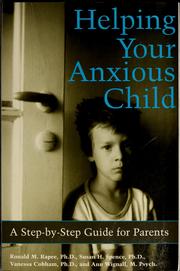
A structured, workbook-style guide grounded in CBT research that teaches parents to coach — not rescue — their child through anxiety. The step-by-step format makes it easy to use alongside therapy.

Introduces playful, connection-based strategies that complement the more structured CBT approach of Rapee. Reading it here adds an emotional warmth and creativity to the parent's toolkit.
Going Deeper: The Science of Fear and the Brain
IntermediateUnderstand the neuroscience and developmental psychology behind anxiety so parents can explain it to their child, spot triggers earlier, and feel confident talking with clinicians.
▸ Study plan for this stage
Pace: 4–5 weeks, ~25–30 pages/day (approximately 150–160 pages per week across both books)
- The triune brain model and how the upstairs brain (prefrontal cortex) and downstairs brain (limbic system) interact during anxiety and emotional overwhelm
- Integration and the role of connecting left-brain logic with right-brain emotion in calming an anxious child
- The window of tolerance: how anxiety pushes children outside their optimal arousal zone and how to help them return
- Developmental stages of emotional regulation and why young children cannot simply 'think away' their anxiety
- Emotional coaching as a parenting approach: validating feelings before problem-solving, rather than dismissing or minimizing anxiety
- How to identify and name emotions in your child, and why labeling feelings reduces amygdala activation
- The neuroscience of empathy and attunement: how your calm nervous system helps regulate your child's anxious one
- Recognizing anxiety triggers and patterns through the lens of brain development and emotional intelligence
- How do the upstairs and downstairs brain work together, and what happens in your child's brain during an anxiety spike?
- Why can't you simply reason with an anxious child in the moment, and what does the science tell us about when logic becomes accessible again?
- What is emotional coaching, and how does it differ from dismissing, problem-solving too quickly, or punishing anxiety?
- How does labeling emotions help calm an anxious child's brain, and what is happening neurologically when you name a feeling?
- What is your window of tolerance, and how does understanding your own nervous system help you regulate your child's?
- How can you use the concepts of integration and connection to help your child move from emotional overwhelm back to a calm, thinking state?
- Map your child's anxiety triggers using the triune brain model: for each trigger, identify which part of the brain is activated (e.g., amygdala hijack) and practice describing it to your child in simple, age-appropriate language.
- Practice emotional coaching in a low-stakes moment: listen to your child's feeling without immediately offering solutions, validate the emotion, and only then help them problem-solve. Reflect afterward on how your child responded.
- Create an 'emotion vocabulary list' with your child, using the Gottman framework: name at least 10–15 emotions beyond 'happy' and 'sad,' and practice identifying them in daily moments (books, shows, real life).
- Record yourself during a calm moment describing your own window of tolerance: when do you feel regulated, and what pushes you outside it? Share this with your child in age-appropriate terms to model self-awareness.
- Identify one recurring anxiety pattern in your child (e.g., bedtime resistance, social worry) and trace it through the lens of brain development: Is the upstairs brain offline? Is the child in fight-flight-freeze? What integration strategy might help?
- Practice the 'name it to tame it' technique: during a calm moment, ask your child to recall a recent anxious moment and help them label the feelings and sensations. Notice how the conversation differs from when they're in distress.
Next up: This stage equips you with the neuroscience and emotional intelligence framework to understand *why* your child is anxious; the next stage will teach you *how* to implement specific, evidence-based strategies and tools to help your child manage anxiety in real time.

Translates neuroscience — the 'upstairs/downstairs brain,' left/right integration — into parent-friendly language. This context helps parents understand why their child can't simply 'calm down' on command.

Introduces emotion coaching as a daily parenting practice. Building on Siegel's brain science, Gottman shows how validating feelings — rather than dismissing or amplifying them — builds long-term emotional resilience.
Advanced Integration: Resilience, Avoidance, and Long-Term Wellbeing
ExpertSynthesize everything into a long-term family approach — addressing accommodation, building genuine resilience, and sustaining progress after professional treatment ends.
▸ Study plan for this stage
Pace: 4–5 weeks, ~25–30 pages/day. Start with Ferber (2–3 weeks, ~20 pages/day), then transition to Lebowitz (2–3 weeks, ~30 pages/day). Build in 1 week for integration work and family protocol design.
- Sleep as a foundation for anxiety regulation: how sleep deprivation amplifies anxiety and how structured sleep protocols reduce physiological stress in anxious children
- Graduated extinction and behavioral shaping: understanding the mechanics of Ferber's approach to breaking maladaptive sleep associations and building independent sleep capacity
- Accommodation as the hidden driver of childhood anxiety: recognizing how well-intentioned parental responses (reassurance, avoidance enabling) paradoxically maintain and intensify anxiety
- The Family Accommodation Model: how parental anxiety, guilt, and enabling behaviors perpetuate OCD and anxiety cycles across the family system
- Motivational interviewing and collaborative change: Lebowitz's approach to shifting family dynamics without blame, using curiosity and shared decision-making
- Exposure-based resilience: moving beyond symptom reduction to genuine distress tolerance and adaptive coping in real-world contexts
- Sustaining progress post-treatment: designing family protocols that maintain gains, prevent relapse, and build long-term wellbeing without ongoing professional support
- How does sleep deprivation specifically amplify anxiety symptoms in children, and what does Ferber's protocol address beyond just 'getting kids to sleep'?
- What is the difference between accommodation and support, and how can you identify when your parenting responses are maintaining rather than alleviating your child's anxiety?
- Describe the Family Accommodation Model: what role does parental anxiety play, and how do reassurance-seeking and avoidance enabling create feedback loops?
- What are the core principles of Lebowitz's motivational interviewing approach, and how do they differ from traditional behavioral exposure therapy?
- How would you design a post-treatment family protocol that sustains progress without professional oversight? What specific practices would you embed?
- What does genuine resilience look like in an anxious child, and how do you measure it beyond symptom reduction?
- Sleep audit: Track your child's sleep patterns for 1 week (bedtime, wake time, night wakings, daytime mood/anxiety). Map correlations between sleep quality and anxiety intensity. Identify one specific sleep accommodation you currently provide.
- Accommodation inventory: List all accommodations your family makes for your child's anxiety (reassurance rituals, avoidance of situations, modified routines). Rate each by frequency and impact. Identify which 2–3 are most entrenched.
- Ferber protocol design: Choose one sleep issue (bedtime resistance, night wakings, early waking). Draft a graduated extinction plan using Ferber's principles—specify intervals, your response script, and how you'll handle your own anxiety during implementation.
- Family conversation practice: Using Lebowitz's motivational interviewing framework, script a conversation with your partner about one accommodation you want to change. Practice curiosity-based questions rather than directives. Record yourself and listen for tone.
- Resilience definition workshop: Define what genuine resilience looks like for your child in 3–4 specific contexts (social situations, academic challenges, uncertainty). Write behavioral markers (not symptom absence, but adaptive coping actions).
- Post-treatment protocol template: Design a 6-month family maintenance plan that includes: weekly check-ins, how you'll respond to anxiety spikes, what accommodations stay vs. phase out, and how you'll celebrate progress. Include contingency steps if anxiety resurges.
Next up: This stage equips you to sustain and deepen the work independently—the next stage (if applicable) would focus on troubleshooting relapse, adapting strategies as your child develops, and addressing secondary issues (perfectionism, social anxiety, school refusal) that often emerge once primary anxiety is managed.
Included because sleep disruption is one of the most common and overlooked drivers of childhood anxiety; understanding and fixing sleep is a high-leverage, evidence-based intervention that complements all prior strategies.

The capstone of the curriculum. Lebowitz's SPACE program is the leading research-backed approach for reducing parental accommodation — the single biggest maintainer of child anxiety. Best read last, when parents already have strong foundational knowledge and can implement its demanding but transformative framework.
Discussion
Keep reading
Paths that share books, cover the same subject, or open a related topic.