Best books on adoption for prospective parents
This curriculum takes a prospective or new adoptive parent from the basics of the adoption process all the way through the nuanced, lifelong work of raising an adopted child. Each stage builds on the last: first understanding the landscape and process, then mastering attachment and trauma-informed parenting, and finally exploring the deeper relational and identity questions that emerge over a lifetime of adoptive family life.
Foundations: Understanding Adoption
BeginnerGain a clear, honest overview of the adoption landscape — types of adoption, the process, key terminology, and what to realistically expect as an adoptive parent.
▸ Study plan for this stage
Pace: 8–10 weeks, ~25–30 pages/day (with reflection breaks)
- The spectrum of adoption types (domestic infant, foster-to-adopt, international, kinship, embryo adoption) and how each differs in process, timeline, and considerations
- The adoption process pipeline: pre-approval, matching, legal finalization, and post-placement support, including realistic timelines and costs
- Core adoption terminology and language (birth parent, adoptee, triad, open/closed adoption, attachment, permanency) and why word choice matters
- The adoptee's inner world: loss, identity formation, and the lifelong impact of adoption on a child's emotional and psychological development
- Realistic expectations for adoptive parenting: challenges, grief work, cultural competency, and the need for ongoing education and support
- The role of the extended family system in adoption success and how to prepare relatives for their role in welcoming the child
- Ethical considerations in adoption, including transparency about origins, respecting birth family connections, and avoiding savior narratives
- What are the major types of adoption, and what are the key differences in timeline, cost, and post-placement support for each?
- Walk through the adoption process from pre-approval to finalization—what happens at each stage, and what should you realistically expect in terms of waiting time and emotional demands?
- Why does adoption terminology matter, and how should you speak about adoption in front of your child and in your community?
- What are the core emotional and psychological needs of adopted children, and how does adoption loss shape their development across different life stages?
- What are the most common challenges adoptive parents face in the first year, and what support systems and skills do you need in place before bringing a child home?
- How do you prepare your extended family (grandparents, siblings, cousins) to be supportive and informed members of the adoption triad?
- Create a personal adoption-type comparison chart: for each adoption type covered in Davenport's book, list timeline, typical costs, legal complexity, and post-placement support availability. Identify which type(s) align with your family's circumstances and why.
- Map out your own adoption timeline: using the process stages from Johnston's book, create a month-by-month or quarter-by-quarter roadmap of what you'll do before, during, and after placement. Include milestones, decision points, and support checkpoints.
- Conduct a terminology audit: write down 15–20 adoption-related terms from all three books. For each, write a one-sentence definition and note why using the correct term matters (e.g., 'birth parent' vs. 'biological parent' vs. 'real parent'). Practice using these terms in conversation.
- Write a letter to your future child: after reading Eldridge's book, write a reflective letter addressing the 20 things adopted kids wish their parents knew. For each major theme, write one sentence acknowledging what you've learned and how you'll respond to that need.
- Interview or survey your extended family: create a 5–8 question survey for grandparents, aunts, uncles, and close family friends about their understanding of adoption and their role in welcoming the child. Identify gaps in knowledge and plan how you'll educate them before placement.
- Develop a personal challenge inventory: list the top 5 challenges you anticipate as an adoptive parent (based on what you've read), and for each one, identify one concrete strategy, resource, or support person you'll lean on to address it.
Next up: With a solid foundation in adoption types, process, terminology, and the emotional realities of the adoptee experience, you're now ready to move into the next stage—preparing your home, family systems, and parenting mindset for the specific needs of your child.
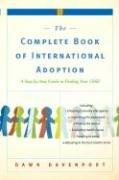
A practical, comprehensive starting point that demystifies the adoption process — domestic and international — covering legalities, timelines, and costs. Reading this first gives you the vocabulary and framework for everything that follows.
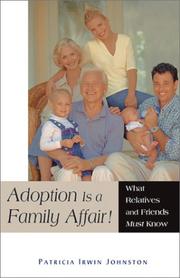
A short, accessible guide for helping extended family and friends understand adoption. Reading it early sets healthy expectations for your support network before you dive into deeper parenting topics.
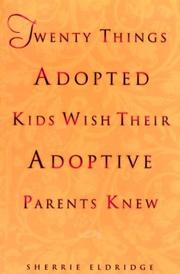
Written from the adoptee's perspective, this book immediately humanizes the child's inner world and introduces core emotional themes — loss, identity, belonging — that will be explored in depth in later stages.
Attachment and Trauma-Informed Parenting
BeginnerUnderstand attachment theory as it applies to adopted children, recognize the effects of early trauma and loss, and learn foundational parenting strategies that build secure bonds.
▸ Study plan for this stage
Pace: 8–10 weeks, ~25–30 pages/day (with reflection pauses). Suggested pacing: "Attaching in Adoption" (weeks 1–5, ~40 pages/week); "The Connected Child" (weeks 6–10, ~35 pages/week). Allow 1–2 days per week for review and integration.
- Attachment theory fundamentals: how secure attachment forms and why it matters for adopted children's development and emotional regulation
- Trauma and loss as core adoption experiences: how early deprivation, institutional care, and separation affect the brain, behavior, and bonding capacity
- The neurobiology of adoption: how stress, fear, and survival responses shape adopted children's nervous systems and require different parenting approaches
- Trust-building as a prerequisite: why traditional parenting fails with traumatized children and how to create safety before expecting compliance
- Sensory and relational connection: concrete strategies (eye contact, physical proximity, co-regulation) to rewire attachment pathways and soothe dysregulated children
- Parental attunement and emotional availability: recognizing your child's underlying needs beneath challenging behaviors and responding with empathy rather than punishment
- Reframing behavior: understanding that misbehavior often signals fear, shame, or unmet attachment needs rather than willful defiance
- Building the foundation for secure bonds: how consistency, predictability, and unconditional presence lay groundwork for long-term family integration
- What is attachment theory, and why do adopted children—particularly those from institutional or neglectful backgrounds—often struggle to form secure attachments?
- How does early trauma and loss affect the developing brain, and what specific behavioral or emotional challenges might you expect to see as a result?
- What is the difference between traditional parenting approaches and trauma-informed parenting, and why do conventional discipline strategies often backfire with adopted children?
- Describe three concrete strategies from the books for building trust and connection with a child who has experienced early deprivation or institutional care.
- How can you recognize when your child's misbehavior is rooted in fear or dysregulation rather than defiance, and how should your response differ?
- What role does parental attunement and emotional availability play in helping an adopted child develop a secure attachment, and what does this look like in practice?
- Create a personal 'attachment profile' for your child (or a hypothetical child): document their current behaviors, triggers, and suspected attachment style. Revisit this monthly to track shifts.
- Practice 'narrating' your child's internal experience: for one week, when they misbehave, pause and write down what fear, shame, or unmet need might be driving the behavior (e.g., 'He refused to eat lunch—is he afraid there won't be enough food?'). Share observations with a partner or therapist.
- Implement one 'connection ritual' from the books (e.g., eye contact during transitions, 10-minute daily one-on-one time, or co-regulation breathing) and track how it affects your child's behavior and your relationship over 3 weeks.
- Role-play or script a challenging scenario (e.g., bedtime resistance, a meltdown in public) using trauma-informed language and strategies. Practice responding with empathy and safety-building rather than punishment.
- Read and annotate one chapter from each book that resonates most with your family situation. Write a 1–2 page reflection on how the concepts apply to your specific child and what you'll change in your parenting approach.
- Join or start a study group with other adoptive parents reading these books. Meet bi-weekly to discuss key concepts, share challenges, and practice strategies together.
Next up: This stage establishes the *why* and *how* of trauma-informed attachment work; the next stage will likely deepen practical tools for specific behavioral challenges, developmental milestones, and long-term identity and belonging work as your child grows.
The single most recommended book for adoptive parents on attachment. It translates attachment theory into clear, practical parenting guidance and is the essential bridge between understanding the process and understanding your child.
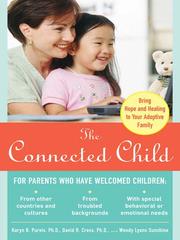
Introduces the TBRI (Trust-Based Relational Intervention) framework in plain language. Read after Gray to get concrete, day-to-day tools for parenting children who have experienced early adversity.
Open Adoption and Navigating Relationships
IntermediateUnderstand the spectrum of open adoption, how to manage ongoing relationships with birth families, and how to talk honestly with your child about their origins.
▸ Study plan for this stage
Pace: 4–5 weeks, ~25–30 pages/day (approximately 150–180 pages total across both books)
- The spectrum of open adoption: from fully open (ongoing contact) to mediated (indirect communication) to closed, and how to choose what works for your family
- The psychological benefits of openness for adoptees, including reduced identity confusion and access to medical/genetic history
- Strategies for building and maintaining healthy relationships with birth families while establishing clear boundaries
- Age-appropriate language and frameworks for talking with children about adoption, birth families, and their origins at different developmental stages
- How to manage complex emotions (grief, loss, joy, gratitude) that arise in open adoption relationships for all parties involved
- Addressing difficult questions children ask about why they were adopted and how to answer with honesty and compassion
- Creating a family narrative that honors both adoptive and birth family connections without minimizing either
- What are the key differences between fully open, mediated, and closed adoption, and what factors should adoptive families consider when deciding where on this spectrum they want to be?
- How can adoptive parents maintain healthy boundaries with birth families while still fostering meaningful relationships?
- What are the developmental stages children go through in understanding adoption, and what language is most appropriate for each stage?
- How should adoptive parents respond when a child asks difficult questions like 'Why did my birth mother give me up?' or 'Don't you love me as much as your biological children?'
- What role does access to birth family information and ongoing contact play in an adoptee's identity development and emotional well-being?
- How can adoptive parents prepare themselves emotionally for the complex feelings that arise in open adoption relationships?
- Map your family's position on the open adoption spectrum: write down where you currently are, where you'd like to be, and what barriers or concerns are holding you back. Identify one concrete step to move toward your goal.
- Draft a 'family story' about your child's adoption that is honest, age-appropriate, and honors both their adoptive and birth family origins. Practice telling it aloud and refine based on how it feels.
- Role-play three difficult adoption-related questions your child might ask (e.g., 'Why did my birth mom not want me?'). Write out your response using the frameworks from Watkins, then practice delivering it with a partner or in a mirror.
- Create a communication plan with your child's birth family (or the adoption agency if contact is mediated): outline frequency of contact, what information will be shared, and how you'll handle conflicts or changes.
- Interview an adoptive parent in an open adoption relationship about their experience: ask about challenges, rewards, and how they talk with their child about their birth family. Reflect on what resonates with your own values.
- Design a memory book or photo album that includes both adoptive and birth family connections. Include space for your child to add their own reflections as they grow.
Next up: This stage equips you with the relational and communication skills to navigate open adoption thoughtfully; the next stage will likely deepen your understanding of how to support your child's identity development and emotional resilience as they encounter adoption-related challenges in school, peer relationships, and adolescence.

The definitive guide to open adoption, written by an adoptive mother alongside her daughter's birth mother. It reframes openness as a mindset, not just a legal arrangement, building naturally on the attachment and trust concepts learned in Stage 2.

Provides research-based, age-appropriate scripts and strategies for discussing adoption, birth families, and origins. Pairs perfectly with Holden's book by translating open-adoption values into real conversations.
Raising an Adopted Child: Identity, Race, and the Long Game
IntermediateNavigate the deeper, ongoing challenges of adoptive family life — including transracial adoption, adoptee identity development, and supporting your child through adolescence and adulthood.
▸ Study plan for this stage
Pace: 8–10 weeks, ~25–30 pages/day, with 2–3 reflection days per week
- Adoptee voices and lived experiences: Understanding adoption through the perspectives and narratives of adoptees themselves, as presented in Simon's work
- Transracial adoption dynamics: The unique challenges, identity formation, and racial socialization required when parents and children have different racial backgrounds
- Identity development across the lifespan: How adoptees construct and reconstruct their identity from childhood through adolescence and into adulthood
- The role of openness and communication: How honest, age-appropriate dialogue about adoption, origins, and race supports healthy development
- Racial socialization and cultural competence: Parents' responsibility to actively teach their children about their racial/cultural heritage and navigate systemic racism
- Adolescence and identity crisis in adoption: The intensified questions about belonging, origins, and self that emerge during teenage years
- Long-term outcomes and resilience: What research shows about adoptee well-being, attachment, and thriving into adulthood
- What are the core themes and experiences that adoptees themselves identify as most important to their identity and well-being, based on Simon's research?
- What are the specific challenges and strengths of transracial adoptive families, and how do they differ from same-race adoptive placements?
- How should parents approach racial socialization and prepare their transracially adopted children to navigate racism and discrimination?
- What does healthy identity development look like for an adoptee at different life stages (childhood, adolescence, adulthood), and what can derail it?
- How does the adoptee's search for origins and connection to birth family evolve over time, and how should adoptive parents support this?
- What are the long-term psychological and social outcomes for adopted children, and what factors predict resilience versus struggle?
- Read and annotate one chapter from 'In Their Own Voices' per week, then write a one-page reflection on how each adoptee's story challenges or confirms your assumptions about adoption
- Create a 'racial socialization action plan' for your family or a hypothetical family: list 5–7 concrete practices (books, conversations, community involvement, cultural events) to build racial awareness and pride
- Interview an adoptee (if possible) or listen to an adoption podcast featuring adoptee voices; document 3–5 key insights that resonated and why
- Map out your child's (or a hypothetical child's) identity development across three life stages (ages 5–8, 10–14, 16–22) using Brodzinsky's framework; note likely questions and concerns at each stage
- Role-play difficult conversations: practice how you would respond to your child asking 'Why did my birth mother give me up?' or 'Why do people treat me differently because of my race?'
- Review your family's communication patterns: audit how often adoption, race, and identity are discussed naturally in your home; identify barriers and set a goal to increase openness
Next up: This stage equips you with deep understanding of your child's inner world and long-term developmental needs; the next stage will focus on practical, day-to-day parenting strategies and building a supportive community infrastructure to sustain your family through these challenges.

Lets adult transracial adoptees speak for themselves about identity, race, and belonging. Reading first-person accounts at this stage grounds the theoretical knowledge from earlier books in lived reality.
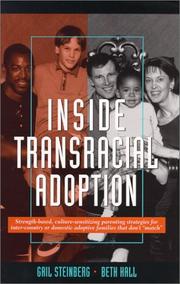
A thorough, honest guide for parents raising children of a different race or ethnicity, covering cultural competence, racism, and identity. It builds directly on the adoptee voices heard in Simon's book.
A landmark psychological study of how adoption shapes identity across the entire lifespan — childhood through adulthood. This is the capstone of the curriculum, giving parents a long-view understanding of their child's evolving inner life.
Discussion
Keep reading
Paths that share books, cover the same subject, or open a related topic.